
The message lands in our inbox as two words: “insole arch”. No greeting, no context, no shoe size — and behind those two words sit three entirely different questions from three entirely different buyers. One person wants to know what arch type their own feet are. The next already knows their arch and wants to know how much support an insole should give. The third has a drawer of failed insoles and wants to be pointed at the right product this time. Answering all three the same way is how people end up with insoles that fit the foot they wish they had. This guide unpacks the short query “insole arch” question by question, shows what an honest answer to each one looks like, and where the FX product line — the daily comfort insole series in particular — fits into each answer.
What the phrase insole arch actually points to
Search data flattens everything. A retailer in one country, a runner in another and a grandparent buying for a grandchild all type some version of “insole arch”, and the results page hands them all the same product listings. But the three questions behind the phrase have different answers, different tools and different mistakes. If you run a store, a clinic or an online shop, recognising which question a customer is actually asking is the difference between a sale that sticks and a return in three weeks.
We keep seeing the collision in our own pre-sales enquiries, and it is exactly how an “insole arch” message arrives: two words, no greeting, no context. When one lands without a clue about which question the buyer means, our pre-sales team has settled on a fixed move — answer all three questions in one short reply, then ask which one the buyer means. It reads like more work than necessary, but it closes the loop faster than three rounds of clarification. The reply states that arch type is established through the assessment equipment, that support level is specified through the four build grades, and that the product choice runs through the three series — and then asks for the one detail that sorts everything: what shoes the insoles go into, and what the wearer’s day looks like. The answer splits cleanly into the three camps more often than not, so it is worth walking through each one properly.
For a store, the cost of guessing this question wrong is concrete. An insole sold on a hunch — “most people have flat arches, take this one” — comes back as a return, or worse, as a quiet customer who never comes back. The assessment route takes a few minutes with the detection equipment and produces a record the customer can see: arch type, foot shape, where their pressure sits. That record does the selling on its own, and it protects the fitter, because the recommendation now traces back to a measurement instead of a glance over the counter.
Question one: what arch type do I have?
The first question is about assessment, and it deserves a measurement rather than a guess. Arch type is not three boxes you sort yourself into with a wet footprint on cardboard; it is a range, and it can read differently between the two feet of the same person. The FX series is built on BODYFIT AI assessment combined with senthmetic flexible-fabric sensing technology — the data characteristics captured through that sensing layer are what an insole order is built from, on the specific detection devices our systems provide. In other words, the same company that makes the insole also makes the equipment that measures the foot, so the assessment and the product speak the same language.
One caution belongs in every honest answer to this question: a measurement is a record, not a diagnosis. The assessment describes arch type, foot shape and pressure distribution under defined conditions. It does not name a condition or promise anything about how your feet will feel in a year. For a retailer, that boundary is actually useful — it keeps the conversation professional and defensible, and it routes anyone with a genuine medical concern to a qualified professional rather than to a shelf.
It is also worth telling customers that arch type is a snapshot, not a fixed label. The two feet can read differently from each other; a record taken after a full day of standing can sit differently from one taken first thing in the morning; and footwear changes what the sensing layer sees. That is why a refit, not a repeat guess, is the right response when someone returns months later with new shoes or a new job — the assessment runs again, the record updates, and the insole order follows the fresh data rather than the old assumption.
Question two: how much arch support do I need?
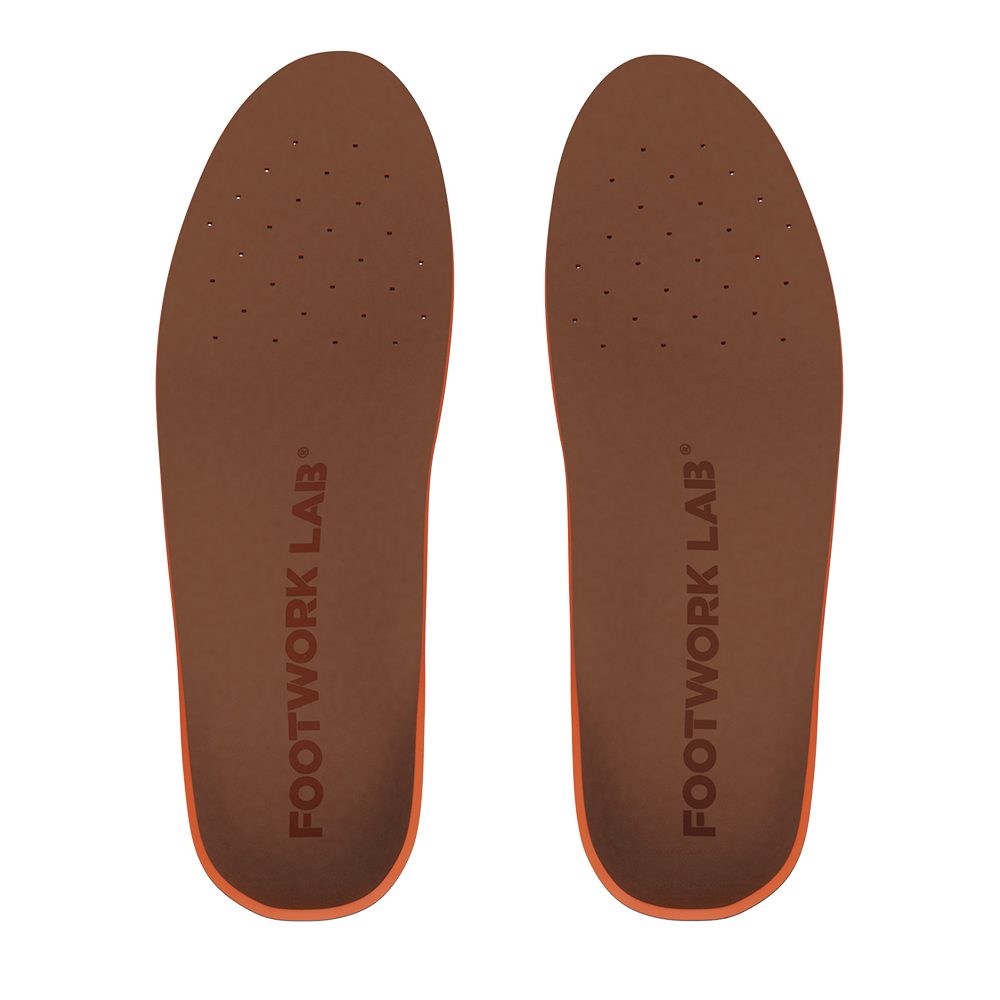
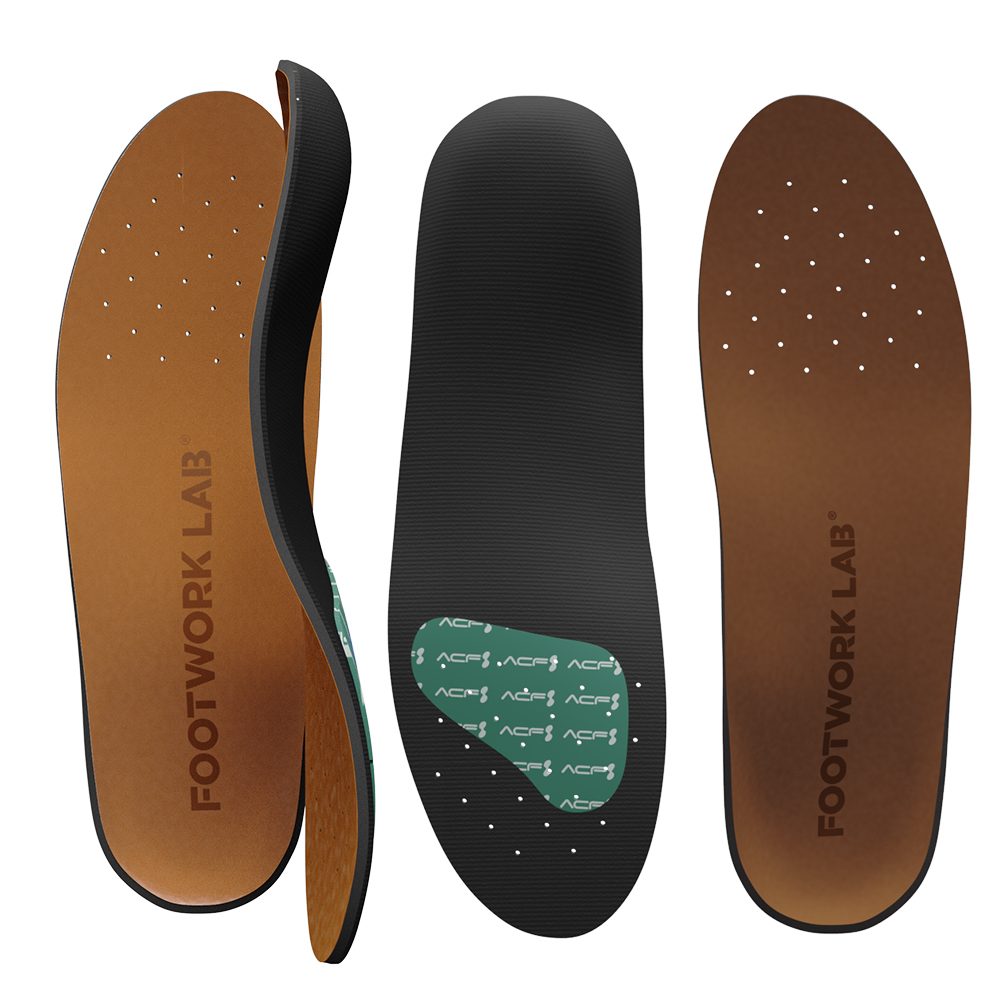
The second question assumes the assessment is done and asks about dosage. Here the FX design logic starts from the plantar zones. The foot’s sole is divided into ten regions: the five metatarsal heads M1 through M5, the outer and inner heel HL and HM, the midfoot MF, and the toe regions T1 and T2–5. Daily walking and standing concentrate load in the M1–M3 region and the two heel zones, which is why the daily comfort insoles focus their structure there — the arch piece, the shaping board and the cushioning layers work as one system, with the arch section providing support and alignment and the heel and forefoot layers handling load distribution.
“How much” is answered by the four build grades the FX line is specified by: support level, anti-torsion level, cushioning level and starting-ability level. Those four describe what a given insole is built to do, and they map onto the wearer’s reality — a person who stands all day on hard floors and a person who walks to the bus stop need different grades even if their arch types match. That is also why the answer to “how much support” cannot be a single number. It depends on duration, surface, body weight distribution and the shoe the insole goes into; the shoe sets the cavity, and the insole has to work inside it.
In practice, a fitter uses the grades as a matching exercise rather than a ranking. Take the wearer’s day first — hours on the feet, surfaces, the weight the zones actually carry — then the shoe, then pick the grade combination that fits both. A long-standing shift in a firm-soled work shoe pulls toward the standing-oriented structure in the daily comfort line; a leather-shoe commuter needs the forefoot and heel cushioning elements that a dress shoe’s stiff sole leaves out. Two people with identical arch readings can therefore leave with different pairs, and both recommendations are correct — the grades exist precisely so that “how much” has a vocabulary instead of a shrug.
Question three: which insole should I choose?
The third question is the purchase decision, and this is where a product line earns its structure. The FX series is divided into three families. The daily comfort series covers daily walking, leather-shoe wear and long standing hours — three daily scenarios with different shoes, different loads and different pressure points, which is why the leather-shoe version carries forefoot and heel cushioning elements on the outside where a dress shoe’s firm sole needs them. The rehabilitation care series addresses four specific directions: flat foot, pressure relief, hallux valgus and plantar fasciitis, each with its own structural emphasis on the arch and heel zones. The sport series is specified by activity — basketball, running, skiing, golf and the rest — because a court shoe and a ski boot put load through the foot in different patterns.
The manual’s own notes matter here, and we pass them on rather than soften them. The daily-wear cycle is stated as four to six months, and high-intensity sport shortens both the life and the support and cushioning performance. A first-time wearer may feel the arch piece prominently for the first days, which is why the guidance is to extend wearing time gradually rather than judge the fit on day one. And the sizing runs across a wide range so that the same structure can be fitted to most of a family or a store’s customer base.
The three-part structure shows up inside our Ruichang plant too, in the orders themselves.
The three-part structure shows up inside our Ruichang plant too, in the orders themselves. A sample request in the rehabilitation care direction can ship within three days, and production orders start at two hundred pairs, mixed across models and sizes, with ODM and OEM accepted. Walking the line, you can see why the series structure exists: the daily, rehabilitation and sport families share materials and process steps but branch at the shaping board and the zone emphasis, so a mixed-size order is normal work rather than an exception. The factory runs at a rate of roughly five hundred to a thousand pairs a day, which is what lets a distributor hold a real range instead of a token shelf — and it is also why the answer to “which insole” can be honest rather than promotional: there is a structure behind the shelf to back it up.
Frequently asked questions
What do people actually mean by the search phrase “insole arch”?
In our experience the two-word query hides three separate questions: what arch type the wearer’s own feet are, how much support an insole should provide, and which insole product to choose. The first is answered by an assessment, the second by the four build grades, and the third by matching the FX series — daily comfort, rehabilitation care or sport — to the wearer’s shoes and daily routine.
How is my arch type measured before an insole is made?
Through BODYFIT AI assessment combined with senthmetic flexible-fabric sensing technology, run on our detection equipment: the sensing layer captures the data characteristics of your feet under standing load, and the insole order is built from that record. The result is a measurement of arch type, foot shape and pressure distribution — a record for a professional or fitter to read, not a diagnosis.
How much arch support is the right amount?
Support is specified, not guessed. The FX line grades each product on four levels — support, anti-torsion, cushioning and starting ability — and the right combination depends on how long you stand or walk, on what surfaces, and on the shoe cavity the insole sits in. The same arch type can call for different grades in a dress shoe and a work sneaker.
Which FX series covers arch support for everyday wear?
The daily comfort series covers daily walking, leather-shoe wear and long standing. The rehabilitation care series handles four specific directions — flat foot, pressure relief, hallux valgus and plantar fasciitis — with structural emphasis on the arch and heel zones. The sport series is specified by activity. All three fit sneakers, casual shoes and outdoor shoes within their stated use.
What are the ordering terms for the FX insole series?
Production orders start at two hundred pairs, which can be mixed across models and sizes. ODM and OEM are accepted, samples ship within three days, and the Ruichang plant produces roughly five hundred to a thousand pairs a day. Transit terms and the full order conditions are listed on our FAQ page.
How long does a pair of FX insoles last?
The manual states a daily-wear cycle of four to six months, and notes that high-intensity sport reduces both the service life and the support and cushioning performance. First-time wearers are advised to extend wearing time gradually, since the arch piece can feel prominent during the first days.
What we would do next
If you are a retailer or clinic building an insole range, start by writing down which of the three questions your customers ask most, and stock the series that answers it — then let the assessment equipment settle arch type in-store instead of over the counter. The FX insole categories page lays out the three series side by side, and our FAQ page carries the MOQ, sample and transit terms in full. If you would rather talk it through, send us the two words plus your market and we will ask the one question that sorts it.
If you want to go deeper on the individual pieces: why foot arch shape is a range rather than three boxes extends the first question, what the arch piece of an insole actually does extends the second, and a shared vocabulary for support levels in orthotic insoles extends the third.
This article is intended for professional and educational reference. It is not medical advice. Insoles are support and comfort products; the assessment equipment produces measurements and records, and any clinical interpretation remains the responsibility of a qualified professional. Certification scope is limited to the documentation we hold: European Union certification and ISO quality system certification.