
An enquiry reached the workshop with one line in it: can your insoles relieve foot and ankle pain? The sender was not being careless. They had typed that phrase into a search bar, it had delivered them to a page about insoles, and they used the same words on the people who make them. Behind the sentence was a person — a nurse on her feet for a shift, a man whose first steps out of bed had become the worst part of his morning — and a hope that a pair of insoles would take that away. What the workshop makes is not relief. It is a moulded object that changes where load sits under the sole, and whether that helps is a judgement made later, by a professional and by the person wearing it. This article is about the distance between those two sentences: four questions that convert a wish into a specification a bench can act on, what the rehab builds actually vary, and the point at which the factory stops.
The rehab builds in the FX range are made for the flat foot group, for pressure relief under a loaded sole, for hallux valgus and for the plantar fasciitis group — four directions of design rather than four prescriptions. Each is offered in the same four grades that run across the range: support, anti-torsion, cushioning and starting ability. The grade is chosen against the shoe and the working day, not against the name of a condition.
What the phrase relieve foot and ankle pain brings in, and what the object does
A person searching for relief is searching for an outcome. A factory shipping a pair of insoles is shipping geometry, a cushioning layer and a top cover, in a size, to fit a shoe. Neither side is confused about its own half of the transaction. The confusion sits in the middle, where an outcome has to become a specification, and that conversion is not performed by the person typing or by the machine cutting.
It is performed by someone who can look at a foot, ask about a day, and then choose among the variables the build actually offers. How high the medial arch contour sits, and how far forward it runs. Whether the board resists torsion or lets the foot roll. How much cushioning sits under the heel and under the forefoot. Where the top cover ends and what it is made of. Each of those is a decision with a name, and a pair of insoles is the sum of them.
That is why the phrase in the subject line of an email is a starting point rather than an order. It tells the fitter that someone is uncomfortable and wants to buy something. Everything that decides whether the purchase is worth making comes afterwards, and the four questions below are the shortest route we know to the rest of the information. They are also the four we ask in return when a distributor sends us a request for a build we cannot picture.
The first question: where, and when, in the day
Where the discomfort sits is the obvious half. When it appears is the half that changes the build. A sole that complains in the first minutes after getting out of bed is describing one kind of load history. A sole that is quiet at breakfast and loud after six hours on a hard floor is describing another. Ask a customer to describe the worst ten minutes of their day and the answer is usually more useful than a body chart with a circle drawn on it.
A pressure record helps here, but it helps in a particular way. A record taken standing shows where load rests at that moment: the distribution across each sole, the footprint length and width, the contact area, and how the two sides compare. It is a snapshot of a pose, and a pose is not a day. The map tells the fitter where the load sits. The conversation tells them when the person notices it.
Put the two together and a specification starts to form. Load concentrated under the first metatarsal heads, in a customer who feels it after a long shift, points toward more forefoot cushioning and a pad placed to spread that load rather than a deeper arch. Load sitting under one heel, in a customer who describes a sharp first step, points toward a heel cup and a softer landing zone. Neither conclusion is exotic. Both need the second half of the sentence, and neither can be read off the colour map alone.
One caution belongs to this question. A person’s account of their own day is not a clinical history, and a fitter collecting it is not taking one. A pressure record is a measurement rather than a diagnosis, and reading it as a diagnosis is the error both the equipment and the fitter should avoid. What the shop or the clinic is doing at this stage is gathering enough to specify an object. If the account contains something that belongs in a consulting room — and most fitters recognise the shape of that — the right move is to say so and stop. That is a service, not a lost sale, and it is the first of the limits this article will keep returning to.
The second question: what the foot is already standing in
Insoles are bought for shoes, and the shoe decides more of the specification than any other single input. A deep trainer with a removable sockliner leaves room for a full build. A safety boot with a steel toe cap and a shallow heel leaves almost none, and a build that suits the first will not sit in the second. A dress shoe with a narrow waist and a leather lining asks for a different board and a different cover again.
That is why we ask for the shoe rather than the size alone. A photograph of the inside of the shoe, the existing sockliner laid flat, and a note on whether it lifts out are worth more than a careful measurement of the foot. A fitter with the shoe in the room can check the build inside it before the customer leaves. A fitter working from a foot measurement is guessing at the last, and the last is where most returns begin.
The existing insole is the second input. A customer who has worn a soft gel insert for a year has a foot accustomed to a certain volume under the arch, and a structural build will feel like too much during the first week. That is not a reason to soften the build. It is a reason to say what the first week will feel like, so the pair does not come back on day three in a bag. The reverse case matters too: a shoe worn with no sockliner at all has more volume, and the build can be fuller.
The floor belongs to this question as well. A hospital corridor, a concrete plant floor, a wooden kitchen and a tennis court load a foot differently, and the difference is not only in cushioning. It changes how long the pair will last and what the fitting has to hold. We ask what the floor is made of and how many hours of the day are spent on it before a grade is named, because the same customer on a different floor is a different specification.
The third question: what the pair has to survive
An insole is a wear item. In daily use our own guidance puts the working life at four to six months, and heavy sport shortens it: the cushioning compresses, the cover abrades, the board holds its shape longer than the foam around it. That figure is not a sales device. It sets the reorder rhythm, and the reorder rhythm sets what a clinic or a retailer should keep on the shelf.
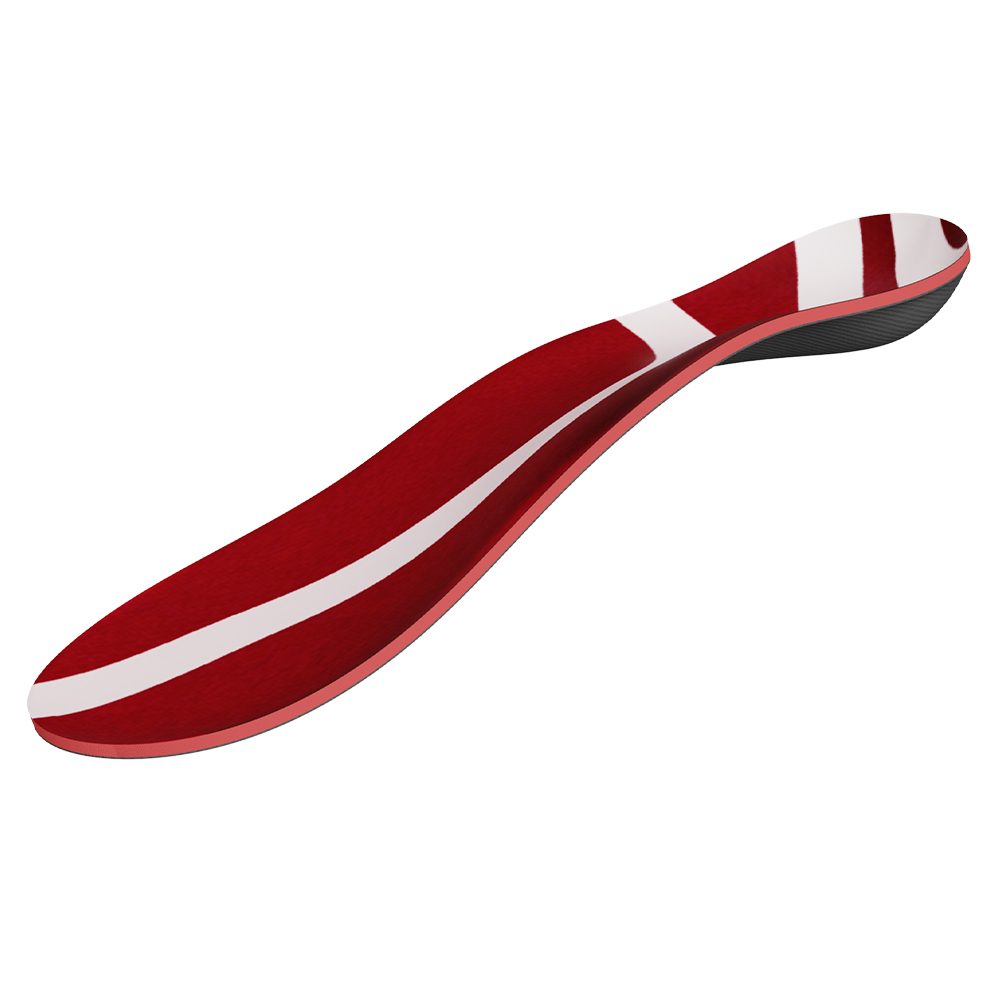
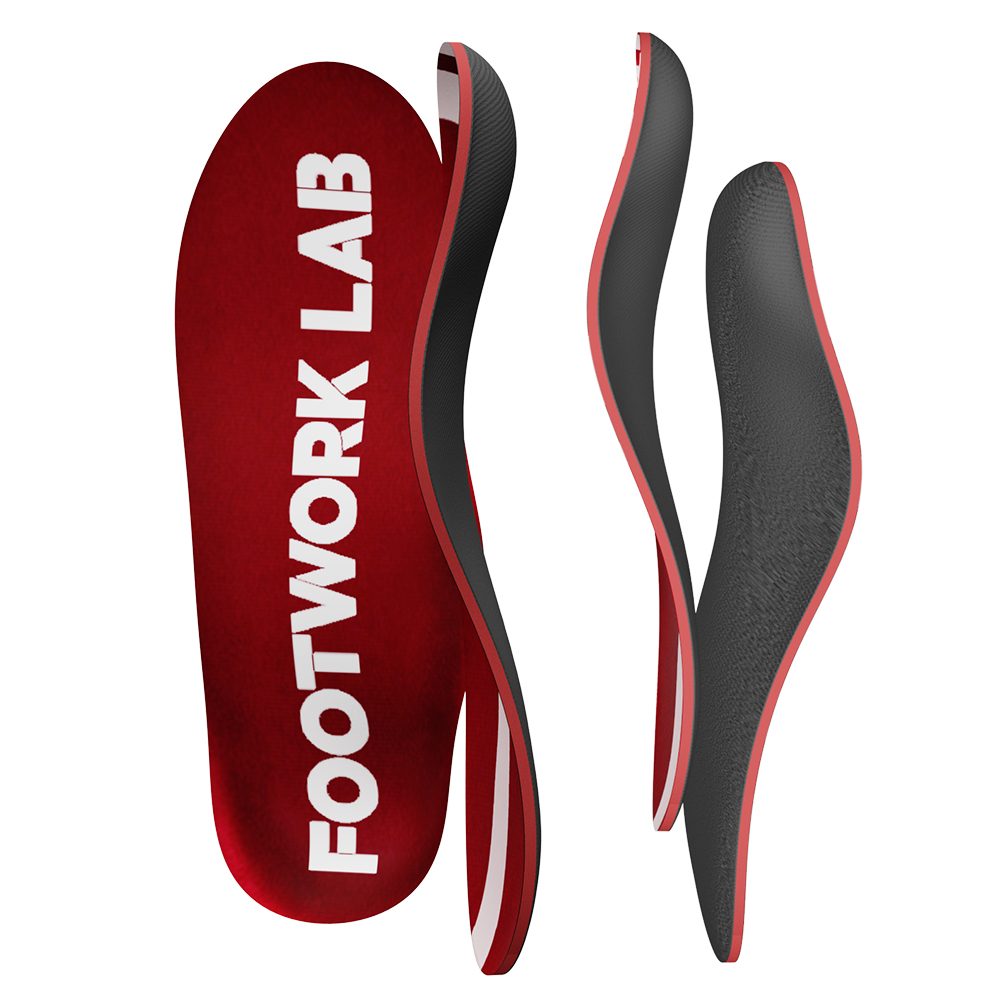
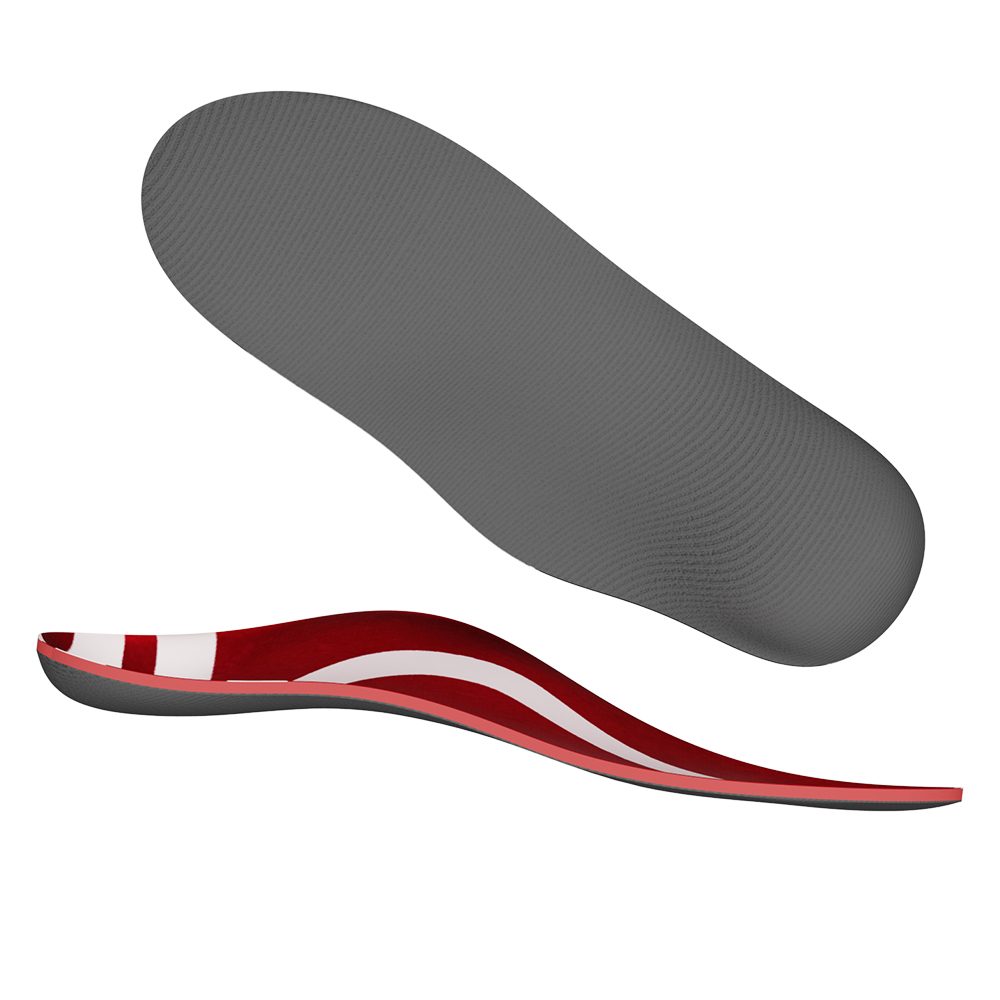
The structure that decides how a pair behaves is layered. A top cover in mesh fabric or brushed microfibre sits against the foot. Under it, a cushioning layer takes the first part of the impact. Beneath that, the shaping board does the structural work: it holds the arch contour, resists or permits torsion, and carries load across the sole instead of letting it pool in one place. A dress build swaps the cover for leather and adds cushioning at the heel and forefoot.
The four grades are the vocabulary for the choice. Support describes how much contour the build holds under the arch. Anti-torsion describes how much the board resists a twisting sole. Cushioning describes what sits under the impact points. Starting ability describes how readily the build lets the foot leave the ground — a grade that matters more to a racket player than to a man standing at a machine all day. A pair can be high in one and low in another, and that combination is the specification.
Heat and moisture belong here too, because in a humid climate they are what ends a pair’s life before the foam does. A build that suits a temperate city may not suit a coastal one. We ask where the customer lives and what the shoe is worn for before the cover is trimmed, and in our experience the honest answer about sweat and long shifts is worth more than a polite one about weekend walks.
The fourth question: how both sides will know it worked
If the request is relief, the acceptance test has to be something other than relief, or the pair can never be signed off. This is the part of the conversation fitters find awkward and buyers, once they have run it a few times, refuse to skip. It consists of writing down, before the pair is made, what would count as the specification having done its job.
Three lines are usually enough. The pair goes into the shoe and the shoe closes without lifting the heel or pressing the instep. The customer wears it for a full working day and reports what happened, in their own words, at the end of it. And where the room has a pressure plate, a retest under the same conditions shows load sitting where the build intended — under the arch rather than the heel edge, spread across the forefoot rather than pooled under one metatarsal.
None of those lines says the discomfort will be gone. They say the object was made to specification, that it fits the shoe it was made for, and that the sole is being loaded the way the fitter planned. If the customer’s experience does not follow, the next conversation is a clinical one, and the fitter’s task is to hand it over rather than keep adjusting a piece of plastic until something happens.
Writing the lines down changes the sale in a small way that buyers notice later. It turns a hopeful purchase into a testable one, and it gives the customer a reason to return for the retest instead of drifting away. It also protects the workshop: a pair specified against written criteria and then rejected is a different conversation from a pair made against a sentence in an email, and the second conversation is usually the one that ends with a refund.
Where the factory stops, and what the fitter signs
We mould insoles to a specification. We do not decide what that specification should be for a given person, and we do not tell a customer that a pair will relieve anything. Those two sentences mark the boundary of this article and of the business. The builds we ship are structural objects with a documented construction. What a foot needs is a judgement made with the foot in the room.
Other limits are worth stating because they save everyone a wasted sample. We do not make shape-scanning hardware: a buyer looking for a laser or a surface model of the foot is shopping in a different category, and the insoles here are specified from a pressure record, a shoe and a conversation rather than from a mesh file. We do not publish prices in an article of this kind, because a quotation depends on the build, the quantity and the destination. And we do not offer exclusivity by territory; the part we can hold to is manufacturing and support.
What we do is narrower and more useful. Samples ship within three days, so a fitter can put a build into a real shoe before committing to a range. The minimum order is two hundred pairs, mixed styles and sizes, which is the point at which a clinic or a small chain can hold a range rather than a single line. We accept ODM and OEM work on the insole side, so a buyer with their own packaging and size curve does not start from our catalogue. Every specification conversation we have had at an exhibition has ended the same way: the fitter describing a customer, and us describing what the bench can hold.
Frequently asked questions
Can a pair of insoles be specified from a description of discomfort alone?
Not to a standard anyone can check. A description tells the fitter that someone wants help; the specification still needs the location and timing of the load, the shoe the pair will live in, the hours and surface involved, and an agreed test for whether the build worked. A build ordered from a sentence is a sample, and samples are how ranges get judged — not how individual pairs should be made.
What does the rehab range cover, in structural terms?
Four design directions — the flat foot group, pressure relief under a loaded sole, hallux valgus and the plantar fasciitis group — each available in four grades: support, anti-torsion, cushioning and starting ability. The grade combination, not the name of the condition, is what the bench works from.
How is pressure relief actually built into an insole?
By moving and spreading load rather than by softening everything. A contour under the arch, a pad placed under a specific metatarsal head, a heel cup that widens the contact area, and a cushioning layer under the impact points each do part of the work. Which of them is used, and where, comes from the record and the shoe.
Does the customer need a pressure record before a pair can be ordered?
It is not a legal requirement and we do not insist on it. A record makes the specification easier to defend and the retest easier to run, which matters most in clinics and in any business that wants to compare a pair against the next one. Fitters working without a plate rely on the shoe, the day and a written acceptance line instead.
What is the minimum order, and can styles and sizes be mixed?
Two hundred pairs, mixed styles and sizes. That is low enough for a clinic or a single shop to hold a small range across the common sizes, and it is the quantity at which a first order can still be a test of the market rather than a commitment to one build.
How often does a daily-wear pair need replacing?
Our guidance for daily use is four to six months, sooner under heavy sport or in constant heat. The board usually outlasts the cushioning, so a pair that still looks sound can already be delivering less than it did. That interval is the natural point for a reorder conversation.
Is there a build for a safety boot or a dress shoe?
Yes, and they are different builds rather than the same one trimmed. A safety boot needs a shallow profile that keeps the heel locked without lifting it; a dress shoe needs a slimmer board, a leather or microfibre cover and cushioning placed where a leather sole gives nothing. Send the shoe, not only the size.
What we would do next
Take the four questions into the next enquiry and write the answers down while the customer is still in the room. Location and timing, the shoe, the day the pair has to survive, and the line that will count as success. If the answers will not settle into a build, send them to us through the contact page and we will say which parts of the specification are still missing rather than quoting a pair.
The insole range page lists the three series and the four grades in the factory’s own wording, and the FAQ page carries the sample, minimum order and delivery terms. For the design side of the plantar fasciitis group, plantar fasciitis insole design follows the build decisions one by one, and pain relief orthotic inserts covers what a relief-oriented build can and cannot be asked to do.
This article is intended for professional and educational reference. It is not medical advice. Foot assessment equipment produces measurements and images; clinical interpretation and any decision about care remain the responsibility of a qualified professional. Certification scope is limited to the documentation we hold: European Union certification and ISO quality system certification.