
At week six the patient says it feels better, and the therapist writes gait improved in the note, and both of them are telling the truth about something neither can describe. The programme has been running since the first appointment: heel-to-toe sequencing on a line of tape, step length work against a metronome, weight shifting onto the affected side, turning practice at the end of the corridor, a set of drills repeated at home in a kitchen that is too narrow for any of them. Something has changed. What nobody can say is which part changed, by how much, or whether the change would survive a second therapist watching on a different day. This article is about the record that would answer those questions, and about the order it belongs in. It covers what a pre-programme record has to hold, how retest points line up with the shape of a programme rather than with a calendar, what has to stay fixed for two records to be comparable, and where an insole sits in all of this — which is a smaller place than the insole industry usually claims. It is written for the therapist who has to justify a programme to somebody who was not in the room.
A word on scope before the detail. Nothing here is a prescription and nothing here describes an exercise protocol of ours. Gait exercises are selected and progressed by a qualified physiotherapist who has examined the person, and the equipment we make does one job in that context: it records how the person stands, loads and walks, before and after, so that the judgement has a reference. The insole range we make is a supporting product, not a treatment, and we will be specific about that later rather than vague about it now.
An exercise programme is prescribed against something
Every gait programme begins from a description, even when the description is only a sentence in a referral. Short step on the affected side. Wide base. No heel strike. Turns slowly and reaches for the wall. Those sentences are the therapist’s starting point, and they are remarkably good at capturing what matters — which is why experienced clinicians distrust them slightly, because a sentence is a summary written by one person on one afternoon.
The trouble with a sentence is that it cannot be subtracted from a later sentence. If the note at week six says gait improved, and the note at week one said short step and wide base, the two statements are not in the same units. One describes a pattern, the other describes a direction, and no reader can tell how far the direction went or which part of the pattern moved first.
A record does not replace the sentence, and it should not try. It adds quantities to it: how long the contact phase lasts on each side, how much of the cycle is spent in double support, what the step and stride lengths actually are, how the centre of pressure travels from heel to toe, how the trunk and pelvis sit above the feet. The sentence stays; the numbers give it a floor and a ceiling.
The practical consequence is that the programme can be aimed. A therapist who knows that the affected side carries a shorter contact phase and a lower peak load can choose drills that ask for weight acceptance rather than drills that ask for cadence. Both are gait exercises; only one of them addresses what the record shows. Aiming a programme is not the same as writing it, and the record never writes it.
What the pre-programme record has to hold
Six items earn their place in a baseline for a gait programme. The first is bilateral timing: contact and swing shares on each side, and the double-support period, because asymmetry in timing is the thing most gait programmes are quietly working on. The second is length: step and stride, measured rather than estimated, since step length is the quantity patients most often overestimate when asked.
The third is load: peak and mean pressure under each foot, contact area, and the way the centre of pressure travels through the step. The fourth is alignment: the foot axis, the position of the heel, and whatever rotation the lower limb shows, because a programme that ignores alignment will spend weeks asking for a movement the person’s structure does not offer comfortably.
The fifth is the body above the foot: trunk and pelvis position, and the knee’s behaviour through the stance phase. The sixth is context — footwear, walking aid, the speed the person chose, the surface, the time of day. The first five are what the report shows; the sixth is what makes the report comparable, and it is the one most often left out because it lives in the operator’s memory rather than in the software.
Retest points that follow the programme, not the calendar
Retests are usually scheduled by calendar because calendars are easy: six weeks, twelve weeks, discharge. The better arrangement follows the programme’s own structure, which has decision points rather than dates. A block of work is set, a review decides whether to progress it, and a retest belongs at the review, where its result can change what happens next. A record that arrives a fortnight after the decision is a report, not an input.
Three points cover most programmes. The baseline, taken before the first drill is taught, which is also the session where the therapist explains what is being measured and why. A mid-block record, timed to the review that already exists, which answers a narrow question: is the thing we are working on moving? A discharge record, taken under the same conditions, which closes the episode and gives the referrer something more useful than a letter.
What improvement looks like in a record is worth stating, because it is not always what patients report. Contact time on the affected side lengthening, double support shortening, step length becoming more symmetrical, the centre-of-pressure path smoothing out, the trunk swaying less — those are the shapes a therapist looks for. A patient who says it feels easier may be showing all of them, some of them, or none, and the two accounts are not in competition. They answer different questions.
A plateau looks different again, and it is the reason a mid-block record earns its place. When the drills have stopped producing change in the quantities, the programme needs a different aim rather than more repetitions of the same one. Without a mid-block record, the plateau is discovered at discharge, when there is no time left to act on it, and the note that gets written is the sentence this article opened with.
What has to stay fixed for a comparison to mean anything
Footwear or bare feet, and the same choice at both records. A shoe with a rocker sole changes timing and load, and a comparison between a shod baseline and a barefoot retest measures the shoe. The same rule applies to a walking aid: if a stick is used at the first session and abandoned by the second, that is a genuine clinical change and also a change of condition, and the report should say so in the notes rather than leave the reader to infer it.
Speed is the second fixed condition, and the hardest to hold. People walk faster when they are more confident, and confidence returns over a course of care, so a retest taken at a self-selected pace may show improvement that partly belongs to the pace. The honest options are to record the chosen speed and report it, or to use a fixed pace for both sessions. Either works; mixing them silently does not.
Surface, starting foot, the number of passes, the instruction the therapist gives, and where the equipment sits in the room: all of those belong on the routine page, and the page belongs with the equipment rather than in somebody’s head. We have seen two records from the same patient, six weeks apart, differ mainly because one was taken on a Tuesday morning and the other after a physiotherapy session on a Friday afternoon.
The operator is the last variable and the one institutions find hardest to control. Where two therapists share a caseload, the routine page is what holds the sessions together, and a short handover note — the person was tired, the aid was different, the room was cold — is worth more than a perfectly formatted report without one. Comparability is a discipline before it is a feature.
Where the insole sits in a gait programme
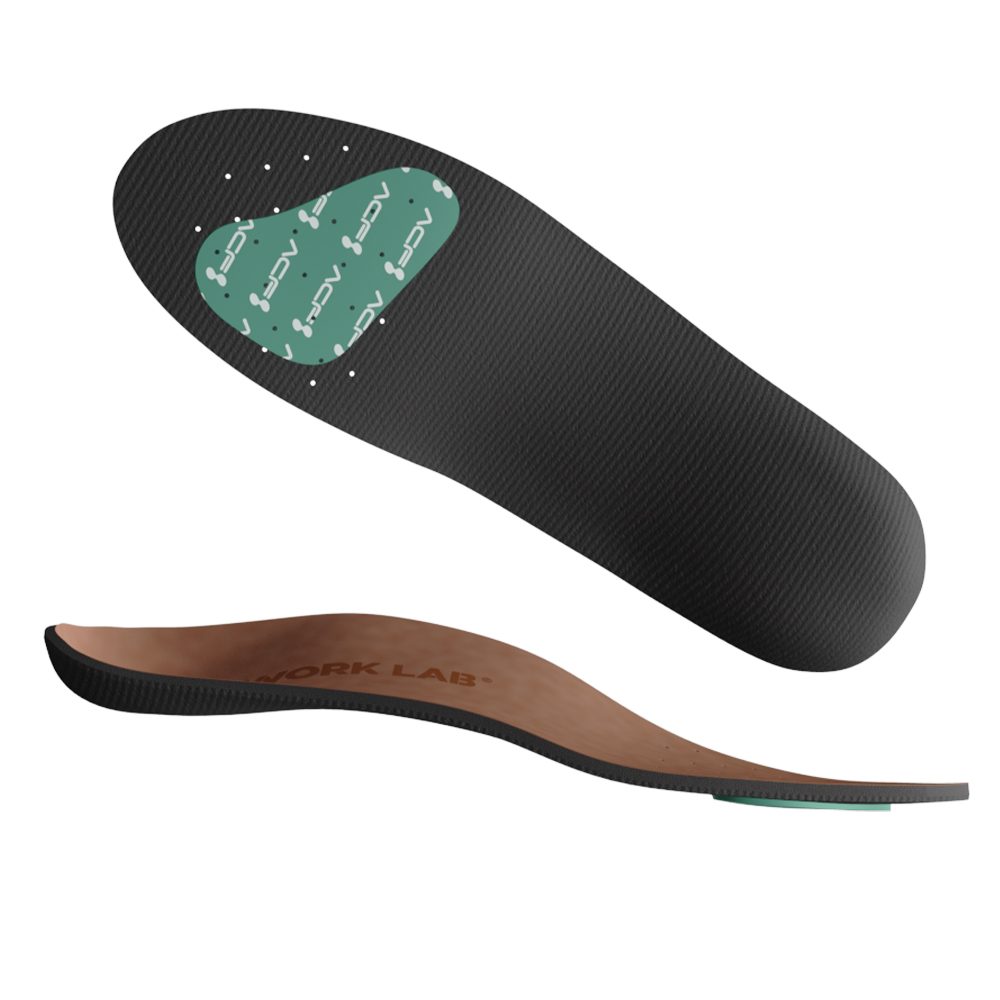
An insole is worn between sessions, and that is its whole contribution: it changes how load is distributed during the hours the person is walking around living their life. It does not perform the drill, it does not build strength, and it does not teach a movement pattern. A programme that consists of an insole and nothing else is a product, not a programme, and we would rather say that plainly than let a catalogue imply otherwise.
Within a programme, the useful role is support for the work. A person practising weight acceptance on the affected side may find the practice easier with a build that gives a more comfortable base under the foot, and comfort is a legitimate reason to keep practising. Whether that is true for a given person is a clinical judgement made with the record in hand, not something a factory can assert for a population.
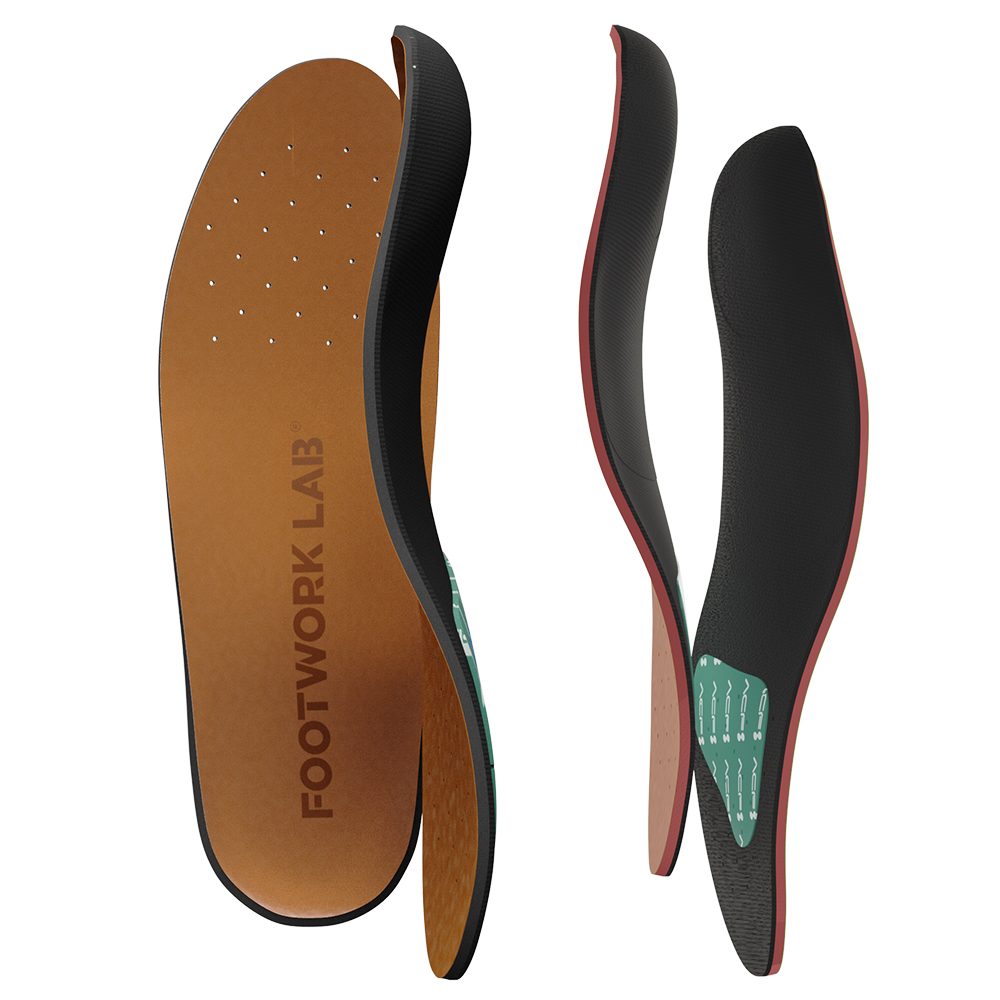
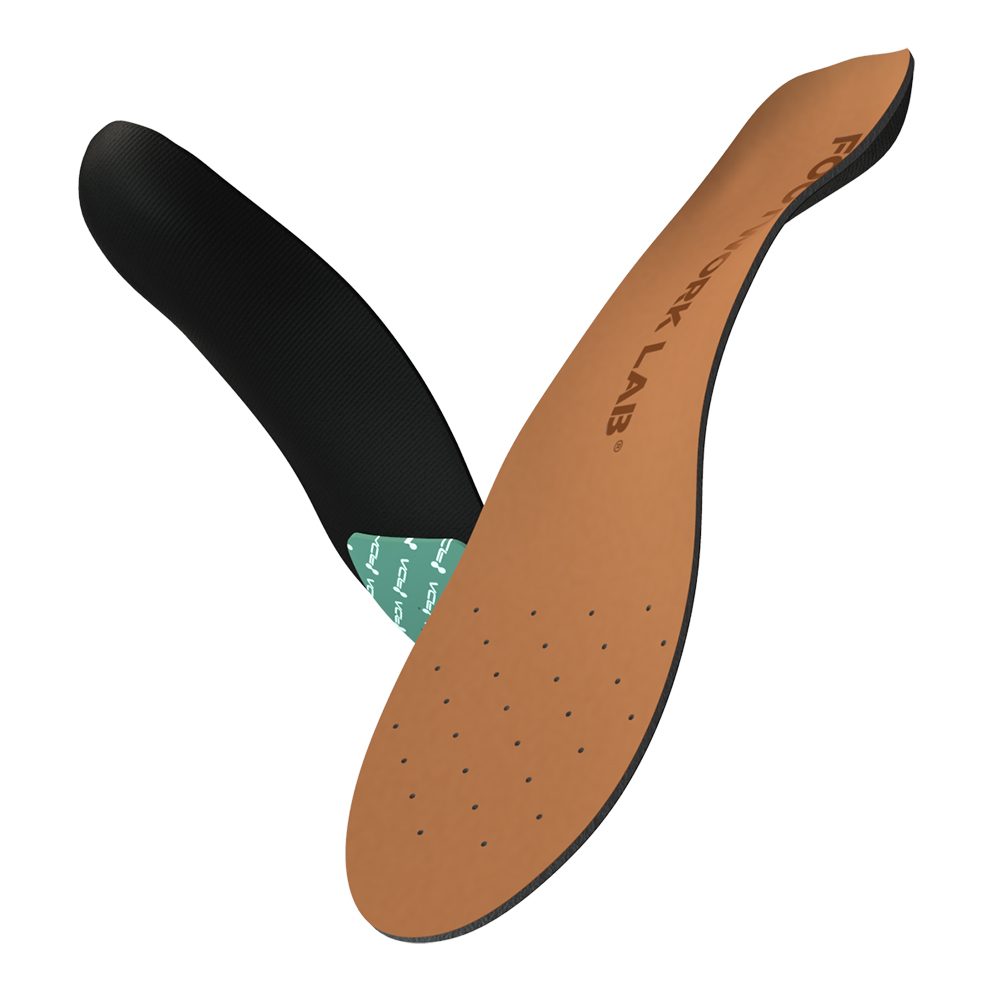
The rehabilitation series we make is specified in grades rather than in models, and the grades concern support, torsion, cushioning and launch rather than a named condition. A therapist choosing between grades is choosing how much structure the build carries, which is a decision that follows from the record and from what the person will wear the insole in. It is also a decision that can be revisited, and revisiting it at the retest is cheaper than replacing a pair that was never right.
The timing rule we suggest to clinics is simple. Fit after the baseline, not before, because a build chosen before the record exists is a guess with a size on it. Review at the mid-block retest, because a foot that has changed its loading may want a different grade. Replace on wear rather than on a calendar, and note the replacement date in the file so that a later comparison is not confused by a change of build halfway through.
Documentation matters more here than suppliers usually admit. A file that records the grade, the date of fitting and the shoes the build is worn in gives the next therapist something to work with; a file that records only that an insole was supplied tells them nothing and invites the assumption that the programme and the product were the same intervention. Two lines in the note prevent that, and they take less time to write than the paragraph explaining why the record was not kept.
What this equipment does not do
It does not prescribe, progress or select exercises, and no report we ship contains a programme. Those decisions require an examination, a history and a person in the room, and a document produced by a machine is not a substitute for any of the three. A therapist who lets a report choose the drills has handed a clinical decision to a supplier, which is a bad trade even when the supplier is us.
It does not diagnose, and it does not tell anyone what is wrong. The record holds timings, lengths, pressures, contact areas, paths and angles; the meaning of a pattern is read by a qualified professional. Every report carries a reference line saying so, and the line is not there to be read out as a formality — it marks the boundary of what the document is.
It does not improve anybody’s gait by being installed, and we will not write a sentence that suggests otherwise. What it does is make a comparison possible, and a comparison is what lets a therapist say at week six that the contact phase lengthened rather than that it feels better. The improvement belongs to the programme and the person; the description belongs to the record.
Commercially, the limits are the ones we state everywhere: no prices in an article, because a quotation depends on configuration and destination; no regional exclusivity promised; one unit as the minimum order, a seven-day test at the plant before dispatch, twelve months of warranty against non-human damage with free parts. On the insole side, two hundred pairs as a minimum with styles and sizes mixed, and samples out within three days.
Frequently asked questions
Does a gait programme need a record before it starts?
It benefits from one, because a programme is aimed at a pattern and a pattern has to be described before it can be aimed at. The record does not write the programme; it gives the therapist quantities to work against and a reference for the review that decides whether to progress.
How often should a patient be retested during a course of care?
Three points cover most courses: before the first drill is taught, at the review that already decides whether to progress, and at discharge. The mid-block record is the one that catches a plateau while there is still time to change the aim.
What if the patient walks faster at the retest?
Record the chosen speed and report it, or use a fixed pace for both sessions. A faster walk changes timing and load, so improvement measured at a self-selected pace partly belongs to the pace. Either approach is defensible; changing the approach between sessions without noting it is not.
Can an insole replace part of the exercise programme?
No. An insole changes how load is distributed while it is worn; it does not build strength or teach a movement pattern. It can make practice more comfortable, which is a reason to keep practising, but the practice is still the programme.
Who reads the record?
A qualified professional who has examined the person. The report contains timings, lengths, pressures, contact areas, centre-of-pressure paths and alignment angles, and every report carries a line stating the findings are for reference rather than a medical assessment.
Is the equipment a three-dimensional shape scanner?
No. It records plantar pressure, alignment and posture from a standing and walking position. Shape capture is a different family of machine, and buyers searching for it will find listings that describe something other than what we build.
What are the order and delivery terms?
Equipment: one unit minimum, a seven-day test at the plant before dispatch, twelve months of warranty against non-human damage with free parts. Insoles: two hundred pairs minimum with styles and sizes mixed, samples within three days, express delivery in six to seven working days.
What we would do next
Take the last discharge note you wrote for a gait programme and read it as somebody who was not in the room. If the only evidence of change is a phrase like improved or walking better, the programme was probably real and the documentation was thin. One record at the start and one at the review would have turned that phrase into a sentence with a direction in it.
If you want to see what those two records would contain, the F2-PRO page lists the items a longer walkway captures, and the insole range page sets out the rehabilitation series and its grades. Send a description of your caseload through the contact page and we will say which part of the routine is worth recording first, which is usually not the part buyers expect.
Two related pieces are worth the time. Gait physical therapy starts with a record covers the same argument from the first appointment, and foot rehabilitation programmes need a baseline explains why a retest without one is a document rather than a comparison.
This article is intended for professional and educational reference. It is not medical advice. Foot assessment equipment produces measurements and images; clinical interpretation and any decision about care remain the responsibility of a qualified professional. Certification scope is limited to the documentation we hold: European Union certification and ISO quality system certification.