
A shop owner at the Hong Kong exhibition stands at the insole bench for a long time and finally asks the question he has clearly been carrying for months: if I want to make orthopedic insoles, which machine do I buy first? Behind the question sits an assumption worth dismantling before it costs him money — that the decision is about the machine at all. It rarely is. The decision is about whether the shop is ready to own the stages around the machine: who captures the record, who reads it, who forms, who finishes, and how many appointments a week the room can honestly fill. A starter line that ignores those questions is an expensive ornament within a quarter. This article walks the decision in order: what a starter combination actually covers and what it leaves out, what outsourcing to a factory covers and where it stops, the three checks to run before any money moves, and how a shop expands stepwise once the first stage is earning — with the limits we state plainly from the factory side at the end of every section.
One framing note before the sections begin. “Orthopedic insoles” in this article means the custom range: builds specified from a record — pressure distribution, force line, footprint, arch presentation — rather than flat shelf inserts. The equipment conversation only makes sense against that definition, because a shelf range needs no machine at all, only a supplier and a reorder rhythm, which is a different article about a different decision.
What a starter combination actually covers
The smallest working line has two halves: capture and forming. Capture is the assessment equipment — a pressure and force-line system that records the footprint, the distribution of load, the arch presentation and the alignment of the leg above the foot, and assembles them into a report. Forming is the customisation bench: a heating box, a set of shaping pillows in adult and children’s sizes, and the small fittings that turn a warmed blank into a contoured pair. Between those two halves sits the part that is neither machine: a professional who reads the record and writes the specification the forming follows.
That pair of halves covers the appointment-based business end to end. A customer arrives, gets assessed, gets a record, gets a pair formed to the specification that record supports, and leaves with a retest booked. What it does not cover is volume: the blanks themselves, the cover materials, the size range on the shelf, the orders that arrive without an appointment. Those come from a factory, and the starter line is designed on that assumption rather than pretending the shop will laminate its own stacks in month one.
Buyers routinely over-ask on the capture half and under-ask on the forming half. The capture machine is the photogenic purchase and the one listings compete over; the forming bench is where the daily friction lives — how long the cycle takes, how much bench space the pillows and heater need, who is trained to run it. Our advice, given without irony at every show: spend the extra hour of due diligence on the forming half, because that is where starter lines quietly fail.
What the combination should never be asked to cover is judgement. The record is evidence; the specification is a professional’s reading of it; the machine follows instructions. A buyer who expects the equipment to decide what a foot needs is shopping for something that does not exist, and a supplier who implies otherwise is selling a phrase. Everything downstream in this article assumes the honest version: machines capture and form, people read and decide.
What outsourcing covers, and where it stops
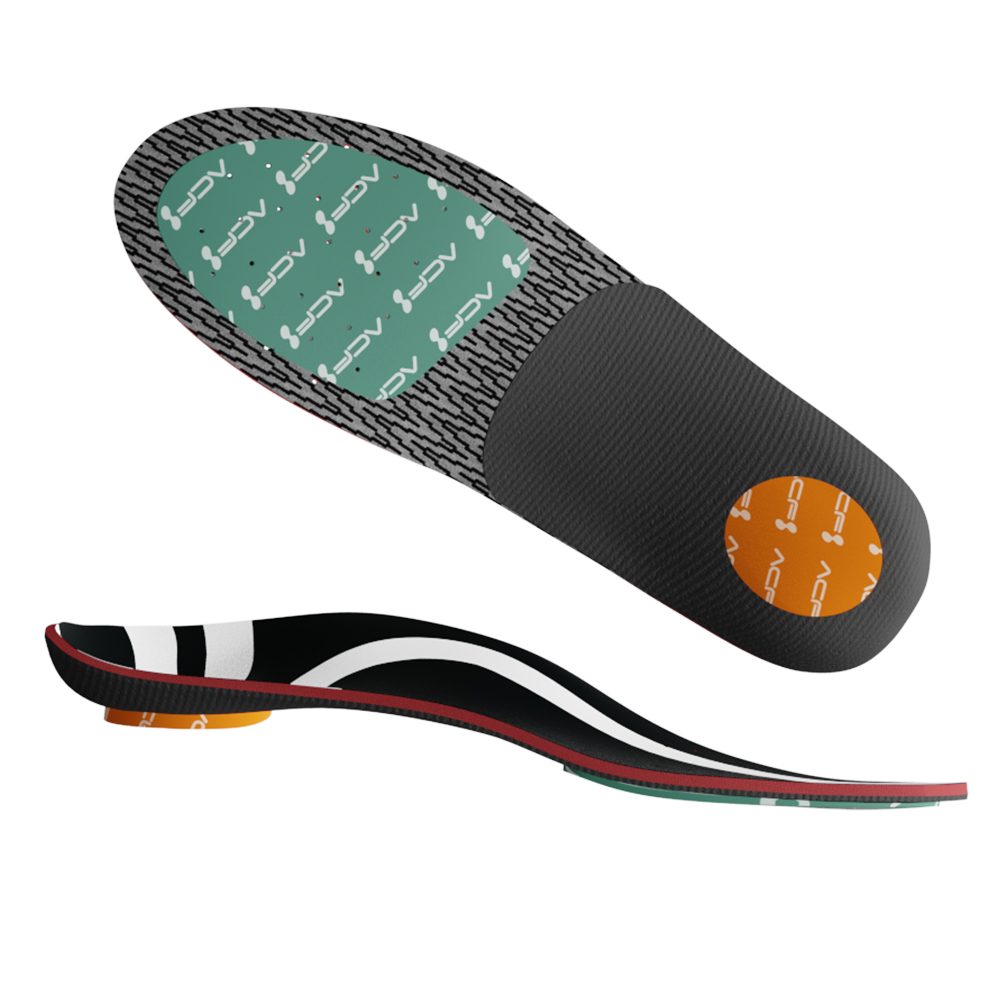
The outsourced model is older than the equipment model and remains the right answer for many shops. The factory produces the range — in our case the three series of daily comfort, rehabilitation care and sport, running at roughly five hundred to a thousand pairs a day across the plant — and the shop sells it from the shelf with no machine on the premises. Orders start at two hundred pairs, mixed styles and mixed sizes, samples ship within three days, and ODM and OEM work are accepted on the insole side, so an own-label range can be built without owning a bench.
What outsourcing stops covering is the individual appointment. A shelf range is graded for types of feet, not for one person’s record, and the moment a customer needs a build specified from her own pressure record and force line, the shelf answers imperfectly or not at all. Shops discover this gap from the customer side first: the regular who asks why the premium pair still does not feel right for her is describing the gap in one sentence. On-site forming exists to close it, which is why the two models coexist rather than compete.
There is also a sequencing argument for starting outsourced. A shop that sells the factory range for a season learns which styles move, which sizes walk out, which sport its local population actually plays — knowledge that costs nothing to acquire and changes every equipment decision later. The reorder history becomes the specification for the starter line: which series to form locally, which to keep on the shelf, how many appointments the customisation module should be sized for.
Where outsourcing genuinely stops is margin structure and differentiation. A shop selling the same range as the shop next door competes on location and service; a shop that adds an assessment room and on-site forming competes on a record nobody else in the street holds. Neither is the better business in the abstract. But the second one is a different business, and the machine question is really the question of whether that business is the one you want.
The three checks before any money moves
First check: foot traffic. The forming stage attaches to appointments, and appointments attach to customers already coming through the door. Count them honestly — not the hoped-for traffic, the counted traffic — and ask what share of them would plausibly book a foot assessment. A shop doing steady daily walk-ins has a case; a shop that empties by mid-afternoon is building a room for a queue that does not exist yet. The arithmetic is unglamorous and decisive, and no supplier will run it for you, because the number indicts the purchase as often as it supports it.
Second check: consumables and the shelf behind the service. On-site forming consumes blanks, covers and fittings, and the appointment only makes money if the supply behind it is steady and costed. Ask prospective suppliers how blanks ship, how fast a sample order turns around — ours leave within three days — and what the minimum order looks like. Two hundred pairs, mixed styles and sizes, is the insole-side minimum we work to, and a shop should map that against its own shelf velocity before committing, because a forming bench with a starving shelf is a room that turns customers away.
Third check: hands. Forming is a skill before it is a cycle — positioning the warmed blank, judging when the material is ready, dressing the edges, checking the pair against the specification. One trained operator can run a small appointment book; the book cannot exceed the operator. A shop should name the person, budget the training weeks, and accept the pile of imperfect first pairs as tuition rather than as evidence the equipment is wrong. Every workshop we have supplied produced that pile; the ones that succeeded treated it as the cost of the skill.
Run all three checks and write the answers down, because the written version is what a supplier needs to give honest advice against. We read that page the same way every time: if the traffic is thin, start with the shelf range and no machine; if the traffic is there but the consumables plan is not, fix the supply line first; if the hands are not named, the purchase can wait a quarter. The advice costs us nothing to give and saves both sides the most common bad order in this trade.
How the expansion path runs, stage by stage
The stepwise path most of our successful retail partners have followed runs in three moves. Move one is the shelf: factory range, own-label if wanted, no equipment, reorder rhythm established. Move two is capture: assessment equipment arrives, the shop sells records — sizing, screening, an honest picture of the foot — and pairs every record with a shelf recommendation. Move three is forming: the customisation bench joins the assessment room, and the appointment-based business begins. Each move pays for the next on evidence rather than optimism, and each can stop without stranding the previous one.
The order matters because capture without forming is already a business, while forming without capture is a trap. A shop that buys the bench first forms pairs to pillow contours with no record behind them — shaped product, not fitted product — and competes on price against factories that do it better. A shop that buys capture first learns its own demand curve before the second purchase, and by the time the bench arrives the operators have been reading records for months, which shortens the forming learning curve more than any manual.
Capacity arithmetic belongs to move three and should be done with numbers in words rather than ambitions. A forming cycle is a few minutes; the cooling, trimming and check around it decide the true appointments-per-day. One operator, one bench, one room supports a modest book, and that is the honest starter shape. Growth then means adding people before adding machines, because the slowest station governs the line — the same lesson production floors learn, arriving at retail scale.
The machine-side terms, for calibration rather than promotion: machines carry a minimum order of one unit and accept ODM; every unit is tested at the plant for seven days before dispatch and covered by a twelve-month warranty against non-human damage with free parts; after-sales runs through a dedicated WhatsApp group where engineers answer directly and remote assistance is available when a room needs it; machines ship alongside express, air and sea options of six to seven working days, ten to twelve days and thirty to thirty-five days respectively. Those are the facts a starter buyer needs; none of them is a reason to buy, and all of them are reasons the purchase survives its first year.
What we state plainly from the factory side
Two refusals, stated the same way at every show. We do not publish prices in an article, because a quotation depends on the configuration, the quantity and the destination, and a figure printed here would be wrong for almost every reader. Structure we will always state — minimums, sample timing, capacities, warranty — and a buyer who sends a configuration gets a quotation. The other refusal: we do not promise that buying a line transforms a shop’s business, because the transformation depends on the three checks above, and a supplier who promises outcomes from hardware is selling to the buyer’s hopes rather than to the order book.
With the refusals said, what we will do is read the three-check page and answer it honestly, including the answer that a shop is not ready — which we give more often than buyers expect, and which has kept more relationships alive than any sale. The manufacturer’s long interest is a partner whose customisation module runs full, not a bench gathering dust under a counter while the reorder history shrinks. Advice that costs a sale today buys a customer for years, and we would rather be accused of patience than of pressure.
A last word on what the starter line does not include, because the gaps are where expectations break. It does not include diagnosis — the record is evidence, and its reading belongs to a qualified professional whose licence covers interpretation. It does not include guarantees about what a formed pair does for any particular foot; builds are specified in structural terms, support and distribution and alignment, and the professional decides the rest. And it does not include a monopoly: we do not promise regional exclusivity as a lure, because exclusivity sold in advance of performance is a debt the partner repays, not a privilege they enjoy.
What the line does include is the whole loop this article has described: capture that produces a record worth reading, a forming bench that follows a specification, a factory behind the shelf, and an after-sales channel that answers when the room needs it. A buyer who has run the three checks and still wants the loop is the buyer we build for, and the next section is where that conversation starts.
Frequently asked questions
Which machine should a shop buy first?
Neither half should be bought first. The recommended sequence starts with the shelf range from a factory, moves to capture equipment when traffic supports records, and adds the forming bench last. Capture without forming is already a business; forming without capture produces shaped pairs with no record behind them, competing on price against factories.
What does a starter combination cover?
Two halves: a capture system recording pressure, footprint and force line into a report, and a forming bench — heating box, shaping pillows, fittings — that turns a warmed blank into a contoured pair. Between them sits the professional who reads the record and writes the specification. Volume blanks and shelf stock still come from a factory.
Can a shop run entirely on outsourced insoles?
Yes, and many do for years. Orders start at two hundred pairs, mixed styles and sizes, samples ship within three days, and ODM and OEM work are accepted on the insole side. What outsourcing cannot cover is the individual appointment specified from a personal record — that is the gap on-site forming exists to close.
What are the three checks before buying?
Foot traffic counted honestly, not hoped for; a consumables and shelf plan behind the forming service, mapped against supplier minimums and sample turnaround; and a named operator with training time budgeted, accepting that the first imperfect pairs are tuition. All three answers in writing, before any money moves.
How many appointments can one bench support?
The forming cycle is a few minutes, but cooling, trimming and the fitting check decide the true rate, and one trained operator governs the book. A shop should time the full cycle with its own operator before promising appointment density — the honest number is always smaller than the machine’s cycle time suggests.
What are the machine order terms?
Minimum order of one unit, ODM accepted on machines. Every unit is tested at the plant for seven days before dispatch and covered by a twelve-month warranty against non-human damage with free parts. After-sales runs through a dedicated WhatsApp group with engineers reachable directly and remote assistance available.
Will the equipment tell us what a customer’s foot needs?
No. The equipment produces records — pressure distribution, force line, footprint, arch presentation — and every item is a recorded quantity, not a verdict. Reading the record and deciding what the build should do belongs to a qualified professional. A supplier who implies the machine supplies judgement is selling a phrase.
What we would do next
Run the three checks this week and write the answers on one page — counted traffic, consumables plan, named operator. Send that page through the contact page and we will answer it honestly, including the answer that the purchase can wait. The insole range page lists the shelf side of the model: three series, four grading scales, and the mixed-style ordering that a starter shop builds its reorder rhythm on.
Three articles carry the argument further. Your first orthotic insole making machine walks the bench purchase in detail, in-house or factory maps the stage split behind the outsourcing question, and a fit insole machine still needs a fitter covers the operator side of the third check. For the capture half, an insole scanner sells the assessment explains how the record earns its place at the counter, and buying an insoles machine collects the questions buyers wish they had asked earlier.
This article is intended for professional and educational reference. It is not medical advice. Foot assessment equipment produces measurements and images; clinical interpretation and any decision about care remain the responsibility of a qualified professional. Certification scope is limited to the documentation we hold: European Union certification and ISO quality system certification.