
A buyer writes that he needs a pressure pad, and by the third message it is clear he needs three things the word cannot distinguish. He wants something he can carry, something that records rather than merely prints, and something that ends with a pair of insoles in a customer’s hands before the customer leaves the table. A pad is only the first of those. Searches that begin with the word tend to end with a small mat, a colour picture and a question nobody answers: what happens next, and what happens when the same person comes back in three months. This article separates the shapes of pressure surface a buyer will meet, explains what a flat print can and cannot carry, describes how a portable capture-and-customise session runs in practice, and sets out what has to stay fixed so that a record taken on the road is still worth comparing with the one taken in a clinic. It is written by a company that makes a portable system, so the last section is where we say what ours does not do.
One note on vocabulary before the sections. In this trade a pad, a mat, a plate and a walkway are four different objects with four different records, and marketplaces use the words almost interchangeably. A pad is usually a small sensing surface; a mat is a longer one you can walk across; a plate is a rigid surface designed to be stood and walked on without moving under the foot; a walkway is long enough to capture several consecutive steps. Which one a buyer needs depends entirely on the question being asked, and that question is rarely in the search bar.
Why the word pad keeps appearing in the search
The word survives because it is the smallest true description of the thing. Every pressure system has a surface the foot touches, and “pad” is the word a buyer reaches for when he does not yet know whether he is buying a sensor, a plate, a mat or a whole station. Sellers accommodate him, because a listing that uses his word gets found. The result is a category where a disposable shoe insert, a sensing mat and a clinical plate can share a page of results without a single line explaining which trade each belongs to.
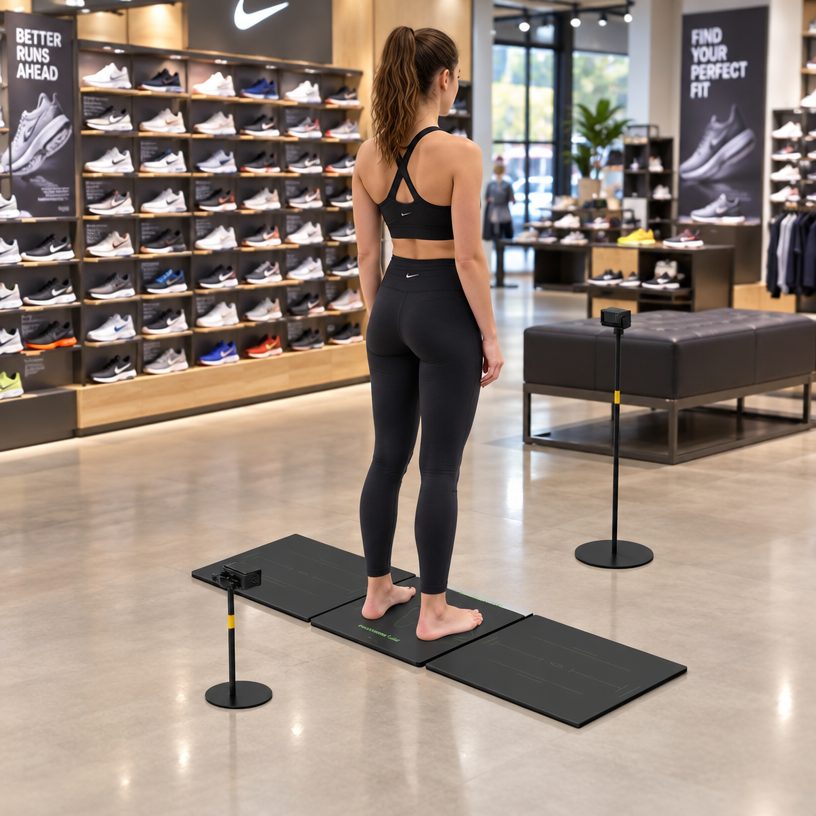
There is a second reason the word persists: portability sells itself. A buyer who imagines carrying the assessment to a gym, a shoe shop, a sports event or a company’s staff room is imagining a pad, because a pad is what fits in a case. That instinct is sound. What it hides is that portability is a property of the whole session, not of the sensing surface — the lighting, the floor, the space to walk, the power, and the ability to produce something the customer can take away all travel with the case or do not travel at all.
So the useful move is to translate before comparing. A buyer who wants a quick footprint picture at a counter is shopping for one kind of device. A buyer who wants to show a customer how load moves through a step, and then hand over a pair built on that session, is shopping for a station that happens to fold into a case. Those two purchases look identical in a search result and behave nothing alike in a room.
Three shapes of pressure surface, and three different records
The shortest surface is the one that takes a standing print. The customer stands, the surface registers where load sits, and the output is a picture with a colour scale and usually a set of footprint dimensions. It is fast, it is legible across a counter, and it is genuinely useful for a first conversation about arch presentation and left-right difference. What it cannot do is show a step, because nothing moved.
The mat in the middle is the one that produces most of the confusion. It is long enough to walk across, so it captures a crossing: contact beginning at the heel, load travelling forward, the moment of peak, the toes leaving. That is a different record from a standing print, and far more informative for anything to do with how a person walks. Whether the mat is rigid enough to keep its own shape under a moving foot, and whether the software stitches successive crossings into one trace, decides whether the record is a set of pictures or a sequence.
The walkway at the far end is the version that lets a person walk naturally for several steps rather than aiming at a target. It answers questions the mat cannot — cadence, symmetry across repeated steps, how the pattern holds when the customer is not concentrating on the surface. It also needs floor and length that a portable session usually does not have, which is exactly why the choice is not a hierarchy but a fit.
What all three share is the part buyers underestimate: the software behind the surface. Two systems with similar surfaces can produce completely different documents — one a picture with no numbers, the other a report naming the quantities, the phases and the alignment that goes with them. The surface is what the customer stands on; the report is what the service actually keeps.
What a flat print tells you, and where it stops
A print is a summary, and summaries are useful. From a standing capture a practitioner can see where load concentrates, whether one side carries more than the other, how the arch presents at rest, and how the footprint compares with the shoe the customer arrived in. In a retail setting that is often enough to start a sensible conversation, and it is honest about being a starting point.
Where the print stops is at movement. Standing still is one posture among hundreds a foot takes in a day, and the load pattern under a still foot can be almost unrelated to the pattern under a walking one. A customer whose standing print looks unremarkable may load the inside edge heavily through every step; another whose print looks dramatic may walk through the middle of the foot without difficulty. A print cannot separate them, because the difference only exists in time.
The second limit is the report’s memory. A picture that exists as a printout, or as an image file with no structured values, is difficult to compare with anything. There is no axis to read, no percentage to put beside last season’s, and no way to say whether a change is real or an artefact of how the picture was taken. Services that intend to review customers over months need numbers with names, stored where the next session can find them.
The third limit is what a print implies. A footprint is visually persuasive, and persuasion is a commercial asset that can be misused. A colour map shown to a customer without a professional’s reading invites the customer to draw their own conclusion, which is usually the most alarming one available. Every report we produce carries the line that the data is for reference; that line matters most in exactly the setting where a print is being shown across a table.
The suitcase: capture and customisation in one visit
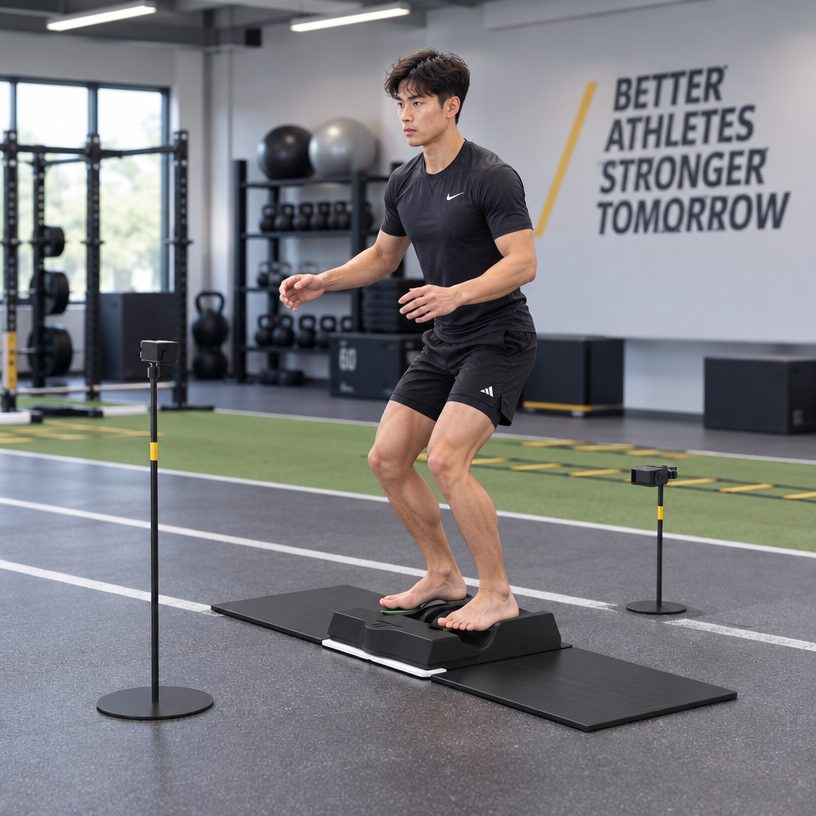
A portable session becomes a service only when the output can be handed over before the customer leaves. That is the difference between a demonstration and a transaction. The pattern that works pairs the capture with a forming step: the customer stands and walks on the plate, the practitioner reads the record, a build is specified, and a pair is formed on site while the customer waits — with a heating box, a shaping pillow in the right size, and the accessories that go with the build.
The kit list for that is longer than most buyers expect, and every item has a job. The host unit and the pressure plate do the recording; two cameras on stands capture alignment and posture in the same session; a hub ties the parts together; the heating box and the shaping pillows, in adult and child sizes with their accessories, do the forming; a floor mat defines where the customer stands so the next session starts from the same place; and the case carries all of it. Buyers who price a plate alone and then discover the rest of the list tend to describe the category as expensive, when what they actually did was cost half a session.
The commercial argument for the combination is not speed, it is continuity. A customer who watches a pair being formed from a record of their own feet understands what they are buying in a way no brochure achieves, and the same record is what the next visit is compared against. A shop that captures, reads and forms in one visit has a service; a shop that captures and sends away has a lead-generation tool with a longer cycle and a lower conversion.
What the portable configuration does not remove is the reading. The camera images and the pressure numbers still need a person qualified to interpret them, and the forming still needs a specification — which contour family, which support grade, which cushioning. A case full of equipment does not make those decisions, and a session run without them produces a pair that fits the pillow rather than the customer.
Running a portable session so the numbers survive the trip
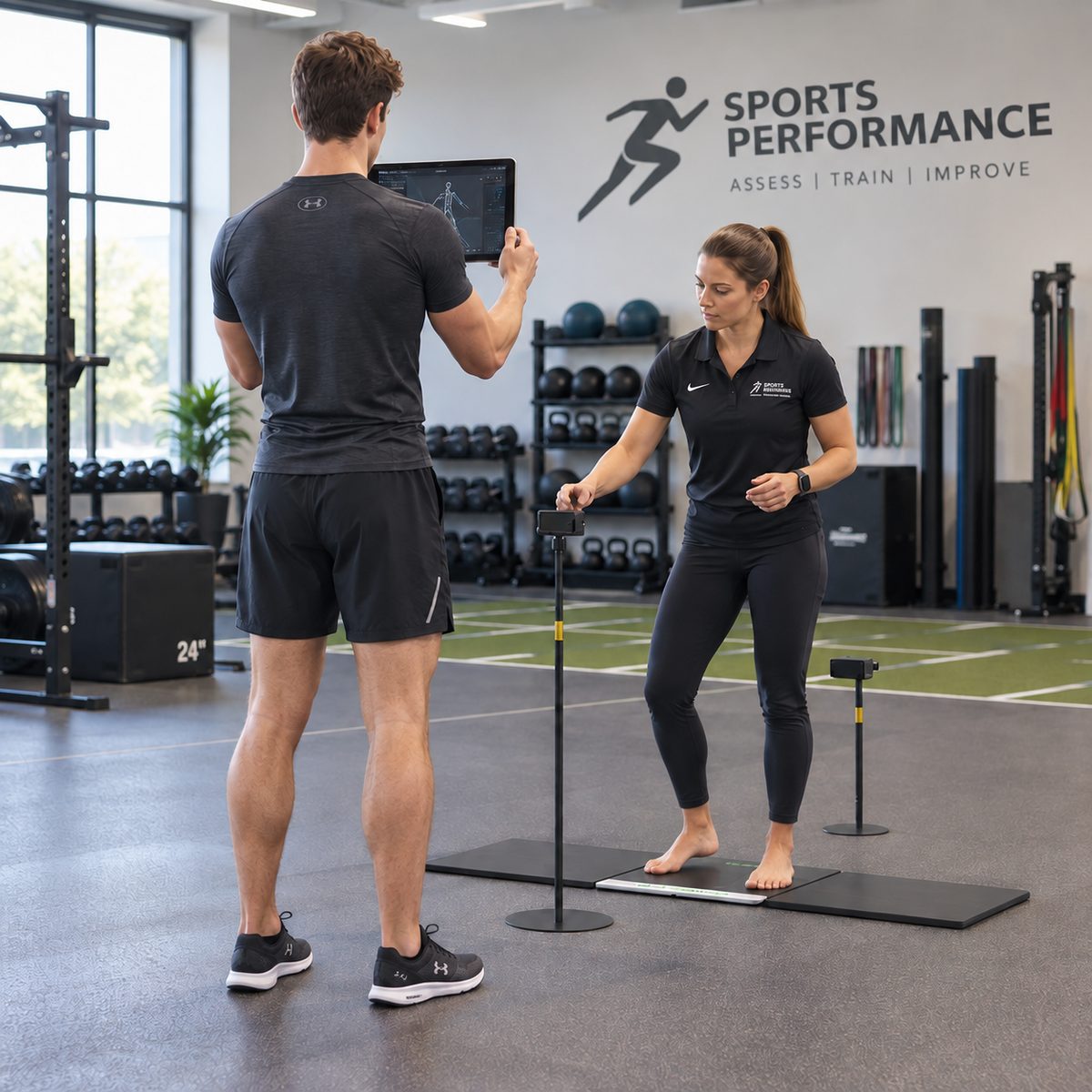
The first thing to fix is the floor. A plate on carpet, on a slope, or on a surface that flexes under a walking foot produces a record of the floor as much as of the customer. The mat in the kit exists for this reason: it gives every session the same footprint to stand on, and it lets the person running the session rebuild the same geometry in a hotel conference room, a shop’s back office or a sports hall. Without it, each venue silently changes the measurement conditions.
The second is repetition. Decide before the first session how many crossings count as a set, which foot goes first, and what instruction is given, then apply it without variation. On the road the temptation is to take one pass and move on because a queue is forming, and one pass is a picture rather than a pattern. Three crossings take only a little longer and give the practitioner something to compare within the session itself, which is how a bad pass gets spotted before the customer leaves.
The third is the record’s identity. A portable session happens away from the desk where files are normally kept, so the naming and export routine has to work without it: customer name, date, venue, which foot, which pass. Exports that require the office network, or a report that can only be printed from the machine, turn a good session into a follow-up task that gets done late or not at all. Test the whole chain — capture, export, send, reopen — before the first event, not at it.
The fourth is expectation. A portable station is a screening and specification tool, not a laboratory, and saying so at the start protects everyone. It records what it records under the conditions of the day, and the practitioner reads it with those conditions in mind. Buyers who present a road session as a full clinical assessment create a promise the setting cannot keep, and the disappointment lands on the equipment rather than on the promise.
What we state plainly about the pad we sell
Our portable system records pressure and alignment: static, dynamic and balance passes on a fabric-sensing plate, whole-body biomechanical alignment from camera capture, and a report assembled from both, with an on-site forming module for insoles. It travels in a case. It does not capture the outer contour of the foot, and it produces no file a milling tool could follow. Buyers who need a shape for a carved build should raise it in the first conversation, because the answer changes the purchase.
We also do not diagnose, and we do not let a report imply that it has. Every item is a recorded quantity or an image, and interpreting it belongs to a qualified professional. A shop using the system to start a conversation about support and load is using it as intended. A shop using a colour map to tell a customer what is wrong with them has gone past what any measurement can support, and no line of small print fixes that.
On commercial terms we keep to structure rather than figures. The machine minimum is one unit, machines accept ODM, each unit is tested at the plant for seven days before dispatch, and the warranty runs twelve months against non-human damage with free parts. Support runs through a dedicated WhatsApp group with engineers reachable directly, remote assistance when a session goes wrong in the field, and over-the-air updates where the unit is connected. Prices we do not publish, because a quotation depends on the configuration, the destination and the service around it.
And we do not claim a portable session replaces a fixed room. It replaces the version of the service that only happens when the customer comes to you. Clinics that run both tend to describe the fixed plate as the reference and the case as the reach — the same software, the same report items, different conditions and a different purpose. That division is honest, and it is also the one that survives contact with a busy season.
Frequently asked questions
Is a pressure pad the same as a gait laboratory?
No. A laboratory records several consecutive steps under controlled conditions with room to walk. A pad or mat records what its surface covers, usually a standing print or a single crossing. The records answer different questions, and a portable session is best described as screening and specification rather than laboratory measurement.
What can a portable system capture in one visit?
Static, dynamic and balance pressure passes, alignment and posture images from camera capture, and a report combining them. With a forming module in the kit, a specified pair of insoles can be produced on site in the same visit, which is what turns a demonstration into a transaction.
Does the pad produce a shape file for insoles?
No. It records pressure and alignment, not the outer contour of the foot, so there is no geometry for a milling tool. Where a build is needed, our workflow forms over a shaping pillow on site, which gives a contour family rather than an individual shape.
How do you keep sessions from different venues comparable?
Fix the floor with the mat, fix the routine — number of crossings, starting foot, spoken instruction — and fix the naming and export chain. Those three keep a road session comparable with a clinic session. Changing any of them turns the comparison into a discussion about conditions.
What does the on-site forming step involve?
A heating box, a shaping pillow in the appropriate size for an adult or a child, and the accessories for the build. The blank is warmed, formed over the pillow, and left to set before finishing. The specification — contour family, support grade, cushioning — comes from the reading, not from the pillow.
What are the order and warranty terms?
One unit is the minimum order, machines accept ODM, each unit is tested at the plant for seven days before dispatch, and the warranty covers twelve months against non-human damage with free parts. Support runs through a dedicated WhatsApp group with direct engineer access and remote assistance.
Can the system be used at events and pop-ups?
Yes, with the caveats above: a level floor or the mat, a routine applied without variation, and an export path that works without the office. Events are best treated as screening and specification sessions, with the report sent afterwards and any build specified on the day.
What we would do next
Write down the three questions the session is meant to answer, then check whether the surface you are considering can answer them at all — that single exercise settles most pad-versus-plate arguments before a quotation is requested. Send the list through the contact page and we will say which configuration fits, including the answer that a fixed plate is the better buy for your room. The portable system page lists the record types and the forming module in the equipment’s own terms.
Two pieces go further into the comparison. A foot pressure plate that travels describes the case-based session from the buyer’s side, and foot gait floor mat versus fixed platform sets out what changes when the surface stops moving. Pressure plate gait records explains what a crossing actually contains, and foot pressure mapping covers the report items a buyer should expect to see named.
This article is intended for professional and educational reference. It is not medical advice. Foot assessment equipment produces measurements and images; clinical interpretation and any decision about care remain the responsibility of a qualified professional. Certification scope is limited to the documentation we hold: European Union certification and ISO quality system certification.