
A buyer at the spring fair unfolded a catalogue the width of a table and asked a simple question: which page is mine? The catalogue was a footwear machinery catalogue, and it held cutting presses, toe-lasting machines, heel-nailing stations, moulding lines and — somewhere near the back, usually — the equipment that records feet and makes custom insoles. All of it serves the same customer’s shoes, and almost none of it serves the same buyer. This article maps the category, shows where the insole line sits inside it, walks through the four stages that line runs, and sets out the OEM and ODM terms that decide how differently sized buyers each start.
One catalogue word, five different factories
Footwear machinery is a category drawn around the customer’s product rather than the buyer’s workshop, which is why it mixes so badly. A cutting press serves a factory that cuts uppers by the hundred. A lasting machine serves an assembly line that closes shoes. A moulding press serves a midsole operation. A finishing line serves the people who make all of the above look deliberate. Each is a real industry with its own specialists, its own trade shows and its own vocabulary, and a buyer who arrives from one of them finds the others plausible until the first quotation arrives.
The insole line shares a catalogue page with all of them and a workflow with none. It does not cut, last or close anything. Its raw material is a record of a person’s foot and a specification derived from it, and its output is a pair made to that specification, one pair at a time or a small batch at a time. The economics are service economics rather than production economics, which is the first thing a buyer from the shoe-factory side should recalibrate: the machines are smaller, the batches are smaller, and the margin logic is entirely different.
The confusion is not symmetric, and that is worth knowing before a shortlist is made. An insole-line buyer who wanders into shoe-production machinery usually notices quickly, because the machines are enormous and obviously not theirs. The reverse error is quieter: a shoe-factory buyer assumes the insole line is a small version of what they know, orders it with production expectations, and discovers at commissioning that the line’s rhythm is set by assessments and appointments rather than by shifts. Catalogues do not prevent either error. Only a walk-through of what each line actually consumes and produces does.
There is a quick test for any page in the catalogue, and it takes one question: what does this machine consume, and who produces that? A cutting press consumes sheet material that a supplier delivers by the roll. A lasting machine consumes uppers that a preceding line produced. The forming bench in an insole line consumes a specification, and the only source of a specification is a record taken from a person by a device and read by a professional. Trace that chain backwards on any catalogue page and the machines sort themselves into industries faster than any category heading will.
The four stages of a custom insole line
Whatever the catalogue page looks like, a custom insole line runs four stages, and a buyer should see them named separately before any price is discussed. Capture: a device records the foot — pressure distribution under load, alignment of the leg and posture above it, the dimensions and the arch presentation. Forming: a bench turns a specification derived from that record into a formed blank, over a shaping pillow or another contour. Finishing: the blank is trimmed, dressed and given its cover. Quality check: the finished pair is inspected against the written specification before it reaches the customer.
The stages are separate purchases more often than catalogues admit. A workshop can record at the counter and outsource forming for a year; a clinic with referred work may own a forming bench before it owns any capture device; a retailer may do neither and simply stock finished pairs, which is a legitimate answer we give buyers regularly. What the catalogue phrase promises — one line, one invoice — is real but rare, and it describes a workshop with all four stages under one roof and the staffing to run them.
Where the stages share a roof, the handovers between them are the line. The record passes to the specification; the specification passes to the bench; the blank passes to finishing with its requirement written on the ticket. When a pair comes back, the fault is findable because each handover was a document. When the stages are described as one seamless machine — the way catalogues prefer — the handovers become memories, and memories argue back.
What the capture stage must hand over
The capture stage is where most lines are quietly weak, because the device photographs well and the record does not. A buyer should ask what the report contains, item by item: footprint length and width, contact area, load distribution, foot axis angle, the proportions of contact and flat phases, peak and mean pressure, the travel of the centre of pressure, and the alignment images from the cameras. A supplier who recites that list unprompted is selling a record. A supplier who answers in adjectives is selling a photograph of a machine.
Then ask how the record becomes a specification, because that translation is where the line earns its keep. In our own arrangement the assessment system produces the findings, and the professional running the session translates them into a build — the contour family, the support grade, the cushioning, the stiffness. The range our line forms is graded on four axes precisely so that a reading can become an order without guesswork: support, anti-torsion, cushioning and starting ability. A catalogue that shows forming machines but says nothing about the grading scheme behind them is showing half a line.
Finally, ask what the capture device cannot do, and trust the supplier who answers without being pressed twice. Our systems record pressure and alignment; they do not capture the outer contour of the foot, and no search word that promises otherwise will change what the sensor actually measures. A workshop whose production depends on shape files is shopping in a different category and should be told so in the first message. Every honest conversation we have on this point costs us a browser session and saves both sides a commissioning week.
What the forming, finishing and inspection stages are verified against
The forming stage is verified against consistency, not spectacle. The cycle — heat, position, form, set — takes minutes, and the variables are temperature, time and pressure; what matters is that they are the same for the tenth pair as for the first. Ask what the bench’s routine looks like when the queue builds, because forming faults are schedule faults in disguise: a blank pulled early, a pair lifted before it set. A demonstration that runs at leisure tells a buyer nothing; ask to see the bench run three pairs back to back.
Finishing is verified against the labour plan. Trimming, edge dressing and covering take longer than the forming, and they scale with people rather than with machines — a buyer who multiplies press cycles by an hour will overshoot any real workshop’s day. The question to put to a supplier is not how fast the bench forms but how many trained hands the rest of the line needs, and what the training covers. Lines are bought as machines and fail as staffing plans, more often than any other way.
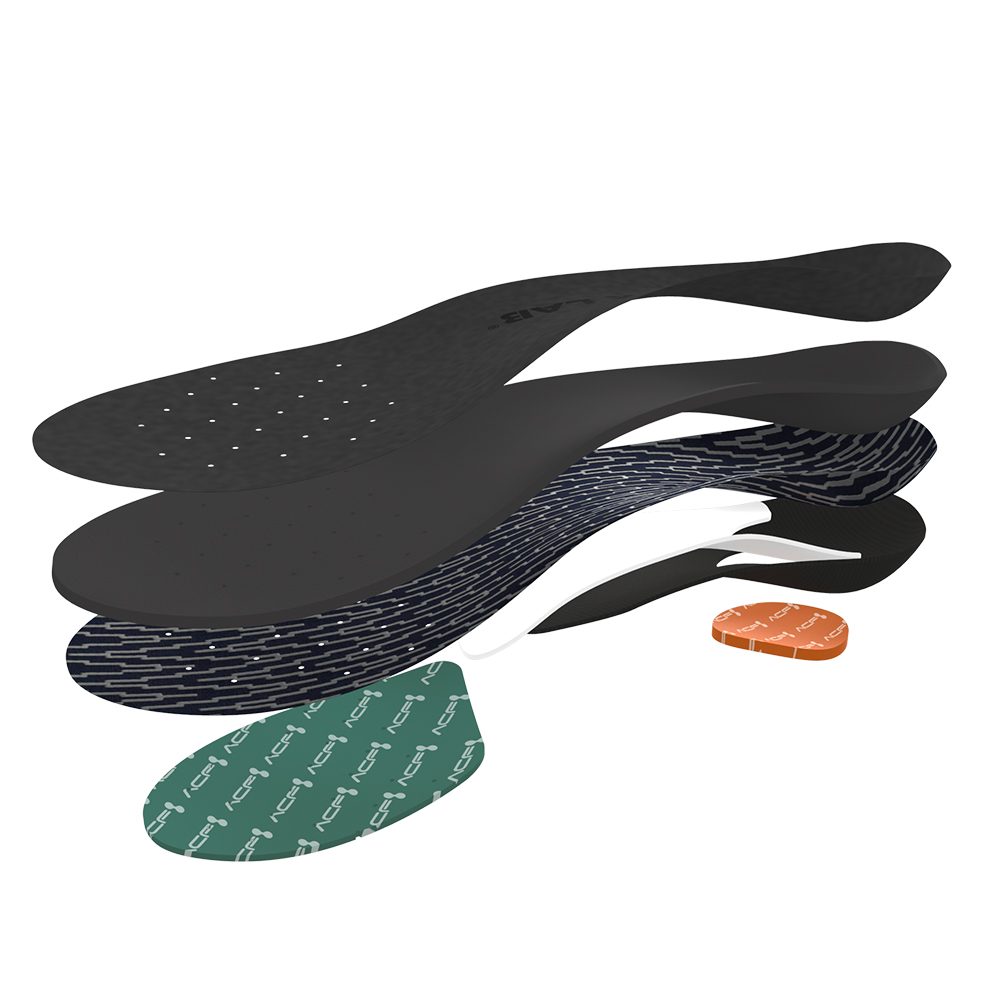
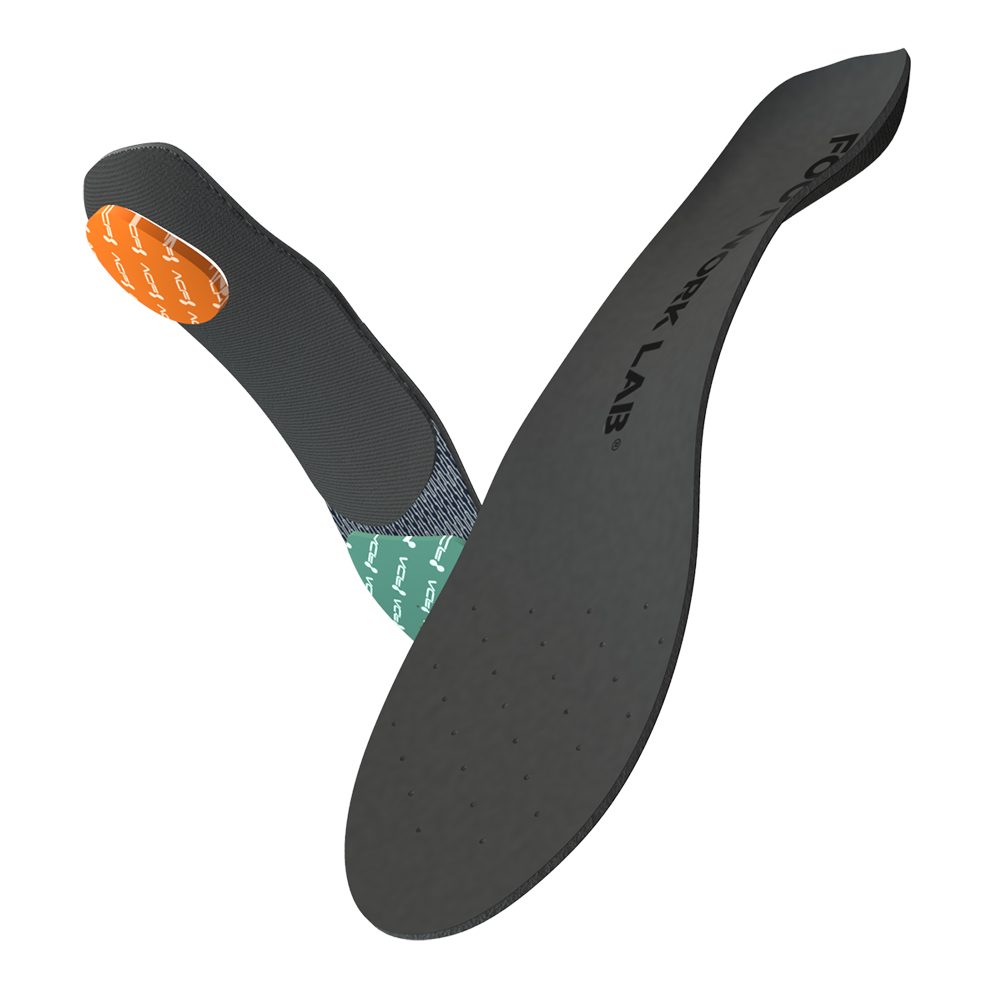
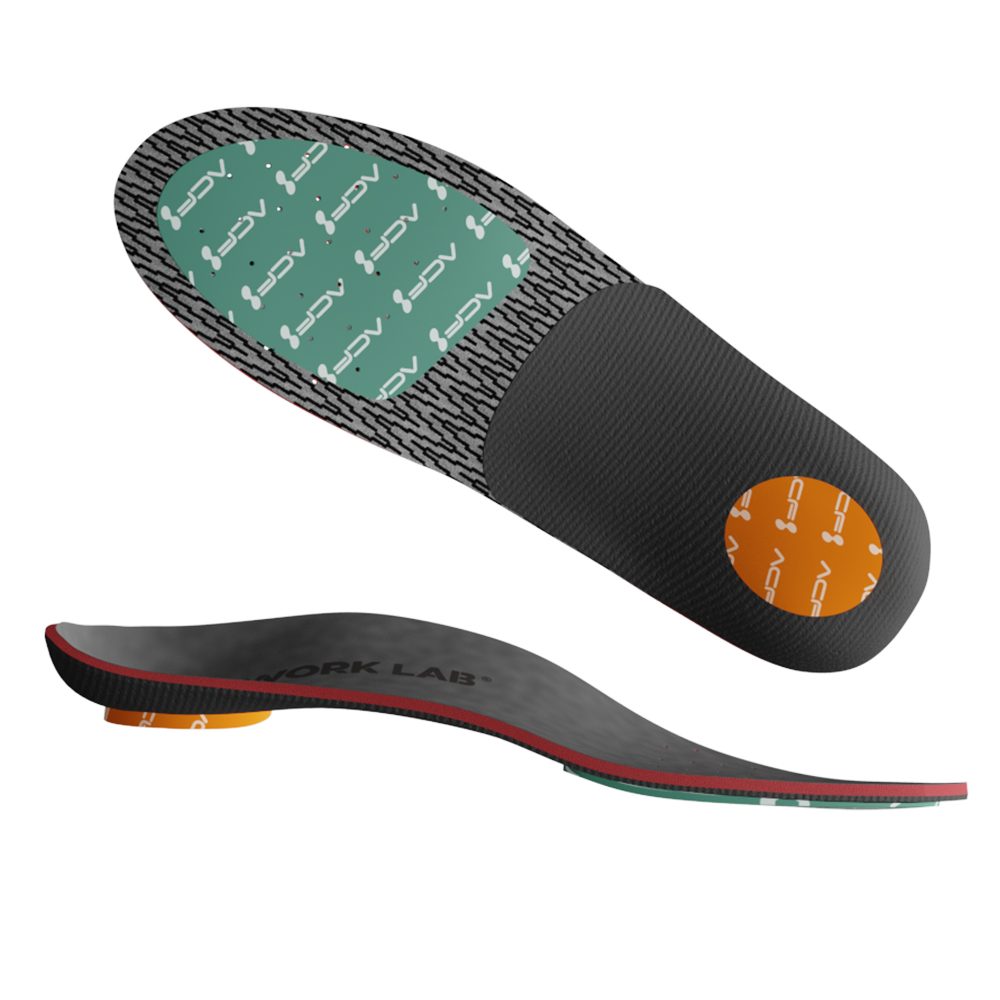
Inspection is verified against a written specification, and the specification is verified against the record that started the line. Four checks, every pair: contour matches the specification at the arch and heel; outline sits inside the intended shoe and size; cover is bonded at the edge; the two sides match each other. The everyday build in our range makes the point concrete — mesh fabric over a cushioning layer over a polymer shaping plate, each layer with a job the inspector can see. Without the written page, inspection is an opinion, and opinions do not survive staff turnover.
OEM, ODM and the terms that decide how a buyer starts
The manufacturing terms are where catalogues go quietest and buyers differ most, so they are worth stating plainly. Machines: we accept ODM — built to our design, branded for the buyer — and OEM for machines is discussed separately, case by case, because putting another factory’s design on our floor is a different conversation from putting our design in another brand’s box. Insoles: both ODM and OEM are accepted, which is why brand owners, clinic chains and retailers with their own labels all start in different places on the same range.
The minimums are deliberately low so that the first order tests the relationship rather than the warehouse. Machines start at one unit. Insole orders start at two hundred pairs, mixed across styles and sizes, with samples shipped within three days of a specification being agreed. Every machine runs seven days of testing at the plant before dispatch, and the warranty runs twelve months against non-human damage with free parts. A buyer comparing catalogues should write those four numbers down for every supplier they consider, because they are the numbers that decide how the first year feels.
What we will not do with the terms is disguise them. We do not publish prices, because a quotation depends on configuration, destination and the service wrapped around the machine, and a number quoted across a fair aisle follows a buyer home. We do not promise exclusivity by region. We do not promise a machine that does everything from capture to finished pair in one box, because we have watched that promise being made by others and have sold the customer the missing half afterwards. The terms are the terms; the earlier they are on the table, the shorter the negotiation.
Buyers should also ask how the terms behave after the first order, because that is where catalogue language and factory behaviour diverge. A reorder of two hundred mixed pairs should be as easy to place as the first one, with the specification carried forward rather than renegotiated. A machine buyer’s second unit — for a second site, or a replacement — should be quoted against the first as a known configuration. We keep both histories on file, and a buyer comparing suppliers should ask each one what their reorder process looks like in practice: who holds the specification, how a change is requested, and how long a repeat order takes from message to dispatch.
Acceptance points before the crate is opened
The last stage of the catalogue conversation is acceptance, and it has a checklist that survives translation. Before dispatch: a sample report from the capture device, in full, not a screenshot; the testing week documented; the specification of what was built matching the specification of what was ordered. On arrival: documentation, cables and consumables in the same crate as the unit, a first-run guide written for the person who will actually operate it, and a contact who answers in the buyer’s working hours.
After arrival, the acceptance continues rather than ends. The first sessions should be run with the supplier’s remote support watching, because the faults of a new line are almost always routine faults — instruction, position, scheduling — and they are cheapest to fix in the first fortnight. Software updates should arrive over the network where the unit is connected, and a retest taken after an update should still sit cleanly beside a record taken before it. A buyer who asks for that demonstration during the sale is asking the right question about the third year, not just the first week.
Underneath the checklist sits the question a catalogue can never answer: who built this, and will they answer for it. We manufacture at our own plant rather than trading, which means the people who answer the support group are the people who assembled the machine, and the plant’s name is on the documents rather than on a trading company’s letterhead. A buyer reading a footwear machinery catalogue is really reading supply chains, and the insole line, more than most, rewards the buyers who read all the way to the factory door.
Frequently asked questions
Where does the custom insole line sit in footwear machinery?
Apart from the shoe-production machines it shares a catalogue with. The line runs four stages — capture, forming, finishing, quality check — and its raw material is a foot record and a specification, not leather or uppers. Its economics are service economics, not production economics.
Can I buy the four stages separately?
Yes. Workshops commonly record at the counter and outsource forming for a year, or own a bench first if referred work already arrives with specifications. Many buyers start with neither and stock finished pairs, which is a legitimate answer.
What should the capture stage’s report contain?
Named quantities: footprint dimensions, contact area, load distribution, foot axis angle, contact and flat phase proportions, peak and mean pressure, centre-of-pressure travel, and the alignment images. A supplier who recites the list unprompted is selling a record.
Do you accept OEM for machines?
Machines accept ODM as standard — our design, the buyer’s brand — and OEM for machines is discussed separately, case by case. The insole range accepts both ODM and OEM, which is how brand owners and clinic chains start from different points on the same range.
What are the minimum order and warranty terms?
Machines start at one unit; insole orders start at two hundred pairs, mixed across styles and sizes, with samples shipped within three days. Every machine runs seven days of plant testing before dispatch, and the warranty covers twelve months against non-human damage with free parts.
What is checked before and after delivery?
Before dispatch: a full sample report, the testing week documented, build matching order. After arrival: documentation and consumables in the crate, a first-run guide, remote support during the first sessions, and updates that keep records comparable across versions.
Who reads the foot record and decides the specification?
The professional running the session. The equipment records; the professional translates the findings into a build against the grading scheme; the line produces to that specification. Interpretation stays with the qualified professional, as every report we produce states.
What we would do next
Take any catalogue page in front of you and mark it against the four stages: what captures, what forms, what finishes, what checks. Whatever is missing is what you are actually shopping for. Send the marked page through the contact page and we will tell you which half of the line it shows and what the other half costs to run. The insole range page shows what the line produces — three series, four gradings — which is the destination of every record the capture stage takes.
Three articles follow the same line further. A custom insole machine line from the inside walks the four stages as they run in continuous production, a machine to make shoe insoles for OEM brands covers the brand-owner route specifically, and insole molding machine expectation versus the FX line sets buyer expectations against what a real line does.
This article is intended for professional and educational reference. It is not medical advice. Foot assessment equipment produces measurements and images; clinical interpretation and any decision about care remain the responsibility of a qualified professional. Certification scope is limited to the documentation we hold: European Union certification and ISO quality system certification.