
The patient laid three pairs of shoes on the counter and asked which one the build was for, and the room had no answer prepared. It is a fair question and it deserves a better reply than one pair per shoe. A custom build is shaped to a foot, and the foot is the same foot in all three pairs; what changes between the shoes is the space it sits in, the stiffness under it and the hours it spends there. Some of the build travels well between shoes and some of it does not, and the difference is not mystery, it is the interior of the shoe. This article works through how many pairs one patient genuinely needs, which shoes deserve a build first when the budget does not stretch to everything, what happens to a build that gets moved between shoes as a routine, whether one pair can honestly serve two very different kinds of shoe, and how the answer gets written into the record so that next season nobody has to guess which build belongs in which pair.
One pair per shoe is not a rule anyone actually needs
The instinct behind the question is sound: a build shaped inside one shoe does not necessarily sit flat inside another. But the conclusion people jump to — that every shoe in the wardrobe needs its own pair — is where the spending gets out of proportion to the benefit. A patient who owns fifteen pairs of shoes does not need fifteen builds. What they need is a build for the shoe or two they actually live in, and an honest conversation about the rest.
The reason the one-pair-per-shoe rule feels true is that the build carries two kinds of fit at once. It matches the sole of the foot, which never changes from shoe to shoe, and it fits the cavity of the shoe, which changes constantly. The first half of the fit travels everywhere; the second half travels only between shoes that happen to be similar in depth, width and shape through the forefoot. Rooms that explain this distinction at the counter end up selling fewer pairs and getting fewer complaints, because the patient stops expecting one build to behave identically in a trainer and a dress shoe.
There is also a dose of honesty required on our side of the counter. We build to the foot as recorded at the assessment, and we finish each pair for the shoe it is ordered for. When a patient buys a new shoe with a different interior, the build usually still works and sometimes does not, and the room should say so in advance rather than let the patient discover it at home. Uncertainty stated early costs nothing; the same uncertainty discovered later costs the reputation of the whole fitting.
What actually travels between shoes, and what does not
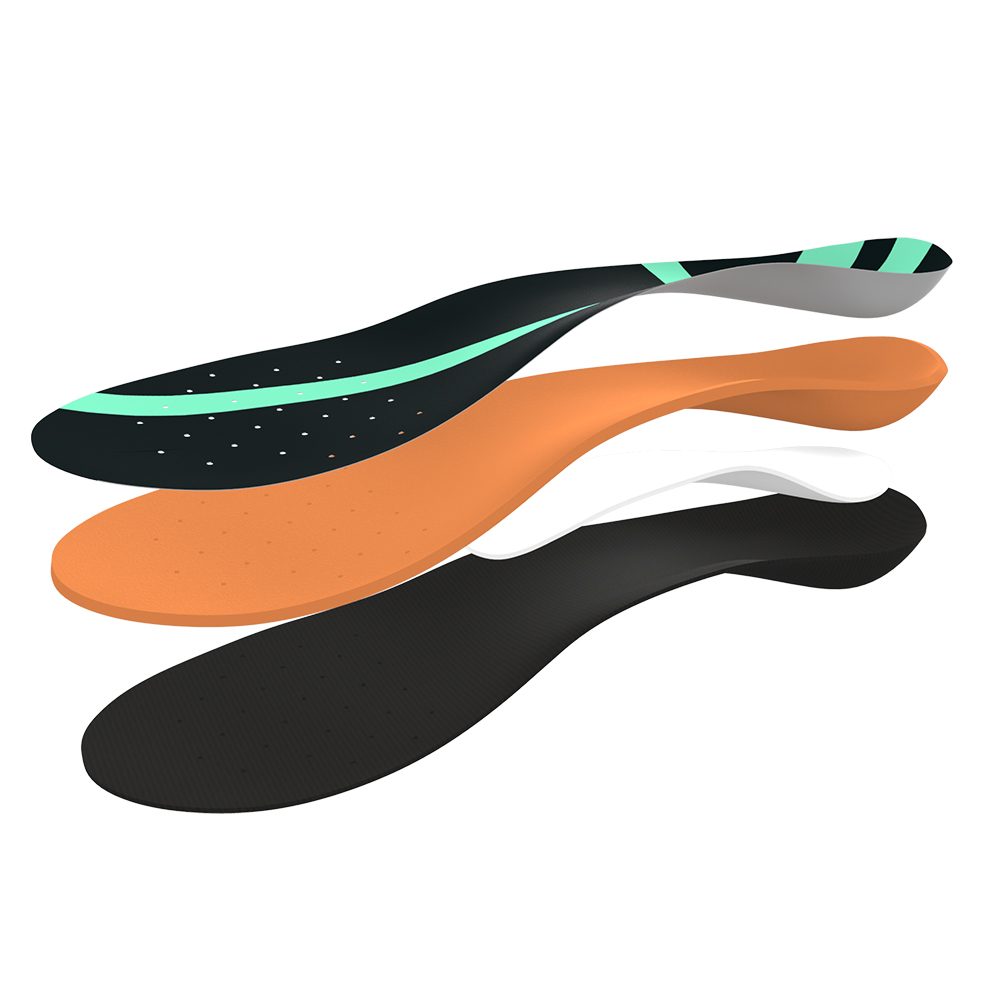
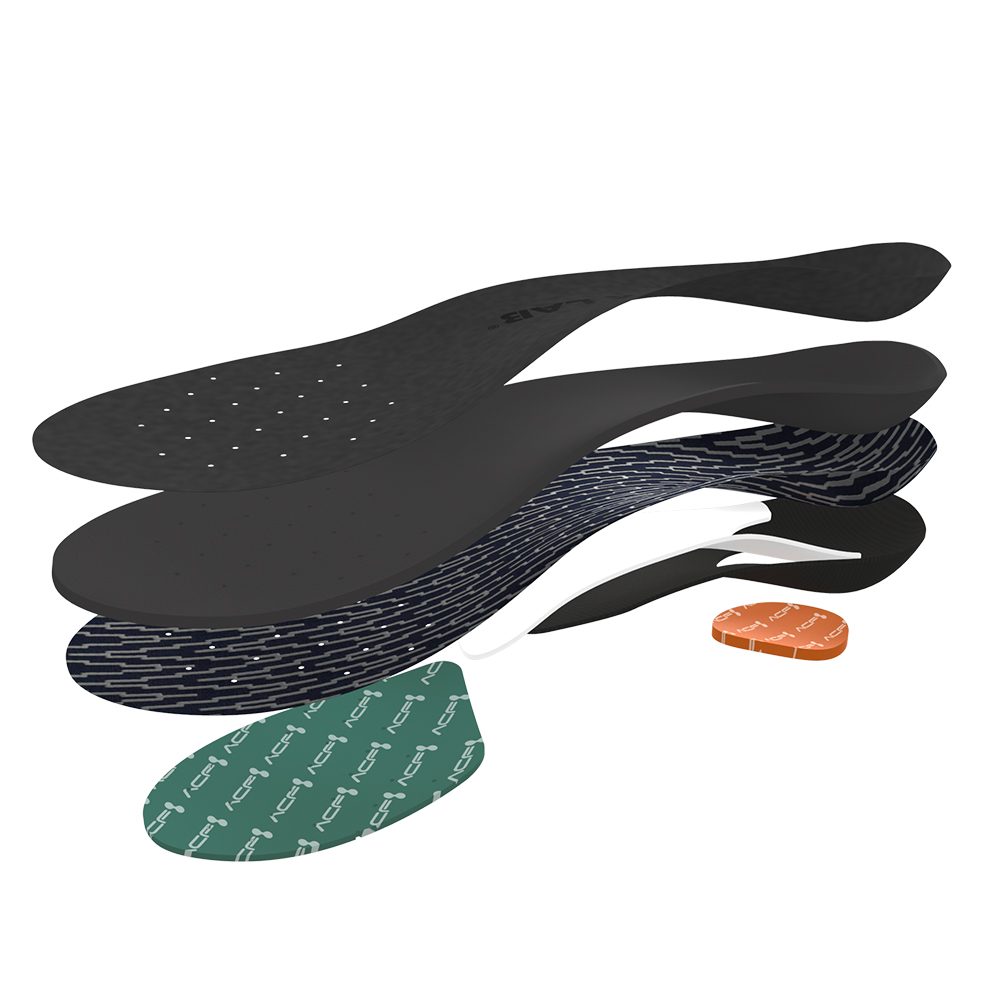
Break a build into its parts and the travel question answers itself. The contoured shape under the arch and around the heel matches the foot, and that shape is indifferent to which shoe it sits in. The thickness through the body of the build, on the other hand, was chosen partly for the shoe: a deep trainer swallows a medium build without complaint, while a shallower shoe pushes the foot up towards the top of the toe box and changes how the whole fitting feels. The edge of the build, trimmed to the footprint of one shoe’s footbed, may sit proud against the sidewall of another.
The top cover adds its own constraint. A fabric cover that grips well inside a laced trainer can slide inside a smooth-lined loafer, and a thicker cover that suits a roomy boot will lift the foot in a closer-fitting shoe. None of this means the build is wrong for the second shoe; it means the second shoe asks a different question of the same shape. The parts that match the foot answer the same question everywhere. The parts that match the shoe answer only one question at a time.
This is also why we ask, at order time, for the shoe the build is destined for rather than just a size. A room that sends us the shoe model and how the patient describes the fit gets back a pair finished for that shoe, and the trimming and thickness decisions were made with that shoe in mind. The same foot recorded in the same week, ordered for two different shoes, can arrive as two visibly different pairs, and both are correct. What a thin dress-shoe build has to give up, and why shows how far those decisions can diverge between a trainer and a formal shoe built from the same foot.
Which shoes are worth building for first
When a patient asks where to start, the ordering we suggest is simple and unromantic: count the hours. The shoe that carries the most hours of ordinary life gets the first build, because that is where the shape does its work for the largest share of the week. For most working adults that is the everyday pair — the commuter shoe, the standard work trainer, whatever spends the daylight hours under the foot. Everything else on the shoe rack is a smaller claim.
The second claim usually belongs to sport, and the reason is not the hours but the load. A pair worn three hours a week on a running path asks more of a build per hour than a pair worn thirty hours at a desk, which is why we tell rooms to treat the sport build as its own decision rather than an upgrade to the daily one. The loads, the pace and the interior of the shoe all differ, and the build ordered for the daily pair was not finished for the path. Choosing a sport build by the load it will carry, not by the name of the game covers how that order is specified.
Work boots form the third common claim, and they behave differently again because of the safety features built into the shoe. A protected toe and a stiffer sole change the space available and the way the foot sits inside, which is why a build for a safety boot is finished for that boot specifically. What fits and what does not inside a safety boot, and how the toe box decides walks through that case. Outside these three categories, occasional shoes — evening pairs, seasonal pairs, shoes worn once a fortnight — rarely justify a build of their own, and the honest counter answer is that the ordinary insole can stay where it is.
What happens when one build moves between shoes as a routine
Patients will move a build between shoes, and rooms cannot prevent it, but they can teach what the move costs. The first cost is compression: a build that spends its life squeezed into a shallower shoe than the one it was finished for will slowly lose some of its shaped height, and the change does not come back with rest. The build that comes out of the wrong shoe is not the pair that went in.
The second cost is edge behaviour. Trimmed for one shoe’s footprint, the build’s edge may sit against the sidewall of another, where it buckles, curls or presses, and the patient reports the build as uncomfortable without anyone connecting the complaint to the shoe swap. The third is quiet deformation at the heel, where a loose counter in the second shoe lets the build shift on every step. None of these show up as damage at first inspection, which is why the room needs to ask the shoe question when a patient returns with a softened build and no obvious cause.
Occasional moves — a build borrowed for one long walk in a similar trainer — cost little and should be said so, because patients deserve to know the rule has room in it. The rule that matters is the routine: a build that lives its weeks shuttling between two different interiors is being shaped and reshaped constantly, and neither shoe gets the fit the order promised. Judging a pair’s life by wear and not by the calendar is where the inspection habit belongs, because wear is what tells the truth about how a pair has actually been used.
When the budget does not stretch: an order of priority
The budget conversation is easier when the room has an order ready. First: the daily pair, because hours rule. Second: the sport or work pair, whichever carries the heavier load in this particular patient’s week — a warehouse worker’s boots outrank a twice-monthly jog, and a runner in training outranks a job spent at a desk. Third: the second shoe in the daily rotation, if the patient genuinely alternates between two similar pairs all week. Everything after that is a want, not a need, and saying so plainly is a service rather than a lost sale.
The order also answers the patient who asks whether one build can serve two very different shoes. The answer is usually no, and the reason is the thickness decision made at order time: the build was finished for one interior, and a formal shoe or a tight court shoe will push the foot up or pinch the edge in ways the fitting did not plan for. Two similar trainers in the same size, worn on alternate days, are the exception, and it is worth telling patients about it because it saves a genuine cost. The exception is judged on the shoe, not on the hope.
Rooms sometimes fear that turning work away will read as indifference. In practice the opposite happens: a patient told exactly which build matters first, and why, comes back for the second pair when the budget allows, because the first pair did what was promised. The clinic that sells three pairs on honesty keeps the patient for years; the one that sells five pairs on enthusiasm fields complaints for months. The order of priority is therefore not a sales technique. It is how the fitting stays true to what the assessment actually measured.
Writing the shoe list into the record
Every one of these decisions ends its life on paper, and the paper is where the discipline lives. The record for each pair should carry the shoe it was finished for: the model, the size, whether the original footbed was removed, and anything the patient reported about the fit at handover. A line in the order sheet — this pair goes with the grey trainers, this pair with the safety boots — costs seconds at the bench and settles arguments two years later that nobody at the counter could have settled from memory.
The note matters most in families of pairs. A patient with a daily build and a sport build, or a build per household shoe, will eventually bring in the wrong question — why one pair feels different from another — and the answer is on the record, not in the operator’s recollection. The assessment page holds the foot; the order sheet holds the shoe; together they explain the pair. Rooms that file only the assessment page are holding half the evidence and improvising the other half.
Labelling at the clinic closes the loop. A simple mark on the underside or the edge of each pair, keyed to the record, means the patient’s spouse cannot confuse the safety-boot pair with the office pair, and the fitter at the next visit can see at a glance which build is which. The marking habit costs nothing in production and saves its first confusion within a season. Why both feet are recorded together and share one record is a companion discipline from the measurement side: the record exists so that the pair can be understood months later by someone who was not in the room.
When the patient buys new shoes
Sooner or later the patient arrives with a new pair of shoes and a straightforward question: does the build move over, or do we start again? The assessment itself does not expire with the shoe — the foot’s recorded shape does not reset because the wardrobe changed — so the starting point is usually the existing record rather than a new session. What has to be checked is the interior of the new shoe: depth through the forefoot, whether the original footbed comes out, and how much room the toe box leaves above the build.
If the new shoe is similar in volume to the old one, the build can often move across, and the room should say what to watch for in the first weeks: edges pressing, the heel sitting differently, the fit of the shoe itself tightening. If the interior is very different — shallower, narrower, or built around a footbed that cannot come out — the honest answer is that this shoe either gets its own build or goes without, and the priority order above applies again. The patient decides; the room’s job is to make the decision an informed one.
The re-fit conversation is also the natural moment to update the record. The new shoe model goes on the sheet against whichever pair it now hosts, the old entry is marked as retired, and the folder stays truthful. A record that is updated at the moment of change takes a minute; a record that is reconstructed a year later takes an argument. The counter habit worth building is to ask, at every visit, which shoes the builds are living in this season, and to write the answer down even when nothing else has changed.
Frequently asked questions
Does every shoe need its own custom pair?
No. The shaped part of a build matches the foot and travels between shoes; what does not travel is the thickness and edge finish, which are decided for one shoe’s interior. Most patients need a build for the shoe worn most hours, plus at most one or two more for heavy sport or work use.
Can one pair work in two different shoes?
Two similar trainers of the same size, worn on alternate days, are usually fine. A trainer and a dress shoe are not: the thickness and edge were finished for one interior, and the other shoe pushes the foot up or pinches the edge in ways the order did not plan for. Judge the exception on the shoe, not on the hope.
Which shoe should get the first build when money is limited?
The everyday pair worn the most hours. After that, the sport or work shoe that carries the heavier load in that patient’s week. Occasional and seasonal shoes come last, if at all. Counting hours before anything else is the ordering we suggest rooms use at the counter.
What happens to a build that is regularly moved between shoes?
It compresses in the shallower shoe, loses some shaped height for good, and its edge may buckle against the sidewall of the second shoe. Occasional moves cost little; a build that shuttles weekly between two different interiors slowly stops fitting either of them properly.
How should the clinic record which build goes with which shoe?
The order sheet carries the shoe model, size, and whether the original footbed was removed, with a plain line naming the shoe the pair is destined for. A simple mark on each pair keyed to the record stops the two builds being swapped at home. The assessment page holds the foot; the order sheet holds the shoe.
If the patient buys new shoes, is a new assessment needed?
Usually not, because the recorded shape of the foot has not changed. What needs checking is the new shoe’s interior: forefoot depth, whether the footbed is removable, and the room above the build. If the interior differs materially, the shoe gets its own build or goes without one.
Why ask for the shoe at order time at all?
Because finishing decisions — thickness, edge, top cover — are made with a specific shoe in mind. Two pairs built from the same foot record for two different shoes can arrive visibly different, and both are correct. Telling us the shoe is how the pair comes back matching the promise made at the counter.
What we would do next
Put the hours-first ordering on a card at the counter, and add one line to the order sheet asking which shoe the pair is for — model, size, footbed out or in. Then make the shoe question a standing item at every return visit, and write the answer on the sheet even when the shoes have not changed. Where trimming, edge finishing and returns actually get decided shows what happens to a pair after the order is written, and what a repeat order needs to state before the first shipment covers the second pair a year later. The insole range page lists the build families in their own terms, and the FAQ page carries the counter questions we answer most often by message.
This article is intended for professional and educational reference. It is not medical advice. Foot assessment equipment produces measurements and images; clinical interpretation and any decision about care remain the responsibility of a qualified professional. Certification scope is limited to the documentation we hold: European Union certification and ISO quality system certification.