
The boy was six at the first visit, standing on his mark with his mother behind him holding the shoes he had just kicked off, and the record went into a folder that nobody expected to reopen for a while. He came back this season, taller by a visible margin, shoes replaced twice in between, and the owner asked the question every room with young customers eventually asks: what do we compare this new record against, and what has to stay the same for the comparison to mean anything at all. Repeat capture of growing feet is not about re-running a scan and hoping the difference explains itself. It is about holding the protocol still — the same instructions, the same stance, the same conditions written down — while the foot underneath it changes. When the protocol holds, the folder becomes a story worth reading. When it drifts, the two records sit side by side with nothing honest to say to each other. This article works through what experienced rooms fix, what they deliberately allow to change, how they space the visits, and what they write down so that the record taken at six and the record taken at nine can be read as one continuous picture rather than two unrelated snapshots.
What a growing foot does to a record
A child’s foot is not a small adult’s foot held still. It lengthens, it widens, the arch present at one visit may be more defined at the next, and the fatty padding under the heel that a toddler carries thins out gradually across the early years. None of this is a finding; it is the expected work of growth. But every one of those changes lands on the pressure record at once. Contact area shifts, the load line between heel and forefoot rearranges, and the centre of pressure path — the trace a room reads to describe how a step unfolds — moves with the limb it belongs to. A repeat record taken a year or more later can look surprisingly different without anything being wrong.
This is exactly why the measurement-only framing matters so much with children. The equipment records how load arrives and distributes at the ground under the conditions stated on the page. It does not judge the foot, and it does not decide what the growth means. Interpretation belongs to a qualified professional, and in paediatric work that professional is usually reading the interval between records, not either record alone. The room’s job is to make that interval readable: same task, same conditions, same labels. Where the protocol drifts — different stance this time, a support used last visit but not this one — the drift gets written into the growth, and the folder starts describing the room’s habits instead of the child’s foot.
Experienced rooms put it plainly to parents: we are taking a picture of how the foot loads today, and the value of the picture comes from the next one being taken the same way. That sentence gives the repeat visit a purpose the parent can hold onto.
The protocol is the part that must not change
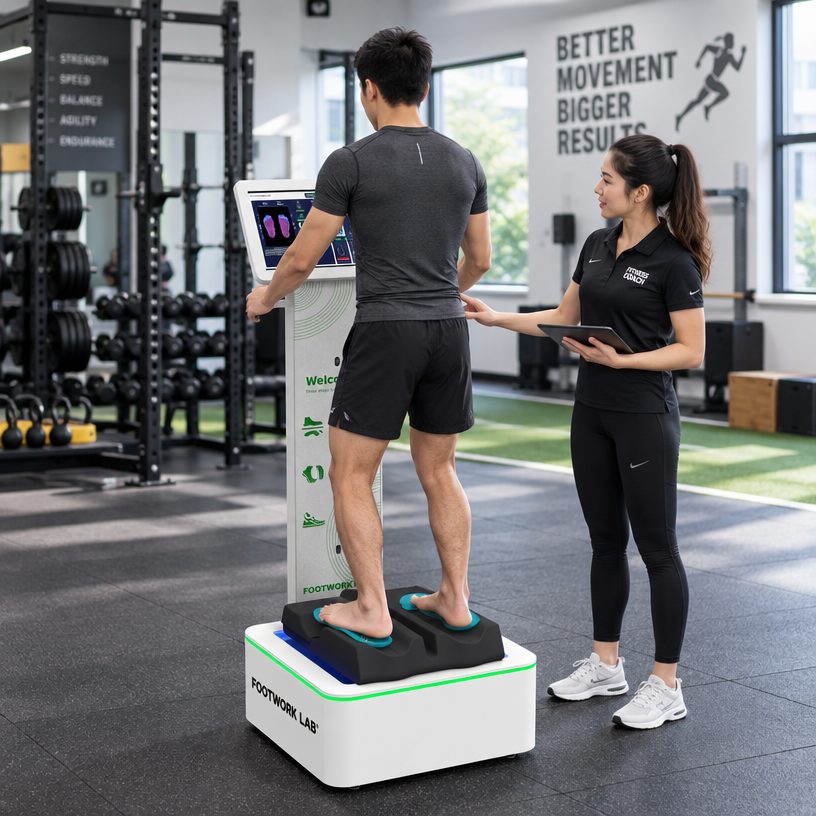
Everything the room controls should be identical between visits. The instructions given before capture — where to stand, where to look, whether fingertips may rest on the rail — are repeated word for word. The stance is the same: both feet, quiet standing, the same duration the software was set for at the first visit. Walking passes, if the protocol includes them, run at the same self-selected pace with the same start distance marked on the floor. The footwear condition matches: barefoot both times, or the same category of shoe both times, never one of each. Even the time-of-day note matters more than people expect, because a foot carries the day’s load differently in the morning than in the evening, as our piece on the same foot measured at three points in a working day describes.
What the room deliberately lets change is the child himself. Shoe size goes up. The mark on the wall gets repainted. The operator who ran the first session may have moved on. None of those touch the measurement. The discipline is knowing which column each decision falls into, and the room that writes the protocol down — on the sheet, in the folder, in the words the staff actually use — is the room whose three-year-old records can be laid side by side without an argument starting.
There is a practical test we suggest to buyers during demonstrations: hand the protocol to a different staff member and ask them to run the session from the sheet alone. If the sheet carries the instructions, the stance, the walking start and the footwear condition, the record survives the staff change. If it does not, the comparison is resting on one person’s memory, and memory is the first thing a busy clinic loses.
Choosing the interval between records
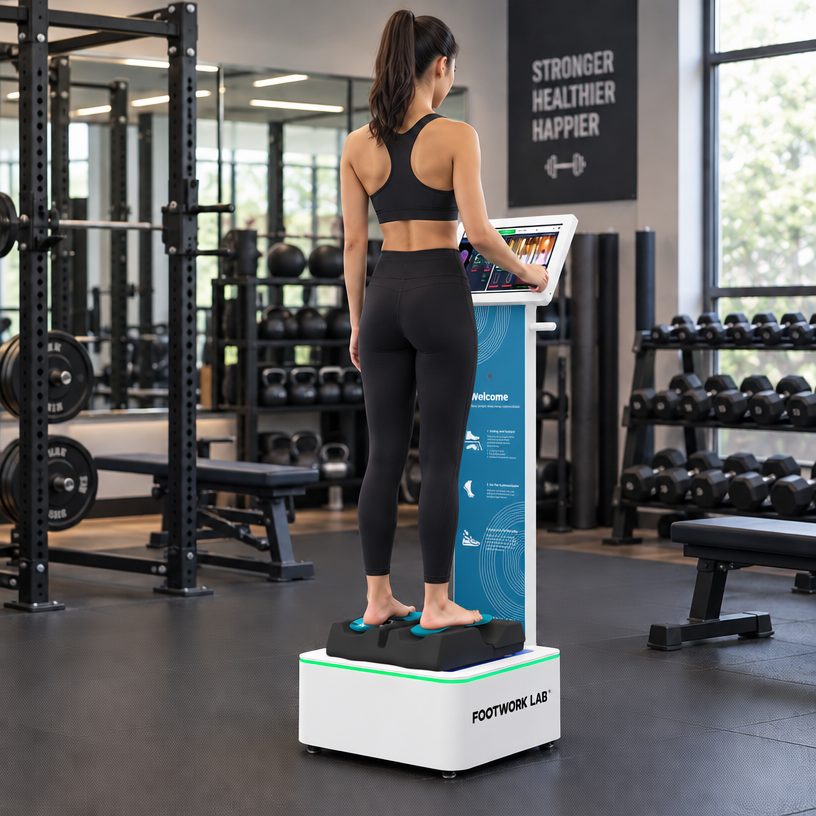
How often to re-capture is a question the room answers with the family, not one the machine answers. The working pattern in most rooms we talk to is an annual repeat for school-age children whose footwear keeps needing replacement, with an earlier return whenever shoes are outgrown noticeably fast, whenever the parent reports discomfort that was not there before, or whenever the professional managing the case asks for a check-in. The interval is written on the folder before the family leaves.
What matters more than the exact spacing is that each capture lands on the same footing. A record taken at a rushed walk-in, with the child tired after school and the session shortened, does not compare cleanly with one taken at a planned visit. Rooms that treat repeat capture as a scheduled event — same length of appointment, same time-of-day note, same instructions — get folders where the interval itself carries information. Rooms that re-capture opportunistically, whenever the child happens to be in, get folders where every difference has to be interrogated: is that the foot, or is that the Tuesday afternoon appointment squeeze?
The interval note also protects the professional reading the folder later. A record marked simply with a date tells the reader nothing about why it exists; the same record marked with the interval since the last one, and the reason for this visit, tells the reader what question it was taken to answer.
Capturing children: what actually changes in the room
The protocol holds; the customer does not. Young children bring exactly the movement problem our article on recording a customer who cannot stand still addresses, only sooner and with less apology. The six-year-old rocks, chats, waves at the screen, and asks whether it is finished before it started. The working answers are the same as for adults, compressed: shorter passes, one instruction at a time, attention moved off the feet. Look at the blue mark across the room. Stand like a flamingo would if it were bored. The operator who expects several short attempts and plans for them gets a usable record; the operator who expects one long quiet pass gets five blurred ones and a child who has decided the room is boring.
Parents are part of the capture, and the sheet should say so. Whether the parent stood beside the child, whether the child held a hand, whether shoes and socks came off at the start — each of those belongs on the session note, because each can show up in the record. A child steadied by a parent’s hand produces a quieter line than one standing alone, and nobody reading the folder next year will know that unless it was written down.
Posture capture alongside the pressure record deserves the same care. Children fidget differently on camera than on a sensing surface, and our article on what posture capture in street clothes can and cannot see applies doubly to a customer who grew out of last season’s outfit between visits. The camera records what it can see in the clothing worn that day.
Reading two records side by side
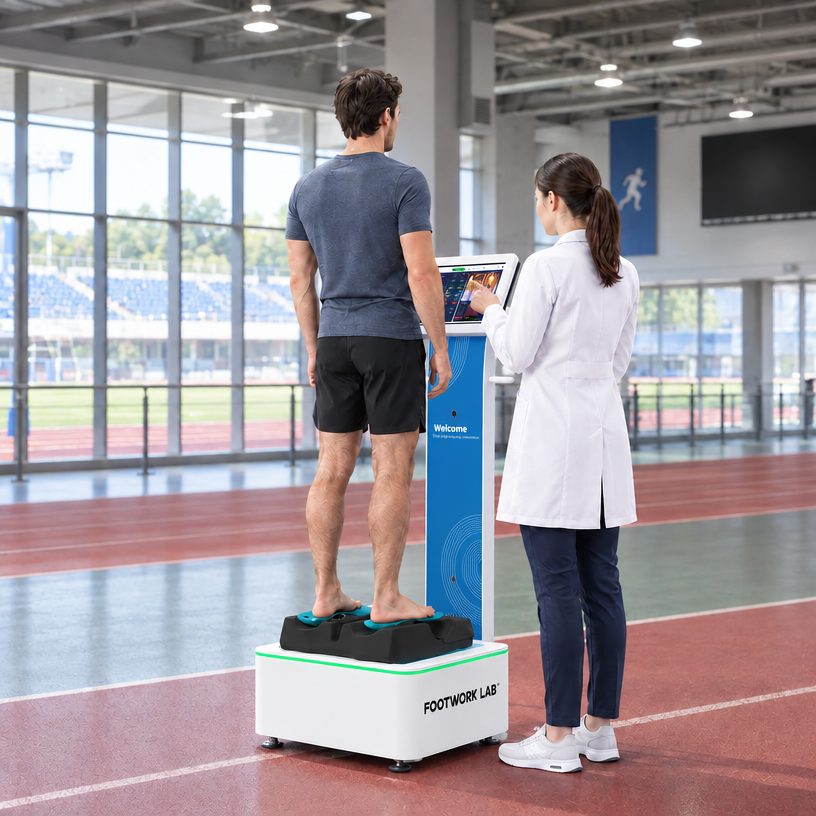
When the protocol held, the comparison becomes straightforward to set up and honest to read. The room puts the two records next to each other with the conditions visible: same stance, same walking start, same footwear state, and the interval written across the top. Differences in contact area, in where load concentrates, in how the centre of pressure path travels from heel through to forefoot, can then be discussed as changes in the foot under like-for-like conditions. Our article on building a left-and-right comparison you can defend describes the same discipline applied within one visit; the repeat capture applies it across visits, which is harder and more valuable.
The reading itself stays with the qualified professional. The equipment’s role is to produce the two pictures under stated conditions, and to keep them comparable — which is why the settings, the labels and the session notes matter more in paediatric work than anywhere else. What the professional reads is the direction of change, not a verdict: more defined contact, a different load line, a path that travels differently through the step. Those observations feed a conversation with the parent and any decision about footwear or support, and none of them are made by the machine.
Where a pair of records leads to a rebuilt or adjusted pair of custom insoles, the same logic that governs rebuilding after a change in body weight applies: the trigger is a real, recorded change under comparable conditions, not a hunch that the old pair has been outgrown. When a new build does happen, the repeat capture feeds forward into it rather than replacing what the room already knows.
What the comparison cannot support
Two honest limits keep repeating themselves in conversations with rooms that follow children over the years. The first: a pressure record taken under one set of conditions cannot be swapped for one taken under another and read as continuous. A record captured seated, or partly loaded, or with a support in use, sits in a different column from the standing barefoot record, and only the labels keep the folder from quietly merging them. The second: the equipment produces measurements and images. It does not assess development, it does not forecast how a foot will grow, and it does not produce a diagnosis. Any statement about a child’s development belongs to a qualified professional working from the whole picture — history, examination, the records — and not from the pressure page alone.
Rooms that respect those two limits end up with folders they can defend: every page labelled, every interval explained, every comparison made between like and like. Rooms that let the labels slip discover the problem years later, when a professional reading the sequence asks why one record looks different and the room has no note to answer with.
The notes that make six and nine comparable
The whole system rests on one page: the session note. For a repeat capture it carries the interval since the last record and the reason for this visit, the conditions as run — stance, footwear, support used or not, parent’s position — which pass was filed, and anything unusual about the day. The note takes two minutes to write and it is the only thing that survives the room; the note is what the reader in five years actually has.
Rooms that keep this habit well tend to keep the note format identical between visits, so the reader’s eye lands in the same place every time. A card kept with the child’s folder, listing the standing protocol in the exact words used at the first capture, closes the loop: new staff read the card, run the session from it, and the next record arrives comparable without anyone having to remember a conversation from years ago. Records that stay comparable across years are built from calibration discipline as much as from capture discipline, as our piece on keeping a record comparable across visits sets out.
For buyers weighing the equipment itself, the paediatric use case is one we are asked about most: how the machine handles a small, restless customer, and how the software keeps past records retrievable alongside new ones. The X5 foot, ankle and posture system page covers the capture modes in the equipment’s own terms, and the team answers workflow and purchase questions by message.
Frequently asked questions
How often should a growing child’s foot be captured again?
Rooms usually work on a yearly repeat for school-age children, and ask for an earlier return when footwear is outgrown quickly, when the parent reports a change in how the child moves, or when the professional managing the case requests a check-in. The interval is written on the folder at the end of each visit so the next one is planned rather than remembered.
What has to stay the same between repeat captures?
The instructions, the stance, the walking start distance if the protocol includes gait, the footwear condition, and any support used or not used. Everything the room controls should match the first visit. What changes — shoe size, clothing, the child’s mood — belongs to the child and is simply noted on the sheet beside the record.
Can a record taken seated be compared with the standing record from the first visit?
Not as a like-for-like comparison. Load distribution under partial load differs from full-weight stance, so the two describe different conditions. A seated capture can be filed as an additional record with its condition labelled; it cannot quietly replace the standing record in the sequence without breaking the comparison.
Does the equipment tell you how the foot will develop?
No. It records how load distributes at the ground under stated conditions, and produces measurements and images for that moment. Development, and any conclusion drawn from the interval between records, is read by a qualified professional working from the whole case, not by the machine from the pressure page.
Can we buy a single machine for a clinic that sees children?
Yes. The machine minimum order quantity is one unit, and we accept ODM projects for machines. Insoles are ordered from a minimum of two hundred pairs, which can be mixed across styles and sizes. The sales team confirms current lead times by message before an order is placed.
What support do we get after the machine is installed?
A dedicated WhatsApp group with our engineers directly in it, remote assistance when something needs a second pair of eyes, and software updates delivered over the network when the machine is connected. Machines carry a twelve-month warranty, and the factory tests every unit for a week before it ships.
How long does shipping take?
Express delivery runs roughly a working week to ten days depending on destination, air freight somewhat longer, and sea freight around a month. The exact schedule for a specific destination is confirmed with the quotation, since ports and customs clearance vary by country.
What we would do next
If the room already follows children with repeat captures, open the last few folders and check one thing: whether the conditions of each earlier record are recoverable from the page, without asking anyone who was there. Where they are not, write the protocol card this week — the instructions, the stance, the walking start, the footwear condition — so the next record lands comparable. Our walkthrough of capturing a customer who cannot stand still carries the phrasing that works with restless young customers, and the same foot at three points in a working day explains why the time-of-day note belongs on the sheet too. For the calibration side of keeping records comparable across years, see calibration, care and a record that stays comparable; for what the comparison can and cannot support once sport returns, building a comparison you can defend covers the same discipline inside a single visit. The FAQ page carries the operational answers we give most often by message, and the team replies to workflow and purchase questions through the contact page.
This article is intended for professional and educational reference. It is not medical advice. Foot assessment equipment produces measurements and images; clinical interpretation and any decision about care remain the responsibility of a qualified professional. Certification scope is limited to the documentation we hold: European Union certification and ISO quality system certification.