
A platform in a working clinic collects a surprising amount of a person: the shape of their foot under load, the line of their spine standing still, their name, their age, the reason they walked in. None of it is sensitive in the way a hospital record is, and that is exactly why it drifts. Records pile up under filenames like test1 and new customer final, images get shown on a screen facing the waiting area, a USB stick of exports rides in a jacket pocket, and nobody in the room can say who has what or until when. Then one day a customer asks the question every room eventually hears — where exactly do my pictures go after I leave? — and the honest answer is whatever the room has actually built. This article is about building a good one. It covers what a platform realistically stores in an ordinary week, the one-sentence consent that should precede every capture, a naming habit that costs nothing and prevents most confusion, who is allowed to see which screen, the special care posture photographs deserve, and a keeping-and-deleting routine simple enough that a busy room will actually run it. None of it requires new equipment. All of it requires deciding, once, that records are part of the room’s professionalism.
What a platform actually stores in an ordinary week
Start with an inventory, because rooms routinely underestimate theirs. One busy week at a capture station produces, for each customer: a pressure record of standing or walking, the images attached to that session, posture photographs taken in street clothes, the session notes typed or scribbled beside them, and — somewhere in the room’s own system — the customer’s name, phone number and booking history that connect the file to the person. Multiply by the week’s bookings and the platform plus its surroundings hold a small archive of identifiable people.
The equipment’s side of this is simple and worth stating plainly: the platform’s job is to produce measurements and images under stated conditions, and what a room does with those files — where they are kept, for how long, who may see them — is the room’s decision and the room’s responsibility. We support that responsibility on the technical side where we can: software updates arrive over the network for connected units, and support runs through a dedicated WhatsApp group with engineers who answer directly. But custody is not something the manufacturer can hold for a clinic. It lives in the room, built out of habits rather than hardware.
The inventory exercise takes fifteen minutes and changes the conversation. List every place a customer’s data rests: the capture station’s storage, the reception computer, the printed summaries in the filing drawer, the phone in the front-desk drawer that holds customer photographs, the shared folder nobody has opened since the staff member who made it left. Every line on that list is a place this article’s habits need to reach.
Consent is a sentence, said before the first capture
Before the first capture, before the shoes come off, the customer should hear one short sentence and be able to answer it naturally: We will take a pressure record and some photographs of how you stand and walk; they stay in our records here, and we only show them to the professional working on your assessment. Any problem with that? That is consent in working form — specific about what happens, honest about where it goes, and spoken early enough that the customer can ask questions before standing on anything. Most say yes and the session proceeds. The point is that the customer knew, in advance and in plain words, what the machine in the room does.
Two follow-up permissions deserve their own ask, and rooms that skip them regret it later. The first: may we keep the record beyond this visit, for comparison at a re-check months from now? Some customers are happy; some prefer their images deleted after the consultation, and both answers are fine — but they must be the customer’s answers, noted on the session sheet. The second: may a photograph or record be used outside the room — in the clinic’s own teaching, on its website? That one should almost always be a separate, later request, made when there is something specific to show, and a no costs the room nothing.
The session sheet carries all of it in one line, written the same way every time: consent given for capture and retention, declined for external use. A customer who later hears about their images from any direction other than the professional they trusted will not ask whether the consent sentence was technically said. They will remember what they were told, and the sheet is what the room remembers.
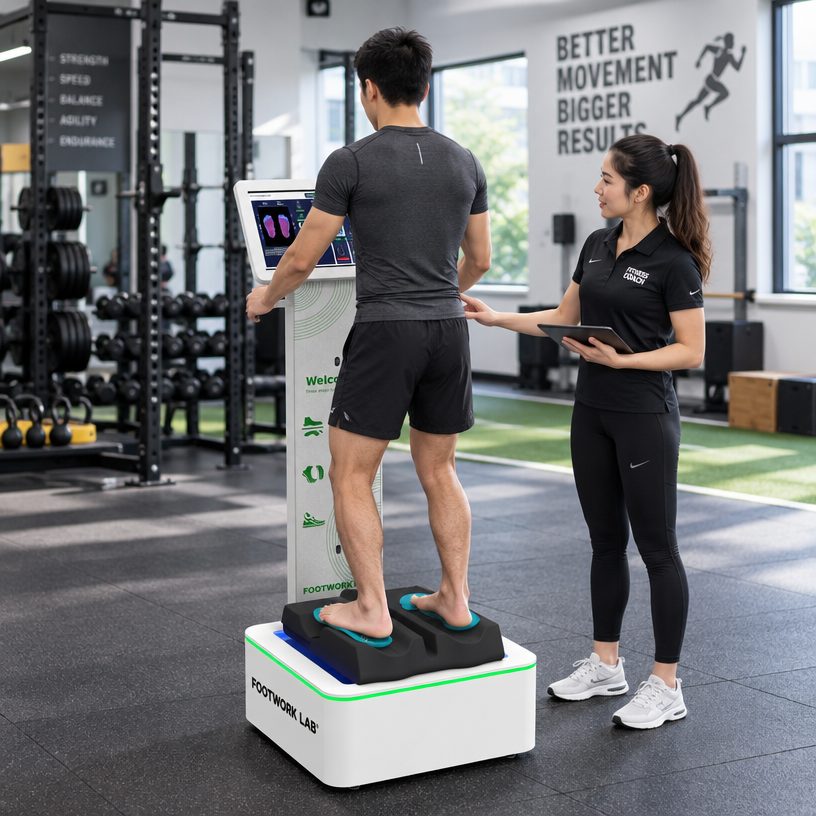
Naming: the cheapest tidy-up there is
The most common privacy failure in working rooms is not a leak. It is confusion: files that cannot be traced to the right person, records that might belong to one of two customers with similar names, a folder of images that outlived everyone who understood it. The fix costs nothing and takes a minute to learn — a naming convention, agreed once, used by every operator, on every save.
A workable convention has three parts: surname, date, and a short code for the session type. Chen 2026-03-14 walk-stand tells any reader in the room, next month or next year, whose record this is, when it was taken, and what it contains. What it deliberately does not include is the customer’s condition or the operator’s guess about it, because a filename is the most visible and least controlled place in the system — it appears in search, in export lists, in screenshots — and it should carry identity, not interpretation.
The second half of the naming habit is the check that happens at save time. Ten seconds of looking — is this the right customer’s name, is this the right foot marked left, does the date match today — prevents the cross-contamination that no deletion policy can repair afterwards. Rooms that run two capture stations or two operators need this discipline doubled, because records produced under the same protocol by different staff only stay comparable when the files stay unambiguous; our article on two operators working one protocol extends this into the capture routine itself.
Who is allowed to see the images, and on which screen
Physical placement does half the privacy work in a capture room, and it is decided with furniture, not software. The screen that shows the customer their own record during the consultation should face the customer, not the corridor. The reception screen, if it can display a capture window, should not be the one sessions are reviewed on. The chair where results are explained should be positioned so that a waiting customer glancing over sees a wall, not somebody else’s spine. These are one-time decisions; rooms that do not make them leak images into the waiting area a dozen times a day without anyone noticing.
Then the human rule, which needs writing down because it is violated casually rather than deliberately: images are shown to the customer by the professional responsible for their assessment, and to nobody else. Not to the next customer as an example, not to a colleague dropping in out of curiosity, not on a phone. The professional showing a record is acting within the consent sentence; everybody else showing it is not. Training material, if the room wants it, is collected separately, with its own permission.
Export deserves its own rule, because exports are where records physically leave the room. A USB stick of files carried in a coat pocket is the classic failure; a shared folder with no owner is the quieter one. The workable habit: exports happen only when a specific professional needs a specific record, the file is named under the convention above, and the room keeps a one-line log — date, record, who took it, why. It sounds bureaucratic and takes seconds, and it is the difference between we think the file went to the referring specialist and here is the line saying so.
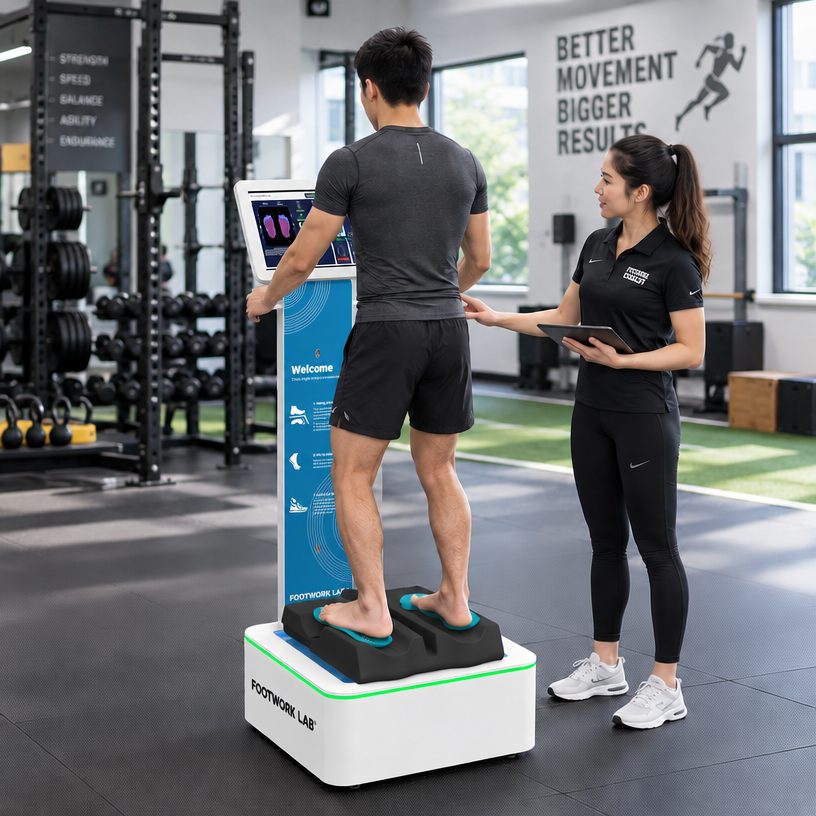
Posture photographs deserve their own care
Pressure records look like data; posture photographs look like people, and customers feel the difference immediately. A photograph of somebody standing in their everyday clothes — how the shoulders sit, how the hips line up — is the single image most likely to make a customer ask what happens to it, and the single image most likely to be photographed off the screen by a relative, laughed at in a corridor, or recognised on a monitor. It deserves handling beyond what the pressure map needs.
Three habits cover most of it. Take posture photographs with the customer dressed as they are, explained plainly before the camera is picked up — what the picture is for, what it will and will not show — and never with more of the person exposed than the assessment needs. Store them under the same naming convention but flag them in the file structure, so a search for a customer’s records does not surprise anyone with a portrait. And when showing them to the customer, show them to that customer only, with the same screen rule as above applied with extra care, because this is the image the person in it is most sensitive about.
The boundary on interpretation applies here more sharply than anywhere else in the room. What the photograph shows is a posture under stated conditions — a moment, in street clothes, on a given day. What it means for that person, and whether anything should be done about it, is the qualified professional’s call, made with the full record and never from the image alone. Our article on posture capture in street clothes deals with the photographic conditions themselves; the room’s care for the image should match the customer’s natural feeling about it.
Keeping and deleting: put both on a schedule
Rooms are good at keeping records and bad at deciding to stop, which is how a capture station accumulates years of files nobody remembers taking. The remedy is a keeping rule written once and applied without exception: how long a record is retained after the last visit — a year, two years, whatever the room’s own standard and local practice require. Local law governs the minimums and, in many places, the maximums; the room’s own rule should never sit below what the law asks and rarely needs to sit above it.
Deletion then becomes a calendar entry, not a decision. Once a quarter, someone with thirty spare minutes opens the archive, applies the rule, and records one line in a log: records older than the retention period for customers with no visit since that date were deleted. Files the customer asked to have removed after the consultation are deleted at the time, as agreed on the session sheet. Deletion of archived records should be real deletion, not moving files to a folder called old — the folder named old is where tidy systems go to die, as anyone who has inherited a room’s archive knows, and our article on moulds, files and a build that has to be found again describes the retrieval half of the same discipline.
The review has a second benefit beyond privacy: it is the moment the room notices its own naming convention holding up or failing. Files that cannot be matched to a customer get flagged, duplicates get merged, and the archive that survives the quarterly pass is one any successor could inherit without dread.
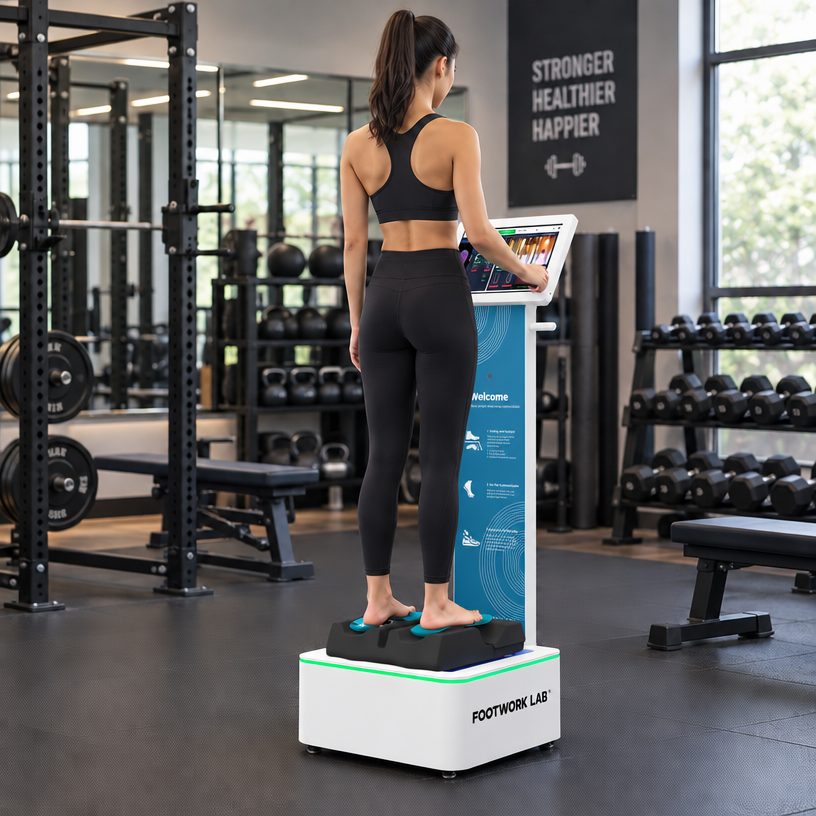
When a record leaves the room
The last habit covers the customer-facing end of the system: what the person takes home. A printed summary — the record, the conditions it was taken under, the professional’s notes — is the version of the data most customers will ever see, and it should be built deliberately: minimum needed for the customer’s next step, nothing extra, no second customer’s data on the same page. Our article on what belongs in a printed summary page walks through the content line by line.
Electronic sharing follows the export rule from earlier: a specific record, to a specific professional, logged in a line. Where a referring specialist needs the images, the room sends what was consented and no more; where the customer asks for copies for their own keeping, the room provides them under the same consent sentence that opened the relationship.
One closing boundary, the same one we state to buyers at every demonstration: the equipment produces measurements and images of load distribution and posture under stated conditions. What those mean for the person, and what anyone should do about it, belongs to the qualified professional reading the full record — and the habits in this article exist so that professional knows exactly whose record it is, under what conditions it was made, and that nobody outside the room saw it who should not have. That is what tidy data actually means: not paperwork for its own sake, but a record the room can stand behind, from the consent sentence to the deletion log.
Frequently asked questions
Can the software be updated without a technician visiting the room?
Yes. For units connected to the network, software updates are delivered over the air, and support questions are handled through a dedicated WhatsApp group where engineers answer directly; remote assistance is available when the room wants it. A visit is arranged only where a room prefers one, not as a routine requirement for keeping software current.
Who is responsible for the records our clinic keeps?
The room is. The equipment’s role is to produce measurements and images under stated conditions; where those files are stored, who may see them and when they are deleted are the clinic’s decisions and the clinic’s responsibility. What we provide on our side is technical support, updates and documentation — custody of customer data is never something the manufacturer can hold for a clinic.
What should customers be told before a capture?
One plain sentence before the first capture: that a pressure record and some photographs of standing and walking will be taken, that they stay in the room’s records and are shown only to the professional responsible, and that the customer can ask questions or decline. Rooms that open with this sentence rarely face the harder conversations later, because the customer was never surprised.
Are customer names attached to the images by the software?
How records are named and linked to customers is the room’s own workflow decision. Our standing advice is the convention described in this article: surname, date and session type on every file, with no conditions or interpretations in the filename, and the check of name, foot side and date at save time. Identity belongs in the name; interpretation belongs in the professional’s notes.
Can records be exported for a referring professional?
Yes, and rooms do this routinely. The workable habit is a specific record, to a specific professional, for a stated reason, with one line in the room’s export log — date, record, who took it. What gets sent should match the consent the customer gave at capture, and printed summaries prepared for the customer’s next step should contain that customer’s data only.
What happens during a remote support session?
Remote assistance is arranged by the room when it wants help, typically through the dedicated WhatsApp group. The room stays in control of the session — what is shown, on which screen, with which customer’s data visible — and rooms that prefer to close records first can simply do so. Support is for the equipment; the room decides what the engineer sees.
How long should we keep captured records?
That is set by your local requirements and your own retention policy — we cannot answer it for your jurisdiction. Our practical advice is to write a retention period, apply it with a quarterly calendar review, delete truly on schedule rather than into an archive folder, and log the pass in one line. Customers who asked for deletion after the consultation are handled at the time, as noted on the session sheet.
What we would do next
Run the fifteen-minute inventory this week: every place a customer’s data rests in your room, on one page. Then adopt the three cheap habits — the consent sentence, the naming convention, the export log — and put the quarterly deletion review in the calendar with a name attached to it. For the equipment side, the X5 foot, ankle and posture system page describes the capture system itself, and the operational questions we answer most often by message are on the FAQ page. To discuss how a unit fits into your room’s routines, write to us — the first question we will ask about is your consent sentence, not the hardware.
This article is intended for professional and educational reference. It is not medical advice. Foot assessment equipment produces measurements and images; clinical interpretation and any decision about care remain the responsibility of a qualified professional. Certification scope is limited to the documentation we hold: European Union certification and ISO quality system certification.