
The handover has barely finished when the first alarm sounds, and a care assistant is already moving. Down the corridor at the pace the shift allows, into the room, a hand under an arm, a brace that starts in the feet and travels upward through the whole body. Twenty minutes later the same corridor, the same pace, a different room. By mid-morning she has done more unplanned movement than most people manage in a week — and none of it appears in any job description she was ever shown.
Care work loads the feet in ways no standard occupational category captures. There is the steady walking between rooms and alarms, there is the sudden bracing when a resident stumbles, and there is the transfer done with the whole body while the feet stay planted wide on a hard floor. For podiatry clinics, rehabilitation centres, and the orthotic workshops that serve care providers, this mixture deserves more than a generic standing-worker recommendation. This article describes how working teams break a care shift into its actual loads, what to ask before any assessment, and how support programmes for whole care teams are rolled out, checked, and kept honest.
Six Forty in the Morning: Anatomy of a Care Shift
The shift divides into three kinds of load, and telling them apart is the first analytical step in any assessment conversation. The first is volume: corridors. A care assistant walks between rooms, laundry, the kitchen pass, the office, and back, dozens of times a shift, on linoleum or sealed concrete, in footwear chosen by an employer. The distances are not extreme by warehouse standards, but the floor never varies and the pace is set by other people’s needs rather than by the walker.
The second is surprise. When a resident stumbles, the assistant’s feet take a braking and bracing load that arrives without warning — a deceleration through the ankles, knees and hips that no warm-up precedes and no planning shapes. This is the load most people outside the sector never think about, and it is the one care workers themselves mention most when asked what a hard shift does to them: not the walking, but the catching.
The third is the transfer. Moving a resident from bed to chair, or chair to standing hoist, is performed with the feet planted wide and still while the upper body and trunk do the guiding. The load here is sustained, static, and asymmetric — one side usually takes the dominant share, shift after shift, year after year. Volume, surprise, and static asymmetry: three patterns that show up in different ways on an assessment record and in different complaints at the end of a week. Any recommendation built for a care worker that ignores two of the three is built for a different job.
Ask About the Shift Before the Feet
A short question set, asked before any capture, saves the whole appointment. First: employer footwear. Most care providers issue or mandate specific shoes — slip-resistant clogs or trainers — and whatever is recommended has to work inside those shoes or it will not be worn. Ask which pair is actually worn on shift, and which pair the feet get in the evening, because the two answers together show where support can and cannot reach.
Second: the shift pattern. Long days, doubles, night rotations — each changes the load picture, and night work adds its own story of tired feet on quiet corridors. Third: how many alarms and transfers in a typical shift, asked as a range rather than a count; the assistant’s answer in their own words is what belongs in the file. Fourth: where does the week complain — the heel by Wednesday, the forefoot after heavy transfer nights, the arch on double shifts? Pin the complaint to the shift structure, not just to the foot, because the structure is what any change will have to survive.
Fifth: what has been tried. Care teams are practical people, and by the time they reach a clinic most have already experimented — cushioned socks, supermarket insoles, a different shoe model, standing on one foot while resting the other. Each failed attempt narrows the field: it tells the assessor what this person’s feet and this employer’s footwear have already rejected. Write all five answers on the sheet in the worker’s own words. They will do more to shape the recommendation than any single measurement taken afterwards, and they give the follow-up visit a baseline that the worker recognises as their own.
What a Capture Can and Cannot Show for This Work
The assessment itself has honest limits, and stating them out loud is part of the service. A static record shows the arch profile and standing load distribution — the base picture, useful for the fitting conversation and for understanding how the foot behaves during those long, planted transfers. A dynamic record at the worker’s own corridor pace shows how load travels step by step during the walking portions of the shift. Both are measurements. Neither reproduces the stumble, because nobody should be asked to stage a fall on a pressure plate, and the sudden bracing load of care work therefore reaches the assessment only through the worker’s description.
That gap matters for how the findings are framed. The record can show that the walking pattern loads one region heavily, or that the two sides behave differently under quiet stance. What it cannot do is explain itself, and it certainly cannot reproduce the catching movement that the worker says is the hard part. The interpretation — what the measured pattern means for this person, in this footwear, under this shift structure — belongs to the qualified professional, who combines the record with the five answers and the examination. The equipment’s contribution ends at measurement, and a good operator says so plainly in the room.
What the capture does add, and why it is worth the appointment: it turns vague complaints into specific, comparable descriptions. “My feet are wrecked after a double” becomes “left forefoot loads longer than right in walking, both heels high in quiet stance, complaint region matches the loaded region”. That sentence can travel — to the professional deciding on support, to the employer’s occupational health team, to the workshop building the pair. The measurement does not decide anything; it makes the decision discussable, which is exactly what a worker who has been vague for years usually needs.
Support for Unpredictable Movement
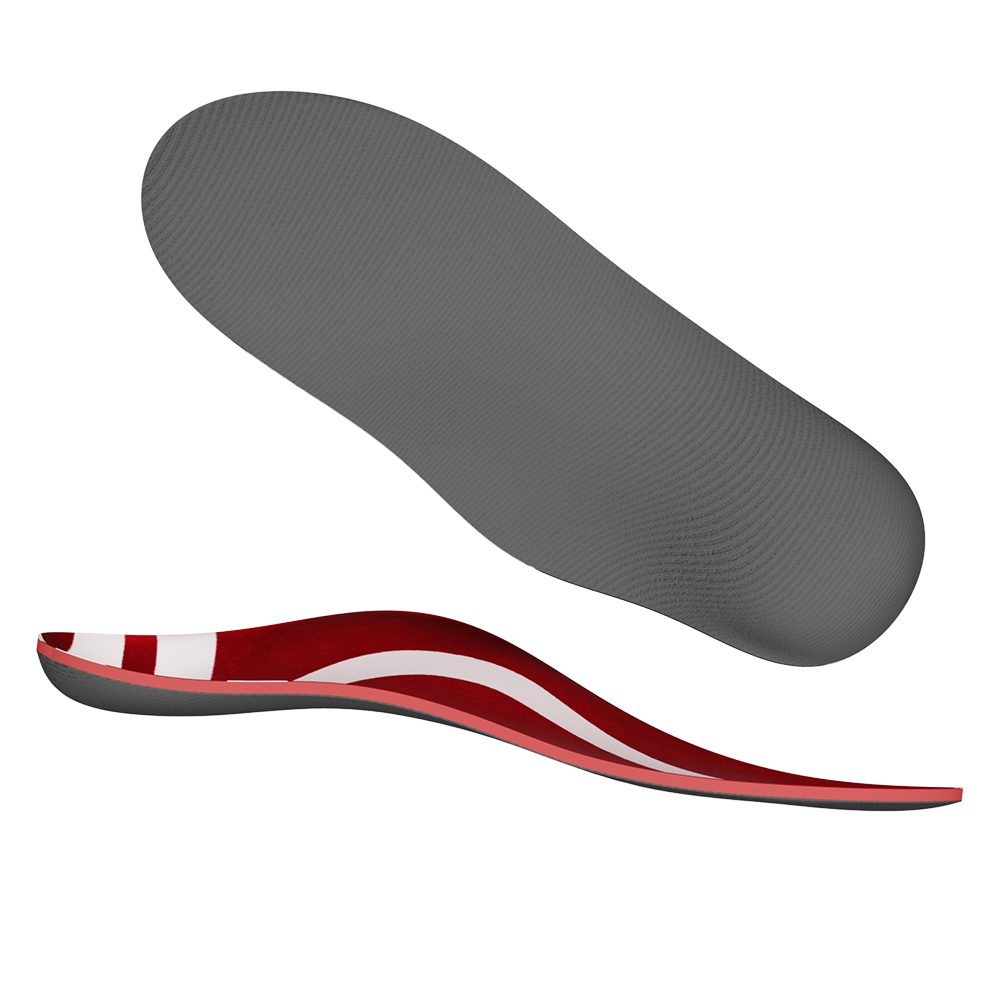
When the professional’s interpretation points toward foot support, the unpredictable character of care work drives the design conversation. The pair has to perform across all three loads: steady corridor walking, sudden bracing, and planted transfers. In practice that conversation revolves around three properties. Support that holds the arch through long walking stretches and wide static stances. Cushioning that takes the edge off unyielding floors, because corridor surface is the one variable nobody in a care home can change. And a load distribution that stops the worker’s dominant transfer side from absorbing everything — which is precisely where the assessment record earns its place in the build decision.
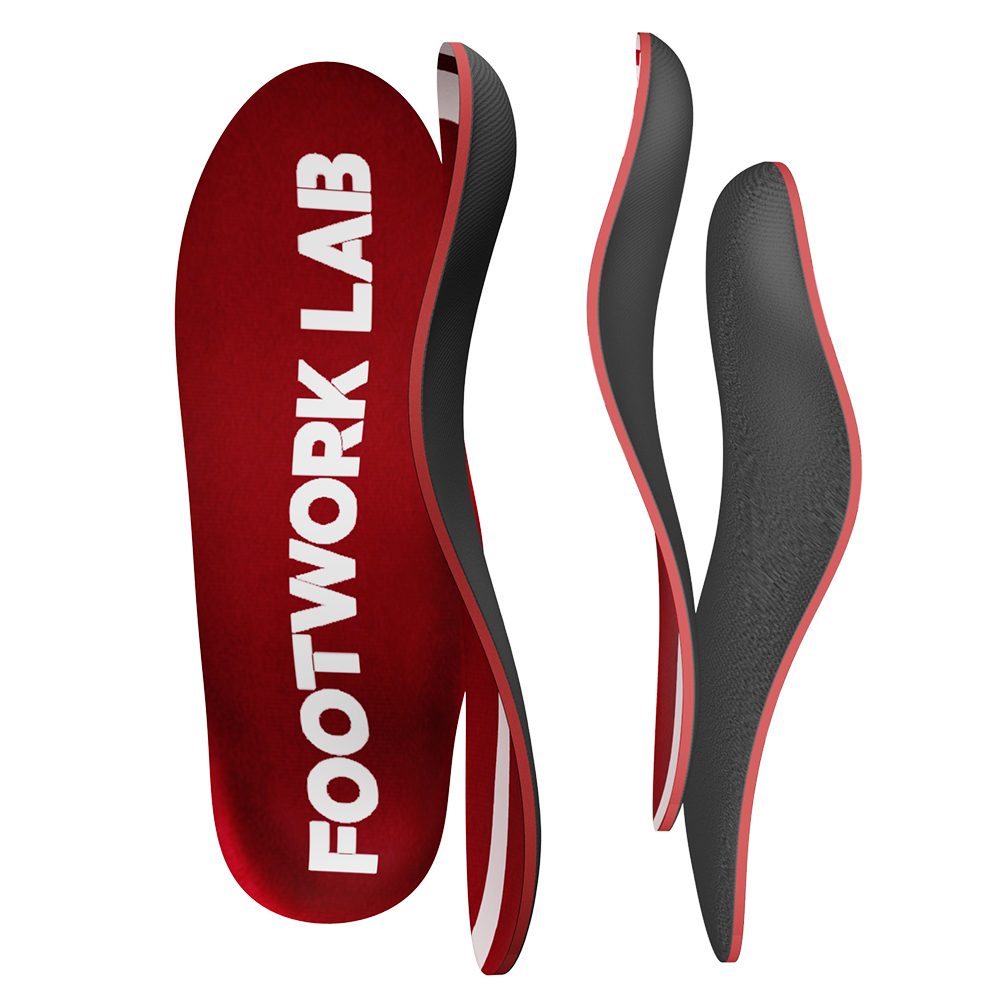
Custom orthotic insoles are the category built for this trio, and the honest framing matters: they are a tool that changes how load is distributed inside the employer’s shoe, chosen because the professional judged that distribution worth changing for this foot. They do not make a worker quicker, they do not replace safe moving-and-handling technique, and no pair of insoles is a substitute for the training that governs transfers. Stating those limits at the point of recommendation is not weakness; it is what lets a care worker trust everything else you say.
One practical detail deserves its own sentence: the employer’s shoe is the fixed constraint. Whatever goes in must fit under the foot without lifting it into the toe cap of a mandated safety shoe, must survive being moved between the day pair and the night pair if the worker alternates, and must cope with the humidity of a twelve-hour shift. The workshop building for care teams learns to treat the employer shoe, not the foot, as the outer boundary of the design — and to say so at the fitting bench rather than discovering it at the return visit.
Employer Footwear Rules Come First
The slip-resistance rule is the one to respect absolutely: care floors are washed constantly, spills are routine, and the employer’s choice of slip-resistant footwear is part of a safety system that a foot support must never compromise. This means the bench check comes before any conversation about design. Take the mandated shoe, remove the stock insole, and look at what the replacement has to live in: depth over the toes, width at the ball, whether the stock insole was glued or free. If the shoe swallows a support without lifting the foot, the conversation proceeds. If it does not, the honest answer is that the footwear boundary wins, and the options narrow to what fits.
Three bench checks take minutes and prevent the most common failures. Depth: with the worker’s foot on the proposed support inside the shoe, can the toes wiggle without pressing upward into the cap? Grip: does the lacing or strap hold the foot still on top of the support, or will it slide side to side on the polished corridor? Thickness at the edge: does the support sit fully inside the shoe’s footbed line, or does its rim catch the midfoot where the clog is narrowest? A support that fails any of the three will be out of the shoe within a fortnight, no matter how well matched it was to the record.
Where the mandated shoe genuinely cannot host a support, say so and redirect. The evening pair, the commute shoes, and the weekend footwear can still carry support for the hours the employer’s shoe cannot reach, and some providers will review footwear choice with occupational health when a whole team raises the same fitting problem. The professional decides what is appropriate; the workshop’s job is to be the honest party at the bench, because care workers talk to each other the way every workforce does, and the second fitting goes smoother only if the first one was truthful.
Rolling a Programme Out to a Whole Team
Care homes rarely engage one worker at a time, and the structure of the work suggests the service shape. Assess between shifts or at shift overlap — a quiet hour after handover, when the team is together and the story of the night is fresh. Run the five questions plus capture for each volunteer, one record per person, and book the follow-up before anyone leaves the room. A team session served this way typically splits naturally: a few feet that need the full assessment and a professional conversation, and many that need straightforward support fitted honestly inside the mandated shoe.
The logistics reward preparation. Care teams come in every size, so the fitting session needs a genuine size range on hand. Production follows the session rather than preceding it: each pair is built from that person’s record, in batches once the session’s records are processed. For distributors and workshops weighing the sector, the supply chain is an established one — insole samples ship from our own factory within three days, full orders are produced at rates of hundreds of pairs a day, and minimum order quantities allow a mixed-size pilot batch for a single home rather than a warehouse commitment. The scarce resource is assessment capacity, not manufacturing.
Follow-up is where the programme earns its renewal. Book a recheck six to eight weeks out — long enough for adaptation, short enough that the first impression has not yet hardened into a resigned one. The recheck catches the pairs needing adjustment, the workers whose employer shoes changed model mid-season, and the quiet cases that should be referred to the clinician rather than adjusted at the bench. Care providers renew programmes that keep their staff’s records current; they quietly drop the ones that fit and disappear.
Frequently asked questions
Are custom insoles suitable for care workers who wear employer-issued safety shoes?
Often, provided the shoe has the depth and width to host a support under the foot without lifting it into the toe cap. The bench check with the actual mandated shoe decides, not the product sheet. Where the employer shoe genuinely cannot fit one, support can still work in the worker’s own evening and commute footwear.
Can a foot assessment capture the sudden bracing movements care work involves?
No, and it should not try — staging a stumble on a capture plate is unsafe and unrepresentative. The assessment records static stance and walking at the worker’s own pace; the surprise loads of the shift reach the file through the worker’s description, and the professional weighs them alongside the measured record.
How should a care home roll out foot support for a whole team?
Book a session between shifts, assess volunteers one record each, produce pairs from the records, and schedule a follow-up before the session ends. A genuine size range on hand matters as much as the capture itself, because care teams span every size and the mandated shoe is the fixed constraint.
How long does a pair of insoles last with corridor work?
There is no fixed lifespan, and any number quoted without seeing the hours, the floor, and the worker’s weight is a guess. The practical rule is to inspect at every recheck and replace when the support visibly loses shape — corridor work on hard floors is among the more demanding daily uses a pair can have.
Should night-shift staff be assessed at different hours?
Assessing after a real shift shows the feet under the actual conditions of the complaint; a rested capture gives a cleaner structural picture. Either is legitimate. Write down which condition the capture was taken under, so the follow-up comparison is honest about what changed.
What questions should I ask a care worker before recommending support?
Five: the employer shoe actually worn, the shift pattern, the rough number of alarms and transfers, where the week complains and by when, and what has already been tried. The answers convert a generic standing-worker case into a specific person on a specific floor in specific footwear.
Can one pair of insoles cover both work shifts and home life?
Sometimes, if the work shoe and the home shoe can both host the same support with adequate depth and grip — a question the bench check answers in minutes. Where the employer shoe cannot, many workers run work support and home support as two pairs, each matched to its own footwear.
What we would do next
If your clinic or workshop serves care providers, the single highest-value change we know of is to book the assessment where the shift lives: after handover, on site or by appointment blocks that respect the rota. The five questions in this article fit on the front of your record sheet, and a month of answers from one care team will tell you more about that sector than any market summary. Start with one home, one session, one recheck — the renewal conversation takes care of itself if the first round is honest at the bench.
For context on adjacent workforces, the veterinary teams in Kennels, Consult Tables and Surprise Loads share the catching and lifting pattern, contract cleaners in Mopping the Same Corridor Twice a Shift share the hard-floor corridor volume, and people working a second shift face the double-load question described in One Pair for Two Jobs. The category we manufacture for this kind of work is the custom orthotic insole range, built from each person’s assessment record — but the programme above runs the same way regardless of who supplies the pairs.
The question we would hand to the room: when a care worker tells you the catching is the hard part, not the walking — does your current assessment routine have anywhere to put that information? If it does, we would like to hear what you record and how the follow-up compares. If it does not, you are in good company, and this article is a place to start.
This article is intended for professional and educational reference. It is not medical advice. Foot assessment equipment produces measurements and images; clinical interpretation and any decision about care remain the responsibility of a qualified professional. Certification scope is limited to the documentation we hold: European Union certification and ISO quality system certification.