
The club hall on a Tuesday evening has a sound of its own: a hard stop, a shoe that grips, and a second step that never quite comes. Badminton punishes the front foot. A deep lunge at the net ends with the whole body balanced over one leg, the hall floor gives nothing back, and the calf complains first. By the second set the arch has joined in, and by the next morning the forefoot has a bruised, used feeling that no warm-up would have predicted.
Most players who reach a foot professional are not tournament athletes. They are club members with one or two sessions a week, shoes chosen for grip and looks, and a load pattern that looks nothing like the walking cases filling the rest of the diary. This article goes through what badminton actually asks of the foot, what to ask the player before suggesting anything, where a measurement earns its place, and how to judge a trial honestly. The equipment involved produces measurements and images; turning those into an explanation or a plan is the work of a qualified professional.
Every lunge belongs to one foot
Badminton is a game of repeated single-leg events. The player prepares with a small split step, pushes toward the shuttle, and arrives in a lunge with the front foot well ahead of the body and the back leg trailing. That position is held for a moment while the racket does its work, then the player recovers and does it again, often in the opposite direction. A single rally contains several of these stops. A session contains hundreds. The foot that leads the lunge absorbs a deceleration in a position where the knee is flexed and the load has nowhere else obvious to go.
The direction matters as much as the count. Walking rolls load from heel to forefoot in a sequence the tissues handle comfortably all day. A badminton lunge arrives as a spike: the forefoot takes a sharp load while the heel is still travelling, the foot grips and pivots, and the push out of the lunge starts again from the same spot. Over a match, the same foot often leads the same lunge many times, because players favour a forehand side and a familiar pattern of movement. The other foot is not idle, but it is not doing the same job.
That asymmetry is visible long before anyone mentions it. Club players describe one shoe wearing out first, or one calf feeling the session more, and they usually assume it is normal. It is specific, which is different. The player is asking one foot to do braking work in compressed bursts, on a surface designed to return very little.
None of this makes the sport unusual; it makes it specific to a degree that a generic walking assessment will not capture. The professional’s first task is to describe the arrangement plainly — which foot leads, how often, on what surface — before discussing what might help.
What the hall floor and the shoe do
Badminton is played on sprung wooden floors and on synthetic hall surfaces, and neither gives back much. A sprung floor has some movement in the substructure, but the finish under the shoe is firm and the grip is high. The synthetic hall surface is firmer still. In both cases the stopping work that the floor refuses to absorb travels into the shoe and then into the foot. A clay court allows a slide that bleeds off momentum; a badminton hall does not. The player’s foot is the last element in the chain.
The shoe is built for that chain. A badminton shoe is light, with a low profile and an outsole pattern that bites the hall floor, and with enough structure in the midfoot to resist the sideways collapse a lunge demands. That structure is protective. It also means that whatever the shoe will not let slide is transferred upward into the foot. Grip is the mechanism by which a hard floor becomes the player’s concern, and it is why a shoe that feels excellent on court can still leave the foot working hard at the end of a session.
Runners sometimes arrive in cushioned running shoes, assuming more cushion must be better. The cushioning is real, but the lateral structure is not, and the foot slides toward the edge of the shoe during a lunge. The badminton shoe’s firmness is load-bearing structure rather than a comfort oversight. What can be discussed is what sits between the foot and the shoe, and that conversation only makes sense once the shoe itself has been read properly.
The practical summary for a clinic is short: on a gripping hall floor, in a structured shoe, the foot absorbs what the court will not. Everything that follows starts from that arrangement, not from a general idea about sport and feet.
The second-set and next-morning report
The timing of a badminton complaint is as characteristic as the movement that caused it. During the game the player feels little worth mentioning: tissues are warm, attention is on the shuttle, and the session ends on adrenaline. The report arrives later. In the second set, the leading foot starts to feel different on recovery steps; the next morning, cold tissues meet the first steps of the day and the arch cramps on the way out of the car. A bruised feeling under the forefoot, a tight calf, an aching big-toe joint are the familiar words of this group. They are reasons to book, not diagnoses.
Who arrives tells its own story. The once-a-week club player is the classic case, because six days of ordinary life give the tissues no progressive exposure to lunge load. The returning player — back after a winter, an injury elsewhere, or a change of job — arrives with the same novelty problem in a fitter body. Juniors need a separate conversation: their feet change quickly, and their sessions often cluster around school terms. Even the keen regular, playing several times a week, reports the same words whenever something new enters the arrangement: new shoes, a change from wood to synthetic, a new club night that means three games back to back.
While taking the history, notice whether the player points to the front foot of the lunge. Players often do. That agreement between the story and the movement pattern is worth more, at intake, than most of what follows, and it takes no equipment to observe.
The professional then has a choice about what to measure. A pressure record describes how load is distributed in stance and through a few loaded steps. It produces images and measurements; interpreting them against the history, and deciding what if anything to do, belongs to the qualified professional. That boundary is worth saying to the player in plain words, because it sets an honest expectation of what the appointment can deliver.
Four questions before anything is recommended
Recommendations fail most often because they were built on half a history. Four questions, asked in order, cover most of what a badminton player needs a professional to know before anything is suggested, and all four fit inside a normal intake conversation.
First: how many sessions a week, and on which surface? A player who has two club nights on wood and one on a synthetic hall floor is carrying two different friction arrangements, and the move between them often marks the start of a complaint the player blames on getting older. Surface history frequently explains more than shoe history.
Second: when during a session are the feet first noticed? Early in the session points toward footwear and support. Late in the session points toward fatigue and conditioning. Only the next morning points toward the delayed loading pattern described above. The answer sorts most players into three quite different conversations, and it prevents the classic mistake of answering a conditioning question with an equipment answer.
Third: which shoe dies first, and where? Fourth: has anything changed in the last two months? New shoes, a new hall, a new doubles partner who plays faster, a return after a break. Each resets the load pattern and each is a reason the complaint arrived this month rather than last year. Write the answers down as they are given.
Alongside the questions sits one action that costs nothing and earns its keep every visit: put the shoes on the bench and read them before looking at the feet. Check where the outsole is worn smooth, press the midsole and compare the two shoes side by side, see how the uppers lean when the shoes stand alone, and write what you find on the record card. A shoe that has stopped standing upright is reporting what its owner’s foot has been doing for months.
Reading the shoe next to the complaint
Badminton shoes are unusually honest data sources. Their outsole pattern is designed to wear visibly and the hall surface is abrasive, so the zones that took the braking work are usually easy to see. Smoothing under the lateral forefoot of one shoe marks the leading lunge foot. Heavy wear under the toe marks a player who drags the front foot on recovery. Wear that stops abruptly at the midfoot suggests a player who plants and pivots rather than pushes through. None of these observations diagnose anything; each narrows the history, and each takes under a minute.
Then compare the pair. In an ideal world the two shoes wear as mirrors; in badminton players they almost never do. The difference between the worn zones of left and right shoe is a rough map of how the two feet have divided the braking work since the shoes were new. A player whose complaint sits on the same side as the heavier wear is telling a coherent story. A player whose complaint sits on the lighter side deserves a second look before anything is concluded, because the foot doing the most work is not always the one complaining.
The midsole deserves its own check. Press it, compare the two shoes, and look for set: a midsole that has stopped recovering means the shoe has been quietly handing more work to the foot for some time, whatever the outsole looks like. Badminton shoes often die internally before their grip pattern wears through, and a player still in a shoe whose midsole has set is effectively playing on a harder hall every week.
Photograph the outsoles at every visit, two views per shoe, filed with the record. Two photographs turn the next appointment into a comparison instead of a memory test. The same habit works for midsole set if the press and the photograph are done at the same angle each time.
Where a measurement fits
Questions and shoe wear describe the arrangement from the outside. A pressure assessment describes it from underneath: a record of how each foot distributes load in static stance and through a few loaded steps, with the images to match. It answers narrow questions — how the two feet share the lunge work, where pressure concentrates under each sole, how the loaded pattern differs from the standing one. It produces measurements and images, nothing more; reading them against the history and deciding what to do belongs to the qualified professional holding the record.
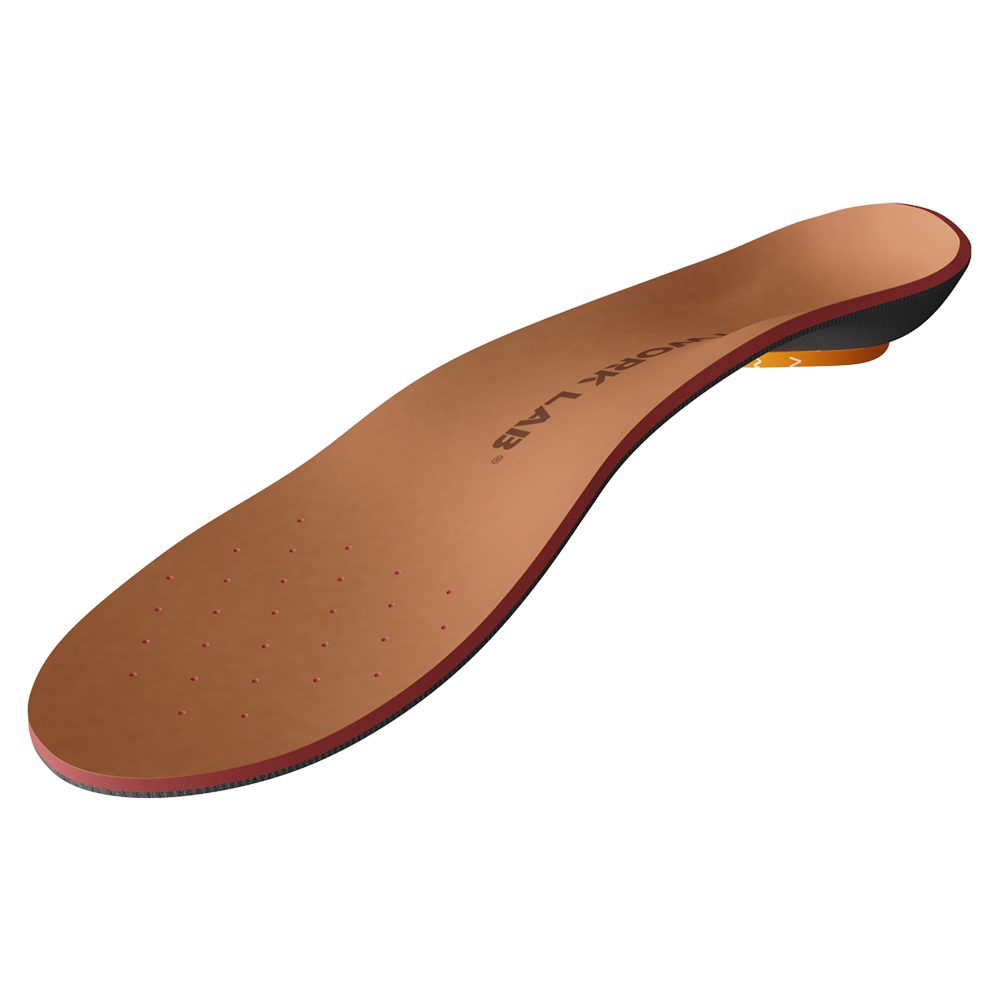
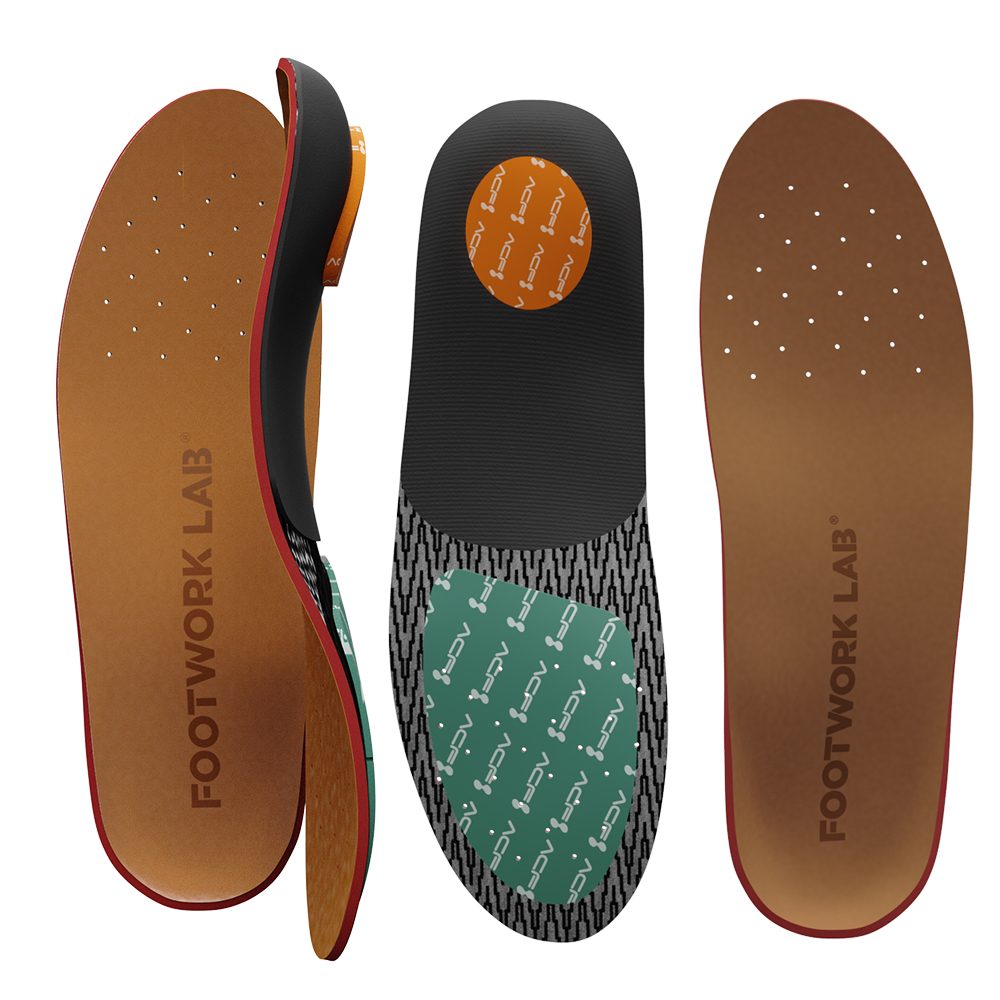
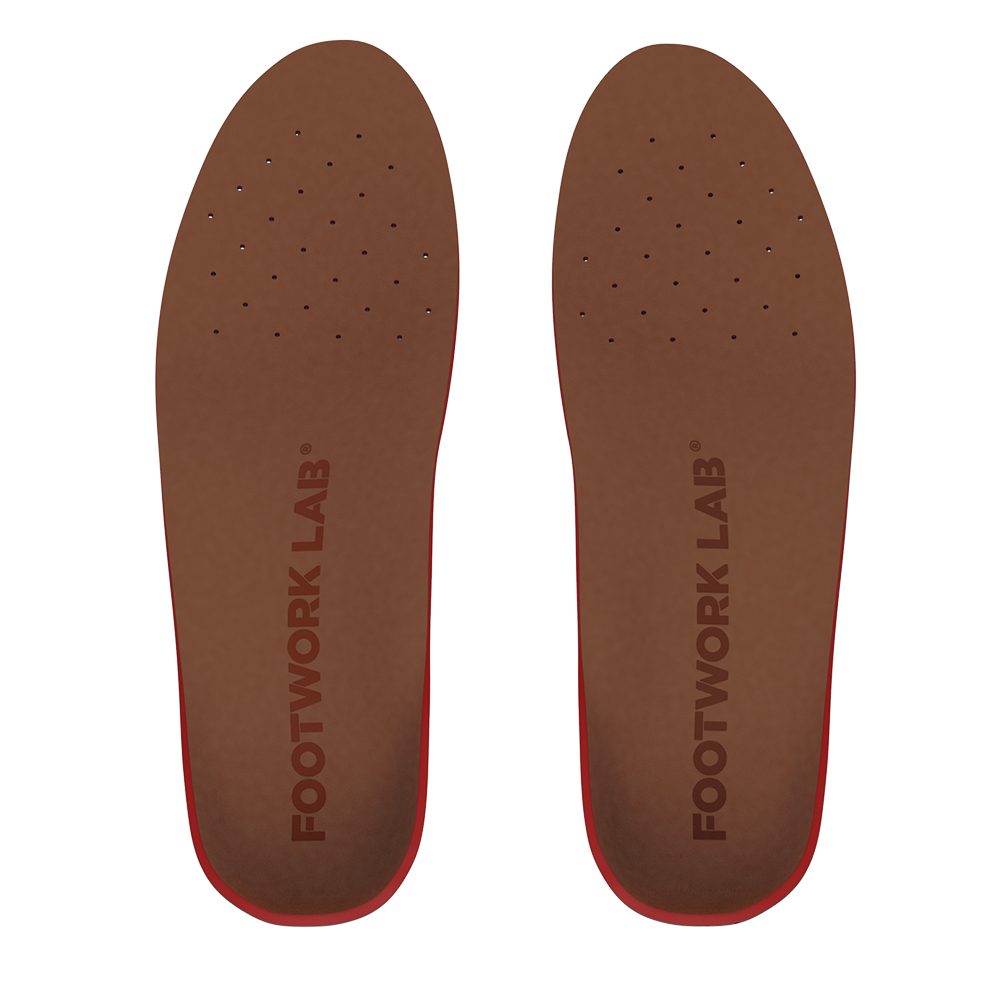
What the measurement adds to the badminton conversation is the missing middle. The player has feelings and a story; the shoes have wear; the assessment puts a distribution underneath both, on the same side of the page. When the leading foot, the worn outsole zone and the concentrated pressure region line up, the professional has a grounded starting point for discussing options — footwear choice, session structure, conditioning, or whether custom orthotic insoles are worth trialling for this player’s particular pattern. When they do not line up, that disagreement is itself the useful finding and it redirects the conversation before anyone spends money on the wrong thing.
The assessment deliberately does not predict performance and does not promise that any change will follow. It states how load is distributed now, in this shoe, on this day. For a sport where each lunge passes through one foot, knowing the current distribution before changing anything is the difference between an adjustment and a guess.
One caveat worth saying to players directly: the record is taken in a controlled setting and in shoes that may not be the ones they play in. The measurement frames the conversation; it does not replace the history or the shoe check. The three together are the intake, not any one of them alone.
Trial, adaptation and the second look
Whatever comes out of the intake — a different shoe, a changed session structure, a first pair of made-to-measure insoles — the trial deserves the same discipline as any other change a professional supervises. The adaptation period comes first and is not optional. Feet that have handled lunge load one way for years do not accept a new arrangement immediately, and the first fortnight commonly feels different before it feels settled. A player who quits on day three has learned only that change is uncomfortable. The practical version is to use the new setup in low-stakes sessions first, build exposure gradually, and treat the second week as the fairer test.
Keep the log running through the trial. The four intake questions now double as the comparison instrument: when in the session are the feet noticed, where, in which shoes, and on which surface. Two weeks of notes against two weeks of notes is a conversation a professional can have; a single sentence about how the new pair feels is not. Set review dates in advance so the decision does not drift on impression alone.
Then build the second look into the calendar. Badminton load changes with the season, the hall and the shoe, so the arrangement measured in one term is not automatically the arrangement of the next. A re-assessment when anything in the chain changes keeps the record current. The honest outcomes matter as much as the good ones: if nothing has shifted by the review, the conclusions are still useful — the change was wrong for this pattern, or the pattern was never the main story, or the load itself needs restructuring before the equipment conversation continues.
Behind any insole recommendation sits a production reality worth stating once. Our insoles are made in our own plant, with samples dispatched within three days and production capacity in the range of several hundred to a thousand pairs a day; minimum order quantities are set for mixed styles and sizes, and both ODM and OEM work are accepted. We do not promise outcomes for a pair, and we do not quote prices in an article like this, because the cost depends on specification and volume rather than on a figure that can be printed.
Frequently asked questions
Why do badminton players notice their feet the morning after?
During play the tissues are warm and attention is on the shuttle, so the delayed response has not started yet. The braking load typical of a deep lunge commonly shows up hours later, which is why the report arrives on waking rather than at the hall.
Are running shoes a reasonable substitute for badminton shoes?
Generally no. Running shoes cushion in one direction and lack the lateral structure a lunge demands, which lets the foot slide toward the edge of the shoe during sideways loading. The badminton shoe’s firmness is load-bearing structure, not a comfort oversight.
Why does one foot usually take more of the lunge work?
Players favour a forehand side and a familiar pattern of movement, so the same foot leads the same lunge many times in a match. The other foot is not idle, but it is doing a different job, and the difference is often visible in shoe wear before anyone mentions it.
What should be checked on a badminton shoe first?
The outsole wear zones, the midsole set when the two shoes are pressed and compared, and whether the uppers still stand upright. A midsole that has stopped recovering has been quietly handing extra work to the foot, whatever the grip pattern looks like.
Do custom orthotic insoles help badminton players?
They are one option a qualified professional may consider once a measurement shows how load is distributed across the player’s feet. They are not a promise of anything, and the fair way to judge a pair is a proper adaptation period with notes taken before and after.
How long should a player trial a new setup before judging it?
Commonly two weeks at minimum, with a review around a month. New setups are used in low-stakes sessions first, exposure builds across the first week, and the second week is the fairer test. Day-three impressions are not a verdict.
Should the assessment be repeated during the season?
Whenever something in the chain changes: new shoes, a move from wood to a synthetic hall, a return after a break, or a change in how often the player trains. The arrangement measured in one term is not automatically the arrangement of the next.
What we would do next
The two actions that survive a busy club evening are the cheapest ones: the four intake questions, and the shoes on the bench before the feet on the plate. Neither needs equipment, both can start tomorrow, and together they turn a vague next-morning complaint into a structured one — surface, timing, wear zone, and what changed recently. If the intake still points toward the load pattern, a pressure assessment gives the professional a distribution to read against the history and the outsoles, and the trial that follows runs on notes rather than feelings.
Two adjacent reads on this site: the sole tells a story too, on reading shoe wear next to a pressure record, and how long before you record again, which treats the spacing of a second capture as a decision rather than a reflex. Both describe the same discipline this article keeps returning to: read the whole arrangement before changing any part of it.
The question we would leave with colleagues: when a club player books in after a tournament, does anyone on your team photograph the outsoles before the feet are measured — and if not, what would it take to make the shoe part of your standard intake?
This article is intended for professional and educational reference. It is not medical advice. Foot assessment equipment produces measurements and images; clinical interpretation and any decision about care remain the responsibility of a qualified professional. Certification scope is limited to the documentation we hold: European Union certification and ISO quality system certification.