
Gel is the most recognisable word in the insole aisle and one of the least informative. A customer squeezes a sample, feels it yield, and concludes that the product will be comfortable. That conclusion may be right, but it is being drawn from the wrong property. Gel is a cushioning material. It does not decide the shape of the insole, the stiffness of the shell, or where load goes. Those decisions are made by the structure the gel sits in.
For a buyer sourcing sports insoles, the useful question is not whether a product contains gel but what the gel is doing, where it sits, and what is carrying the load around it. A gel pad bonded into a foam insole and a gel layer integrated into a moulded shell are different products that share a marketing word.
FOOTWORK LAB manufactures custom orthotic insoles in our own plant in Ruichang, Jiangxi Province, including builds with gel components. This article sets out where gel earns its place in a sport insole, where it is decoration, and how to specify it so that a production order comes back the way it was intended.
What gel actually contributes
Gel is a viscoelastic material. Under load it deforms, and it returns to its shape slowly relative to an elastic foam. That behaviour produces two effects: local pressure is spread over the contact area of the pad rather than concentrated at a point, and some of the energy of impact is absorbed rather than returned.
Both effects are real and measurable. Neither is unique to gel: a well-chosen foam can do something similar, and a closed-cell foam often does it with less weight and better durability. What gel offers is a particular feel — soft, damped, slow to recover — that many customers associate with comfort and are willing to pay for.
The honest framing for a supplier is therefore about feel as much as mechanics. Gel changes how the insole behaves under the foot in a way customers notice, and that is a legitimate reason to use it. What gel does not do is provide structure, and a product that relies on gel for support will disappoint.
The materials behind the word
Several distinct materials are sold as gel. Silicone gels are durable, dimensionally stable and relatively heavy. Thermoplastic elastomer gels are lighter and easier to bond, and their behaviour depends heavily on the formulation. Polyurethane gels sit between the two and vary widely by grade.
For a buyer, the practical differences show up in three places: how the pad behaves over months of use, how it bonds to the rest of the build, and how much it weighs. A heavy silicone pad in a sports insole adds mass at the end of the leg, which some athletes notice and others do not. A lighter TPE pad may take a lasting set under sustained load.
Ask the supplier which family the pad belongs to and what the expected compression set is. A supplier who cannot answer is buying pads from a distributor and does not know what is inside them, which matters when a batch behaves differently from the sample.
Where gel fits in a sport build
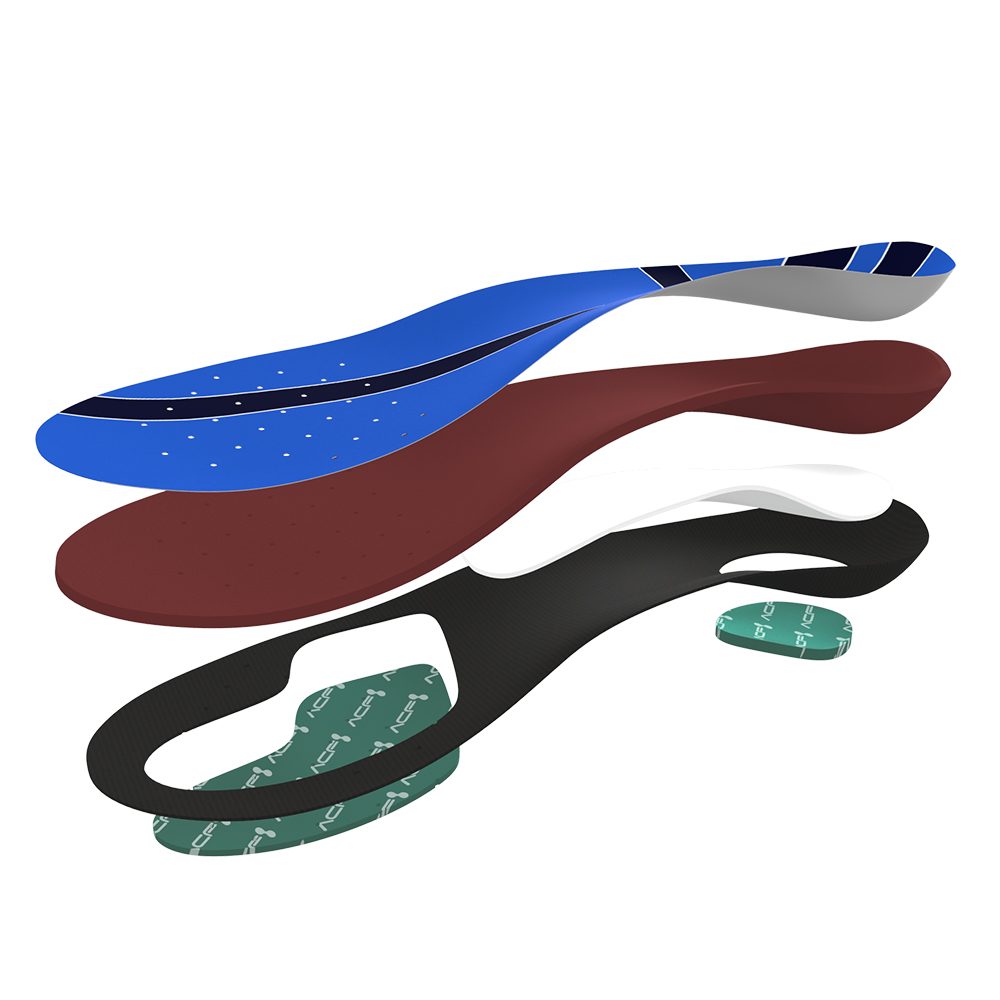
The strongest case for gel is localised: a pad under the heel, a pad under the first metatarsal head, a pad at the point where the shoe’s own cushioning has worn thin. In each case the gel is doing a small, defined job in a defined place, and the surrounding structure carries the load.
Heel pads are the classic example. The calcaneus takes a concentrated load at heel strike, and a gel pad spreads that load across a wider area and damps the impact. The pad is small, the cost is contained, and the effect is easy to explain to a customer.
Forefoot pads follow the same logic where a sport involves repeated loading of the ball of the foot. The pad sits under the metatarsal heads, spreads pressure and reduces the sensation of a hard surface. Again, the surrounding shell decides whether the insole works; the pad decides how it feels.
Where a gel layer is the wrong answer
A gel layer running the full length of an insole is usually a compromise. It adds weight, it reduces the stiffness of the shell above it, and it makes the insole harder to fit inside a shoe with limited volume. The result is a product that feels pleasant in the hand and vague under the foot.
Gel is also the wrong answer where the brief calls for control. If the specification asks for a shell that resists a particular motion, a soft layer between the foot and the shell works against that. The shell may be right and the build may still fail, because the layer above it absorbs the very force the shell was meant to transmit.
And gel is the wrong answer where durability matters more than feel. A pad that takes a lasting compression set after a season turns a supportive insole into a flat one, and the customer experiences that as the product wearing out rather than as a design choice. For high-volume team supply, a foam that holds its thickness may be the better specification even if the sample feels less luxurious.
Durability, compression set and aging
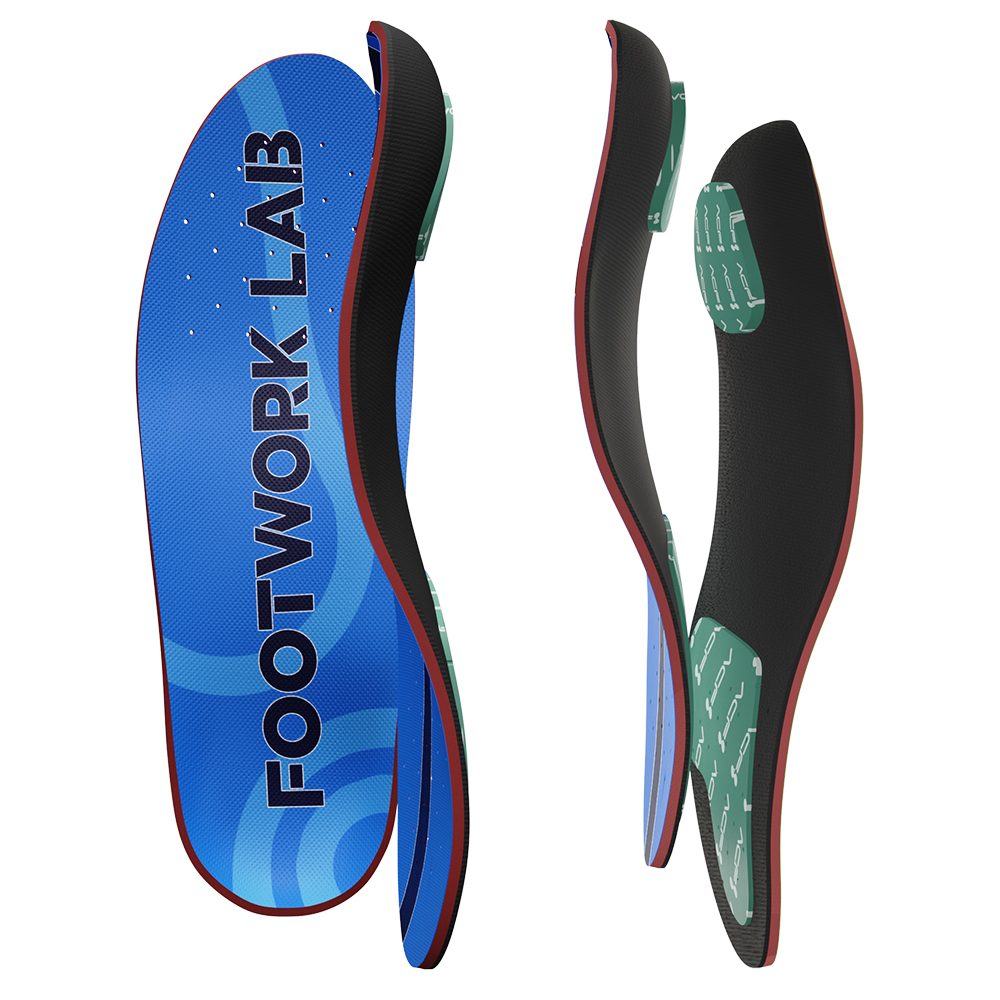
Compression set is the property that decides whether a gel pad still does its job after a year. It describes how much of a deformation remains after the load is removed. A pad with poor compression set gradually becomes thinner at the point of highest load, which is exactly where it was needed.
Heat and UV accelerate the process. An insole left in a car, a shoe stored in a warm room, a product shipped through a hot climate: all of these age a gel faster than laboratory conditions suggest. Suppliers who test only at room temperature are testing an easier life than the product will have.
Bonding is the second durability question. Gel pads that are merely placed in a cavity can migrate; pads bonded with the wrong adhesive can lift at the edge and create exactly the pressure point the pad was meant to remove. Ask how the pad is retained, not just what it is made of.
Specifying placement, thickness and hardness
A gel specification has four parts: the material family, the hardness, the thickness and the footprint. All four need to be written down, because a pad described only as “heel gel” can be produced in a range that behaves completely differently.
Footprint is the part most often left to the supplier, and it is the part that decides whether the pad feels like cushioning or like a lump. The pad should sit under the region the brief identified, and it should not extend beyond it into an area where the foot needs contact with the shell.
Hardness and thickness interact. A soft, thick pad spreads load over a wide area and feels vague under a heavy athlete; a firm, thin pad feels precise and does less cushioning. The right combination depends on body weight, sport and shoe, which is exactly the information a good brief captures at assessment.
Sourcing: what to ask before ordering
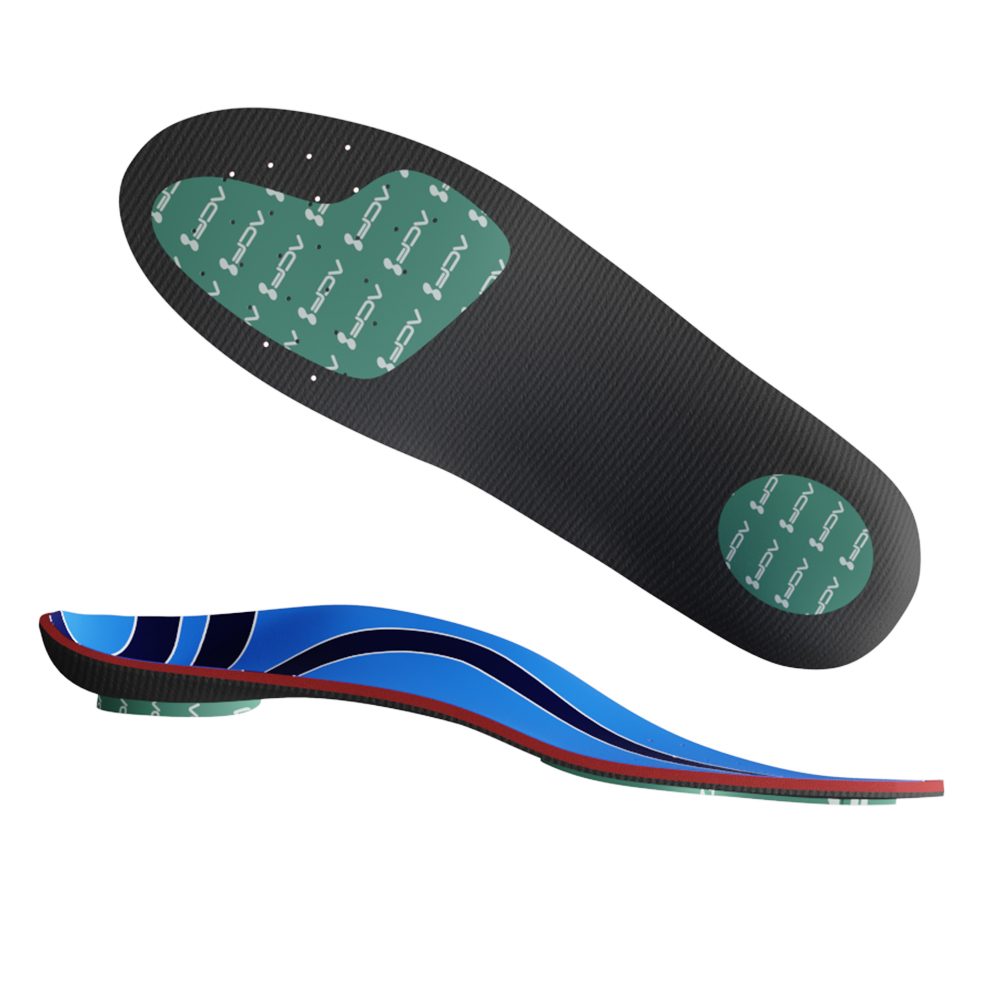
Ask for a sample in the exact specification you intend to order, not a generic demonstration pair. Then wear it, or have someone in the target use case wear it, for long enough that the novelty wears off. Ten minutes in a fitting room tells you how a pad feels when new; a week tells you how it behaves when it has taken load.
Ask what happens at the edge of the pad. A step change in thickness under the foot creates a pressure line, and the way the supplier transitions from pad to shell is a mark of build quality. Ask to see a cross-section, or cut a sample open. Suppliers who are proud of their build will not mind.
Then ask about consistency between batches. Gel formulations vary, and a supplier who buys pads on the open market will produce pairs that differ between orders. Our own production holds a specification on file for each build, which is what makes a reorder a reorder rather than a new product.
The cost side of a gel specification
Gel adds cost in three places, and a buyer should know which one they are paying for. The material itself is more expensive per unit area than most foams. The assembly step is slower, because a pad has to be positioned and bonded rather than laid into a full-length sheet. And the inspection step becomes more specific, because a pad that has migrated is not visible from the outside.
None of that makes gel a bad choice. It makes it a choice that should be justified by the job it does. A pair where the pad sits under a region the brief identified is worth the extra cost. A pair where the pad runs the length of the insole because the product photograph looks better is paying for decoration.
The same arithmetic applies to a range. A supplier offering five gel variants is often offering one build with five pad placements, and the buyer who understands that can ask for the two that matter and skip the rest. Narrow ranges sell better than wide ones when the sales conversation is technical, because the customer can hold the difference in their head.
What to inspect in a returned pair
Returns are the cheapest source of specification data a supplier has, and they are usually wasted. A returned pair should be inspected, not simply credited. Where did the pad sit relative to the brief? Had it migrated, compressed, or detached at one edge? Was the top cover intact above it?
Two or three inspections usually reveal a pattern. If pads migrate forward, the cavity is too shallow at the toe end. If they compress at the heel, the material is too soft for the body weight in that use case. If covers lift above the pad, the bonding method is wrong for the surface. Each of those is a fixable specification detail, and each is invisible without opening the product.
Keep the findings in a log against the build. Over a year that log becomes the most valuable document in the programme, because it is the only record of how the product behaves after it leaves the building.
None of this is an argument against gel. It is an argument for specifying it deliberately, so that the part of the product the customer notices is also the part the brief intended. A build that survives a year of use and still does what it was specified to do is a better sales story than a sample that feels good in the hand.
Honest claims at the counter
Gel sells itself in the hand, which makes it tempting to over-explain at the point of sale. The temptation should be resisted. A gel pad cushions and spreads load. It does not change the structure of the foot, and it does not replace an assessment.
The counter conversation that works is short: this pad sits under the heel to spread load and damp impact; the shell around it does the supporting; here is how the pair should feel in the first week. Customers who understand that framework come back with useful feedback instead of complaints.
Our own material follows the same discipline. We describe what our equipment measures and what our insoles are built to do, and our certification scope is limited to the documentation we hold: European Union certification and ISO quality system certification. We would rather under-claim a gel pad than have a customer discover the gap later.
Frequently asked questions
Is gel better than foam for a sports insole?
It depends on the job. Gel is good at local cushioning under a concentrated load and gives a damped feel that many athletes like. Foam is lighter, often more durable under sustained load, and easier to integrate into a full-length build. Many good insoles use both.
Will a gel pad flatten over time?
All cushioning materials change with use. The question is how much and how fast, which is described by compression set. Ask for the figure and for the test conditions, and expect a different answer for silicone, TPE and polyurethane gels.
Can gel be combined with a rigid shell?
Yes, and that is the most common sensible build: a shell that carries the structural job with a gel pad placed where local cushioning is needed. The pad should be localised so it does not soften the whole shell.
How thick should a heel pad be?
Thick enough to spread load and thin enough that the heel does not lift inside the shoe. The shoe’s internal volume sets the limit, which is why the footwear record belongs in the specification.
What is your minimum order for a gel build?
Two hundred pairs for insoles, mixed across models and sizes. Samples are dispatched within three days of specification approval, so the exact build can be evaluated rather than a demonstration pair.
Do you supply gel material on its own?
We supply finished insoles built to a specification. If you are sourcing material for your own production, we will tell you what we use and why, but our commercial scope is the finished product and the assessment equipment that supports it.
How long does shipping take?
Six to seven working days by express, ten to twelve by air freight, and thirty to thirty-five days by sea, depending on destination and clearance.
What we would do next
If you are specifying a gel build, start from the brief rather than the material: where does load concentrate, and how much of it should the pad take? Our article on Poron in a custom build covers the foam side of the same decision, and the insole categories page shows the builds available for a first order.
For minimum order, samples, ODM and OEM, warranty and logistics, see the FAQ page. To have a specification reviewed before production, contact our team, or see the plant where the pairs are made.
This article is intended for professional and educational reference. It is not medical advice. Foot assessment equipment produces measurements and images; clinical interpretation and any decision about care remain the responsibility of a qualified professional. Certification scope is limited to the documentation we hold: European Union certification and ISO quality system certification.