
Carbon fiber occupies a strange position in the insole trade: buyers
ask for it by name, most of them cannot say what job they want it to do, and suppliers quote it
back without asking. That combination produces some expensive disappointments — not
because the material is poor, but because it was never matched to a foot, a use case or a build.
This article is the briefing we wish arrived with every carbon-fiber request: what the material
is good at, where it is the wrong answer, and the questions that decide which one applies to
your order.
FOOTWORK LAB produces custom orthotic insoles at its own plant in Ruichang, Jiangxi Province,
alongside the assessment equipment that supplies the order data. Material requests arrive
weekly — carbon fiber among them — and our production team answers each one the same way: from
the recorded foot outward, not from the material inward. This article passes that method to
buyers.
The method matters because carbon requests usually arrive with momentum behind them — a
customer heard about it, a competitor advertises it, a previous supplier used it as an upsell.
Momentum is not evidence, but it is also not nothing: it tells you the market is asking a
question, even if the question is badly phrased. The sections below rephrase it — what the
material does, where it belongs in a stack, which use cases it genuinely serves — so the next
conversation with a supplier, or with a customer, can happen at the level of roles rather than
reputations.
What carbon fiber actually brings to a build
Carbon fiber’s defining property is stiffness-to-weight: it holds a shape firmly while
adding very little mass. In an insole build, that translates into a specific capability — the
ability to create a rigid or semi-rigid structural element that keeps its geometry under load,
foot after foot, without weighing the build down. Foam and EVA cushion loads; carbon holds a
line. They are different employees with different job descriptions.
That capability has natural fits. Builds whose specification calls for a firm plate under
the forefoot or midfoot region. Sport-oriented builds where a stable lever through push-off is
part of the intent. Builds where a slim profile must remain stiff — thickness is one way to
buy rigidity, and carbon buys it more cheaply in terms of bulk.
And the capability has natural misfits. A build specified for cushioning and softness gains
nothing from a rigid plate. A wearer who needs the ground conversation — sensory feedback
through the sole — may find a stiff plate mutes it. And a build whose problem is insufficient
shock absorption will not be rescued by adding stiffness; the specification has to be re-read
from the data.
The question that should precede every carbon request
When a buyer asks for carbon fiber, our production team asks one question first: which
recorded feature of the foot is the material responding to? A pressure recording in stance and
movement, with posture capture alongside, either supports the request or redirects it. If the
data shows a use case where a stable structural element serves the specification — carbon has
a role. If the data shows a cushioning problem, a comfort priority or a sensory-sensitive
wearer, the honest answer is that carbon is the wrong tool, however fashionable the keyword.
This is not gatekeeping; it is what “custom” means. A build specified from measurement uses
materials where they serve the foot. A build specified from keywords uses materials where they
serve the sale. Both can ship in carbon-fiber packaging; only one deserves the name custom.
The keyword problem has a commercial tail worth naming: material-name upselling. In a market
where buyers arrive asking for a named material, some suppliers discover that agreeing is
cheaper than assessing — the keyword gets quoted, the build stays ordinary, and the price
carries the premium. Buyers protect themselves with the same instrument used throughout this
article: the recording. A quotation that references the recorded foot, region by region, is
priced for a build; a quotation that references the keyword is priced for the conversation you
brought to it.
Buyers can apply the same test to any supplier: ask what data the carbon decision was based
on, and listen for whether the answer references a recording or a mood.
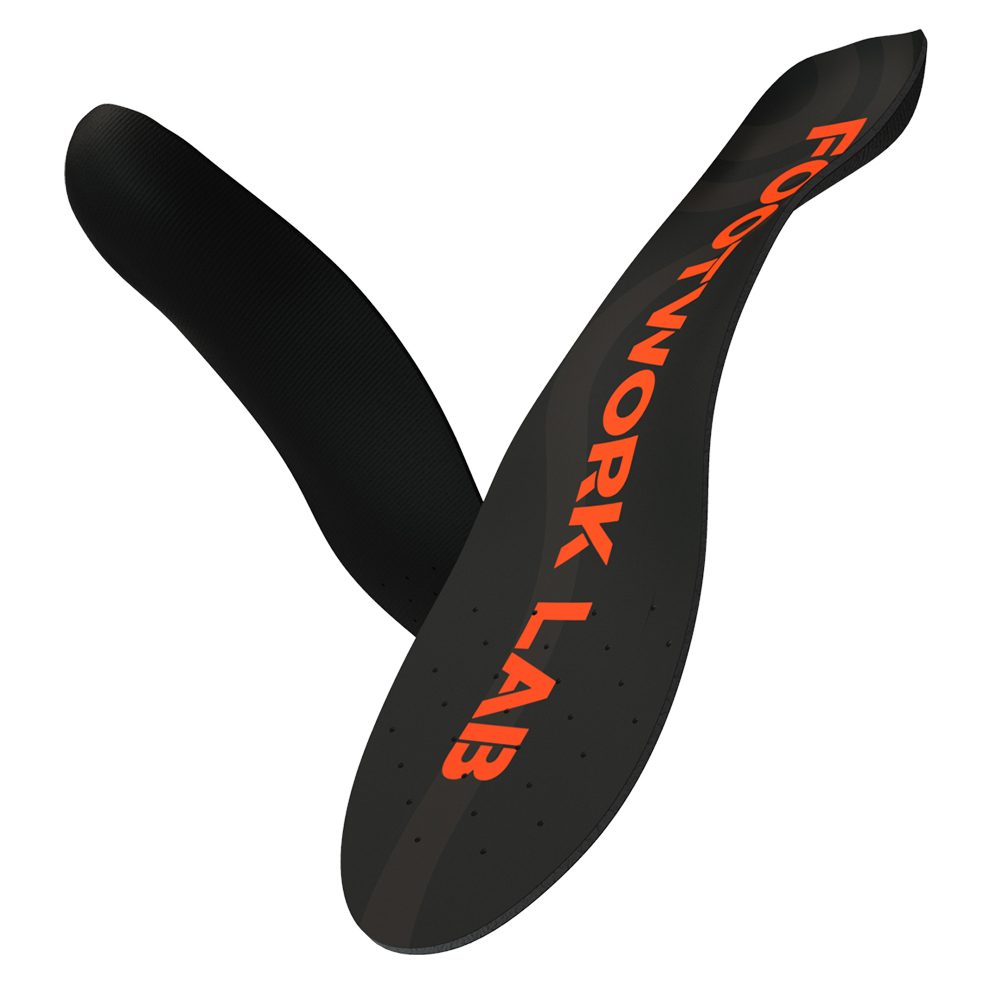
Where carbon sits in the layer stack
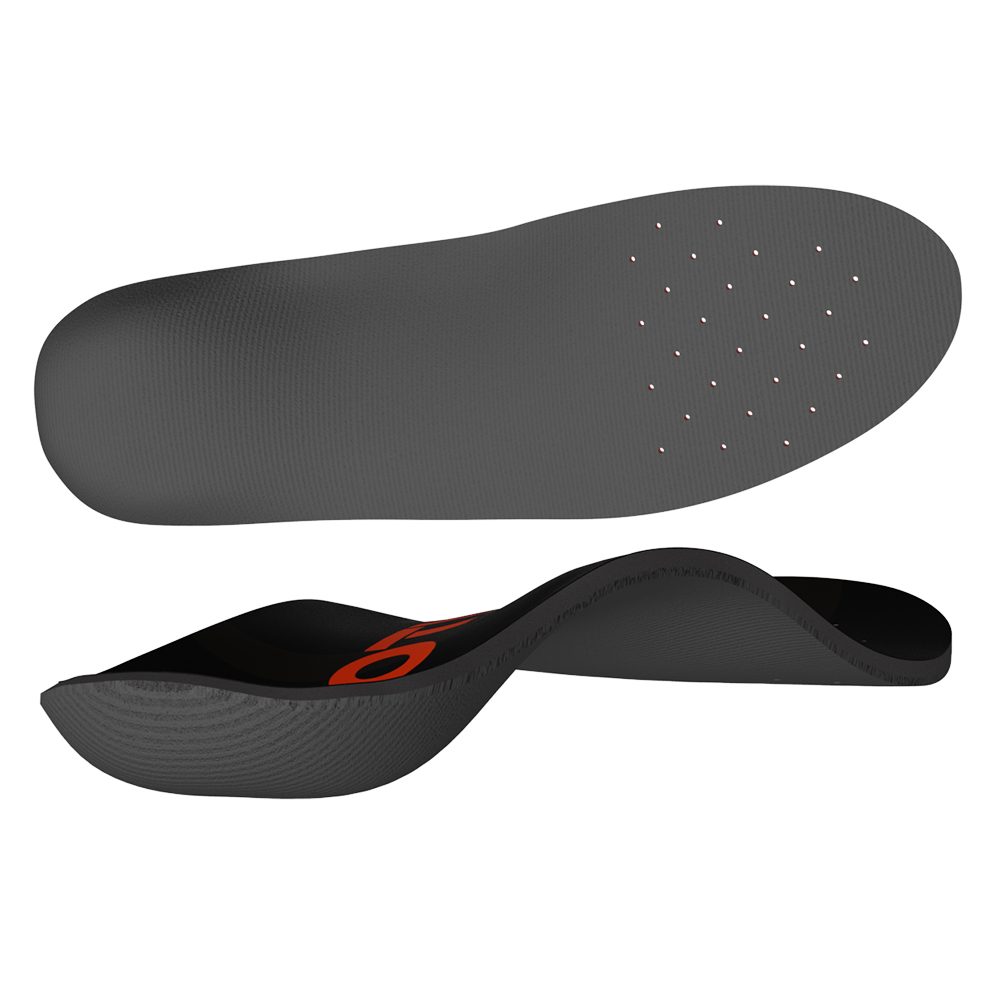
In builds that use it, carbon typically appears as a plate or spring element within the
stack — beneath the cushioning layers, above the shell region or integrated with it, shaped to
the geometry the specification calls for. Placement is everything: the same plate in two
positions produces two different behaviours, and the difference between a build that works and
one that does not is often a matter of millimetres of placement decided by a specifier who
read the data.
Buyers evaluating suppliers on this point can ask a surprisingly revealing question: show me
two builds you have produced with the same material in different placements, and explain the
difference. A production team with real specification depth answers from its order book; one
without, answers from theory. The question costs nothing to ask and is difficult to answer well
without genuine experience — which is exactly what makes it useful. Material capability is a
datasheet; placement judgement is a history, and histories are the thing you are actually
shopping for.
Around the plate, the rest of the stack continues its own jobs — cushioning where the load
pattern asks for it, a top sheet chosen for contact quality and climate. A well-specified
carbon-containing build does not feel like a carbon product; it feels like an insole that
happens to hold a line where the specification wanted a line held.
This is the strongest argument for factory experience in material decisions: placement and
integration are learned from builds that come back. At our daily production pace — five
hundred to a thousand pairs, each inspected against its specification — the feedback loop is
continuous, and the material palette reflects what the loop has taught.
Integration quality also shows up in the sample, if the evaluation knows where to look. A
well-integrated structural element disappears into the build — the pair bends where it should,
holds where it should, and the edges of the element are neither felt nor heard. A poorly
integrated one announces itself: a pressure line under the midfoot, a boundary the foot
notices, a stiffness that arrives where the specification wanted give. Buyers wearing samples
should walk, stand and take stairs with that checklist in mind; the element’s integration
quality is palpable long before it is measurable.
Use cases where buyers most often request it — honestly assessed
Sport and performance builds are the loudest source of carbon requests, and some of them are
right: where the specification calls for a stable lever and a repeatable platform, carbon
earns its place. But many requests in this segment are status borrowing — the material
associates with elite equipment — and the data, reviewed honestly, describes a cushioning and
comfort problem that stiffness does not address.
Occupational builds — long hours on hard floors — generate requests too, and again the data
decides: where the specification wants structure and posture support, carbon can serve;
where the complaint is fatigue under impact, cushioning specification is the conversation.
The honest assessment of use cases is also where a good supplier earns their keep by
disagreement. When a buyer’s request does not match the data, the valuable answer is the
redirect — with the reasoning attached — rather than the compliant quote. Every redirect we
issue costs us a little short-term comfort and saves the customer a season of wear-testing a
mismatched build. Buyers can encourage that behaviour by asking, early in the conversation,
what their supplier has talked customers out of, and why. The question flatters nobody and
informs everybody.
Dress and slim-profile builds are the quiet, high-success case: when a shoe has no room for
a thick build but the specification still calls for structural stiffness, carbon’s
stiffness-to-weight property is exactly the right answer. Buyers serving formal-footwear
markets should ask their suppliers about this case specifically — it is where the material is
least talked about and most often the right answer.
The dress-shoe case is also the best illustration of why material decisions belong to
specification rather than to fashion. In that use case, carbon is not a performance statement;
it is a geometry solution — maximum structure in minimum height — chosen because the shoe
leaves no alternative. The same logic applies across the palette: every material in a build is
there because something in the recording, the footwear or the use case called for it, and the
moment a material is there for the brochure, the build has started misdescribing its own
design.
How to brief a carbon-fiber order properly
Bring the recording, not just the keyword. A pressure session in stance and movement, with
posture capture — from assessment hardware such as our F2 and
FMP platforms — gives the specifier what they need to confirm or redirect the material
choice. State the use case: hours, surfaces, footwear, climate. State the service context:
who fits the pair, how it is sold, what the remake policy is when a build does not suit.
Then demand the sample. Sample pairs dispatch within three days of specification approval
in our workflow, and a carbon-containing build especially deserves wear-testing before
volume: stiffness is the property buyers have the strongest prior opinions about and the
least accurate intuition for. The thousandth pair should match the sample; that is a process
question, answered by inspection against specification — which our line does at five hundred
to a thousand pairs daily, and which any serious supplier should describe concretely.
The brief also has a commercial dimension buyers should use deliberately: state the
programme’s growth path. A service launching with two hundred mixed pairs and hoping to double
within a year should say so, because production planning, material stocking and even build
documentation differ between a one-off order and a developing programme. Factories plan better
when they can see the trajectory, and buyers benefit directly from that planning in lead times
and consistency. Transparency about volume intentions is one of the cheapest reliability
improvements available in a supplier relationship.
What carbon cannot promise
A carbon element holds geometry and redistributes load. It does not promise outcomes, and
builds should be described in exactly those terms: a structural element, specified from
measurement, doing a defined job. Wearer experience varies with foot, use and adaptation, and
no material choice — carbon included — converts an insole into something more than a wearable
product. Services that keep the claim inside the product’s nature build durable customer
trust; services that borrow outcome language for a material keyword borrow trouble.
The honest-scope discipline also simplifies the customer conversation, which is where
services feel the benefit. A wearer told that a structural element holds a line and
redistributes load knows what to expect and what not to; expectations set at that level are met
by the product, and met expectations are what repeat business is made of. The material’s
genuine virtues — lightness, shape stability, slim profile — are selling points that need no
inflation, and services that sell them plainly spend far less time managing disappointment than
services that borrowed a bigger story than the product supports.
The same honesty applies to durability: carbon holds shape well, but the build around it —
top sheet wear, layer bonds — ages on its own schedule. Ask suppliers what typically wears
first in their builds and what the remake policy covers. The question is uncomfortable for
suppliers who have not thought about it, which is the point of asking.
Frequently asked questions
Can you include a carbon fiber plate in a custom build?
Yes, where the specification calls for it. The decision starts from the recorded foot: a
pressure and posture session tells the specifier whether a structural element serves the
build, and where it should sit in the stack.
What data do you need before deciding on the material?
A plantar pressure recording in stance and movement, plus posture and alignment capture.
Assessment hardware such as our F2 and FMP platforms produces both in one session.
What is your minimum order for custom pairs?
Two hundred pairs, mixed across models and sizes, so a first programme covers realistic
variation instead of one repeated specification.
How quickly can I evaluate a sample?
Sample pairs dispatch within three days of specification approval — worth wearing properly
before volume, since stiffness is the property buyers judge least accurately in
advance.
Does carbon fiber make an insole better?
It makes it stiffer where stiffness is specified and correctly placed — which is better for
some builds and wrong for others. Cushioning problems are not solved by stiffness; the data,
not the keyword, decides.
What certification documentation do you hold?
European Union certification and ISO quality system certification, and we keep our claims
within exactly that scope.
Are you a factory or a trading company?
A factory. Insole development and production run in-house at our Ruichang plant, operating
since 2018, alongside the assessment equipment we manufacture.
What we would do next
Bring us the recording and the use case, and let the data vote on the material. The F2 and FMP platform generates the specification input; the insole categories page shows the build families a carbon
element can be integrated into; and the arch support insole guide
walks a full build layer by layer. Standing answers on MOQ, samples and logistics live on the
FAQ page, the factory page shows the line
behind the promises, and the contact page starts the specification
conversation with the team that runs it.
This article is intended for professional and educational reference.
It is not medical advice. Foot assessment equipment produces measurements and images; clinical
interpretation and any decision about care remain the responsibility of a qualified professional.
Certification scope is limited to the documentation we hold: European Union certification and ISO
quality system certification.