
Three different buyers type the same phrase and want three different machines. A podiatry clinic wants a session it can document and repeat. A shoe retailer wants a fitting step that shortens a sale and reduces returns. A research or sports lab wants numbers it can compare across weeks. All three search for a scanner for foot assessment, and all three will be sold the same catalogue page unless they write down what their room actually needs to produce.
The useful way to read a specification sheet is therefore not feature by feature but session by session. Walk through one realistic appointment in your own room — who stands on the device, who operates it, what is printed at the end, who reads it, and what happens to that record. Anything on the sheet that does not serve that sequence is cost without function. Anything the sequence needs but the sheet omits is a gap you will discover in month three, usually in front of a patient.
We build foot assessment systems in Ruichang, Jiangxi, and have done since 2014, with our own plant in production since 2018. That vantage point makes us biased toward one question: what does the equipment have to hand over to the professional? Everything below is organised around that handover, because a capture that cannot be read, compared or explained is not an assessment — it is an image.
Start with the room, not the catalogue
A room decides more about a purchase than a brochure does. Measure the clear floor space, note whether the surface is level, check where the power and network points sit, and think about the path a patient takes from the waiting area to the device and back. A system that needs a person to walk a defined line asks for more length than a static standing capture, and a room that cannot give that length will quietly turn a dynamic purchase into a static one. Buyers who map the room first tend to end up with equipment they actually switch on.
Then count the sessions. A single-chair clinic seeing a handful of assessments a day has different requirements from a retail chain running fitting stations through a weekend. Throughput is not only about capture speed; it is about how quickly a record becomes something a colleague can read while the patient is still in the chair. Where the report is assembled by hand afterwards, the true cost of a session includes that desk time, and it is the number most often left out of a purchase case.
Finally, name the people who will operate it. If the answer is a trained clinician, the interface can carry more depth. If the answer is a retail assistant with two hours of onboarding, the workflow has to be short, guided and hard to get wrong. Both are legitimate; they simply are not the same product. Writing the operator’s name on the requirement sheet is the single most useful discipline we see in buyers who end up satisfied.
What the session has to record
A foot assessment session usually needs three kinds of record: how load is distributed under the foot, what the leg and posture look like while standing or walking, and how the two relate. The first comes from pressure sensing; the second from camera capture of alignment; the third from software that places them side by side on one screen. Each of the three answers a different question, and a system that provides only one should be judged on that one alone — not on the vocabulary of the other two.
Load distribution is the part buyers underestimate. A static standing record shows where weight sits at rest; a dynamic record shows the path load takes through a step. They are not substitutes. A clinic documenting a fitting decision usually wants the static picture plus a walking sequence; a retailer fitting footwear may only need the static standing view and a footprint. Asking which of the two your protocol actually uses will halve the specification list before you have spoken to a single supplier.
Posture capture is where language drifts most. What the camera records is an image of alignment — where the knee sits relative to the foot, whether the pelvis is level, how the shoulders sit over the base. That is an observation, not a conclusion. The conclusion belongs to the professional reading it. Systems that present the image as a verdict, with colour codes and arrows pointing at a diagnosis, are selling certainty the hardware cannot supply.
The subsystems, described plainly
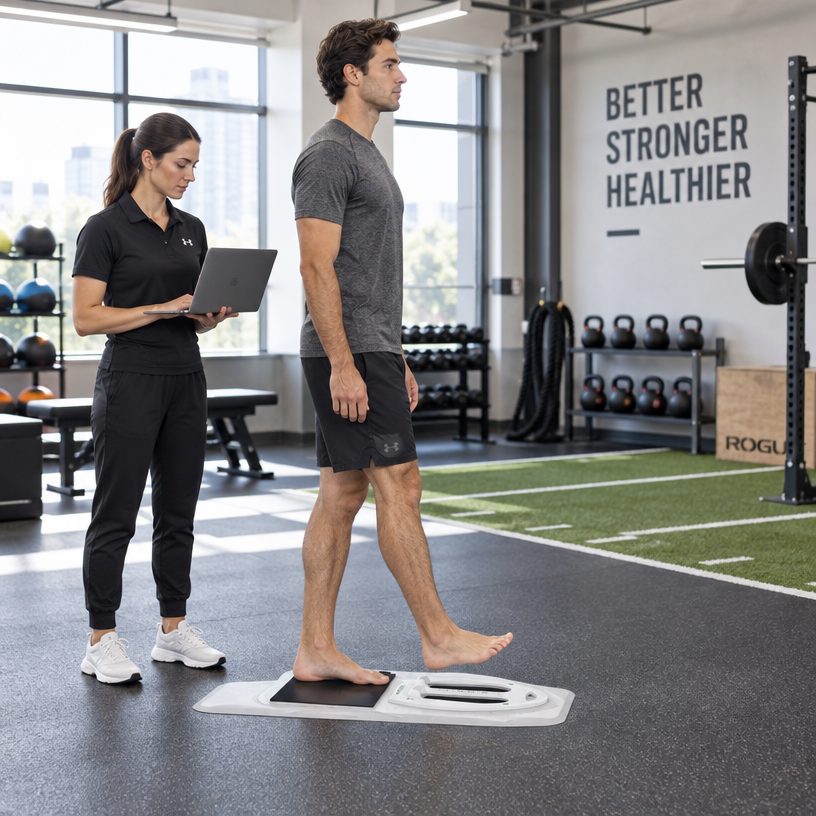
Our own systems are built from three layers, and we describe them the same way to every buyer. Pressure sensing captures load under the foot through a sensing surface. Camera capture records posture and alignment while the person stands or walks. Analysis software joins the two, stores the session and produces a report. There is no fourth layer, and nothing in that list is a shape-capture scanner: our equipment measures pressure and posture, and the term 3D appears in the market as a search word for a category of products, not as a description of what our hardware does.
That distinction matters commercially. A buyer who expects shape capture and receives pressure mapping will feel misled even when the invoice matches the quotation. A buyer who knows they need load data and posture images will use the system from the first week. We would rather lose an order at the specification stage than win one that ends in a mismatch, which is why our quotations list the capture types in plain words and repeat them in the demonstration.
Software deserves its own line in the budget conversation. It decides whether two sessions can be compared, whether a record can be found six months later, whether a report can carry a clinic’s own header, and whether the device can be updated without a site visit. Ask to see the report template before you sign, and ask what happens to the data when the machine is replaced. A capture device with weak software is a camera with an expensive stand.
Questions to put in writing before ordering
Put the answers in the purchase file, not in a chat thread. Which capture types are included, static and dynamic or one of them? What exactly appears on the printed or exported report? Can the clinic’s own template be applied? How many sessions can be stored locally, and where do they go when exported? What is included in the warranty and what is chargeable? Who is the first point of contact after installation, and in what time zone do they work?
Then add the questions suppliers find uncomfortable. Is a demonstration done on our own room’s floor, or only in a showroom? Can we see a report produced from a real standing capture rather than a sample file? What training is included, and how long does it take an untrained operator to complete a session unsupervised? Which parts are consumable, and how are replacements ordered? A supplier who answers these in writing is describing a relationship, not a transaction.
We answer the same set for every enquiry: our units ship after seven days of testing before dispatch, carry a twelve-month warranty against non-human damage with free parts, and are supported through a dedicated WhatsApp group with direct engineer access, remote assistance, and over-the-air updates where the unit is connected. Buyers can compare that against any other offer in the same format, which is the only fair way to compare at all.
Costs that sit beside the invoice
The invoice is the smallest part of the total. Training time, the hours a senior colleague spends reviewing early sessions, the room changes needed to get a clean capture, and the software habit of filing records properly all belong in the business case. So does the plain question of utilisation: a system used twice a week cannot pay back on the same schedule as one used twice an hour, and pretending otherwise is how equipment ends up under a cover cloth.
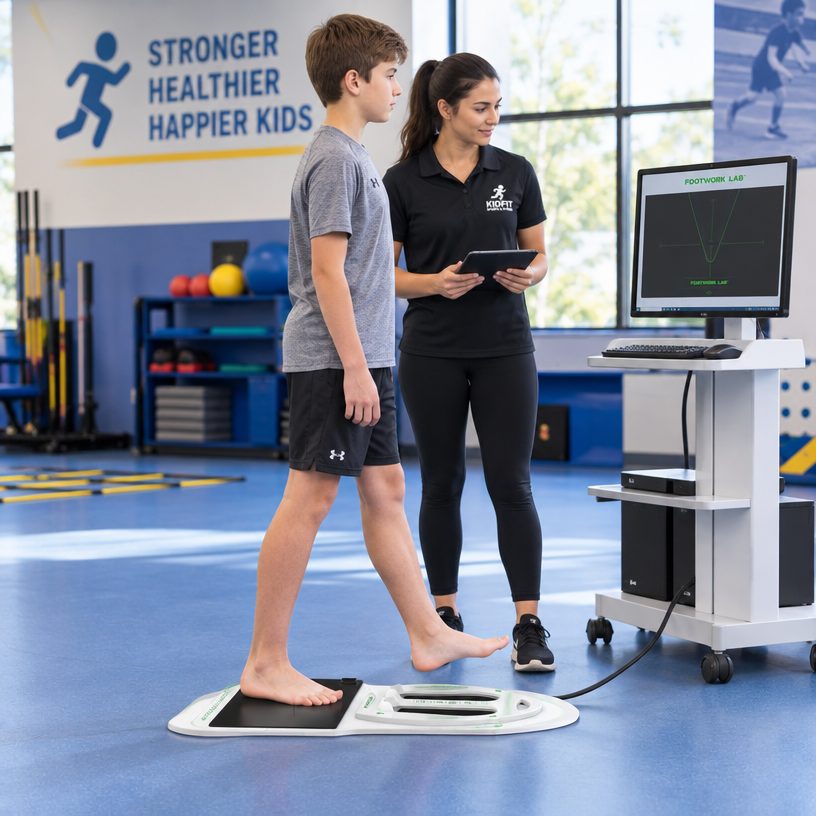
Retail buyers have a specific version of this problem. A scanner at a fitting station pays back through conversion and returns, not through clinical output, so the measure is how often staff actually use it. Placement near the fitting bench, a scripted two-minute explanation, and a clear link from the scan to a product recommendation matter more than an extra capture mode. We have seen shops buy depth they never use and shops buy a simple workflow they use all day; the second group sells more insoles.
Clinics have the reverse risk: they buy a simple workflow and then find the report too thin to support the decisions they are already making. The remedy is the same in both cases. Write the session you intend to run, price the time it takes, and buy the equipment that serves it. The catalogue is a menu, not a recommendation.
Budget conversations go better when they include the alternative. Name what the clinic would do without the equipment — send the customer to a colleague, fit from an outline and a conversation, or buy the insole from a supplier who supplies the record as part of the order. Some rooms discover that the honest answer is to buy the insole service rather than the hardware, which is a fine outcome and cheaper for everyone than an unused machine.
Support and the second year
The second year of ownership is where suppliers separate. Ask what happens when a sensing surface drifts, when a camera mount is knocked, or when a software update changes a screen your staff know by heart. Ask whether support is a ticket queue or a named channel. Ask how a fault is triaged before anyone travels, because travel time is what turns a small fault into a lost week.
Our answer is a group channel rather than a form: buyers get a dedicated WhatsApp group with our engineers in it, remote sessions where a screen can be shared, and updates delivered over the air on connected units. It is not a glamorous promise, and it is the one buyers reference most often when they order a second unit. Support quality is remembered in the language of minutes, not features.
Certification is the other second-year question. We hold European Union certification and ISO quality system certification, and we describe the scope of both exactly as the documents define it. Buyers who need a specific import document for their market should raise it before an order is scheduled rather than after cartons are sealed; asking early is normal and costs nothing.
A checklist for the demonstration
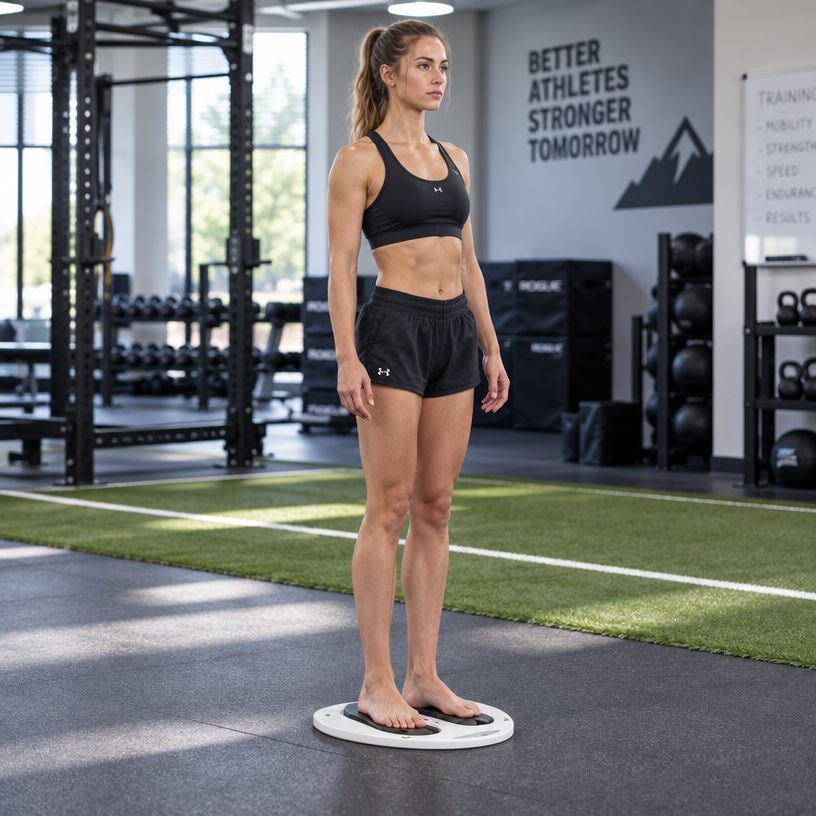
Take five lines into the demonstration. One: show a full session on a person standing, from first screen to printed report, without cutting away. Two: show a second session on the same person and put the two records side by side. Three: show what the report looks like when the capture is poor, and explain how the operator would notice. Four: show where the data lives and how it leaves the system. Five: show who answers a support message on a Tuesday afternoon.
A supplier who can walk those five lines has a product they understand. A supplier who cannot is improvising, and improvisation at the demonstration stage rarely improves after delivery. Buyers are entitled to ask for the awkward demonstration, and we would rather give it in a showroom than have a buyer discover the gap after installation.
The search term that brought you here — a scanner for foot assessment — describes a category, not a model. The category contains static pressure mats, dynamic platforms, posture capture systems and combinations of all three. Sorting your own requirement into one of those boxes, on paper, before a quotation arrives, is the entire job. Everything else is negotiation.
Frequently asked questions
What is the difference between a foot scanner and a pressure platform?
A pressure platform records how load is distributed under the foot, statically or during walking. The word scanner is used loosely in the market for several different capture methods, including shape capture. Buyers should ask which quantity is recorded — load, shape or alignment image — rather than relying on the term on the listing. Our systems record pressure and posture.
Can one system serve both a clinic and a retail fitting station?
It can run in both settings, but the workflow differs. A clinic needs a report detailed enough to support a professional decision; a retail station needs a two-minute path from capture to product recommendation. The same hardware can serve both if the software allows two report templates, which is worth confirming before purchase.
What is included in the warranty?
Our units carry a twelve-month warranty covering non-human damage, with free replacement parts. Consumable items and damage from misuse fall outside it. The warranty terms are stated in the quotation so they can be compared directly with other offers.
How is the equipment supported after installation?
Support runs through a dedicated WhatsApp group with our engineers in it, alongside remote assistance where a screen can be shared and over-the-air updates for connected units. Installation includes operator training, and the group remains the first point of contact afterwards.
Do you sell single units or only container loads?
The minimum order for equipment is one unit. We are a factory rather than a trading company, so a single unit ships from the same line as a multi-unit order, after seven days of testing before dispatch. Insoles carry a separate minimum of two hundred pairs, mixed across models and sizes.
How long does delivery take?
Express runs six to seven working days door to door for sample and small lots, air freight ten to twelve days, and sea freight thirty to thirty-five days for full programme shipments. The mode is planned with the buyer at scheduling so a receiving date holds.
Can we see a report before we commit?
Yes. Ask for a report produced from a real standing capture rather than a sample file, and ask for a second session on the same person so you can see how two records compare. That pair of documents tells you more about the software than any feature list.
What we would do next
If you are weighing a purchase, send us the room dimensions, the number of sessions you expect in a week and the operator’s role, and we will return a short written recommendation naming the capture types that fit — and the ones that do not. Our FAQ page carries the order, warranty and transit details in full.
Buyers comparing several offers can use the same five-line demonstration checklist with each supplier and compare the answers side by side. It is a fairer test than any specification table, and it usually settles the decision in one afternoon.
This article is intended for professional and educational reference. It is not medical advice. Foot assessment equipment produces measurements and images; clinical interpretation and any decision about care remain the responsibility of a qualified professional. Certification scope is limited to the documentation we hold: European Union certification and ISO quality system certification.