
A strength-and-conditioning coach at the Hong Kong exhibition laid three worn pairs of insoles on our stand table and asked which pair his athletes should be wearing in the next block. The honest answer started with a question he had not brought with him: what does the next block ask the foot to do? Physical training does not load a foot evenly across a season. A strength block, a high-volume conditioning block and a speed block each press on different parts of the same sole, and a build that suits one can work against the next. This article follows that coach’s question through the FX Sport range: how the four build grades — support, anti-torsion, cushioning and starting ability — map onto what a programme demands, how a centre switches grades between blocks without turning a shelf into a warehouse, why the natural reorder date is set by the programme rather than the calendar, and what we ask a training centre to check before it orders. It is written from the manufacturer’s side of that conversation, for the people who run the sessions.
The FX Sport line is one of three series in the range, sitting beside the daily-comfort builds and the rehab-care builds, and its own list runs from golf and outdoor to skate, ski, fitness, basketball and the racket sports. Every build in it starts from the same two inputs: a BODYFIT AI assessment of the foot, and senthmetic flexible-fabric sensing technology in the material itself. The assessment is designed to run alongside our X5 detection system, which is how the record and the build stay connected rather than drifting apart. And every build is specified on four grades rather than one: a support grade, an anti-torsion grade, a cushioning grade and a starting-ability grade. Those four lines are the vocabulary this article uses throughout.
One member’s file across a physical training season
Picture a training-centre member measured at the start of a season. The X5 session puts three things in one record: foot data from the plantar capture area, lower-limb biomechanical alignment, and whole-body posture angles — neck tilt, shoulder drop, pelvic tilt, knee position among them. The coach now holds a record of where this foot carries load and how the leg is stacked above it, at that date, under those conditions.
The season then splits into blocks, as programmes do. A strength block with heavy compound lifts. A conditioning block with long running and skipping volume. A speed block with sprints and change-of-direction work. The member is the same person on the same assessment plate at each boundary; the demands underneath are not the same at all, and that mismatch between a fixed record and moving demands is the whole reason grades exist.
At one Canton Fair booth we asked coaches how they handled this today, and the answers clustered around two habits: buying one “training” insole and hoping it covered everything, or letting each athlete pick by feel from a retail wall. Both habits share the same gap — nobody connected the build to the block. The centres that had it figured out were smaller operations, usually, and they all described the same move: they treat the insole like a piece of kit that changes with the phase, the way studs change between surfaces.
The file matters as much as the grades. A record taken in September says nothing about what the member did in November unless the two were captured under the same conditions — same stance protocol, same pace, same passes — and the coach kept the earlier one. Centres that skip the filing step end up re-assessing from scratch every block, which doubles the work and quietly throws away the comparison the first assessment was taken for. The insole programme and the record-keeping habit are one system; buying the first without the second is the most common half-purchase we see from new centres.
What a block changes under the foot
The loads move around. In the manual’s own anatomical zoning, the areas that take the brunt of walking and running sit under the first to third metatarsal heads and across the inner and outer heel. High-volume conditioning stretches the time under load — more ground contacts, more repetitions of the same roll through the step. Heavy strength work loads fewer contacts at higher intensity and adds twist through the midfoot as the body braces. Sprint and plyometric work concentrates everything into short, sharp contacts at push-off.
Each of those profiles argues for a different emphasis in the build. More time under load asks for cushioning that holds its shape late in the session. Bracing and twisting ask for a structure that resists torsion. Short, explosive contacts ask for a build that returns energy at the front of the foot rather than soaking all of it. No single build does all three at their maximum, and a supplier who claims otherwise is selling a slogan.
One thing needs saying plainly here, because training centres hear it wrong surprisingly often. The assessment produces recorded quantities — pressure distribution, contact behaviour, alignment angles — and the reading of those quantities belongs to the qualified professional in the room. The record describes what the loaded foot did on that day. It is not a diagnosis, and we do not present it as one, even when a buyer would prefer a machine that hands down verdicts.
The four grades, read as build decisions
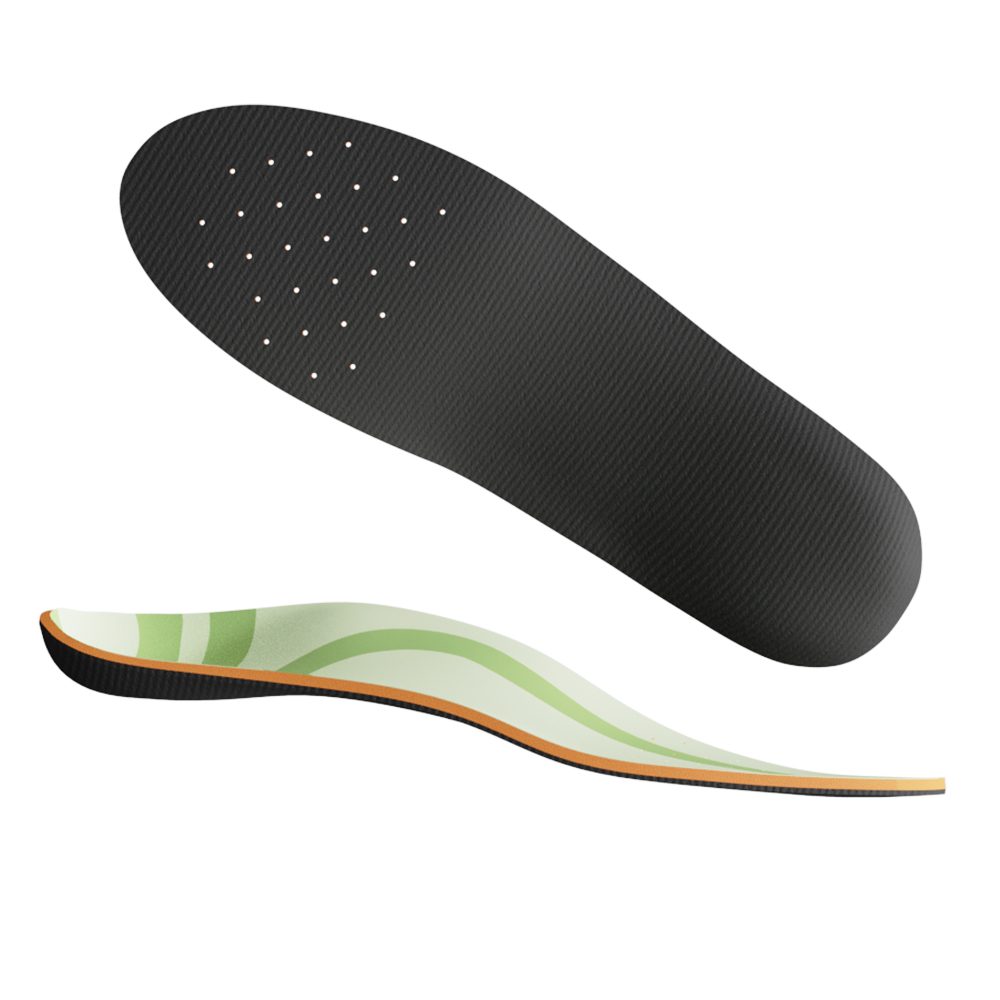
The support grade governs how much the arch area holds. A foot that collapses inward under sustained load needs more of it; a foot that already holds its shape needs less, because excess support is just as much a specification error as too little. This grade is the one that changes most between a strength block, where the body braces hard, and the quieter blocks around it.
The anti-torsion grade governs resistance to twist through the midfoot. Change-of-direction work, racket sports and heavy unilateral lifting all feed it. The cushioning grade governs how the build manages impact — the Osolite cushioning layer and the external shock-absorbing pads in our structures exist for this line of the specification, and the everyday casual build’s mesh fabric, Osolite layer and AQ polymer shaping board show the same logic in a milder form.
The starting-ability grade is the one coaches ask about most and understand least on first hearing. It describes how the build behaves at push-off: how much it returns, how much it gives way. A cushioning-heavy build can genuinely feel dead to a sprinter; a stiff, responsive build can punish a long-run day. The grade exists so that this trade-off is written down instead of discovered on the first speed session after a delivery.
Read together, the four grades turn “which insole” from a yes-or-no product question into a short specification conversation. That is deliberate. Our pre-sales calls keep hearing the same opening — “what is your best sport insole?” — and the only honest reply is that the category does not have a best; it has a set of grades that move with the programme.
A worked example keeps it concrete. Take a racket-sport member whose record shows a loading pattern concentrated under the first and second metatarsal heads with a midfoot that twists on lunges. A cushioning-forward build would feel pleasant in the first session and vague in the fourth week, when the twisting has flattened it. Moving the anti-torsion grade up and trimming cushioning back a step produces a build that feels firmer on day one and still describes the same shape in week eight. The specification conversation, done properly, is about weeks, not first impressions — which is also why we ask centres to judge samples on ordinary training days rather than on a staged afternoon.
Switching grades between blocks
In practice the switch is smaller than newcomers expect. The base build stays the member’s; one or two grades move. A member entering the strength block might take the support and anti-torsion grades up a step and keep cushioning where it was. The same member moving into the conditioning block brings cushioning up and lets anti-torsion rest. The speed block pulls the starting-ability grade forward and trims the rest back toward neutral.
Centres that do this well keep the decisions on the member’s file, next to the assessment record. When the next block arrives, the coach is adjusting a specification, not starting a search. The file also makes the conversation with the member easier: you can show why this block’s build differs from last month’s, and the member sees a programme rather than a sales pitch.
There is a limit we state to every centre, and it belongs in this section. We do not claim a build improves performance, corrects posture or prevents injury, and we ask that centres do not make those claims on our behalf either. What the grades change is what the foot works against during the session. The training outcomes come from the coaching, the programming and the athlete. An insole that is specified well makes the work more comfortable and better matched to the load; that is the honest extent of the claim, and an order built on anything beyond it is an order we would rather not take.
Why the reorder date sits in the programme
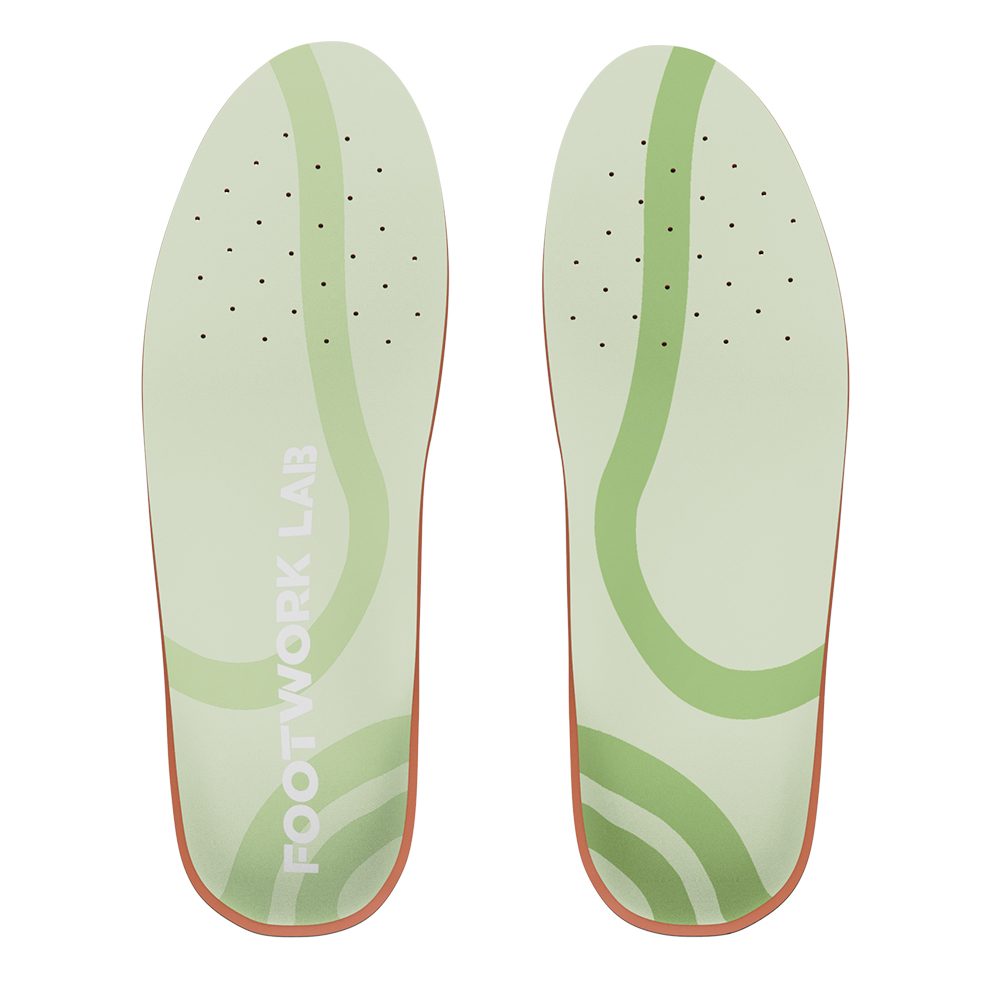
The builds wear. Our own manual’s figure for daily wear is four to six months, and it states plainly that high-intensity sport shortens both the lifespan and the support and cushioning behaviour. A training-centre member training hard will reach the end of a build’s useful behaviour sooner than the calendar suggests, and the moment they notice is rarely the moment they reorder — it is usually a block or two later, after sessions that felt off.
This is why we keep telling centres to attach reorder checks to block boundaries rather than to dates. The transition is already a moment of attention: new phase, new emphasis, natural point to look at the file, look at the build in the shoe and decide whether the grades still describe what the member needs. Centres that build this check into the handover between blocks report that reorders feel like part of the service instead of a second sale.
The rhythm also protects the centre from over-ordering. Because grades switch between blocks, a centre needs depth in the popular grade combinations rather than a full grid of every option, and the file history shows which combinations its own membership actually cycles through. On one support conversation, a centre owner showed us a spreadsheet built exactly this way — grade combinations down the side, blocks across the top — and said it had cut his dead stock within a single season.
One more detail belongs here because centres keep asking it in the first month: what happens to the previous build when the grades move? The honest answer is that most members retire the old pair to lighter training days, where its softened cushioning is a feature rather than a fault, and retire it fully when the manual’s wear window closes. A build does not become waste the day a block ends; it becomes the second pair. Centres that explain this at the handover turn a specification change into something the member understands as normal maintenance rather than an upsell.
Ordering from the factory: samples, minimums and the claims we leave out
The commercial side is shorter than most centres expect. Insole minimum order is two hundred pairs, and those pairs can mix styles and sizes, so a centre’s first order follows its membership rather than a factory grid. Samples ship within three days, which means the coach can put builds on the bench, trim them at the footbed, slide them into the shoes members actually wear and judge the range before committing. Builds accept ODM and OEM development, so a centre running a branded programme can put its own mark on the product.
Production sits at our own plant, with capacity of roughly five hundred to a thousand pairs a day across the line. That number matters less to a single centre than the sentence before it — the plant builds what it sells — but it matters when a centre’s programme grows and reorder timing starts to carry consequences. It is the same reason we exhibit at the trade fairs: to let buyers meet the maker before the first order, not after the first complaint.
Two claims we leave out on purpose. First, we do not write symptom names into a build as promises — where a rehab-care direction exists for flat-footed loads or plantar fasciitis-type pressure needs, the name describes who the build is specified for, and the outcome conversation belongs to a professional. Second, we do not offer regional exclusivity to training centres, because the promise we can actually keep is about build quality, grading and delivery, and we would rather be questioned on what we control.
Frequently asked questions
Do different sports really need different grades?
The sport range is ordered by sport — golf, outdoor, skate, ski, fitness, basketball and the racket sports each have builds — and the four grades are then specified per person from the assessment. Two basketball players can wear builds with different support and starting-ability grades. The sport picks the family; the record picks the specification.
How does the assessment connect to the build?
The BODYFIT AI assessment runs alongside the X5 detection system, which captures foot data, lower-limb biomechanical alignment and whole-body posture angles in one session. The professional reads that record and sets the grades against it. The record guides the specification; it does not write it unattended.
How long does a sport build last?
The manual’s daily-wear figure is four to six months, and it notes that high-intensity sport reduces both lifespan and the support and cushioning behaviour. We do not promise a longer life than that, because intensity varies too much between members. Checking the build at block boundaries is the practical habit.
What is the minimum order for a training centre?
Two hundred pairs, and the pairs can mix styles and sizes, so the first order can match the membership instead of a factory size grid. Samples ship within three days for the bench test before any wholesale commitment.
Can our centre brand the insoles?
Yes. Insole builds accept ODM and OEM development, which covers branding and specification work for a centre’s own programme. Tell us the branding plan at enquiry so the packaging and marking are built into the order rather than added after it.
Does a higher support grade correct a flat foot?
No. The support grade changes what the arch works against under load; it is a specification choice made by a professional from a record. We do not market any grade as correcting foot structure, and we ask centres to frame it the same way to members.
When should members reorder?
When the build no longer matches the block — which the centre catches by checking the file and the build at each block boundary. Because intensity shortens the build’s life, hard-training members cycle sooner than the daily-wear figure suggests. The programme sets the date, not the calendar.
What we would do next
If you run a training centre, start with the blocks, not the catalogue: write down the three or four phases your programme actually runs, and which of the four grades each one stresses. Send that through the contact page and the recommendation you get back will be a grade map rather than a price list. The insole categories page shows the three series and the sport family in the manual’s own wording, and the FAQ page carries the order, sample and delivery terms.
For how the sport builds are specified and ordered in practice, read orthotic sport insoles ordered by sport and custom orthotic insoles for sport; for the assessment side that feeds the grades, fitness analysis in a gym covers the studio use of the record.
This article is intended for professional and educational reference. It is not medical advice. Foot assessment equipment produces measurements and images; clinical interpretation and any decision about care remain the responsibility of a qualified professional. Certification scope is limited to the documentation we hold: European Union certification and ISO quality system certification.