
In the eleventh month, a clinic manager writes to ask what happens next. The unit has run without trouble, the staff know the routine, and the only thing on her mind is the date: the warranty runs out soon, and nobody has told her what the second year looks like. She is not asking for a discount or a new machine. She is asking a more sensible question — what should be on the shelf, who should she call, and what is she supposed to be doing herself.
That question rarely appears in a quotation, and it is the one that decides whether a system is still in use three years later. Equipment in this category does not usually fail dramatically; it drifts. A belt wears, a cable works loose, a camera gets knocked a few degrees off, a staff member leaves and the routine goes with them. None of those is a warranty event, and all of them stop a clinic recording properly if nobody has planned for them.
What follows is the second-year view. What twelve months of cover actually means, what it does not reach, the parts worth holding as spares rather than ordering in a hurry, how remote assistance is started properly, what network updates do and do not change, and how a dedicated support group works best when it is used as a channel rather than a hotline.
Twelve months covers parts, not everything that can happen
The warranty on our machines runs twelve months and covers free parts where the fault is not caused by human damage. That sentence is short and it is worth reading slowly, because each half of it does work. Twelve months is the period. Free parts is the remedy. Not caused by human damage is the test that decides whether the remedy applies, and it is the part buyers skim.
What that covers in practice is a manufacturing fault: a component that was wrong when it left the plant, a connector that failed early, a sensor channel that stopped reporting for a reason nobody in the room created. Those are our responsibility, and the plant tests every unit for seven days before dispatch precisely because most of that class of fault shows up early if anybody looks for it.
What it does not cover is the ordinary life of a working machine. A belt that has carried several thousand sessions is not faulty; it is worn. A cable that has been walked over is not faulty; it has been walked over. A camera that was knocked when a cabinet was moved is not faulty either, and neither is a unit that stopped because the power in the building fluctuated. Support in those cases is still support, but it is parts and time rather than a claim.
The practical advice for a buyer is to get the exclusions in writing at the point of purchase, in the same document as the coverage, and to read them next to the way the site actually works. A clinic that shares a room with other equipment, or a shop where the unit sits near a door, has a different exposure from a lab where the machine has its own corner. The warranty is the same on paper; the risk is not. Where a site is unsure, the simplest habit is a photograph of the unit on the day it was unpacked, with the delivery note beside it, kept in the same folder as the invoice.
It also helps to know what the clock runs from. A warranty dated from dispatch and a warranty dated from installation are different instruments, especially where a unit sits in a crate for a month while a room is finished. Ask which date is written on the document, and if it is dispatch, plan the installation so that the first year overlaps the period when the unit is actually working. That single question has saved more than one site from discovering, in month eleven, that three of those months were spent in storage.
The things a warranty does not cover, and why the list matters
The first item on the list is wear. Every surface that a foot stands on, and every belt that moves under one, is a consumable in the honest sense of the word: it is designed to be used up, and the rate depends on volume rather than on care. A site running twenty sessions a day will replace wear items long before a site running three, and neither site has done anything wrong.
The second is handling. Units get moved between rooms, wheeled over thresholds, lifted onto benches for cleaning, and packed for an exhibition. Damage that happens in transit after delivery, or during a move inside the building, is not a manufacturing fault, and it is the single most common cause of the calls we receive in the first month. Keeping the crate is not sentimentality; it is the cheapest insurance a site can hold.
The third is the environment. Unstable power, a room that floods in the rainy season, dust from a workshop next door, condensation from an air conditioner pointed at the unit. None of that is exotic, and all of it shows up as an intermittent fault that takes a week to diagnose. A stabilised supply and a covered unit cost far less than the sessions lost while the cause is found.
The fourth is people. A unit opened at the bench by somebody who is not our engineer, a lens cleaned with the wrong cloth, a cable forced into the wrong port. We would rather be told than not told — a site that admits what happened gets a faster answer than one that reports a mystery — but we are also clear that this is not a warranty matter.
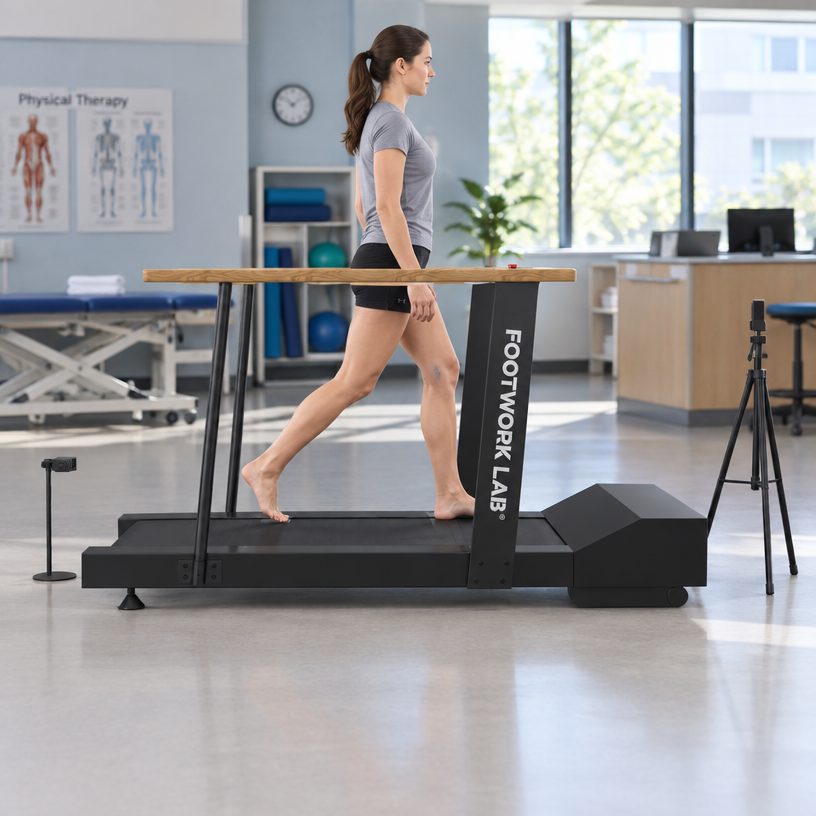
The parts that wear: a stocking list rather than a repair list
The useful exercise in month ten is to sit with the session log and ask which components the site would miss most if they failed on a Friday. For a treadmill-form unit that list is short: the walking surface and its belt, the cables and the hub that carry the cameras, the camera mounts, and whatever the site uses to cover the surface between customers. None of these is expensive in the way a sensor array is expensive, and all of them can stop a clinic for a week if nobody has one.
The logic of a spare is not to duplicate the machine; it is to remove the single point where a small failure becomes a closed room. A spare belt and a spare cable turn a lost week into a lost hour, and they cost a fraction of what the downtime costs in cancelled appointments and a clinician standing idle. The right question is not what might break, but what would stop the room if it did.
Replacement intervals should be set from the site’s own usage rather than from a number in a manual. A surface that carries light traffic and a surface that carries a full clinic day are the same part under different conditions, and the site can see the wear before we can: the surface where feet land most often, the edge where the belt runs, the cable that bends every time the unit is wheeled out. Two minutes a month with a torch beats a schedule imposed from outside.
We do not publish prices for spares in an article, because a part number and a destination change the answer and a figure printed here would be wrong by the time it is read. What we will do is list the parts that a site of a given size should hold, in the same conversation as the order, so the spares arrive with the machine rather than a year later when the first belt gives out.
How remote assistance actually starts
Remote assistance is the part of support that saves the most time and is used the least, usually because nobody knows how to start it. The start is not a phone call; it is a description. Three sentences will do: what the site was trying to do, what happened instead, and whether it happens every time or only sometimes. With those three, an engineer can usually tell within minutes whether the cause is in the software, the routine or the hardware.
The second thing to send is a picture. A photograph of the screen at the moment of the error, a photograph of the room, a photograph of the cable run. Pictures remove the largest source of wasted time in remote support, which is two people using the same word for different things. A site that photographs habitually gets answers on the first exchange, and a site that describes from memory often needs three.
The third is availability: someone standing at the unit, with the network up, at a time when the engineer can work. Remote sessions fail more often from a missing person than from a missing connection. Booking a window — even a short one — is far more efficient than trying to catch somebody between customers, and it gives the site a reason to have the unit switched on and the last session file open.
What remote assistance cannot do is reach into the room. An engineer can see what the software sees and can talk an operator through a check, but cannot tighten a mount, clean a lens or notice that the unit is standing on an uneven floor. Where the fault is physical, the call becomes a diagnosis and a parts conversation, and the sooner that is accepted the sooner the room reopens.
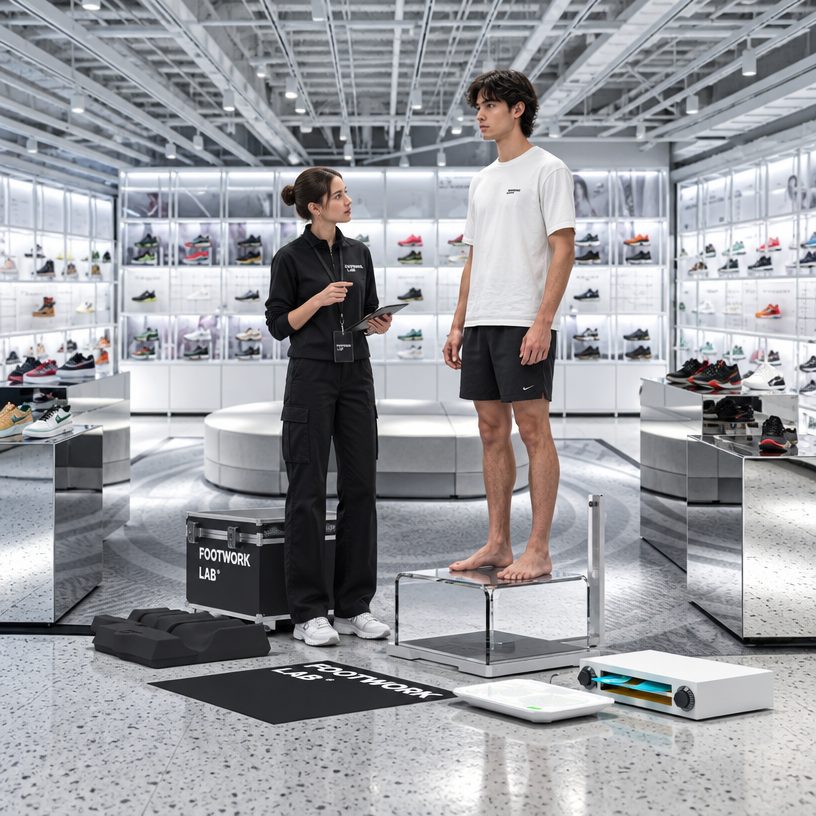
Updates over the network: what changes, what does not
Where a unit is connected, software updates can be delivered over the air. In practice that means report structure, the naming of items, the way results are grouped on a page, and the smaller corrections that accumulate in any software that is used daily. They arrive without shipping media, without a visit, and usually without the site doing more than accepting them at the end of a day.
What an update does not do is change the hardware or the routine. It will not bring a worn belt back, re-seat a camera that has been knocked, or teach a new operator where to stand. Sites sometimes expect a software update to resolve a consistency problem that lives entirely in the room, and the disappointment that follows is really a category error: the update changes what the unit reports, not what it measured.
There is a discipline to updates that is worth adopting. Read the note before accepting, keep the unit on a network the site controls rather than a guest network, and update at the end of a day rather than ten minutes before a patient. Where a site has a busy week ahead, waiting until the quiet day is a legitimate decision, and one that a support engineer will usually endorse.
We do not describe updates as improvements to accuracy or to the meaning of a record. They change how information is presented and how the software behaves; they do not turn a measurement into a judgement, and they do not add clinical capability. That line matters in a clinical setting, where a version number should never be mistaken for a qualification.
Using the group chat properly
Every unit ships with a dedicated WhatsApp group that includes engineers who can answer directly. It is the channel we prefer, for one reason: everything about one machine sits in one thread, in order, with pictures attached. A question asked in March and answered in March can be read again in November by a new staff member, which is more than can be said for a phone call.
The groups that work well share a few habits. One issue per thread, with the serial number pinned at the top. Photographs instead of descriptions where possible. A short closing message when the problem is solved, so the next reader knows which suggestion worked. And a named person at the site who owns the channel, so that messages do not arrive from five staff members about the same fault.
The groups that work badly share a habit too: they are used as a place to think out loud at the end of a long day, with a clinic opening in the morning. That is understandable and it is also the fastest way to get a slow answer, because a clear question at a reasonable hour is easier to act on than a stream of consciousness at midnight. Urgency is best expressed in one sentence, marked as urgent, with the symptom and the consequence.
Over a year, the thread becomes the site’s own service history: what failed, what was replaced, what was tried, who was involved. That is worth keeping even after the warranty ends, because the second year’s questions are usually answered by the first year’s record — and because a site that can show its history gets faster help than one that starts every conversation from the beginning.

Frequently asked questions
What does the twelve-month warranty cover?
Free parts where a fault is not caused by human damage, within twelve months of delivery. In practice that means manufacturing faults: a component that was wrong when it left the plant, an early connector failure, a channel that stopped reporting for a reason nobody at the site created.
What is not covered?
Wear items consumed in normal use, damage from handling or transport after delivery, faults caused by unstable power or the room environment, and work done on a unit by someone who is not our engineer. Ask for the exclusions in writing at purchase and read them against the way the site actually works.
Which spare parts should a site hold?
The ones whose failure would close the room: the walking surface and belt, the cables and hub, the camera mounts, and whatever covers the surface between customers. The question is not what might break but what would stop the room if it did.
How do we start a remote assistance session?
With three sentences — what you were doing, what happened instead, and whether it happens every time — plus a photograph of the screen. Then book a window when someone is standing at the unit with the network up. Remote sessions fail from a missing person more often than a missing connection.
Do network updates change how the machine measures?
No. They change software: report structure, item naming, grouping, and accumulated corrections. They do not alter the hardware, the routine in the room or the meaning of a record, and they are not a substitute for maintenance.
What is the WhatsApp group for?
Direct access to engineers, with the machine’s whole history in one thread. One issue per thread, the serial number pinned, photographs rather than descriptions, a closing message when it is solved, and one named person at the site who owns the channel.
What should be planned before the first year ends?
A review of the session log, a spare parts list sized to the site’s volume, a named internal owner for the routine, and a copy of the service thread kept where staff can find it. That is what makes the second year a plan rather than a hope.
What we would do next
If the first year is coming to an end, send us the delivery date, the number of sessions the unit runs in a typical week, and a photograph of the surface under the belt. From those three we can say which parts are worth holding and which can wait, through the contact page. There is no charge for that conversation and it usually takes one exchange.
The F5-LAB system page lists the components that make up the unit, which is the list a spares plan is built from. Three articles extend the picture: what a gait analysis system is made of explains the layers a service plan has to keep working, a gait treadmill changes the capture covers what the belt contributes to a record, and in-house or factory sets out how a site decides which work it does itself.
This article is intended for professional and educational reference. It is not medical advice. Foot assessment equipment produces measurements and images; clinical interpretation and any decision about care remain the responsibility of a qualified professional. Certification scope is limited to the documentation we hold: European Union certification and ISO quality system certification.