
A fitter opens a courier box on the treatment couch and lays six pairs in a row, still in their bags. She ordered them on a Friday and they arrived on the Tuesday, and the speed has already done something to her mood: a supplier who answers that quickly is a supplier she can plan around. Then she does what every experienced buyer does. She takes one pair out, bends it at the ball, runs a thumb along the edge, turns it over and reads the underside by eye. The box has answered the easy questions in three days. The questions she actually cares about will take a season to answer. This article is about that gap. It sets out what a short sample turnaround genuinely settles, what it leaves untested, which details have to be written down before a bulk order is placed, and where the boundary sits between a build we develop for a customer and a build we simply put their name on.
A sample is a physical argument, not a preview
A catalogue is written by the seller and read by the buyer, and both parties know the photographs were chosen. A sample changes the nature of the conversation because it can be handled without anyone describing it. The buyer stops asking whether the range exists and starts asking whether it suits the shoes on her shelf. That is a different question, and it is the one that decides whether the product sells or sits.
The questions that arrive in the first ten minutes are never the ones in the brochure. Does the edge finish catch on a sock when the foot slides in? Does the plate flex under the ball, or stay rigid all the way to the toe? Is the cover bonded flat at the heel cup, which is where it usually lifts first? Are the left and the right of one pair actually the same shape? None of that can be answered in a specification sheet, and all of it decides whether a fitter hands the pair over with confidence or with an apology.
What the sample is not is the range. It is one build in one size, and a buyer who receives a care build from the middle of the size run and judges the whole line by it will misjudge the line. Ask for the build you expect to sell most of, in the size your counter sells most of, and ask for a second build if the decision is genuinely between two. Two pairs in the hand settle more than six pairs in a photograph.
There is a small point about who chooses. If an enquiry asks only for a sample, someone on our side picks the build and the size, and that pick is a quiet act of salesmanship. Name the build, the size and the shoe it is meant for, and the parcel stops being a sample of our taste and becomes a test of your question.
It helps to give the box a job before it arrives. A shop weighing up a first range might give the sample to two members of staff and one regular customer, and ask each of them the same three questions afterwards: where does it press, where does it feel loose, and would you put it in your own shoe tomorrow. Answers written down on the day are worth more than impressions recalled at the end of the month, and they turn a parcel into the first page of a file rather than a pleasant afternoon.
What three days of sampling actually proves
Three days is a dispatch promise, not an evaluation window, and it is worth being precise about which one is being measured. What the speed proves is that the order path works — that a request becomes a parcel without a month of emails, a forwarded price list and a lost attachment. In a first order that matters more than buyers admit, because the same path will carry the reorder.
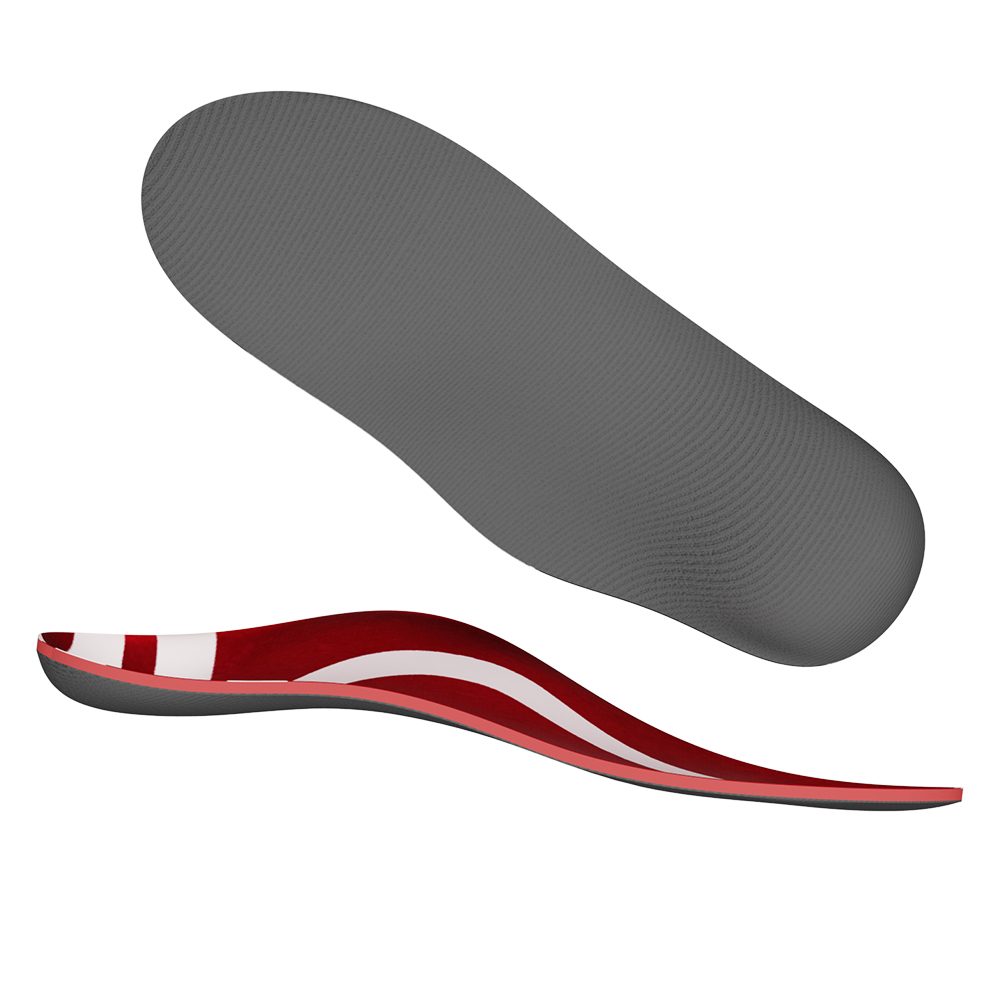
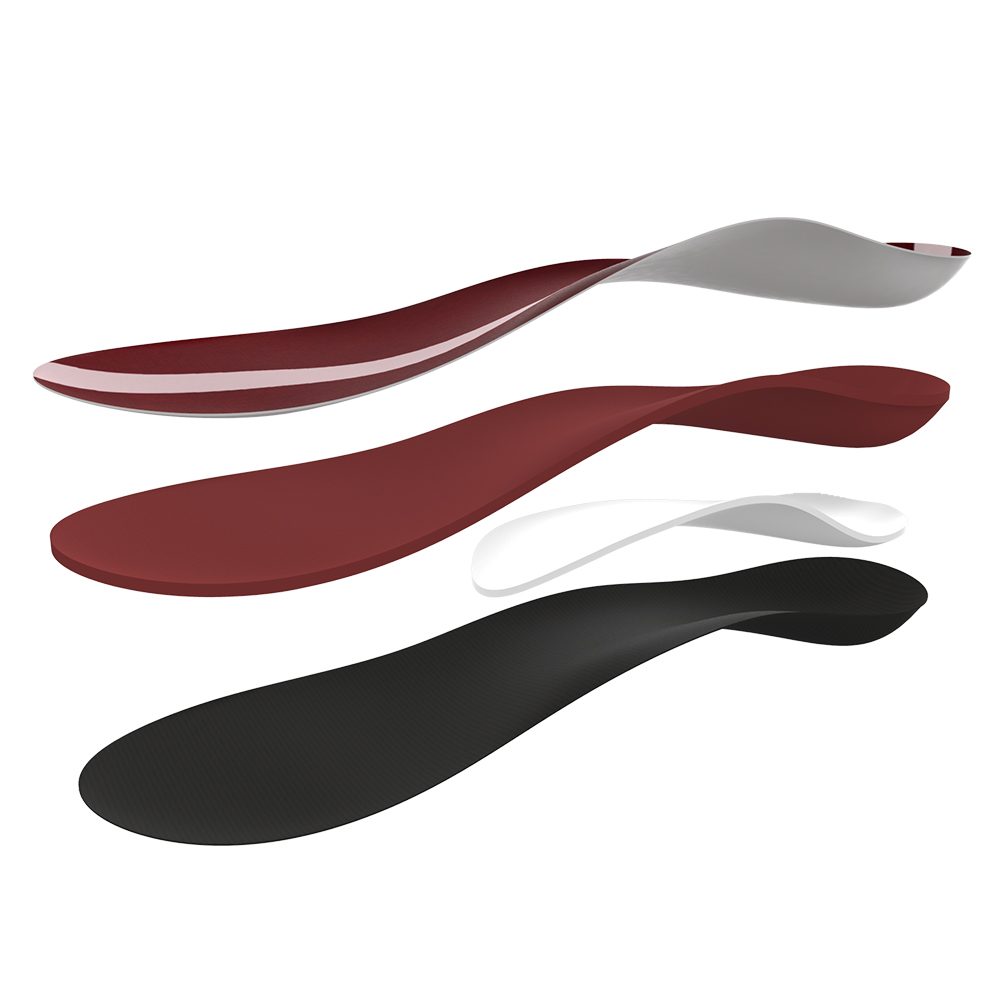
What the parcel itself proves is construction. Layer order, bonding, the face cloth, the middle, the plate underneath: a buyer can see whether the stack is laminated into one article or merely laid together and trimmed. A build that separates at the toe after a week of wear usually looked separated in the hand on day one, and the buyer who noticed is the buyer who avoided the argument.
It also proves workmanship, which is the least glamorous and most predictive thing in the box. Edge trim that runs clean around the outline. A cover that follows the heel cup without a crease. Two halves of a pair that match when laid sole to sole. Consistency between left and right is the cheapest evidence that a workshop has a routine rather than a good day.
And it proves the size baseline, which fitters usually establish by doing something the catalogue never suggests: dropping the sample into a shoe taken off the shelf. Length at the toe, width at the ball, how much room the heel cup takes up inside a closed counter — those are decided by the pairing of insole and shoe, not by the insole alone. A size that fits beautifully in a roomy trainer can crowd a low-volume dress shoe, and only the shelf test shows it.
The questions a sample leaves open
Longevity is the first and the largest. An insole is asked to hold its shape through months of standing, walking, warmth and sweat, and a pair that left the plant last week cannot demonstrate any of that. We do not put a wear life in years on a product page, and we would be cautious about a supplier who does. Nothing we could run in a workshop substitutes for one season under one person’s heel.
Behaviour inside the customer’s own footwear is the second. Volume is set by the shoe, and a build that feels generous in the hand can turn a snug pair of shoes into an unwearable one. A shop that samples without walking the sample through three or four of the shoes it actually stocks has tested the insole and not the sale.
Whether the staff will use it is the third, and it is not a product question at all. A sample cannot predict whether the person at the counter will reach for the range during a fitting or leave it in the drawer and carry on with the old script. That is decided by training and by how the range is introduced, which is why we would rather send a short explanation of the three families than a longer one about materials.
Whether the curve is right is the fourth. A first order is a hypothesis about which builds and which sizes a shop’s traffic will consume, and no sample confirms a hypothesis. The confirmation arrives as a season of records and an empty shelf in two sizes. We do not tell a shop which builds will sell in its town, because we do not stand behind its counter and would only be guessing with confidence.
Four details to settle before the bulk order
The build code comes first, and it is the detail most often lost. A first order placed as “the same as the sample” produces a conversation six weeks later about which sample, in which grade, sent to whom. Write the code on the order, and write the grade beside it, because one build usually exists in more than one level of support and the difference is invisible in a photograph.
The size curve comes second: which sizes, and how many of each. A curve copied from a competitor’s shelf is a guess; a curve drawn from the shoes a shop actually sells, and the feet it actually measures, is a plan. Where the shop already runs assessments, the record stack in the drawer is the best forecast available and costs nothing to read.
The style split comes third. Two or three builds in a first order is usually enough — a daily build for the ordinary customer, a care build where load needs spreading, and a sport build only if the shop has the traffic to justify it. A first order carrying six builds spreads two hundred pairs so thin that every size is short and every style looks unpopular.
Naming and packaging come fourth, and they should be settled before production rather than after. The name a counter trains its regulars to ask for is an asset, and changing it between orders costs more than any packaging upgrade returns. Once those four are on one page and signed, the factory is building to a document instead of a memory, which is the only version of a bulk order that survives a change of staff on either side.
Two hundred pairs, mixed, and the arithmetic behind it
The minimum order is two hundred pairs, mixed across styles and sizes. The number is a production threshold rather than a sales target: below it, the cutting, laminating and finishing setup costs more than the order returns, which is why small runs are expensive everywhere and not only here. Above it, the same setup is spread across a real curve.
Production runs at roughly five hundred to a thousand pairs on a working day, so a two-hundred-pair order is a short run in the schedule and a repeat order can scale quickly once the curve is proven. Delivery moves at three speeds: six to seven working days by courier, ten to twelve days by air, thirty to thirty-five days by sea. A first order should be planned against the slowest of the three rather than the fastest, because a shelf that opens late quietly teaches staff to stop mentioning the service.
The second order should be arithmetic on the first rather than another hypothesis. Which sizes ran dry before the season ended, which builds sat untouched, which one was asked for by name after a customer had worn a pair for a month — those three answers adjust the curve in three places. Everything else stays still, and the reorder becomes a short message instead of a new negotiation.
There is a sequencing point that matters in shops new to the category. Stock before assessment, or assessment before stock, is a real choice, and the second is usually cheaper: a device that records feet for a few weeks tells a shop which builds its own traffic needs before any money is spent on a shelf. Where the shop already has the counter conversation, the range can go in first and the records can follow.
Storage deserves a line too, because a first order is often larger than a first season. Insoles keep best flat, out of direct sun, away from a radiator or a window that bakes in the afternoon; a shelf that warms through the summer will show it in the bonding before the year is out. Two hundred pairs also take more room than buyers expect once they are sorted by size, and a counter that keeps the sizes in order can answer a customer in seconds instead of emptying a box on the floor.
Where ODM stops and OEM starts
Both terms are used loosely in this trade, so here is how we use them. ODM means we develop a build to the buyer’s specification inside our own construction and tooling — a different combination of layers, a different grade, a shape adjusted for a particular shoe or a particular market. OEM means the buyer’s own mark on the product, the packaging and the paperwork, built to a specification that is already agreed. Insoles accept both from the two-hundred-pair minimum.
What we will not do is move the standard range around between orders. The names and the grading of the standard builds stay fixed, because a shop’s records point at those names and a customer’s memory points at them too. A clever improvement that arrives under a new name breaks the mapping, and the mapping is worth more than the improvement.
We also do not promise exclusivity by region. Territory is a distribution agreement with obligations on both sides — volume, support, reporting — and it is not something to be conceded in an email to win a first order. A supplier who offers it casually has usually not thought about what happens when a second buyer in the same city asks for the same range.
And we do not attach outcomes to a build. The insole matches a record; the record describes load and alignment; what either means for a particular person is a judgement for a qualified professional, and a shop that sells a pair as comfort and fit is on solid ground while a shop that sells it as a result is not. That boundary is not modesty. It is the only version of the sale that survives a customer coming back six months later with a question.
Frequently asked questions
What does a three-day sample actually prove?
That the order path works and that the build in the box is the build described. It shows construction, workmanship and the size baseline against a shoe. It does not show how the pair behaves after months of wear, and no supplier can demonstrate that from a fresh sample.
What should I check first when the box arrives?
Bend it at the ball, run a thumb along the edge, look at the bonding at the heel cup, and lay the two halves sole to sole to compare them. Then put one pair into a shoe from your own shelf, because volume is decided by the shoe.
Can a sample tell me how long the build will last?
No. Longevity depends on the wearer’s weight, gait, footwear and hours, and it needs a season to show itself. We do not publish a wear life in years, and a figure printed on a sample bag would be a guess dressed as a fact.
What do I need to decide before the bulk order?
Four things: the build code, the size curve, the style split and the naming or packaging. Put them on one page and sign it. An order placed as “the same as the sample” is the most common source of a mismatch six weeks later.
Why is the minimum two hundred pairs rather than a smaller run?
Because below that the cutting, laminating and finishing setup costs more than the order returns. Two hundred pairs mixed across styles and sizes is enough to open a real curve rather than stack one build that moves slowly.
Can I order the range under my own brand?
Yes. Insoles accept both ODM and OEM from the minimum order, so a build can be developed to your specification or produced to an agreed one under your mark. The standard range stays fixed either way, so records keep mapping onto the shelf.
Does a sample order commit me to a bulk order?
No. Samples ship within three days and carry no obligation. We would rather send a sample to a buyer who orders a season later than take a first order from someone who has never held the product.
What we would do next
Before you write, decide two things on paper: the build you actually intend to sell most of, and the shoe it has to live in. Those two answers turn a sample request into a test, and they make the reply useful. Send them through the contact page and we will send the build that matches, with the grade noted rather than assumed.
The insole range page sets out the three families and the construction of each, which is the fastest way to see whether the build you have in mind already exists. Four articles go further: a custom moulded insole begins with a mould explains the tooling side, custom moulded orthotic inserts covers the finished article, personalized foot inserts takes the retail view, and custom made functional orthotics describes how a specification is written down before production.
This article is intended for professional and educational reference. It is not medical advice. Foot assessment equipment produces measurements and images; clinical interpretation and any decision about care remain the responsibility of a qualified professional. Certification scope is limited to the documentation we hold: European Union certification and ISO quality system certification.