
The shoes come off in the hallway before the coat comes off, because twelve hours of corridor have made that the first order of business. She has been up since a quarter to six, walked whatever the ward asked of her, stood through the parts that asked her to stand, and the first thing she wants at home is not dinner but bare floor under bare feet. Ask her what hurts and she will point somewhere between the arch and the ball of the foot and say “all of it, by hour ten”. Ask what she has tried and the list is short: better shoes, once; a pharmacy footbed, twice; nothing that survived a full rotation of shifts. For the people who fit feet for a living, nurses are one of the clearest cases in the whole trade. The surface is hard, the hours are long, the footwear is constrained by the employer, and the shoes come off at the door — which means whatever sits inside them carries the entire shift alone. This article walks through what a twelve-hour shift on hospital flooring actually asks of a foot, why the shoes get blamed first, what to ask before building anything, what a pair has to survive, and what the first fortnight should confirm.
What a long shift on hard flooring asks of a foot
Nursing work has a load profile that few other jobs share, and it is worth spelling out before any pair is discussed. A shift is not one long walk. It is a mixture: bursts of fast walking between rooms, stretches of standing at a bedside or a trolley, sudden turns in doorways, and long spells of moving slowly through corridors in footwear chosen by policy rather than by the foot inside it. The floor is the part nobody negotiates. Hospital corridors and ward floors are built to be cleaned, rolled over by equipment and disinfected, and resilience underfoot is not their first priority. A foot that would complain mildly about a morning of shopping complains differently about the same distance on that surface.
The second feature is time. Twelve hours means the foot cycles through its structures more times than a recreational walker ever does in a day, and it does the last four hours on legs that have already been working for eight. Fatigue changes how a person walks: strides shorten, weight shifts, and load lands in places it did not land at hour two. Any assessment taken at nine in the morning describes a different foot from the one that finishes a night shift, and a fitter who forgets this builds for the wrong half of the shift — usually the easy half.
The third feature is constraint. Nurses usually cannot choose their shoes freely, cannot change surfaces, and cannot shorten the day. What remains adjustable is what sits between the foot and the employer’s footwear, which is exactly why the question of insoles for nurses on long shifts comes up so often in fitting rooms — and why it deserves the questions in the third section before it deserves a build. A fitter who takes the history first and the measurements second ends up with a pair aimed at the actual job instead of at a generic hard-working foot, and the difference shows up at the first follow-up.
The shoes get blamed first, and sometimes they should
When a nurse finally comes in, the story usually arrives with a verdict attached: my shoes are the problem. Sometimes that is right. Shoes that have collapsed on one side, worn through at the heel, or been worn a year past their working life will distort how load lands no matter what sits inside them. The first thing to check, before anything else, is the shoes themselves: set them on the counter, look at them from behind, press the midsole, and compare the pair against how the foot actually describes the problem. A shoe that has died in a specific place will often explain a complaint in a specific place, and no underfoot addition will rescue it.
Often, though, the shoes are adequate and the arithmetic is the problem. A good shoe on a hard floor for twelve hours still concentrates load in the same regions every cycle, hour after hour, and no shoe on its own spreads that work wide enough to make the surface irrelevant. This is worth saying plainly to the customer, because it reframes the purchase: the shoes stay, and what changes is the interface between her foot and the shoe. Expecting a new pair of shoes to fix a twelve-hour problem has failed for her before, which is partly why she is sitting in the room now.
The useful frame for the conversation is layers. Surface, shoe, interface, foot. Two of those layers are fixed by the job. One can be replaced when worn. One can be built. A fitter who walks the customer through the four layers, and names which ones the workplace controls, ends up with a customer who understands what a pair can and cannot carry — and who stops expecting any single layer to absorb a shift on its own. That expectation, set before anything is built, is what keeps the follow-up appointment collaborative instead of defensive, and it costs nothing except a minute of plain talking at the start.
The questions to ask before building anything
The build conversation for a nurse should take longer than the build itself, because the answers decide everything downstream. Six questions cover the ground, and they belong on a form rather than in memory, because a nurse is the customer most likely to come back in a year and compare notes with what was written the first time.
Ask about the shift pattern first: days, nights, or rotating, and whether the rotation changes monthly. Ask about the surface second: which wards, whether there is carpet anywhere in the day, how much of the shift is corridor. Third, the footwear: which shoes the employer allows, how old they are, whether there is a second pair in rotation. Fourth, the timing of the complaint: which hour of the shift it arrives at, and whether it is there on days off. Fifth, what she has already tried and what happened to it. Sixth, what she does after the shift, because the two hours after work are part of the same load story, not a separate life.
Two of those questions earn their space especially. The timing question separates surface problems from footwear problems more reliably than anything else: a complaint that is present on days off in soft shoes is telling a different story from one that appears at hour nine on the ward, and only one of those stories ends in a build. And the footwear-rotation question decides the practical advice: a nurse with one pair of work shoes needs a different conversation from one who alternates two. Our article on turning a customer’s own words into a build spec covers how these answers become instructions, and the short version is that every answer above should survive onto the build sheet verbatim, not summarised into something tidier.
What the pair has to survive
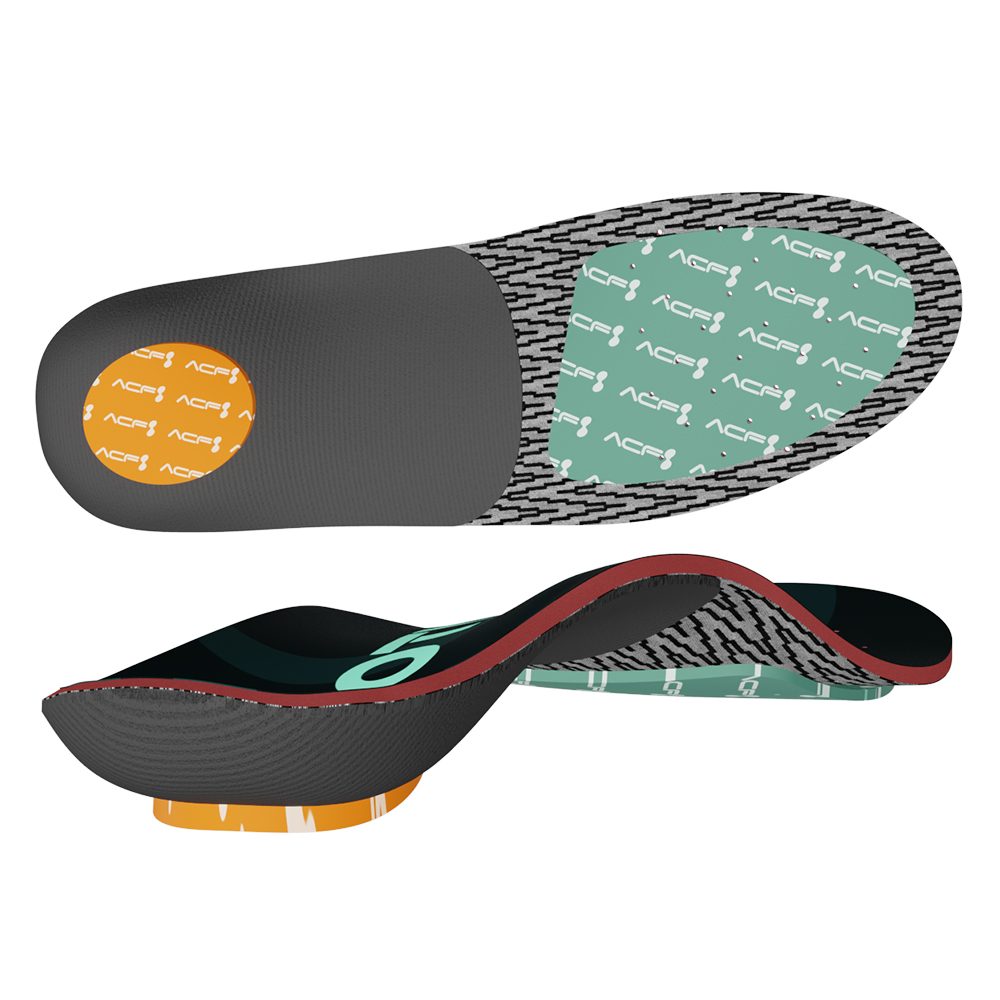
Once the answers are in, the constraints on the build are unusually concrete, and stating them honestly is part of the job. A pair that lives inside nursing footwear has to survive moisture, because wards are washed and feet in closed shoes for twelve hours are not dry. It has to keep its shape under long static load, because standing at a bedside compresses a footbed differently from walking and holds it there. It has to be thin enough to fit the shoes the employer allows, which are rarely deep, and it must not raise the foot so far that the shoe grips differently or the fit changes. And it has to do all of this for a working life measured in months of full shifts, not in occasional weekend wear.
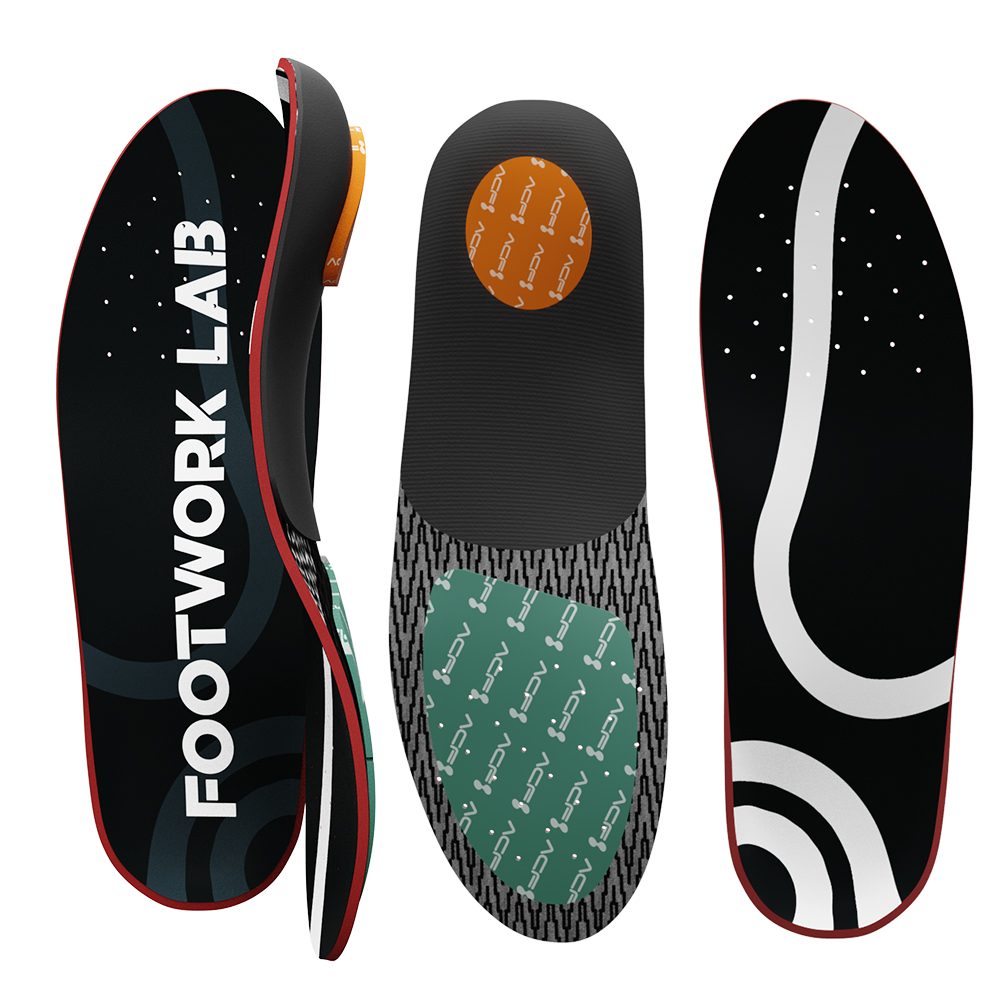
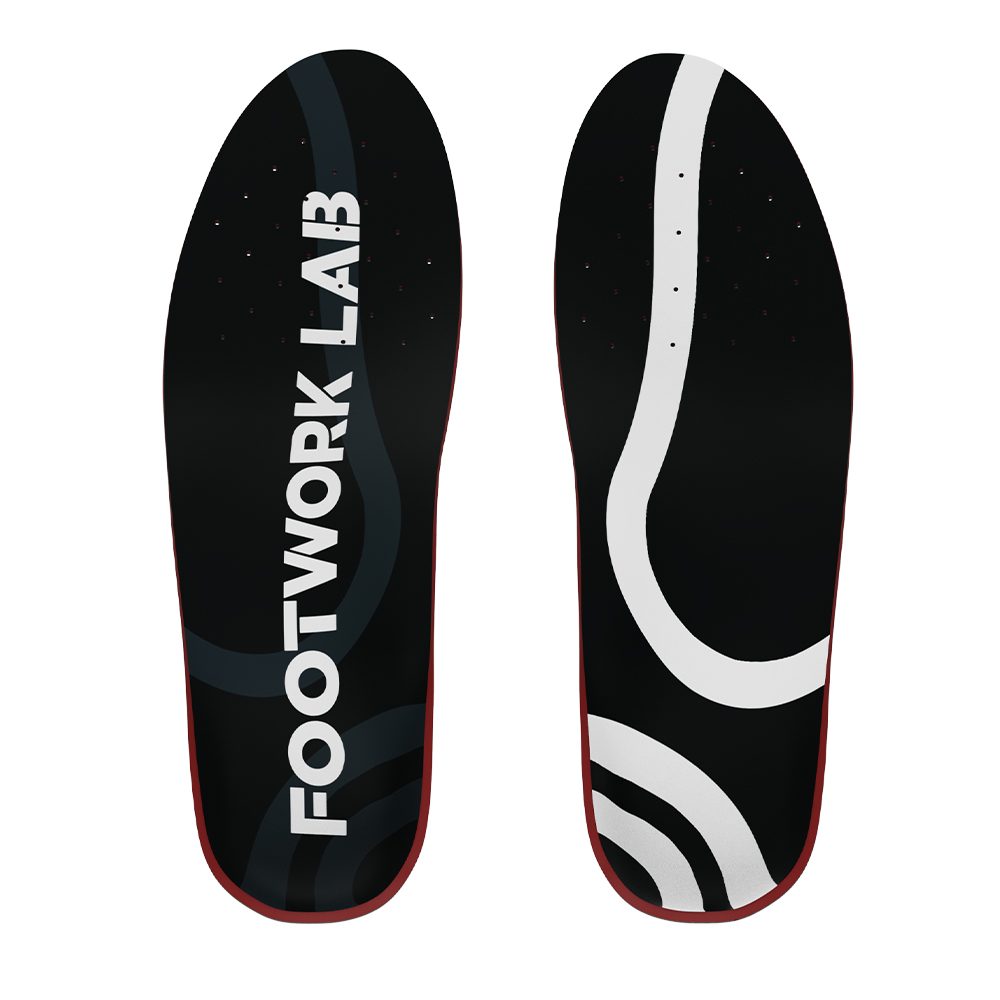
This is the point where the conversation usually reaches what is actually on offer. A pair of custom orthotic insoles built around a recorded assessment is a tool for exactly this kind of case: the aim is not to make a hard floor soft, which nothing under a foot achieves, but to spread load across more of the foot’s working surface and to support the structures that twelve hours ask the most of. We are careful about the boundary of that claim, and it is worth putting in front of the customer the same way: a pair supports and redistributes; what a foot needs beyond that is a question for a qualified professional, not for the fitting room.
The honest expectation, said out loud at fitting, is comfort within the shift rather than immunity from it. The floor stays hard. The hours stay long. What changes is where the work lands. Customers who hear that sentence at fitting judge their pair against the shift they actually work, and customers who do not hear it judge the pair against the floor and the clock, which is a contest nothing underfoot can win.
Standing still is not resting
One finding surprises nurses regularly, and it is worth a section of its own because it changes how the build is judged. Standing feels like the easy part of a shift, and load records tell a different story. During walking, load moves across the foot in a cycle: heel, through the midfoot, off the forefoot, with brief unloading in between. During standing at a station, one region carries a steady share of body weight without relief for as long as the standing lasts, and the structures under it never get their break. Many nurses describe the ache as worst after the long handovers and the bedside stretches, not after the running, and the pattern holds across too many fitting rooms to be coincidence.
This matters for fitting because the regions that carry static load are not always the ones a walking assessment highlights. A fitter who only watches a customer walk will build for the walking cycle and miss the standing one. The practical correction is to ask the customer to reproduce both: a few passes at natural pace, then a minute of standing the way she stands at a bedside, weight settled where it settles. Comparing what the two positions ask of the foot takes minutes and changes the support decisions more than any other observation in the session, because the answer decides where the work of spreading load actually needs to happen.
It also changes the advice given at fitting. Small habits that break up static load — shifting weight, a step sideways between tasks, brief sitting when the work allows — are not folklore; they interrupt exactly the loading pattern that a twelve-hour standing spell concentrates. A fitter who explains that, and then builds to spread the static load as well as the walking load, is answering the shift the customer actually works rather than the one in the brochure. The customer will recognise the difference, because she has spent years in rooms that only ever asked her to walk up and down once.
The house, the slippers and the shoes that come after
The shift does not end when the shift ends, and neither does the load story. A nurse’s day off is not a day without floors: there is the walk to the car, the school run, the supermarket, and then hours at home where the work shoes come off and something softer goes on. For many nurses the home hours are barefoot or in slippers, and a foot that has spent twelve hours supported then spends the evening without any of it. Whether that is rest or a second load case depends on the foot, and it is worth asking about, because some customers report that the ache arrives at home rather than at work, which confuses them until somebody explains the transition.
The rotation question returns here too. Our article on the pair that never leaves the house looks at the home end of that question in detail, and the fitting-room version is simple: know what the foot wears for the other sixteen hours of its day. A nurse who goes straight into flat slippers after a shift on hard flooring is asking the same structures to change their working conditions abruptly twice a day, and the transition is part of what she feels even if neither half of her day looks like the problem.
The practical takeaway for the fitting room is to build for the rotation rather than for one shoe. If the work shoes are a fixed model, the pair is built around them and the check at follow-up includes the other shoes she actually wears. If the rotation is two work pairs, the depth and fit question repeats for both, and the honest answer may be that one pair cannot serve both. What is not advisable, and worth saying so plainly, is moving a shaped pair freely between very different shoes and expecting it to behave identically in each — the shape that helps in one shoe changes its behaviour in another.
The first fortnight and the follow-up
The fortnight after fitting decides how the pair is judged for a year, so the instructions given at handover matter as much as the build. The useful frame is a phased one. The first few days: shorter exposure, worn for part of a shift, while the foot adapts to a new distribution of work. Then full shifts. Then the honest check at the end of week two, which is a conversation with questions rather than a verdict: where does the ache sit now, at which hour does it arrive, and is it different from the ache the pair replaced?
Two outcomes are normal and worth pre-explaining. One is that the complaint moves before it fades: load that has been concentrated somewhere for years does not redistribute without the foot noticing the difference, and an unfamiliar ache in a new place during week one is usually adaptation rather than a problem. The other is that hour ten still announces itself. A pair changes where the work lands; it does not delete the shift. A customer who is told this at fitting judges the pair against the right question, and a customer who is not told this judges it against the floor and the clock. The difference between those two customers, at the three-month mark, is the difference between a review and a return.
The follow-up appointment should include the shoes, not just the pair: look at how the footbed is sitting in the work shoe, check wear against how she actually walks, and compare notes with the build sheet from the first visit. A pair that comes back at three months with a story of two full rotations of shifts is a pair that can be judged properly. That judgement, like everything downstream of the measurement, belongs with a qualified professional reading the whole record — and the fitting room’s contribution to that judgement is a build that matches the stated conditions and a record worth reading.
Frequently asked questions
Are insoles useful for nurses who work long shifts?
For many, yes — the combination of hard floors, long hours and employer-set footwear leaves the interface between foot and shoe as the main adjustable layer of the job. A pair built around an assessment can spread load and support the structures the shift works hardest. It changes where work lands; it does not make a hard floor soft, and any medical question belongs with a qualified professional.
Should a nurse buy one pair or two?
Start with one pair built around the shoes actually worn at work, and reassess at follow-up. If the rotation includes two work shoes of similar depth and shape, a second pair is a practical addition; if the shoes differ a lot, moving one shaped pair between them is not advisable, because fit and support behave differently in each.
How long does a pair last with twelve-hour shifts?
Hard use shortens working life compared with occasional wear, and the honest answer is that a full-rotation nurse should expect to be checked sooner than a light-wear customer. The wear pattern at follow-up, rather than a fixed calendar, decides when a pair has finished its working life.
Can I wear them through any nursing shoe?
They fit best in the shoe they were built around. Employer footwear rules usually constrain which models are available, which is why the footwear question belongs at the start of the assessment conversation, before anything is built rather than after.
Why does the ache sometimes arrive at home instead of at work?
The hours after a shift are part of the same load story. A foot that spends twelve hours supported then spends the evening barefoot or in slippers changes its working conditions abruptly, and some customers feel that transition at home. Ask what the foot wears outside work before judging the pair.
Is standing really harder on the foot than walking?
They are different load cases. Walking moves load across the foot in a cycle with brief unloading; standing holds one region under steady load without relief. Long static spells at a bedside or trolley concentrate work in a way walking does not, which is why a session should observe both positions.
What should I expect in the first two weeks?
A phased start: shorter exposure first, then full shifts. The complaint often moves before it fades, and an unfamiliar ache in a new place during the first days is usually adaptation. Hour ten still announces itself; a pair changes where the work lands rather than deleting the shift. Anything beyond that is a question for a qualified professional.
What we would do next
If you fit nurses, take the six questions in the third section onto your form tomorrow and start with the timing question, because it does the most sorting per minute spent. Ask the rotation question second, and let the two answers together decide whether the conversation is about one pair or two, and about the work shoes only or the whole day. The FAQ page collects the operational answers we give most often by message, including the ones about wear and follow-up intervals. When a nurse tells you about her shift, which hour does she name — and does she name the same hour every time you ask? The comments are open, because the pattern in that answer is worth comparing between rooms.
This article is intended for professional and educational reference. It is not medical advice. Foot assessment equipment produces measurements and images; clinical interpretation and any decision about care remain the responsibility of a qualified professional. Certification scope is limited to the documentation we hold: European Union certification and ISO quality system certification.