
A moulded insole is only as good as the mould it came from, and the mould is only as good as the capture that produced it. Buyers comparing suppliers tend to discuss presses, materials and lead times, then discover that the real difference sits upstream: whether the foot was captured as a plaster cast, a foam box impression, or a measured file from an assessment system. Each method preserves something different, and each loses something the others keep.
This matters because a mould carries forward every decision made at capture, including the bad ones. A cast taken with the foot in the wrong position produces a faithful mould of the wrong position. A foam impression taken in a soft shoe records the shoe as much as the foot. A measured file records what the system measures and nothing else. Understanding that chain is the difference between buying a moulding service and buying a moulding outcome.
We mould insoles in our own plant in Ruichang, and we also supply the assessment systems that produce measured files for buyers who work that way. What follows is written from the production floor, where the consequences of a capture choice show up weeks later as a remake.
Three ways to capture a foot
A plaster cast records the foot’s shape under a controlled position, in three dimensions, with the arch held where the clinician placed it. It is the oldest method and still the most forgiving of a difficult foot, because the clinician can hold a position while the material sets. Its weakness is that the position is a decision made at capture, and a cast taken in a non-weight-bearing position produces a device built for a foot that never occurs in walking.
A foam box impression records the foot under body weight, pressing into a compliant surface. It captures the loaded shape, which is closer to what the shoe sees, and it is quick and cheap. Its weakness is that the foam records pressure as much as shape, so a foot that loads unevenly produces an impression that is partly a picture of the load path and partly a picture of the foot. Reading it back requires experience.
A measured file from an assessment system records what the system measures — typically pressure distribution and, where a camera is used, an alignment image — and leaves shape to be inferred or combined with a separate outline. Our own equipment works this way: pressure and posture capture, not shape capture. Where a buyer needs a mould, that file is one input among several, and the outline and the specification carry the rest.
The three methods are not ranked, they are matched. A complex foot with a fixed position benefits from a cast. A high-throughput retail programme benefits from a foam box and a template. A clinic that already holds pressure records benefits from starting there and adding an outline. The failure is buying the method a supplier happens to sell rather than the method the case needs.
Whichever method is used, one document should travel with it: a note of the position the foot was in at capture and why. A cast taken non-weight-bearing is not better or worse than a loaded impression, but it is a decision, and the technician finishing the pair needs to know it was deliberate. Without that note, the finishing bench compensates for a position nobody chose, and the compensation becomes part of the next pair’s shape.
What the mould decides downstream
A mould fixes the shape the shell will take, and no amount of finishing recovers a shape that was captured wrongly. If the cast was taken with the forefoot inverted, the shell will hold that inversion and the technician will spend the finishing stage trying to compensate — which is where inconsistency between pairs begins. The bench can refine; it cannot re-capture.
A mould also fixes the size range a workshop can serve. Moulds are physical objects with a storage cost and a changeover cost, and a workshop with forty moulds covering six sizes serves a different market from one with two hundred covering twelve. Buyers planning a retail programme should ask how many moulds the supplier holds for the sizes they sell, because that answer predicts lead time more reliably than any capacity statement.
The third thing a mould decides is repeatability. A single mould used for a hundred pairs produces a hundred pairs with the same base shape, which is exactly what a programme needs. A hundred pairs each built from a fresh cast produce a hundred pairs that all differ. Neither is wrong; they are different products, and a buyer should know which one the quotation describes.
The mould also fixes the shoe the device will live in, indirectly. A shell formed from a cast taken barefoot will fit a shoe with volume to spare; one formed from a loaded impression is closer to the shoe’s interior but can be tight in a shallow style. Where a buyer sells into several footwear categories, the specification should name the category, because the same mould produces a usable pair in one shoe and a tight one in another.
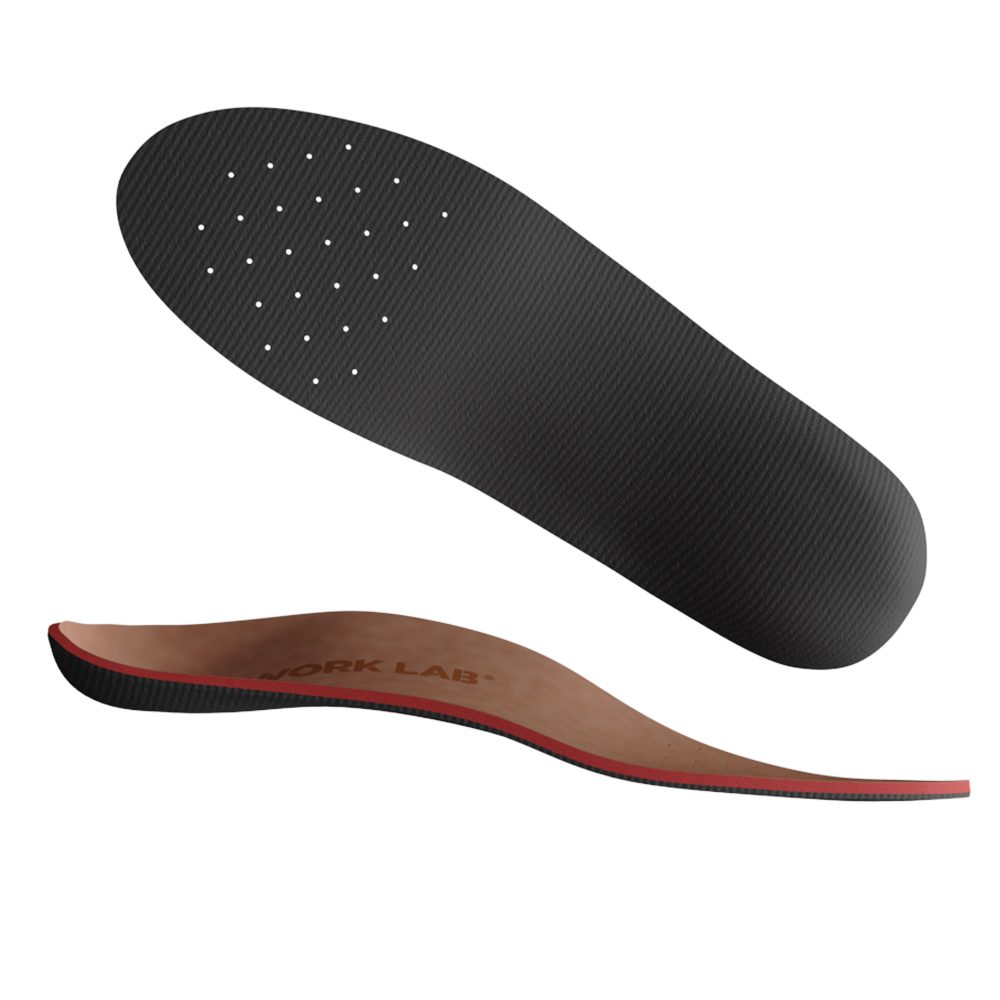
Materials, thickness and the fields that matter
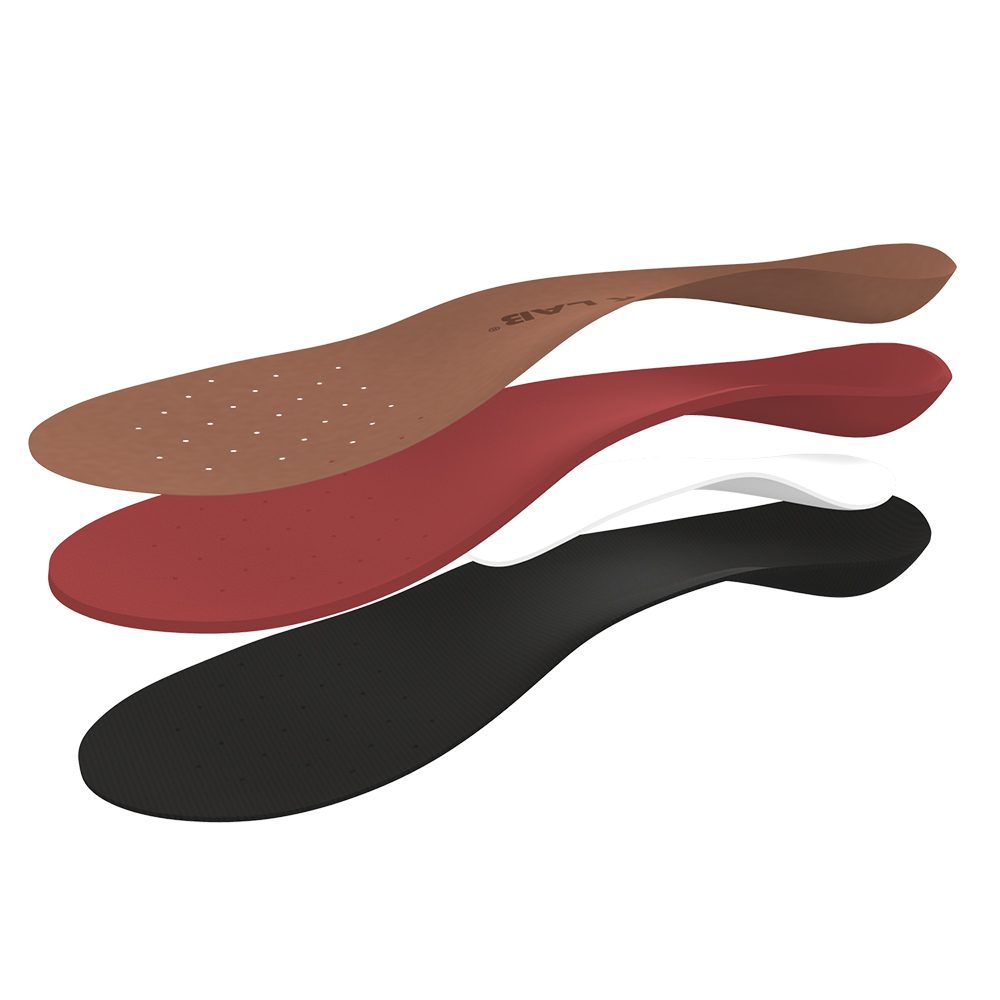
Once the shape exists, the specification decides the rest. Shell stiffness family determines how much the device holds its shape under load. Thickness at named regions determines where material supports and where it gives. The cover material determines how the device behaves against a sock and how long it lasts. None of those can be read from a mould, which is why a mould alone is not a specification.
Our production runs record the material lot, the grade and the settings used, so a later order can reproduce the run. Buyers who want a moulded pair that matches its predecessor should ask for that record rather than assuming it exists. A workshop that cannot state which lot went into a run cannot explain why two runs feel different, and the explanation is usually the lot.
Thickness deserves one further note because it is where buyers and factories most often misunderstand each other. A request for ‘a bit more under the arch’ is not a field; a thickness at a named region is. The difference matters at inspection, where the bench measures against the document. Requests that cannot be measured are requests that cannot be verified, and unverifiable requests are the ones that end in argument.
Cover specification is the field buyers most often leave to the factory, and it is the one that decides how a pair feels in the first week. A leather cover behaves differently against a sock than a velour or a synthetic, and the difference is a preference rather than a quality ranking. Where a buyer serves several markets, naming two covers in the range is usually enough; naming five produces a stock problem without improving fit.
Who should mould, and who should cast
Cast-based moulding suits low-volume, high-complexity work: a clinic building devices for feet that do not fit a template, where the clinician’s positioning decision is part of the treatment. It suits a practice with a technician who can read a cast and a supplier who will work from one. It does not suit a retail programme with a hundred pairs a month and a size run to fill.
Template-based moulding suits programmes: a defined range of shapes, a size run, a cover specification, and a packaging agreement. The creative work moves to the specification and the range design, and production becomes a scheduling exercise. That is the pattern behind most of the moulded insoles we ship, and it is the reason our minimum is expressed in pairs across models rather than per design.
Measured-file workflows sit between the two. They suit clinics that already capture pressure records and want the record to feed production, and they suit buyers who want the archive benefit of a digital file that can be re-read years later without a physical object in a store room. Where a buyer needs a shape as well, the file is combined with an outline or an impression, and the specification explains which part came from where.
There is a commercial argument for casting that buyers sometimes miss. A cast-based workshop can accept a case no template covers, which means it can serve the customers a programme cannot. For a clinic building a reputation on difficult cases, that capability is part of the offer, and it is worth paying for even when the volume is small.
Quality checks that catch a bad mould early
A production line that moulds can catch a bad capture at three points. At receiving, the mould is checked against the specification for size, arch family and any marked corrections. After forming, the shell is checked against the same document for thickness at named regions. At inspection, the finished pair is checked for symmetry and edge finish. Each check is cheap; the expensive version is discovering the problem at the customer.
The receiving check is the one buyers underestimate. A mould that is the wrong size, or taken from the wrong foot, is easier to catch before forming than after, and the check takes minutes. Our receiving desk photographs each mould against the specification sheet, so a question raised months later has an image rather than a description. Buyers are welcome to ask for that photograph on their own orders.
The third check — symmetry — is where hand work shows. Two shells formed from the same mould can differ at the bench, and comparing left and right for weight and edge finish catches the drift before packing. It is not a sophisticated test. It is the test that separates a workshop with a routine from one that relies on the fitter noticing.
Buyers can inspect the quality routine without visiting. Ask for a photograph of a mould with its specification sheet, a photograph of a finished pair in the shoe, and the remake log summary for the last quarter. Three documents, none confidential, that together describe how a workshop actually works. A supplier who cannot produce them is relying on the buyer not asking.
Costs, lead times and the honest limits
A moulded programme has three cost lines that a cast-based service does not: mould inventory, changeover time and the storage of both. Those costs are real and they appear in the unit price, which is why a moulded pair from a programme supplier is often cheaper per unit at volume and more expensive for a single pair. Buyers comparing quotations across methods should compare at the volume they actually order.
Lead times behave the same way. A template-based run is scheduled against moulds and materials and moves predictably; a cast-based pair waits for the cast to arrive and for a technician to read it. Our own line runs from several hundred pairs a day up to around a thousand when the mix is simple, with a two hundred pair minimum mixed across models and sizes, and samples shipping within three days of agreement.
The honest limit of a moulded approach is that it cannot reproduce a clinical decision it was not told about. If the positioning decision matters — and for some feet it does — the decision has to travel with the mould in writing. A mould without a note is a shape; a mould with a specification is a device.
One last distinction is worth stating plainly, because buyers sometimes conflate it. A moulded insole built to a template is a manufactured component with a tolerance; a moulded insole built from an individual cast is a one-off described by a note. The first can be ordered by the hundred and checked against a document, the second is checked against the customer. Both are sold as moulded, and a buyer should know which one the quotation describes.
Capacity is worth asking about in the same conversation as method. Our line runs from several hundred pairs a day up to around a thousand when the design mix is simple, and a cast-based single pair moves through the same stations as a programme run without needing a mould library. Buyers planning a season should confirm which pattern their order will follow, because the two schedules are not interchangeable.
Frequently asked questions
Does a moulded insole need a plaster cast?
No. A mould can be produced from a cast, a foam box impression or a measured file combined with an outline. The method decides what the mould preserves, so the choice should follow the case rather than the supplier’s preference.
Can you work from a pressure record instead of a mould?
A pressure record is one input, not a shape. Where a buyer holds pressure and posture records, we combine them with an outline and a written specification to build the device. Our assessment systems capture pressure and posture rather than shape.
What is the minimum order for moulded insoles?
Two hundred pairs, mixed across models and sizes. The minimum applies to the order rather than to a single design, which lets one run cover a size range and several models.
How long does a sample take?
Samples ship within three days of specification agreement. A sample should be tested in the target shoe under the target activity, then the production version adjusted against what the test showed.
Can the same pair be reproduced next season?
Yes, when the mould and the specification are both on file. We record the material lot, the grade and the run settings, so a repeat is an instruction to reproduce a record rather than a request to remember a design.
Do you produce insoles for other brands?
Yes. Insoles are available as ODM and OEM, including packaging artwork, labelling language and carton marking, agreed in writing before production is scheduled.
What we would do next
Send a mould, a foam impression or a measured file plus a written specification through our contact page, and the receiving desk will confirm which parts of the chain are covered and which need adding before a sample is built. Samples ship within three days of agreement.
For buyers still choosing a method, our factory page shows the forming and finishing stages, and the FAQ page sets out minimums, warranty and transit.
This article is intended for professional and educational reference. It is not medical advice. Foot assessment equipment produces measurements and images; clinical interpretation and any decision about care remain the responsibility of a qualified professional. Certification scope is limited to the documentation we hold: European Union certification and ISO quality system certification.
dMsMkYZPiJnpeJjvzORxHdsJ