
A patient stands on the plate and the picture looks calm. Ask the same person to walk across it and the load pattern changes completely — the region that looked quiet under standing becomes the first point of contact, and the centre of pressure travels a path that never appears in a still image. That gap between standing and walking is the reason buyers type “dynamic plantar pressure mapping”, although most of them begin by assuming the word “dynamic” just means a faster, fuller version of the same picture. On the F2, dynamic is a separate capture state with its own questions, sitting beside static and balance rather than replacing them. This guide is for clinic owners, sports-facility managers and shoe-store fitters who want to decide which of those three states they will actually run before the plate arrives, not after.
The F2 manual names the system a Foot Pressure Detection System. Its three core functions are listed as static pressure detection and evaluation, dynamic pressure detection and evaluation, and balance pressure detection and evaluation. Keeping them as three lines instead of one is not padding: each state answers a question the other two cannot, and a buyer who only ever needs one of them should know that before ordering the full set. The sections below walk through what a standing-versus-walking session actually shows, how the device captures it, what the report returns, and how a clinic builds a follow-up routine on top of it.
What happens when the same foot stands and walks
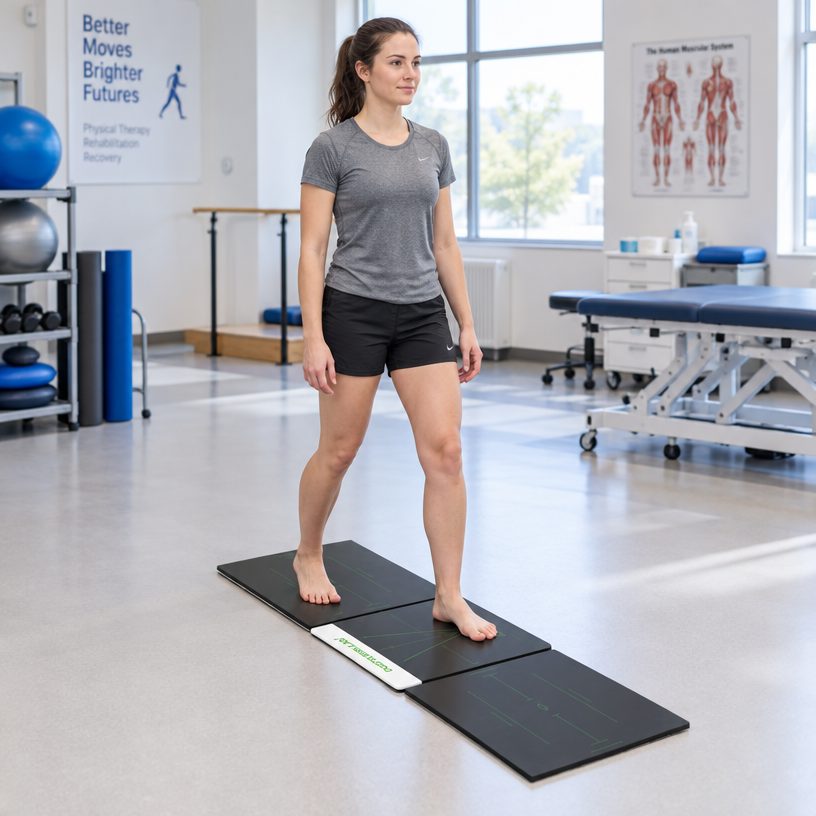
The gap shows up most clearly in a real session. A person who reports no trouble while standing may shift load abruptly the instant they step forward, or favour one side without realising it. We saw this at a Canton Fair booth where a podiatry-clinic owner described a patient whose standing record looked unremarkable but who only felt pain after walking a few metres; the static picture alone had given them nothing to act on. The walking pass was what surfaced the asymmetry, because it records the order in which regions of the foot take load rather than a single frozen moment.
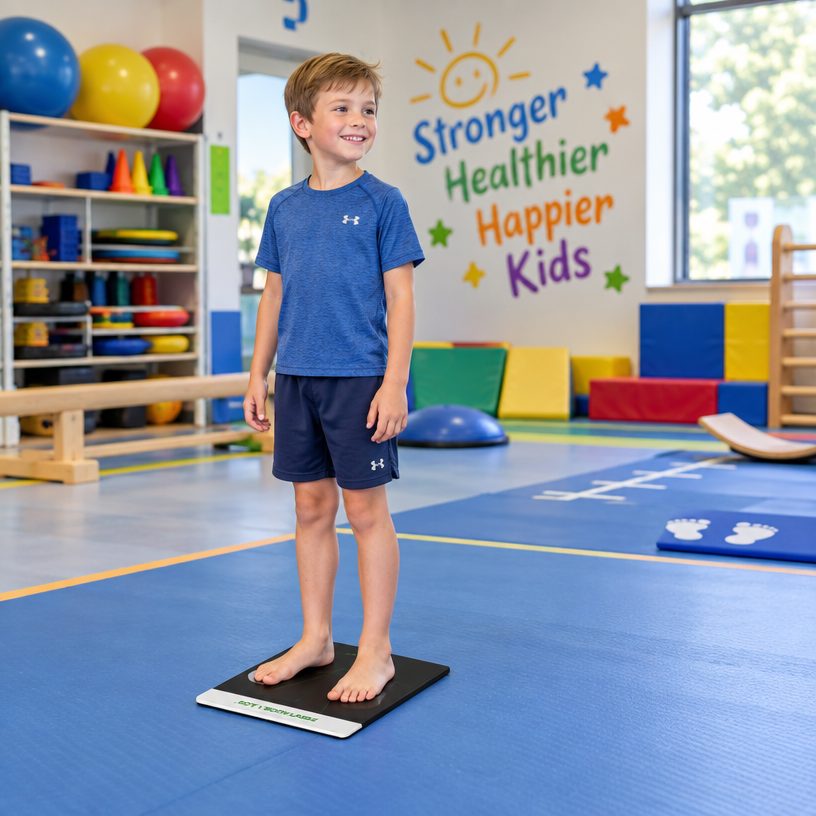
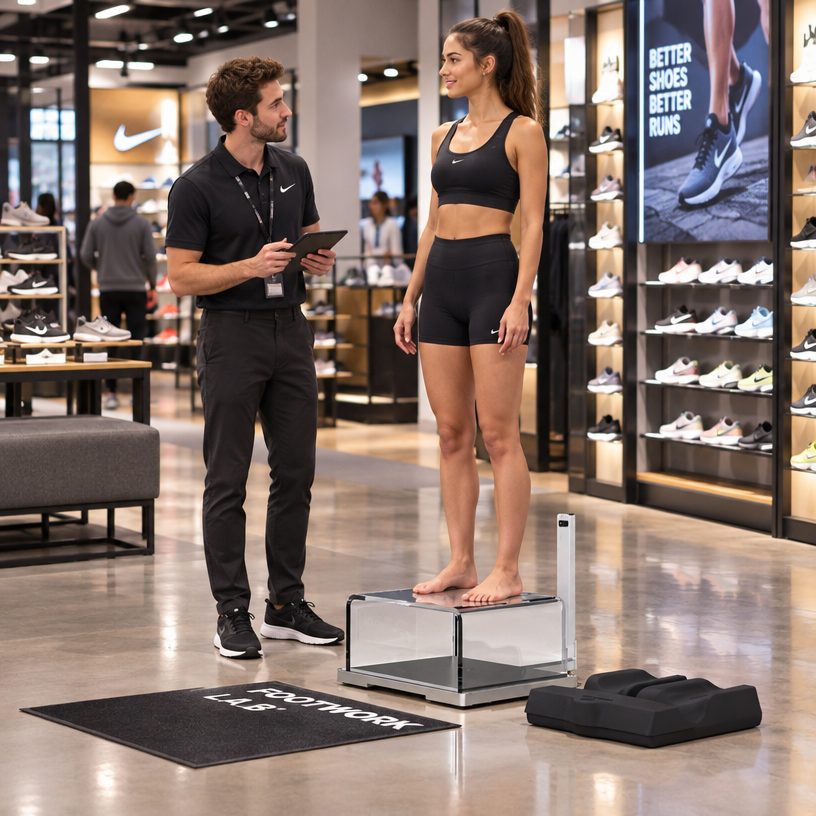
That distinction is why the F2 keeps static, dynamic and balance as separate records. Static holds the standing distribution. Dynamic holds the walking sequence — contact, load transfer, push-off — captured as the person moves across the plate. Balance holds the small corrections a person makes to stay upright while standing, which is a third question again. A sports venue uses the dynamic record to look at load under a specific movement; a children’s fitness institution uses it to watch how a young foot develops a gait pattern; a shoe store uses static and balance to open a fitting conversation. The same hardware serves all three, but the session each one runs is different, and the manual writes them as three functions because they are three different jobs.
How the F2 records each state
Under the manual’s own terms, the F2 runs on senthmetic flexible-fabric sensing technology and turns the captured data into an on-screen layout with AI-assisted report generation. During capture it also uses a lower-limb camera and a posture camera, which is why a report can place a pressure picture beside a biomechanical alignment image instead of showing pressure alone.
- Static pressure detection and evaluation
- A standing record — where load sits under each foot at rest, the contact-area shape, and how the two sides compare.
- Dynamic pressure detection and evaluation
- A walking record — the order in which regions of the foot take load, how long each phase lasts, and how the centre of pressure travels.
- Balance pressure detection and evaluation
- A standing record of the small corrections a person makes to stay upright — a different question from either of the other two.
Static is the fastest to repeat and the easiest to document as a baseline. Dynamic adds the path: contact phase, flat phase, the length and width of the footprint, peak and average pressure, the contact area curve, and centre of pressure velocity. Balance is the state buyers most often underestimate, because it is about stability rather than peak numbers. None of the three produces a conclusion — they produce measurements and images that a professional reads. The F2 records pressure distribution and biomechanical alignment; it does not scan foot shape and it does not produce a diagnosis, which keeps the line between a record and a clinical read where it belongs.
The lower-limb and posture cameras matter more than they sound. A pressure plate on its own shows where load lands, but pairing it with a side-view alignment image lets the reader see the leg above the foot at the same moment, which is why the manual lists the cameras as part of capture rather than an accessory. A clinic comparing a patient’s two visits can place the pressure picture and the alignment image side by side, and the comparison answers a question neither image answers alone.
What the report shows back
The report screen carries a parameter list on one side and the pressure visualisation on the other, with the left and right foot displayed together. Alongside foot axis angle and the phase breakdown, it shows footprint length and width, peak pressure, average pressure, surface area and centre of pressure velocity. The value of that layout is comparison: two visits, two feet, or two conditions can sit side by side without rebuilding a spreadsheet.
A foot axis angle that sits outside the reference band printed beside it is a measurement, not a verdict. The band describes a population, not the person in front of the plate, and the same number can be unremarkable for one patient and worth a conversation for another. When our demo material annotates a contact phase that runs longer than the usual range, the sentence that follows names a possible reason and stops there — it does not close the case. We keep that hedge in the demo on purpose, because removing it would overstate what a pressure record supports.
Reading two records against each other only works when the capture conditions match. Barefoot versus shod, first thing in the morning versus after a training session, one operator’s instructions versus another’s — all of these move the numbers. Clinics that get the most out of the system fix a short capture protocol in writing and keep it, which is the difference between a folder of images and a series that can be read across months.
A practical example makes the point. A runner who presents with one side loading more after a long session shows a centre-of-pressure path that drifts outward compared with their baseline visit. The number alone says little; placed beside the earlier record, it shows a direction of change. That is the record doing its job — not by judging, but by making the second visit comparable to the first and giving the professional a basis to discuss what moved.
How a clinic follows up
A record earns its keep at the second visit. Because the F2 stores each session against a named user, a follow-up can be placed next to the first without hunting for a printout: foot axis angle, phase breakdown and the centre-of-pressure path sit in the same layout both times. That comparison is only fair if the capture conditions match, which is why we suggest writing a short protocol — footwear off, same stance instruction, same operator where possible — and fixing it to the wall beside the unit.
Our engineers see the payoff of that protocol on support calls. On a WhatsApp group one clinic had been comparing two visits that looked nothing alike, and the cause turned out to be simple: the first was captured barefoot in the morning, the second shod after a training session, with a different operator giving different instructions. Walking through their setup call by call, the engineers helped them settle on one written routine, and the next two months of records finally became readable against each other. The hardware had not changed; the discipline around it had.
Where a buyer needs a particular report format, the software can be customised, and that work is quoted separately from the equipment. Report printing runs both online and on site. The minimum order for the F2 is one unit, every unit is tested for seven days before dispatch, and support continues through the dedicated WhatsApp group with our engineers, remote assistance where a screen can be shared, and over-the-air updates for connected units.
Frequently asked questions
What does dynamic plantar pressure mapping actually record?
On the F2 it records plantar pressure distribution in three states — static (standing), dynamic (walking) and balance (the corrections made while standing). Each state captures a different moment: static holds the resting load, dynamic holds the walking sequence and the path of the centre of pressure, and balance holds stability corrections. Together they describe how load behaves, not just what the foot looks like.
How is a dynamic record different from a static footprint?
A static footprint is one frozen moment of where load sits under a standing foot. A dynamic record is a sequence: the order in which regions take load, how long each phase lasts, and how the centre of pressure travels as the person walks. The dynamic sequence shows problems that only appear in movement, which is why a calm standing picture can still hide a walking asymmetry.
What can a clinic do with the F2 report?
The report places pressure visualisation beside parameters such as foot axis angle, phase breakdown, footprint length and width, peak and average pressure, surface area and centre of pressure velocity, with left and right shown together. A clinic uses it to document a baseline, compare two visits for the same patient, and open a fitting or training conversation. The report is a measurement record, not a care plan.
Can the F2 be used for gait as well as standing records?
Yes. Dynamic pressure detection and evaluation is the walking-gait record; static is the standing record and balance is the standing-stability record. The three are captured as separate states rather than one combined measurement, so a clinic can run a gait pass and a standing pass in the same session and read them side by side.
What is the minimum order and how is the F2 supported?
The minimum order for equipment is one unit. Every unit is tested for seven days before dispatch and carries a twelve-month warranty against non-human damage with free parts. Support runs through a dedicated WhatsApp group with our engineers, remote assistance where a screen can be shared, and over-the-air updates for connected units. The software can be customised for a particular report layout, and that work is quoted separately.
Does the F2 diagnose a condition?
The F2 records pressure and movement; it does not diagnose. The record is read by a qualified professional, who decides what the measurements mean for a particular person. Our software presents measurements and images and deliberately stops short of a clinical conclusion.
What we would do next
If you are specifying a pressure system, write down the three sessions you intend to run — standing, walking, balance — and the room each one needs. Send us that list with your floor dimensions and the operator’s role, and we will tell you which records the F2 covers in your space and which ones you would be paying for without using. Our FAQ page carries the order, warranty and transit terms in full, and our team can size the right configuration from your room layout.
If you already own a pressure plate and the records are not being compared across visits, the fix is usually a written capture protocol rather than new hardware. We are happy to review the protocol you use now and point out where two operators would produce two different pictures. For the full system overview, see the F2 and FMP foot assessment systems page.
This article is intended for professional and educational reference. It is not medical advice. Foot assessment equipment produces measurements and images; clinical interpretation and any decision about care remain the responsibility of a qualified professional. Certification scope is limited to the documentation we hold: European Union certification and ISO quality system certification.