
A parent comes back to the counter two years after a first fitting, holding the same pair of insoles, asking for the next shoe size up without a second thought about what sits inside the shoe. In the meantime the foot has grown, the weight pressing through the arch has grown with it, and the shoes themselves have been replaced twice. Pediatric orthotic insoles live inside that churn, and most of the confusion around them traces back to one sentence we hear at trade fairs, on pre-sales calls and in store training alike: a child’s insole is just a smaller adult insole. It is not, and the reasons are practical rather than technical. This guide is written for the four buyer groups who fit and sell children’s insoles — children’s fitness institutions, shoe stores, distributors and sports training academies — and it works through where that assumption breaks, what a children’s fitting record should hold, and how a replacement rhythm should actually be set.
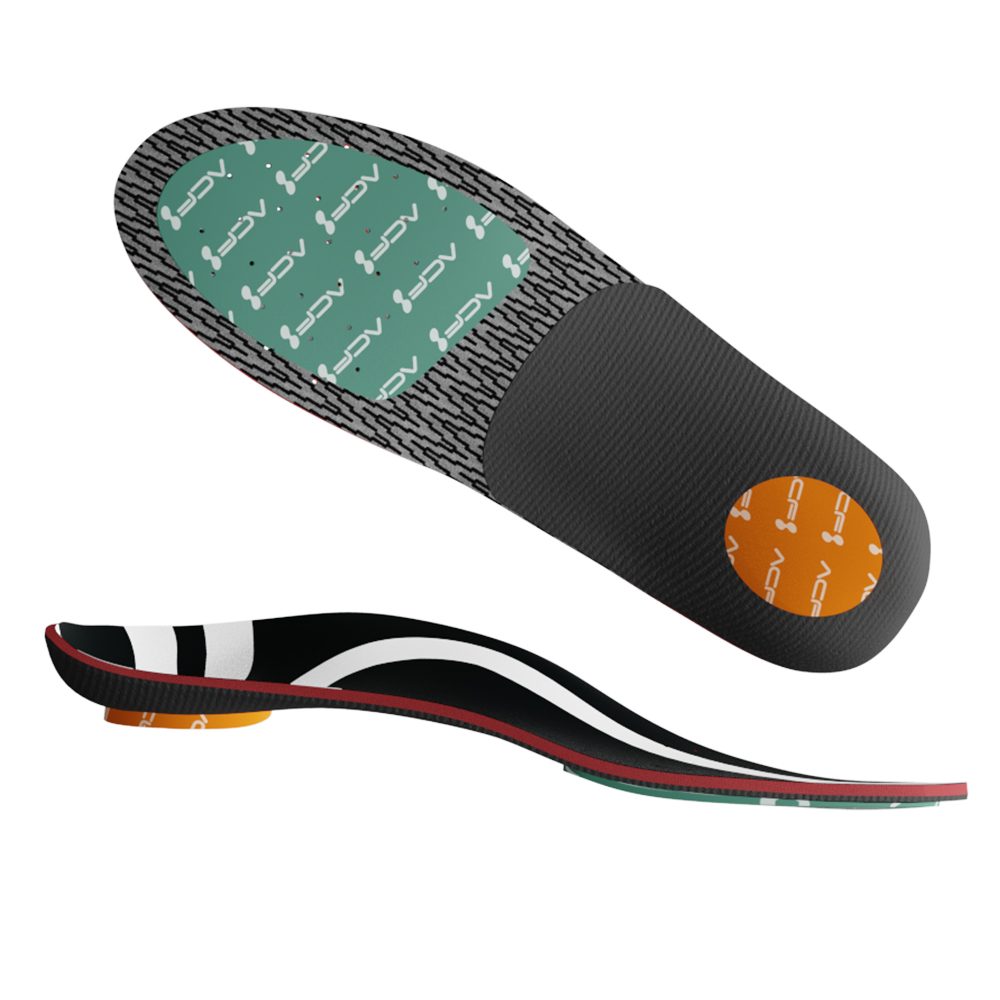
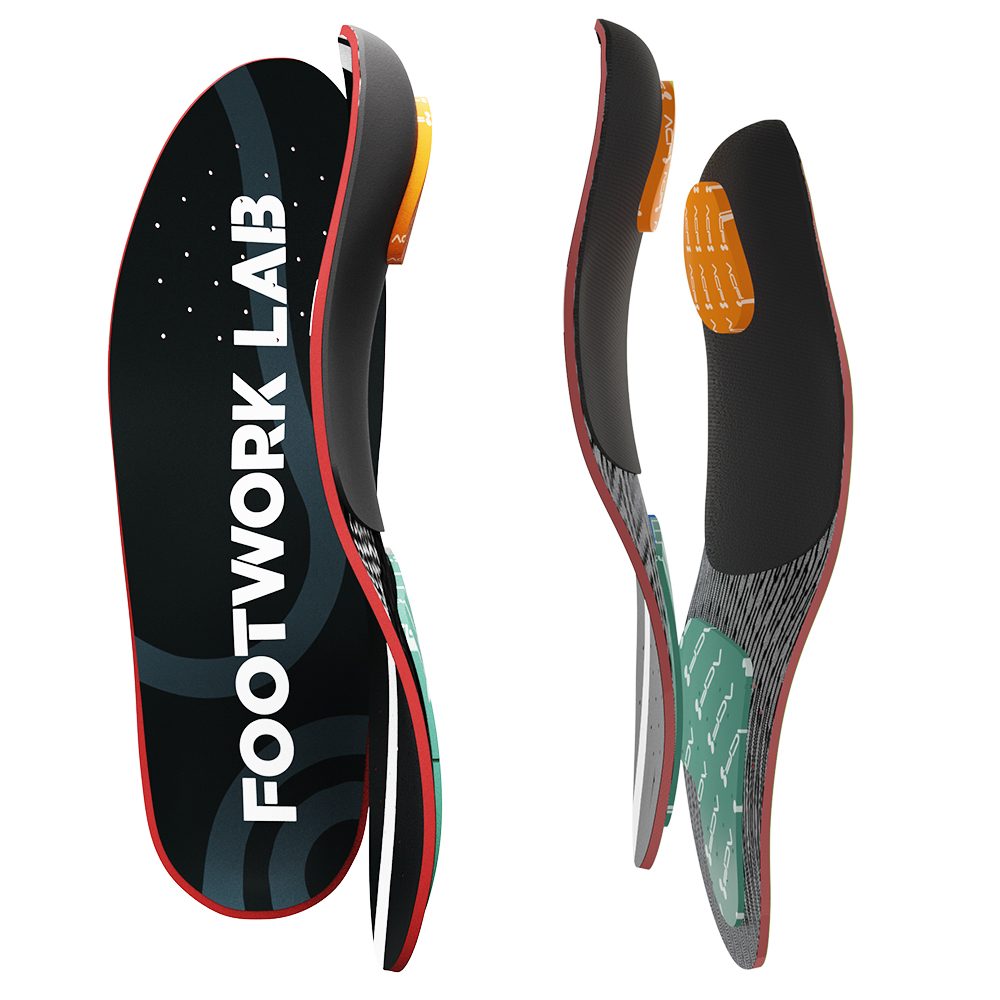
The product line in question is the FX Daily comfort insole series, the everyday line of FOOTWORK LAB’s biomechanically assessed custom insole range. Each pair is built from a BODYFIT AI assessment and senthmetic flexible-fabric sensing data, captured on a compatible detection system such as the X5 foot and posture detection system, so the insole corresponds to a recorded foot rather than to a size chart alone. Everything below follows that logic: measure, record, fit, and then re-measure on a schedule, because a child’s foot refuses to hold still.
Pediatric orthotic insoles are not adult insoles scaled down
An adult insole is fitted against a foot that has, for practical purposes, settled. Length, width and arch type move slowly, shoe sizes change over years, and body weight drifts within a band. A child’s foot breaks every one of those assumptions at once. Length and width grow, and they do not grow at the same pace, which is why two children in the same shoe length can need different widths. Body weight climbs steadily through the growth years, so the load passing through the heel and forefoot rises even while the footprint looks similar. And the shoe itself is replaced every few months, which means the insole changes homes more often than an adult ever thinks about.
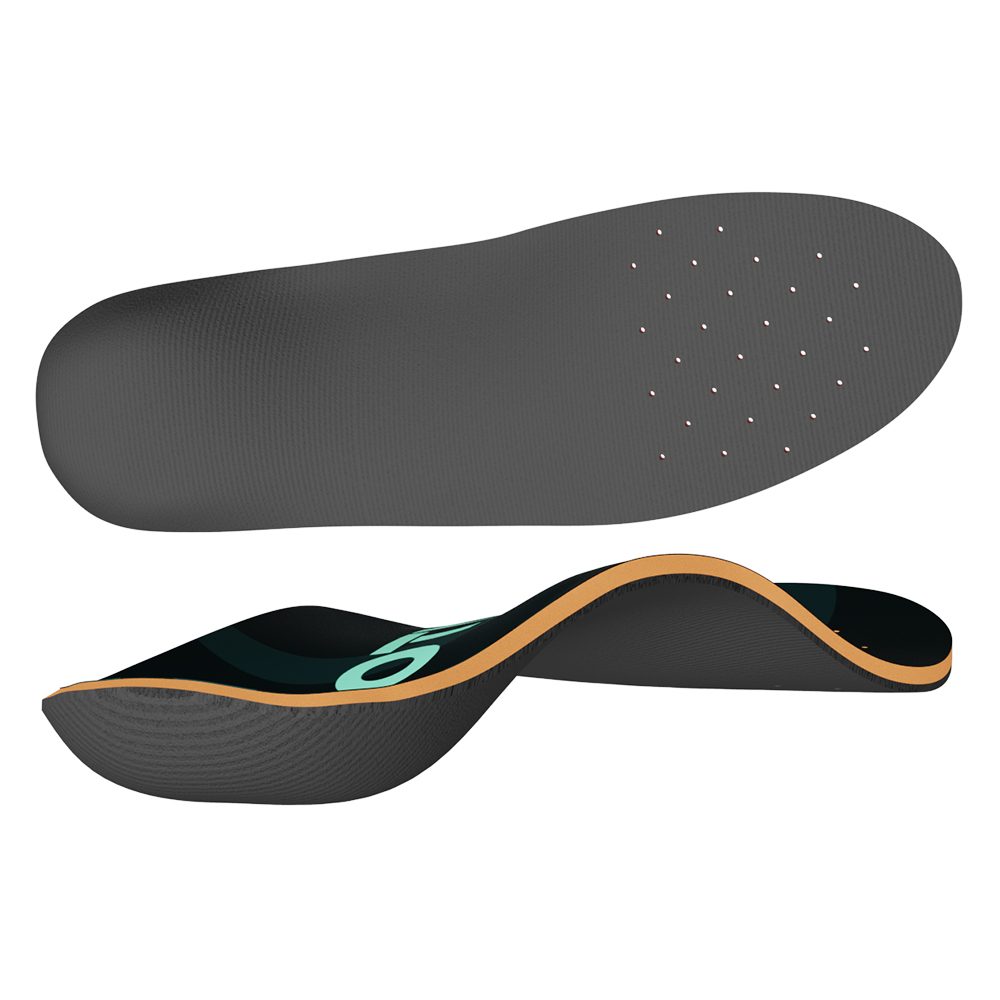
That combination changes what the fitting is for. A daily comfort insole for a child has one job: steady support under the arch, an even distribution of load between heel and forefoot, and a stable platform inside whatever shoe the child is wearing this season. It is a comfort and support product, described plainly in the manual as a biomechanically assessed custom insole, offered across four build grades — support, anti-torsion, cushioning and starting ability — and shaped for the shoe types children actually wear: sneakers, casual shoes and outdoor shoes. Nothing in that brief requires the insole to last three years. It requires the insole to match the foot and the shoe that exist today, and the fitting conversation to include a date for the next look.
Scaling an adult design down misses all of this. The arch geometry copied from an adult last corresponds to a mature loading pattern; the cushioning tuned for an adult’s weight under-supports a lighter child and over-supports the next one in line; and a shell sized for today’s foot is outgrown before its materials are worn out. The error is not mainly technical. It is a planning error: the adult model assumes one fitting covers a long period, while a child’s model has to assume the opposite.
What a fitting record for a child should hold
A children’s fitting lives or dies by its record, because the record is the only way to compare this term against last term. Four fields do most of the work. Foot length and foot width are captured separately, since they develop on different schedules and both decide whether the current pair still fits. Arch type is recorded as it presents today — a description of how the foot loads at this moment, not a fixed label, which is precisely why it belongs on a dated record rather than in a file note. The shoe size range is recorded because the insole has to sit inside a shoe, and children’s shoes are replaced several times a year; knowing the current size range tells the fitter whether an existing pair can carry over or should be refitted alongside the new shoe. Alongside these, the session date, the capture conditions and the agreed re-test date turn a single measurement into a series.
In our pre-sales calls with children’s fitness institutions, the question that comes back most often is not which device to buy but what to write down after each session. The answer we give is deliberately short: one page per child, the four fields above, the capture conditions, and a re-test date filled in before the family leaves. Institutions that keep that page consistent across terms can show a parent something no verbal summary can — the same fields, measured the same way, six months apart. Institutions that do not keep it end up re-explaining their recommendations from memory, and the conversation drifts toward impressions instead of records.
The record is a record. It describes arch type, load distribution and alignment as measured on that day, and it deliberately stops short of any statement about what the foot will do next or what it needs medically. That boundary is printed into our own report pages, and it is worth repeating here because a children’s context invites parents to ask for more certainty than a measurement can carry. The honest framing — here is what we measured, here is when we measure again — is also the framing that keeps the re-test appointment valuable.
Where each buyer type goes wrong
For a children’s fitness institution, the misstep is treating the first assessment as the assessment. Children in a fitness programme change fastest, so the value sits in the series, not the snapshot. A re-test at the start of each term, run to a fixed capture protocol — same instructions, same conditions, same fields — turns the institution’s records into something parents can see and trust, and the re-test dates should be printed on the child’s record from day one, not negotiated later.
For a shoe store, the misstep is detaching the insole from the shoe purchase. A child’s insole fitted against last season’s shoe arrives already mismatched to the new one. The workable habit is to fit the two together: measure the foot, record the arch type and size range, then fit the insole into the shoe the child is about to wear out of the shop. A quick foot screen at the counter — the kind a podoscope screening station supports in minutes — opens that conversation, but it is a fitting aid, not a health examination, and the wording used with parents should say so.
For a distributor, the misstep is carrying the adult selling rhythm into a children’s line. A pitch of “buy once, use for years” is poor advice for a growing foot and, just as practically, it removes the reorder cycle that the product actually has. The comfort series ships under a minimum order of 200 pairs with mixed sizes and models allowed, which is built for term-based replenishment rather than one large annual drop; the full order terms are on our FAQ page. Distributors who present the four-to-six-month window honestly sell less per order and more per year, and their retail partners keep the fitting relationship.
For a sports training academy, the misstep is capturing standing records only and calling the file complete. A child who stands symmetrically can load very differently once they move, which is why the academy version of the protocol includes a walking pass wherever the room allows it. The second habit is keeping the capture protocol fixed across terms and across coaches, so that a record from September can be placed beside one from March without an argument about conditions.
At one Canton Fair booth, a visitor running a children’s fitness institution asked whether a single well-made pair could simply carry a child through a growth spurt. The answer had two parts: the materials in a daily comfort insole are specified for a four-to-six-month wearing window, and the foot it was fitted to will not be the same foot by the end of it. What surprised him was the commercial side — that an honest replacement schedule, written into every record, gave his institution a recurring touchpoint with parents rather than a one-time sale. He was not looking for a reason to sell more; he was looking for a defensible answer to give.
The 4–6 month window is about more than wear
The FX manual states the service life of the daily-wear comfort line plainly: around four to six months of everyday wear, with high-intensity activity shortening that life and reducing both support and cushioning along the way. For an adult, that sentence reads as a material statement — cushioning compresses, the shaping plate relaxes, the surface wears. For a child it does double duty, because the material loses its tuned support at roughly the same pace at which the foot outgrows the fit. By the time the cushioning has noticeably flattened, the arch geometry is likely already mismatched to a longer, wider foot carrying more weight than at fitting.
This is why “keep the pair for years” fails on both counts at once. The support under the arch is calibrated to a foot that no longer exists, the load distribution the design aimed for has shifted as weight and gait changed, and the interior of the shoe has been replaced at least once in the meantime. None of that is visible from the outside — a worn children’s insole can look perfectly presentable while supporting a foot it was never shaped for. The window is the design’s way of forcing a re-fit while the mismatch is still small.
The practical rhythm follows from it. Tie the re-test to the events that actually move the fit: a change in shoe size, the start of a new term, or the end of the wearing window, whichever comes first. At each re-test, record the same fields against the same protocol and compare before deciding. Sometimes the record says the same pair carries over into the next shoe; sometimes it says the arch type presentation has moved and the fit should be revised. Keeping the earlier records is what makes either answer defensible, and reorders — a different job from the first order, as we cover in a separate article on insole reorders — are straightforward when the record travels with the child.
Frequently asked questions
Why do pediatric insoles need replacing every 4–6 months when adult pairs seem to last longer?
The manual sets the daily-wear service life of the comfort series at around four to six months, and notes that high-intensity use shortens it while reducing support and cushioning. For children the window matters twice over: the materials age on that schedule, and the foot they were fitted to grows on a comparable one, so the fit drifts even before wear shows.
What should be recorded at a child’s fitting session?
Four fields carry most of the weight: foot length, foot width, arch type as it presents that day, and the current shoe size range. Add the session date, the capture conditions and an agreed re-test date. Recorded consistently, these turn separate visits into a comparable series rather than a folder of one-off pictures.
Can a child’s insole move into the next pair of shoes?
Sometimes, and the record is what decides. If the foot length and width are unchanged, the arch type presentation is stable and the wearing window has not elapsed, the pair can carry over. If the shoe interior differs significantly in shape, or the re-test shows movement, refit alongside the new shoe. The comparison should be made from the record, not from habit.
Which FX series suits a child, and when would another line come in?
The Daily comfort series covers everyday walking, school hours and standing in sneakers, casual shoes and outdoor shoes. The wider FX range also includes a sport line and a rehabilitation care line addressing defined needs such as flat foot, pressure relief, hallux valgus and plantar fasciitis. Selection should follow the assessment record and the shoe the child actually wears, not the label on the shelf.
What are the order terms for the comfort series?
The minimum order is 200 pairs, with mixed sizes and models allowed, and ODM and OEM arrangements are accepted. Samples ship within three days, and production runs at roughly 500 to 1,000 pairs per day from our own factory in Ruichang. Full terms, warranty and transit details are listed on our FAQ page.
How often should an institution re-test the children in its programme?
Once per term is a workable default, aligned to shoe-size changes and to the wearing window. What matters more than the interval is the protocol: the same fields, the same capture conditions, the same operator instructions each time. A fixed protocol every six months produces a more usable series than frequent sessions run differently each time.
What we would do next
If you run a children’s fitness institution or a training academy, write the re-test calendar before you write the purchase order: which term weeks the sessions fall on, which fields you will record, and who runs the capture. Send us that plan and we will tell you which assessment setup fits your room and how the comfort series slots into the flow. The full range is on our insole categories page, including the comfort, sport and rehabilitation lines.
If you are a shoe store or a distributor, the useful next step is smaller: pick one term, fit every child’s insole against a dated one-page record, and see what the reorder pattern looks like when the replacement window is stated honestly at the first sale. Our FAQ page carries the order minimums, sample terms and transit times in full, and we are glad to review a first order against the age range and shoe types you actually sell.
This article is intended for professional and educational reference. It is not medical advice. Foot assessment equipment and custom insoles produce measurements and support products; clinical interpretation and any decision about care remain the responsibility of a qualified professional. Certification scope is limited to the documentation we hold: European Union certification and ISO quality system certification.