
The first email from a clinic asks about the report. The first email from a pedorthist asks what happens to the edge when it meets a grinding wheel. Both are sensible questions and they describe two different trades. A clinic buys a record it can read and discuss; a fitting workshop buys a material it has to work, and the working happens after our box is opened and before the customer’s shoe is laced. That is why the questions we get from pedorthists are so specific, and why a general brochure answers none of them. Can the shell be taken down at the forefoot without the board delaminating? Can the cushioning layer come off the shaping board if the fitter wants to add volume? What widths are there, how fast is a sample, what happens when a pair comes back, and can the label on the box carry their name rather than ours. This article sets out the answers we give, in the order a workshop usually asks them, and ends with the checklist we run through before a first order. It also states three things we decline, because a supplier who will not say no at the start is expensive later.
The questions a fitting trade asks before it commits
A pedorthist arrives with the assessment side already solved. They have measured feet for years, they know their own casting or capture routine, and they are not shopping for a report template. What they are shopping for is a supply that behaves on a bench, arrives when promised, and leaves enough margin to pay for the labour that goes into a fitted pair.
Their questions cluster in a predictable order. First machinability: what can be ground, heated, separated and re-covered. Then range: which sizes and widths exist, and whether children’s sizes are built the same way as adults’. Then economics: sample speed, minimum quantity, whether styles and sizes can be mixed in one order. Then risk: who carries a remake, what counts as a remake, and how a claim is read. Then identity: labels, packaging, and whose name sits on the box.
None of those questions appear in a clinic’s enquiry, and that is the useful distinction. A clinic is buying a session that ends with a document. A workshop is buying a semi-finished object that becomes a device in someone else’s hands, and the quality of the object is only settled at the bench. Suppliers who cannot answer bench questions tend to answer clinical ones instead, at length, which is a reliable sign that they have not spent a day in a workshop.
Our own position should be plain. We manufacture. We do not assess feet, we do not fit, and we hold no clinical registration in the markets our customers serve. A pedorthist who buys from us keeps the entire professional relationship with their customer, including every judgement about what that customer should wear. We supply the object and the information needed to work it.
What a shell has to survive after the box is opened
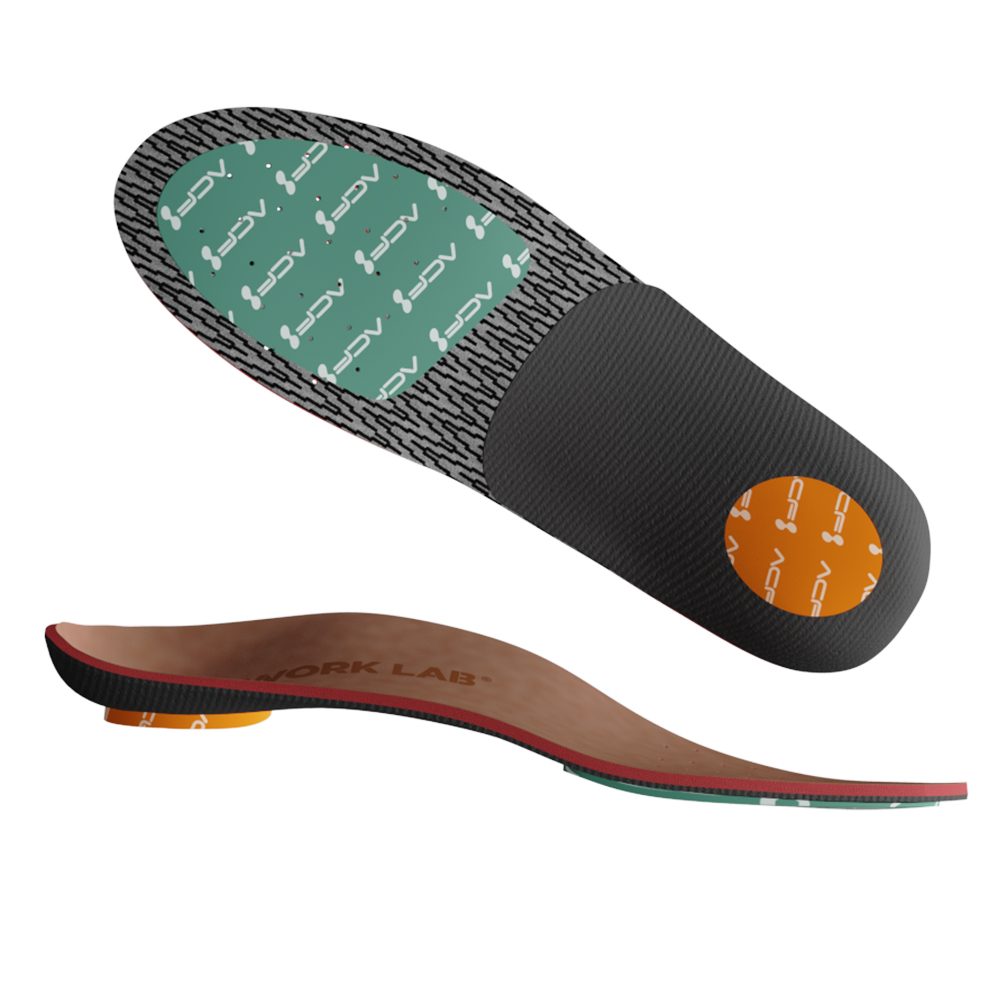
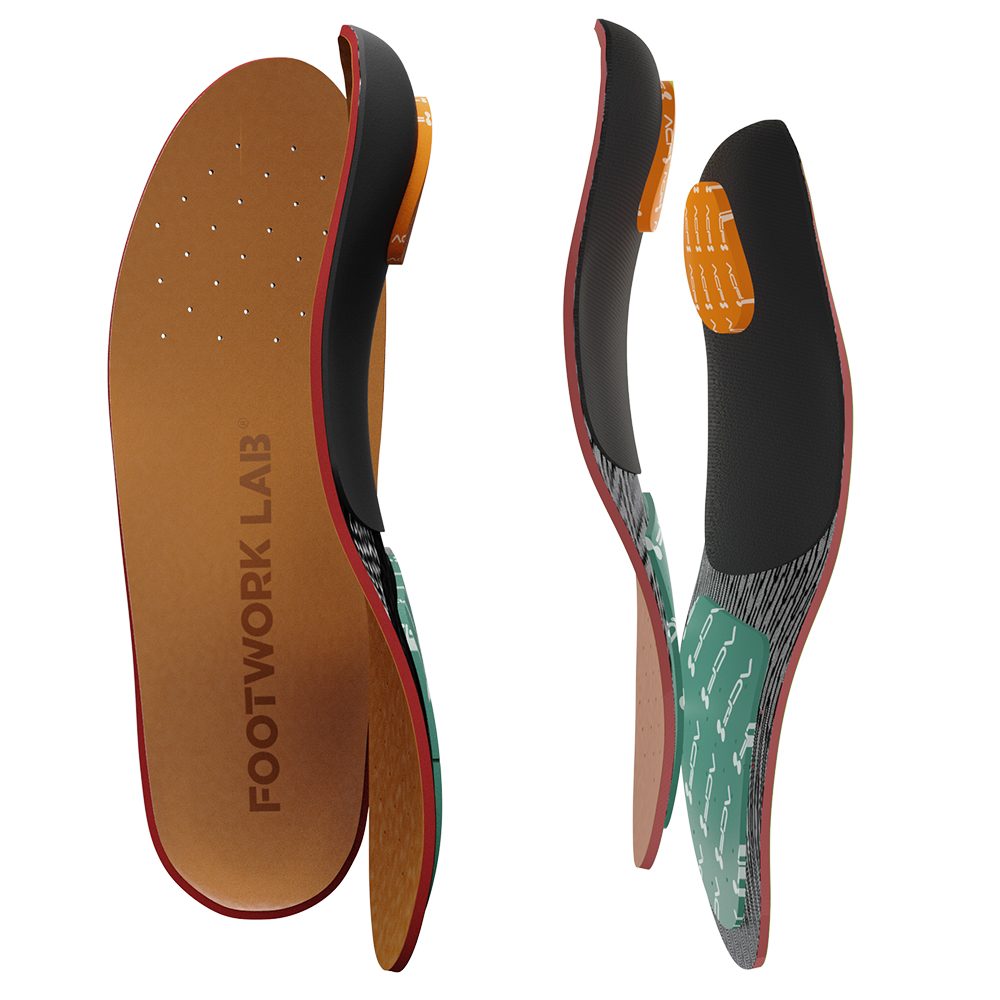
Take the everyday comfort build as the example, because it is the one most workshops start with: a mesh fabric top, an Ortholite layer beneath it, and an AQ polymer shaping board carrying the shape. Each layer has a job. The top manages moisture and friction against the sock. The middle provides cushioning and the volume that fills a shoe. The board holds the shape and does the work that makes the insole more than a soft insert.
Grinding is the first test. The forefoot edge and the heel edge can be taken down to sit inside a shoe, and most workshops do that on nearly every pair. The limit is the board. Grind through it and the insole stops behaving like the build it was ordered as; it becomes thinner, softer and less controlled, and no amount of skiving at the edge hides that. Ask for the board thickness of a given build before planning a grind, and keep a scrap pair to practise on before the first customer order.
Heat is the second test. The board softens in a controlled way and can be re-shaped over a last or by hand while warm. Overheat it and the cover lifts at the toe, usually a day later, usually after the customer has taken the pair home. Workshops that have only used one supplier’s blanks tend to overheat ours in the first week, because the window is not identical. We send a note with every sample stating the window and the failure sign, and we would rather a fitter rang us than guessed.
Separation is the third. On some builds the cushioning layer can be lifted from the shaping board so a fitter can swap volume or fit a different cover; on others the bond is intended to stay closed. This is not a feature to promise a customer in advance. It is something to establish on a sample pair, with the actual build in hand, before it becomes part of a service description.
There is an honest limit to all of this. Past a certain point a re-ground shell should be replaced rather than reworked, and a workshop that keeps grinding a tired pair is spending labour to produce a worse object. We would rather say that in a technical note than sell a second set of blanks into a failure that was predictable.
Sizes, widths and a stock list that does not dead-end
Range questions are really stock questions. A workshop wants to cover the feet that walk through its door without tying up capital in sizes that never move. The answer depends on the width range as much as the length range, because trimming to length is routine bench work while trimming to width is not. A fitter can shorten a pair in a minute. Nobody narrows a shell without changing what it does.
So the width offer matters more than the length offer, and it is the first thing we put on the table. Where a range runs to several widths, a workshop can hold fewer lengths and still fit most customers, because the length can be taken down and the width cannot be added. Where a range is single-width, the fitter ends up compensating with volume, which works for some feet and not for others, and the failures are the memorable ones.
Our advice to a new workshop is to hold the middle of the range deep and order the ends as they are needed. The middle covers the everyday traffic. The extremes — the smallest children’s sizes and the largest adult sizes — are better bought against a real order than held against an imagined one, and the lead time is short enough for that to be practical.
Children’s sizes deserve a separate word, because a workshop that fits families will meet them. The construction should be the same as the adult build, not a simplified version with a softer board and a thinner cover. A child’s pair takes the same amount of bench time as an adult’s, and a cheaper object simply means the work has to be done twice. Growth also means the pair has a short life by design, so the fitter needs the size steps to be close enough to follow a foot through a year.
Samples in three days, and a first order that is not a gamble
Samples leave within three days, and they come off the same line as production rather than from a sample bench. That distinction is worth asking about with any supplier. A sample made by hand in an office tells a fitter what the design is; it does not tell them what the two hundredth pair will feel like under a grinding wheel. Ours are produced the way the order will be produced, which is the only sample worth working on.
The minimum order is two hundred pairs, and styles and sizes can be mixed inside it. In practice a first order is rarely one build bought deep. It is a ladder: a small quantity of three builds that cover the range of feet the workshop actually sees, so the fitter can learn which build suits which customer before committing to a season. We would rather see that pattern than a single large order placed on a brochure.
Capacity sits at roughly five hundred to a thousand pairs a day, which is why a mixed first order is not a problem for the line. Freight runs by express in six to seven working days, by air in ten to twelve days, and by sea in thirty to thirty-five. The choice usually comes down to whether the workshop is filling a shelf or answering a customer who is waiting, and it is worth deciding that before the order rather than after.
One caution about samples. A sample pair is not a production run, and a workshop that approves a sample and then opens a carton of two hundred should still check the first ten pairs against it — the edge finish, the cover bond, the board thickness at the heel. If something has drifted, we want to hear about it in the first week, not after the carton is empty. Batch records exist on our side for exactly that conversation.
Remakes: who carries what, and how a claim is read
Every remake has one of three causes, and naming the cause is the whole conversation. The pair was made wrongly on our line. The pair was made correctly but the measurement or the cast it was built from did not match the foot. Or the pair left the bench correct and was changed afterwards, at which point the change is the cause. Two of those three belong to the workshop, and one belongs to us. A supplier who blurs the line is cheap until the first claim.
What we ask for when a pair comes back: photographs of both insoles, top and edge, the batch reference, and a note of anything that was done to the pair after delivery — ground, heated, re-covered, trimmed. Without those four things a claim is an opinion, and opinions cost both sides a fortnight. With them, most cases are settled in a day, because the photographs usually show which of the three causes applies.
The vocabulary should be fixed before the order, not after. Rework means the pair can be brought back to specification: an edge re-ground, a cover replaced, a trim corrected. Remake means a new pair has to be built, because the object itself is wrong. Those two words carry different costs and different clocks, and a quotation that uses them loosely is a quotation that will be argued over. We put both in writing with the first order.
Our line on cost is narrow and we state it early. Where the fault is ours, we carry the remake and the freight. Where a pair has been modified on the bench and the modification caused the problem, we do not absorb it, and we say so at the quotation stage so that nobody discovers it during a claim. That is not a hard position to hold when it is written down at the start. It is impossible to hold when it is introduced at the end.
Labels, packaging and the checklist before a first order
Insoles are made to order under ODM and OEM terms, which in practice means the workshop’s name on the box rather than ours. What we need to make that work is unglamorous: artwork files, a size-to-label mapping, the build each label refers to, and the language the packaging has to carry. A workshop that runs three builds under two labels needs that mapping written down, or the first mixed carton arrives with the wrong cards inside.
What does not transfer is certification. Our European Union certification and our ISO quality system certification belong to our plant and our process. They are not a claim a customer can print on their own literature as though it described their workshop. Buyers ask about this more often than they admit, and the answer is that a fitter’s credibility comes from their own registration and their own work, not from a supplier’s certificate reproduced at the bottom of a page.
Technical support is part of the supply, not an extra. Every new account gets build sheets for the styles it orders, written notes on the heating window and the grinding limit for each build, and a session for the bench staff — usually a video call with the pair in front of the camera, because a question about an edge is easier to answer while looking at it.
Then the checklist we actually run through before a first order. A sample set of the three builds under consideration, worked on the bench rather than admired in the box. A size and width list matched to the feet the workshop sees. Label artwork and the mapping of labels to builds. Rework and remake terms in writing, with the freight question answered. Freight mode and lead time agreed against a real date. A named contact on each side, and a training slot booked before the first customer pair rather than after.
And three things we decline, which belong on the same page as the checklist. We do not diagnose, and we do not produce a clinical conclusion for a customer’s file. We do not make ankle-foot orthoses or rigid bracing, which is a different category of device and a different set of obligations. And we do not offer territorial exclusivity, because a promise of that kind is worth nothing unless it is enforced, and enforcing it across markets is not something a factory can honestly sell. A workshop that needs exclusivity as a condition of the relationship is better served by a distributor who can carry it.
Frequently asked questions
Can a finished insole be ground down after fitting?
Edges can be taken down at the forefoot and heel to sit inside a shoe, and most workshops do that routinely. The limit is the shaping board. Grinding through it changes how the build behaves rather than only how it looks, so ask for the board thickness of the build before planning the work, and practise on a scrap pair.
Can the cushioning layer be separated from the shaping board?
On some builds, yes, so a fitter can change volume or fit a different cover. On others the bond is intended to stay closed. It is not something to promise a customer in advance; establish it on a sample pair of the actual build, with the insole in hand, before it becomes part of a service description.
What is the minimum order, and can styles and sizes be mixed?
Two hundred pairs, with styles and sizes mixed inside the order. A first order usually works better as a ladder across three builds than as a deep buy of one, so the workshop can learn which build suits which customer before committing to a season.
How quickly can samples ship?
Samples leave within three days and come off the production line rather than a sample bench, so they behave like the pairs that will follow. Freight then runs by express, air or sea depending on whether the workshop is filling a shelf or answering a waiting customer.
Who pays for a remake?
Where the fault is ours, we carry the remake and the freight. Where a pair was modified on the bench and the modification caused the problem, we do not, and that is stated at the quotation stage rather than raised during a claim. The terms are written down with the first order.
Can the insoles carry our own brand?
Yes. Insoles are made under ODM and OEM terms with the workshop’s label, packaging and insert cards. We need artwork, a size-to-label mapping and the build each label refers to. Certification does not transfer: our European Union certification and ISO quality system certification describe our plant, not the customer’s workshop.
Do you offer exclusivity in a territory?
No. We do not promise territorial exclusivity, because an unenforced promise is worth nothing and a factory cannot enforce one across markets honestly. Workshops that need exclusivity as a condition of supply are better served by a distributor who can carry that obligation.
What we would do next
Ask the bench questions first. Send us the build you have been using, the shoe volumes you fit most often, and the two or three things that annoy you about your current supply — the edge that lifts, the board that is too stiff at the heel, the sample that did not match the carton. We will answer against our own builds rather than in general terms, and where the answer is that we are not the right supplier, we will say that too.
The insole range page lists the three series and the four grading levels, and the partner page sets out what an account involves on both sides. For a first conversation, the contact page reaches the team directly, and a sample set can be arranged before any of the commercial questions are settled — which is the right order, because a fitter should never have to commit to a material they have not worked.
This article is intended for professional and educational reference. It is not medical advice. Foot assessment equipment produces measurements and images; clinical interpretation and any decision about care remain the responsibility of a qualified professional. Certification scope is limited to the documentation we hold: European Union certification and ISO quality system certification.