
The customer pressed a thumb into the top cover, looked up at the counter, and asked why the pair in front of her was not as soft as the one she had tried at the pharmacy. The fitter answered carefully, because the question is reasonable and the obvious answer is wrong. Softness is the easiest property of an insole to feel with a thumb in the first second, and the least reliable guide to how the pair will behave at the thousandth step. A cushioning top cover is the layer between the skin and everything underneath it, and what that layer is asked to do changes completely depending on the person, the shoe and the day. Sometimes the right top cover is the softest one on the shelf: a long shift on a hard floor is a real condition, and comfort is a legitimate priority. Sometimes the soft layer quietly undoes the work of the shell beneath it, letting the foot slide off the contour that was built to hold it and eating the feedback the rest of the build depends on. A clinic that orders by softness preference is ordering by the first second and ignoring everything after it. This article walks through what a soft top actually contributes, where it earns its place and where it works against the build, how thickness changes what the layer does over a working day, how we explain the trade-off in one or two sentences at the counter, and how a clinic allocates tops by person rather than by preference.
What the top cover is actually for
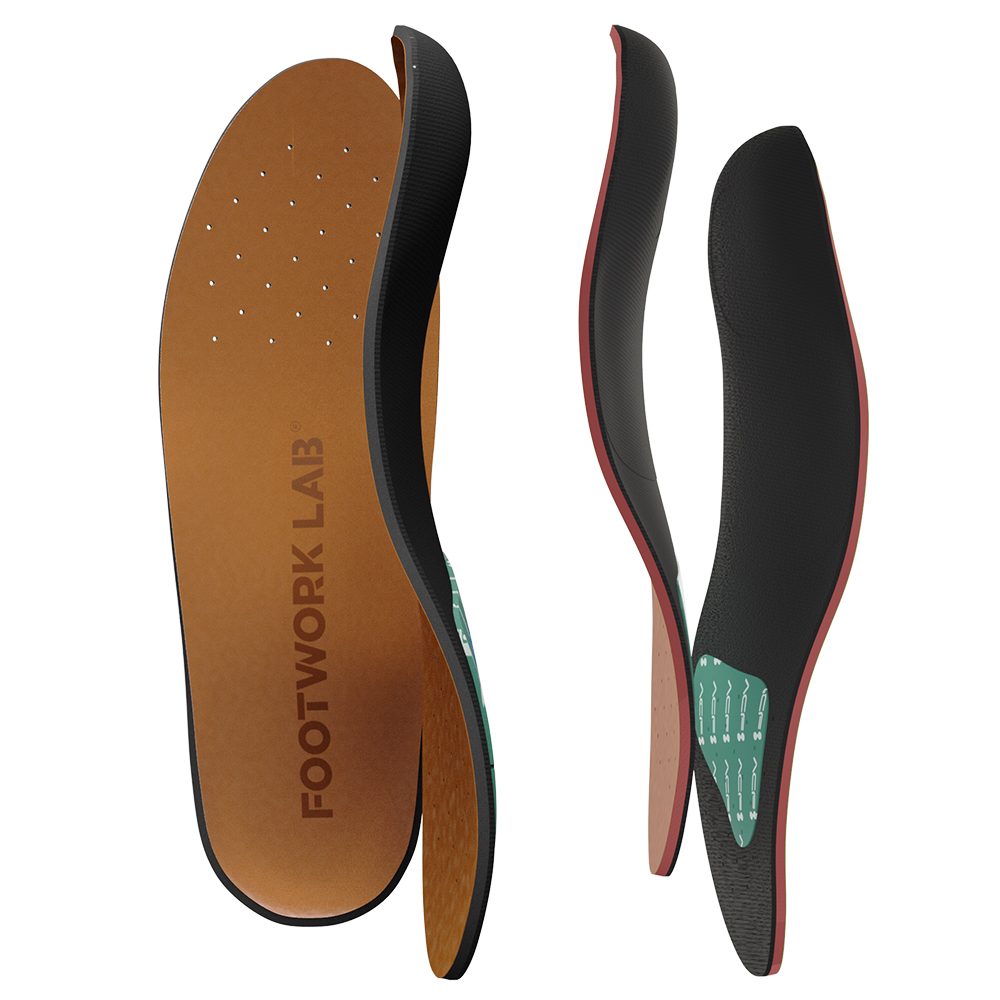
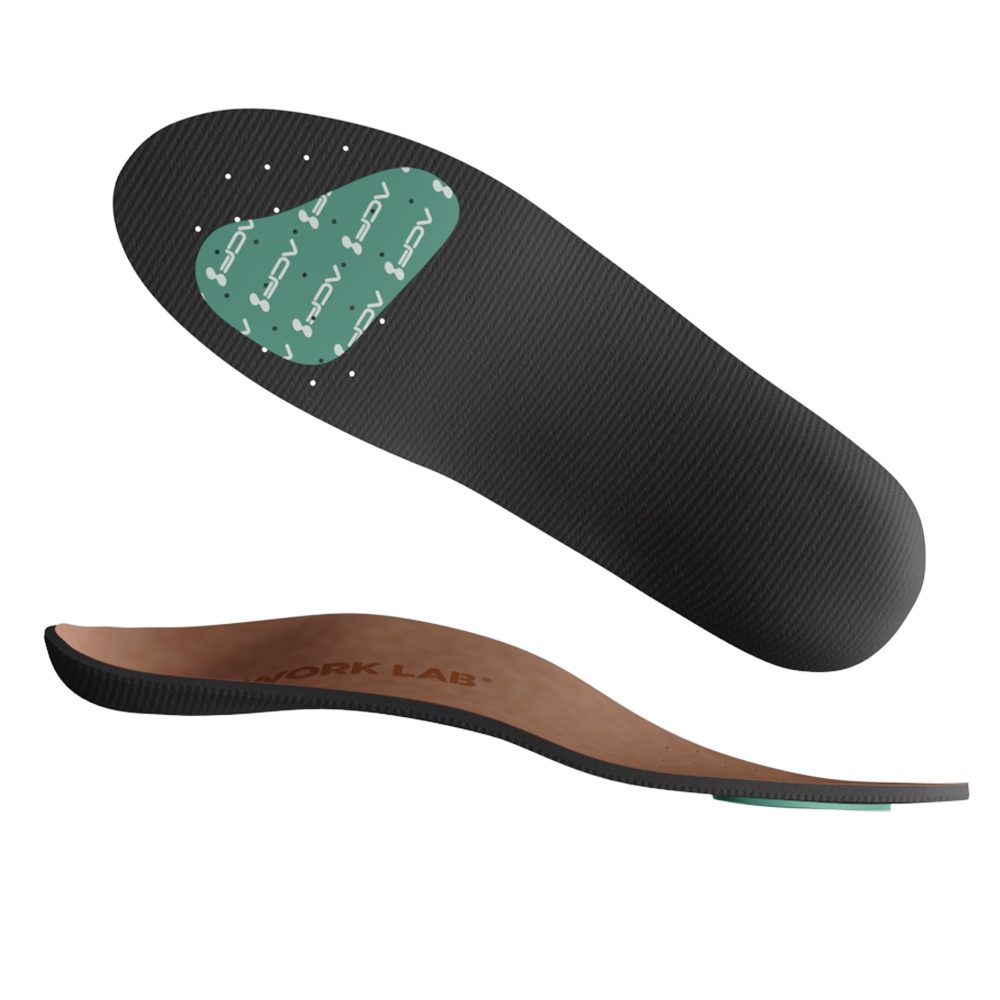
An insole is a stack, and the top cover is the top layer of the stack: the material the skin actually touches. Beneath it sit the shell and whatever posting or redistribution the build carries. The cover’s jobs are specific. It manages friction between skin and build, so the foot does not drag across a firm surface all day. It takes the edge off contact, so a shell that holds the foot does not present itself to the skin as a rigid object. And it is the part that wears, because skin, moisture and repeated compression all land on it first. The shell is the structure; the cover is the interface.
Seen this way, the cover is doing a limited job, and the limits matter. It is thin relative to the layers beneath, and it is not the layer that decides where load travels. A cover cannot pull load off the forefoot, and it cannot hold an arch up. What it can do is change how the build feels at the interface, and how it feels changes how the build is experienced, tolerated and worn. A technically good build under an unsuitable cover gets reported as uncomfortable, and an unsuitable build under a plush cover gets reported as pleasant for a fortnight. The cover sits between truth and experience, which is exactly why the choice deserves a thought rather than a preference.
It is worth stating plainly that softness is a material property, not a benefit. Soft describes how a material deforms under a thumb press in the first second. Whether that behaviour helps or hinders depends on the question the pair is being asked to answer. The pharmacy pair the customer compared against is answering a different question from the pair on our counter, and the thumb test cannot tell the two questions apart. Only the fitter can, which is why the fitter, not the thumb, does the choosing.
The cover is also the part that gets replaced. Wear shows on the top layer first: the pile flattens, the surface glazes, the edge frays where the shoe’s sidewall rubs. This is by design rather than accident, because a cover that wears out is doing its job of taking the wear, and replacing it costs far less than rebuilding the pair. The clinics we supply plan for this: the cover choice is written on the specification, so the replacement matches the original rather than drifting toward whatever is in the drawer that week.
Where a soft top earns its place
There are real scenarios where a softer top cover is the right answer, and they deserve to be listed honestly rather than defended apologetically. The clearest is the long shift on hard ground. A customer who stands for most of the working day on concrete or tile subjects the same contact areas to the same surface for hours, and a cover that spreads the contact and takes the edge off the floor is doing exactly what the day asks of it. In that condition, softness at the interface is not indulgence. It is the difference between a pair that gets worn through the shift and a pair that gets left in the locker.
The second scenario is the shoe that already has a hard interface. A leather footbed in a formal shoe, a thin firm sockliner in a work boot: some footwear hands the foot a surface with very little give, and the build goes in on top of it. Here a softer cover buys back some of the comfort the shoe never offered, without asking the shell beneath to do a job it was not shaped for. The cover and the shoe divide the work sensibly: the shoe’s firmness stays where it is, and the interface stops feeling like a board.
The third scenario is the customer whose priority is comfort, stated clearly, after the record has been taken and the build has been discussed. Some customers are not asking the pair to hold their foot in a particular way; they are asking it to make a long day kinder, and they know that is what they are asking. For them, a comfort-first allocation with a softer top is a defensible build, provided it is written down as such. The phrase that matters on the specification is comfort-led, because that tells whoever reads the file next that softness was a decision, not a default, and that the load notes were written with that choice in view.
Older customers often land in this group, and for a practical reason: many of them walk less decisively than they did, spend more of the day on their feet indoors, and judge a pair almost entirely by how it feels across the day. Pushing a control-led build on a customer whose stated priority is comfort usually produces a pair that sits in the shoe box. A pair worn with a softer top does more work than a pair unworn with a firmer one, and any clinic that has swept a drawer of abandoned pairs knows which outcome it prefers.
Where softness works against the build
The mirror list is shorter and harsher. A soft top cover is the wrong choice when the purpose of the build is to hold the foot in a defined position. A shell is shaped to a contour, and the contour only governs the foot while the foot stays on it. A thick, yielding cover lets the foot compress into the layer and move within it: the heel sits a little differently at midday than it did in the morning, the forefoot drifts toward the edge of the shell as the cover compresses unevenly under load. The build still exists, but the foot is no longer reliably on it, and nobody can see that from the outside.
The second failure mode is the loss of feedback. A build that guides load needs the foot to register what the surface under it is doing, and a thick soft layer sits between the two like a cushion over a message. Customers describe it, when they describe it at all, as a feeling that the pair is doing nothing, which is precisely the problem: the shell is doing plenty, and the interface is swallowing the report. When the purpose of the build includes load being steered rather than merely spread, the cover has to transmit, and transmission is the opposite of what softness does well.
The third failure mode is geometric. A cover takes up volume inside the shoe, and a soft one takes up more as the day goes on, because it compresses under load and then recovers, over and over, into a slightly different shape each time. In a shoe with generous internal room this barely registers. In a shoe with a close fit, a deep heel counter or a narrow toe box, the same cover pushes the foot upward into the lacing or the counter and turns a comfortable build into an objection about the shoe. The fitter who chose the soft top gets the complaint, even though the shoe and the cover made the decision together.
None of this makes softness a defect. It makes softness a trade, and the trade has to be taken deliberately. The error we see in returned builds is rarely the choice itself; it is the default. A workshop that puts the same soft top on every pair because it tested well at the counter has decided nothing for anyone. The cover question deserves one sentence per pair on the specification, and that sentence should say why the choice was made for this person, not for people in general.
Thickness, deformation and what happens between the layers
Thickness and softness are related but not interchangeable, and the relationship is worth spelling out in ordinary words. A thin cover, however soft its material, has little room to deform: the foot meets the shell’s contour through a thin veil, and the contour reads through. A thick cover, even in a moderately firm material, gives the foot somewhere to sink. The deeper the layer the foot can compress into, the more the effective shape of the build changes with load, and the more the shape the fitter built differs from the shape the foot actually experiences by afternoon.
Deformation also compounds over a day in a way the counter never shows. Fresh out of the workshop, a thick soft cover sits proud and feels plush, and the first hour in the shoe confirms it. Hours later, the layer under the heel has compressed harder than the layer under the arch, because load spent its day where load always spends it, and the interface is now deformed unevenly. The foot has drifted relative to the contour beneath. Nothing has broken; the pair simply behaves at hour six like a slightly different pair from hour one, and a clinic that knows this asks its customers to come back for a review rather than relying on first impressions.
Heat and moisture join in. A cover that has been compressed all day in a warm shoe recovers more slowly than the sample on the counter did, and the recovery matters for the second wearing: a pair pulled from yesterday’s shoe and put straight into today’s starts its day part-compressed, especially in the heel. This is one of the quiet arguments for rotating two pairs rather than wearing one daily, and it is also why wear reading after a season is more informative than any thumb test in the shop. The layer shows, in its own shape, how the person actually used it.
The workshop consequence is a rule of proportion rather than a number: the thicker and softer the top, the less precise the build beneath should be expected to stay, and the build specification should be written knowing that. A fitter who wants a contour to govern the foot all day keeps the cover thin and lets the shell work. A fitter whose priority is interface comfort accepts that the contour will be read through a thicker veil and writes the load notes accordingly. Either is a defensible build. Only the combination without a reason is not.
Explaining the trade-off at the counter
The thumb test happens before the fitter can stop it, so the explanation has to be ready. The version we coach partners on runs two sentences long. The softness you feel with your thumb is what the layer does in the first second. What matters is what the pair does for you at the end of the day, and that depends on whether your foot needs to be cushioned or held. Then one question to the customer, and the question decides the allocation more reliably than any material sample: tell me about the hours you spend on your feet, and on what floor.
The answer sorts most customers quickly. Hours standing still on hard ground point toward the comfort-led column, because the condition is contact against a hard surface for a long time, and a yielding interface is the honest response. Hours of walking, turning, carrying, or any activity where the foot needs to be kept in one place relative to the build point toward the control column, because there the cover’s job is to transmit, not to absorb. The customer usually recognises their own day in one of the two descriptions, and having recognised it, accepts the cover that matches it. The argument never happens, because the customer made the decision with their own answer.
What has to be said, and said without hedging, is that a softer choice costs something. A comfort-led pair will feel kinder and will hold the foot less precisely. A control-led pair will hold the foot and will feel firmer at the interface, particularly in the first week. Customers accept trade-offs when they are named; they resent them when they discover them unannounced. The clinics with the fewest surprises are the ones where the cover decision is spoken aloud at handover and written on the card, so the customer’s memory and the file agree before the first full day is over.
One caution belongs in the script: the first week feels firmer than the tenth, in any build, and the difference is settling, not verdict. A customer who judges a control-led pair on day two will reject a build they would have accepted on day ten, and a customer who judges a comfort-led pair on day two may miss that the cover is compressing unevenly under their particular load. The counter sentence that prevents both errors is short: give the pair a fortnight, then tell me what the day feels like, not the first hour. This is also why our insole ranges are allocated against a described day rather than a felt sample.
Allocating by person, not by preference
The allocation conversation is where a clinic either builds a system or accumulates habits. The system version is short. The record and the day description decide the column: load behaviour from the pressure record, position from the alignment frame, hours and floor from the customer’s own account of the day. Comfort-led where the condition is long standing on hard ground or where the customer has stated comfort as the priority. Control-led where the foot needs to be kept on the contour or where load needs to be steered. Everything else follows from that split, including the thickness of the cover and the wording of the load notes.
What the split must not run on is preference alone. Customers arrive with preferences, and the most common one is softness, because softness is what every display in every shop has taught them to test with a thumb. A clinic that lets the preference decide has outsourced the professional judgement the customer is actually paying for. The better move is to hear the preference, test it against the record and the day, and either honour it with a reason or overrule it with one. Both outcomes are respectful. The unexamined yes is the one that produces the drawer of abandoned pairs.
The allocation also has to survive staff turnover, which is where the written specification earns its keep. A pair built this season and reviewed next season should read the same to a new fitter as to the one who built it: cover chosen comfort-led for long standing on concrete, or control-led because the load pattern asked for the foot to be held. Two lines on the card. Without them, the replacement cover at the next service drifts toward whatever the new fitter prefers, and the pair quietly changes character without anyone deciding it should.
Group orders deserve their own caution, because they are where the preference trap is deepest. A studio ordering pairs for a team, or a retailer stocking a series, is tempted to standardise on one cover for consistency, and consistency is a property of the order, not of the feet. Our guidance to partner programmes is to allocate per person inside the order exactly as at the counter: the record, the day, the column. A mixed order with mixed tops is harder to describe in a brochure and far easier to defend at review, and a review is where a re-order either happens or quietly does not.
What the cover looks like after a season
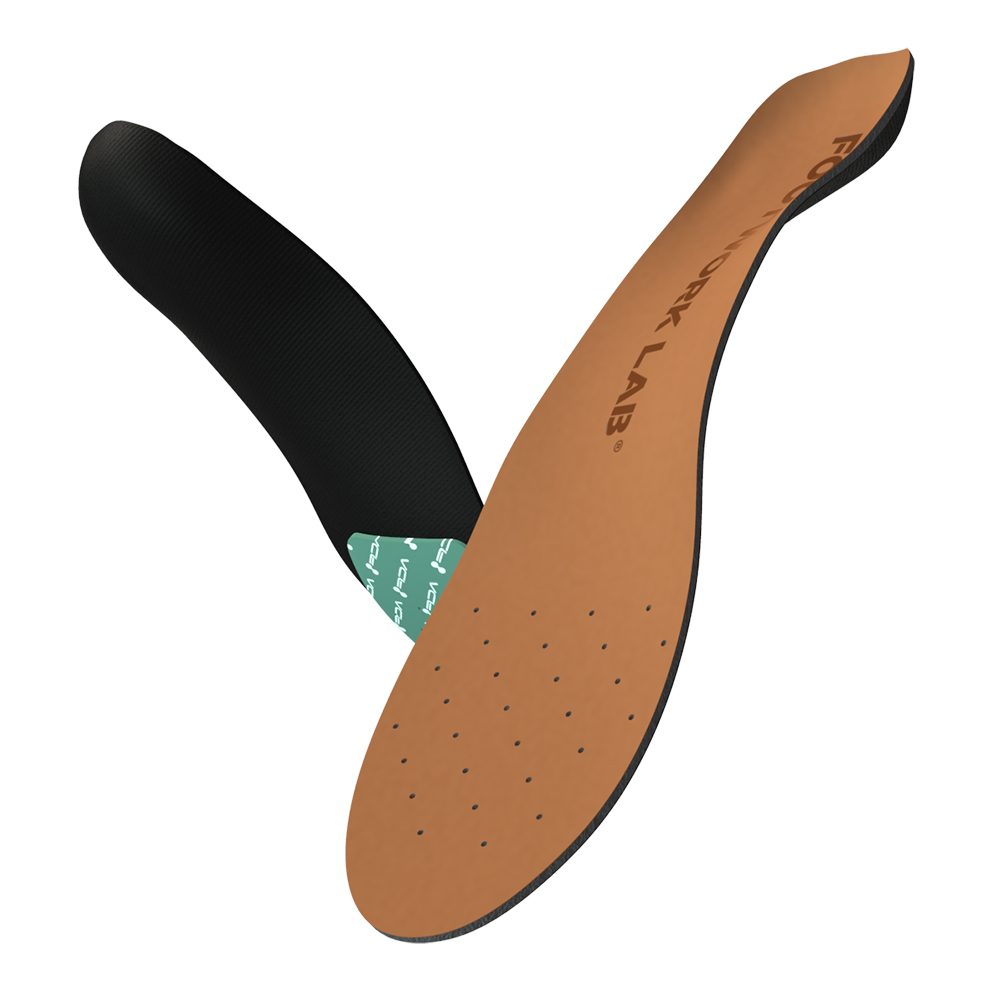
The season’s wear is the audit of the allocation decision, and it reads plainly once a fitter knows the signs. A comfort-led cover on a long-standing customer shows even flattening across the contact zones: the pile has compressed where the day pressed it, uniformly, and the surface has softened in feel. That is the cover doing its job. A control-led cover shows the same kind of wear more slowly and more lightly, and the contour beneath should still read through when a thumb slides along the arch. If a control-led cover shows deep, uneven compression in the heel or a hollow worn at the forefoot edge, the layer was too thick for the job, and the foot has been moving inside the build all season.
Wear also settles the replacement question. When the cover has flattened but the shell still reads true, a cover replacement restores the pair at a fraction of a rebuild. When the cover wear has gone past even flattening into breakdown, or when the shell itself has drifted, the review conversation is about a rebuild instead. This is why the cover choice and its reason stay on the specification: the replacement has to match the original allocation, not the mood of the week the customer walked in. The top-cover article in our reading list takes the wear question further than this one needs to.
The season’s wear is also the best evidence in the next allocation conversation, because customers argue with opinions and accept objects. Showing a returning customer their own pair, with the wear where their day put it, converts the softness question from a matter of taste into a matter of record. The customer who wanted everything softer last season reads their own heel compression and usually concedes the point without being pressed. Evidence accumulated from pairs the customer owns is the quiet advantage a clinic has over every shop counter selling felt samples, and it costs nothing but the habit of looking.
The honest closing position is that neither column wins. Softness helps where the day is standing, where the floor is hard, and where comfort is the stated and examined priority. It costs where the foot must be kept on a contour, where load must be steered, and where the shoe leaves no room for a layer that swells into the day. A clinic that allocates by person, writes the reason on the specification, and audits the allocation against season wear ends up with fewer surprises at review and more pairs still in service a year later. That outcome, rather than any feel at the counter, is the point of getting the top cover right.
Frequently asked questions
Is a softer top cover always more comfortable?
Not always. It feels softer to a thumb press in the first second, which is what customers test. Over a full day, comfort depends on the match between the cover and the condition: long standing on hard ground rewards a yielding interface, while walking and turning can leave the foot drifting inside a thick soft layer, which customers report as the pair doing nothing. Comfort is a match question, not a softness question.
Does a soft top cover weaken the support of the build?
It can. The shell holds the foot only while the foot stays on its contour, and a thick, yielding cover lets the foot compress into the layer and move within it, so the contour governs the foot less precisely through the day. A thinner cover reads the shell’s shape through to the skin, which is why control-led builds are specified with thinner tops as a rule.
When should a soft top cover be chosen?
Where the condition is long hours standing on hard floors, where the shoe already presents a hard interface, or where the customer has examined the trade and stated comfort as the priority. In those cases the comfort-led choice is written on the specification with its reason, so the allocation is a decision on record rather than a default.
When does a soft top cover work against the pair?
Where the purpose of the build is to hold the foot in a defined position or to guide load, the cover has to transmit the shell’s contour rather than absorb it. A soft layer also takes up shoe volume and compresses unevenly through the day, which matters in close-fitting shoes. In those builds the softer choice undoes the work of the shell beneath it.
Does the thickness of the top cover affect the fit in the shoe?
Yes. The cover occupies volume inside the shoe, and a thicker one raises the foot toward the lacing or the counter, which registers most in shoes with little internal room. It also compresses and recovers through the day, so the effective height and shape of the build change with load. Close-fitting shoes argue for a thinner cover regardless of material.
Can a clinic just order the same top cover for every pair?
It can, and it should not. Standardising on one cover optimises the order, not the feet. The allocation runs per person: load behaviour from the record, position from the alignment frame, hours and floor from the customer’s account of the day. A mixed order with mixed tops is harder to brochure and far easier to defend at the season review.
Who decides the top cover for a pair?
The qualified fitter or clinician, on the basis of the records and the customer’s own description of their day. The equipment produces measurements and images and does not make the choice. Whatever is decided should be spoken aloud at handover and written on the specification with its reason, so the replacement cover matches the original allocation.
What we would do next
Pick up the last ten pairs your room has delivered and check whether the cover line on each specification says why the choice was made, not just what it was. Where the reason is missing, write it in at the next service, and where the allocation ran on preference, note that honestly too. Insole material selection, explained plainly covers the layers beneath the cover, what a customer should hear at handover carries the fortnight instruction in full, and where returns are decided at finishing connects the cover choice to the edge work on the bench. The insole categories page lists the ranges we allocate against a described day, and the FAQ page holds the counter answers we send most often by message.
This article is intended for professional and educational reference. It is not medical advice. Foot assessment equipment produces measurements and images; clinical interpretation and any decision about care remain the responsibility of a qualified professional. Certification scope is limited to the documentation we hold: European Union certification and ISO quality system certification.