
“That doesn’t look like my walk at all,” the customer says, still standing at the far end of the path, and the room now owes her an answer. The first crossing is already on the screen. Something at the start of it looks hesitant, and the steps after the turn read shorter than everything else on the line. You offer a second pass — same shoes, same room, twenty minutes later — and the new record comes out different: longer steps, a steadier roll through, no hesitation anywhere. Two records, one morning, one customer. A colleague argues the first pass was nerves and should be discarded. Another argues the second was flattered by warm-up and should be too. Neither is obviously wrong, and the worksheet is still blank.
Nobody trains for this exact moment, yet it happens in every busy room sooner or later: a same-day retest that disagrees with the pass it was meant to confirm. This piece is about working that situation deliberately instead of arguing it by feel. When is a retest actually worth the floor space, which conditions have to be held constant for the pair to mean anything, how to tell an ordinary difference from a drift that matters, what to write on the sheet so both records stay usable, and when the honest answer is to book the retest for another day entirely.
Two records and one quiet argument
The first thing worth saying out loud, to colleagues as much as to customers, is that two different passes from the same person on the same morning is the normal case, not the suspicious one. Walking is not a stamped part coming off a line. The gait cycle varies from stride to stride in everyone, and the variation gets wider when the person is new to the room, being watched, or walking in footwear they did not put on that morning themselves. So the disagreement itself is not a finding. It is a starting point, and the argument only begins because nobody agreed in advance what the second pass was supposed to decide.
That is the frame that settles most of these moments: a retest answers a question, and the question has to exist before the retest does. If the question is whether the hesitation at the start of pass one was a real pattern or just the customer finding her footing, the retest is aimed at the start of the crossing specifically, and you will both be watching for it. If the question is whether the record was spoiled by a misstep at the platform edge, the retest is about whether a clean crossing can be produced today at all. If the question is only “let’s check it again because it looked odd,” you are not running a retest — you are collecting a third opinion, and the room will keep arguing because there is nothing to argue about.
So before offering a second pass, say the question out loud, in one sentence, and put it on the sheet. It costs ten seconds and it converts the argument into a procedure. The colleague who wanted to discard the first record now has to say what the second one is for; the colleague who suspects warm-up now has to say how warm-up would be held equal. Once the question is written down, the disagreement usually dissolves into logistics, which is exactly where it belongs.
What actually changes between two passes
Most same-day disagreement traces back to a short and very ordinary list, and it helps to know it by heart because it tells you what to control. Warm-up comes first: the opening pass of a session is often the stiffest of the day, especially for customers arriving straight from a car seat or a desk, and the second pass is looser almost mechanically. Nervousness runs the other way, at least partly — the second crossing happens in a room the customer has already seen, on a surface she has already felt, with a process she can now predict, so hesitation at the start line commonly shrinks. Pace drift sits underneath both: asked to walk “normally,” people recalibrate with every crossing, and the second pass tends to be a little quicker or a little longer-strided than the first unless you pin the instruction down.
Then there is the unglamorous equipment of daily life. Shoes get re-laced differently after being taken off. Socks slip. A customer who walked barefoot the first time asks whether shoes are allowed the second time and nobody wrote the answer down. The floor itself contributes: direction of travel, the turn at the end, a patch of sunlight warming one side of the path. And finally fatigue, which pushes in the opposite direction from warm-up — a customer who arrived tired and gets more tired will shorten contact and slow down rather than smooth out, which is one reason the second pass is not automatically the better one.
None of these is exotic, and none is a malfunction. They are the ordinary weather of any assessment morning. The professional’s job is not to eliminate them — that is impossible — but to decide which of them are allowed to differ between the two passes and to say so on the record, so that the person reading the file next week knows what the pair actually compared.
Hold these constant if you want a fair pair
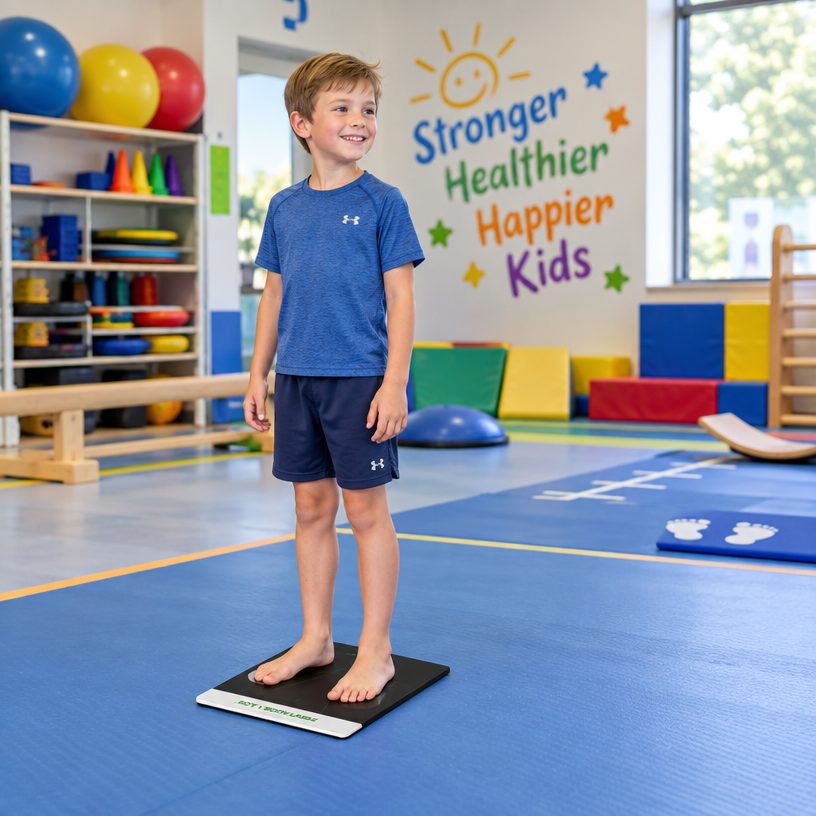
If the retest has a real question behind it, treat the pair like a small experiment and fix the variables you can fix. Footwear first: same shoes, same lacing, and if the first pass was barefoot, the retest is barefoot too — decide it before the customer sits down again, not while she is already standing at the start line. Direction of travel next: same way down the path, same turn at the end, because a reversed route quietly changes everything after the first stride. Pace instruction third, and this is the one rooms argue about least and get wrong most: whatever you told the customer the first time, repeat it word for word, and if the first instruction was “walk at your own pace,” resist the urge to upgrade it to “walk briskly” halfway through the morning.
Add a rest interval that you also keep equal — enough time between passes for the customer to settle, but not so long that the warm-up effect washes out or the room goes cold on her. Keep the same staff member giving the instructions, because two people phrase the same request differently and customers hear the difference. And hold the start protocol identical: same words at the line, same signal to begin, same spot for the first footfall. A surprising share of retest disagreement is manufactured at the start line, not on the path.
The capture itself stays a tool throughout. A pressure platform such as the F2 plantar pressure system records whichever crossing you put in front of it, faithfully and without an opinion; whether the two crossings were taken under fair, comparable conditions is entirely the professional’s work, and it is the part no device can do for you. That is also the sentence worth writing on the sheet when conditions could not all be held equal — say which ones drifted, plainly, so the reader weighs the pair with open eyes.
When the retest is worth the floor time
A full room makes floor time expensive, so spend it on purpose. A retest earns its space in a handful of situations. The first is suspected capture trouble: a misstep at the edge, a dragged toe, a customer who stopped mid-crossing, a start so hesitant it dominates everything downstream. Here the retest is not a second opinion about the person — it is a check on whether the room got a clean measurement, and it is usually quick because you know what you are looking for. The second is a genuine mismatch between the record and the customer’s own account: she says she walks fine, the line says something else, and one more pass under controlled conditions tells you whether the mismatch is the measurement or the moment. The third is a referral question that specifically requires confirmation — a pattern the file’s reader will act on, where one crossing alone would be thin evidence.
Just as useful is the list of situations where the retest is not worth it. Not when no decision hangs on the difference — if both records lead to the same conversation, take the better-labelled one and move on. Not when the difference between passes is small and consistent, because then the pair has already told you the pattern holds. Not when the customer is tired, rushed, or visibly done, because a fourth kind of weather — fatigue — will now dominate everything you measure. And not when you already know the honest answer is a different day: if the shoes are brand new, if the customer came straight off a long shift, if the slot ran short, booking the retest properly beats squeezing it badly.
One habit keeps the list honest: decide before the second pass whether you would change anything based on it. If the answer is no, the retest is theatre, and the customer would rather have the extra minutes back.
Difference and drift are not the same finding
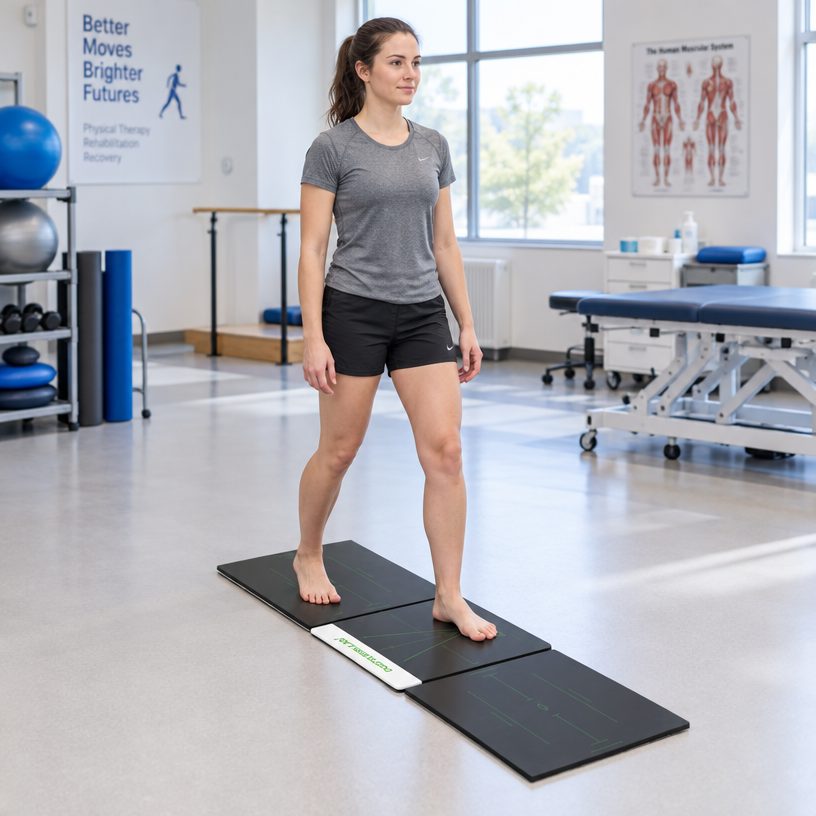
When the pair is done, the reading deserves the same discipline as the capture. Start by separating two very different things that look similar on a screen. Ordinary step-to-step variability means the two records disagree in scattered, local ways — this stride slightly longer, that contact slightly heavier — while the overall shape of the pattern holds. That is walking being walking, and a same-day pair is a perfectly good way to establish that the shape holds. A systematic shift is different: the whole pattern moves together, contact redistributes across the foot, the roll-through changes character from start to finish, and the shift appears in both feet or in the same region repeatedly. That kind of coherence is worth attention, because scattered noise does not organise itself.
Then resist the pull of the strongest number on the screen. A single pair of crossings gives you a range, not a trend. It can tell you the pattern is stable across two efforts under matched conditions, or that it moved when conditions moved — and if conditions moved, the sheet’s conditions lines will say so. What a same-day pair cannot tell you is whether anything has changed over months, because change over time needs the same protocol, the same footwear rules and the same room on a different day, with the earlier file sitting next to it. Rooms that quietly let “we retested her” drift into “we compared this year with last year” end up with files that look like comparisons and are not.
A useful self-check before writing anything: describe the difference between the two passes out loud in one plain sentence. If the sentence needs interpretation to sound meaningful, it is probably variability. If it survives plain language — “both passes show the same roll-through, the second pass was simply more confident at the start” — it is a finding, and it will still read clearly a year from now.
What to write down so the pair stays usable
Documentation is what turns two crossings into a pair instead of two anecdotes, and four short lines do the work. Line one: what was held constant — footwear, direction, pace instruction, start protocol, rest interval, each named. Line two: what differed, even if the difference seemed trivial at the time — “customer paused to re-tie laces before pass two” is exactly the kind of sentence that saves a file later. Line three: which pass the customer herself says feels like her walking, in her words. This line gets skipped most often and earns its space most often, because when the two records disagree, the customer’s own account of which one feels typical is context no measurement contains. Line four: the question the retest was answering, in the same sentence you said out loud before offering it.
Keep both records, label both, and let the reader see the pair rather than a winner. Discarding the first pass because the second looks better is the single most common way rooms quietly bias their own files, and it happens for the friendliest reasons — the second pass is usually prettier, as warm-up and familiarity would predict. Prettier is not truer. If one record must lead the file, lead with the one that matches the referral question, not the one that matches the aesthetic.
And write the conditions lines at the time, not at the end of the morning. Conditions reconstructed from memory at lunchtime are a third kind of weather: the weather of forgetting. Thirty seconds of writing between customers is cheaper than any hour spent later explaining to a colleague why two records from the same day were taken in what the file will otherwise claim were identical conditions.
When the honest answer is another day
A same-day retest answers capture questions, and it is worth being precise with yourself about that boundary. It can tell you whether the room can get a clean measurement from this customer today. It cannot tell you whether her walking has changed since last season, whether an intervention has done anything, or what her typical day looks like — those are different-day questions wearing a same-day costume. When the referral question is really about change, the same-day retest only buys you confidence in today’s baseline, which is useful, but the comparison itself still has to be booked.
Some mornings, the conditions themselves disqualify a retest, and noticing that early is a professional skill rather than a defeat. Brand-new shoes that have never been worn will be walked in differently all day, not just between two passes. A customer who arrived straight off a night shift is measuring exhaustion and calling it gait. A slot that has already run short means the retest would be taken in a hurry, and hurried records inherit the hurry. In each case the stronger move is to write the plan on the sheet — what was taken today, what could not be equalised today, what the retest should hold constant when it happens — and hand the customer a real appointment instead of a compromised one.
Rooms that do this consistently develop a pleasant side effect: customers stop fearing the second pass. They learn that a retest is not a verdict about their walking being wrong but a check on the room being fair, and that difference — between being measured and being judged — is the difference customers remember when they decide whether to come back.
Frequently asked questions
Is it normal for two passes on the same day to look different?
Yes, and usually reassuringly so. Walking varies naturally between strides, and a second pass adds warm-up, familiarity with the room and pace drift on top. Scattered differences with the same overall pattern shape are ordinary. What deserves attention is a coherent, systematic shift that moves the whole pattern together, and the conditions lines on the sheet tell you whether something changed between the two crossings.
How many passes make a fair same-day comparison?
Two is enough for most capture questions — checking that a pattern holds, or that a spoiled pass can be replaced. The fair pair matters more than a larger number: same shoes and lacing, same direction, word-for-word the same pace instruction, comparable rest, the same start protocol. Three or four passes add fatigue, which is its own weather, and rarely answer anything the first controlled pair did not.
What should stay constant between a first pass and a retest?
Footwear and lacing, barefoot or shod, direction of travel, the pace instruction repeated word for word, the start protocol, the staff member giving instructions and a comparable rest interval. Decide these before the customer sits down again. The capture device records whatever crossing happens; making the two crossings comparable is the professional’s work, and it should be written on the sheet, including anything that could not be held equal.
The customer says the second pass feels more like her walking — which record do we keep?
Keep both, label both, and record her words on the sheet. Which record leads the file should follow the referral question, not which image looks better. A customer’s own account of which pass feels typical is context that no measurement contains, and when two records disagree, that line is often the most useful sentence in the file.
When is a retest a waste of session time?
When no decision hangs on the difference, when the two passes already agree in overall shape, when the customer is tired or rushed, or when you already know the honest answer is a different day — new shoes, a night shift just ended, a slot that ran short. A quick test before offering the second pass: if nothing would change based on it, the customer would rather have the minutes back.
Can a same-day retest show whether something has changed over months?
No. A same-day pair answers capture questions: can this room get a clean measurement from this customer today, and does the pattern hold across two matched crossings. Change over time needs the same protocol, footwear rules and room on different dates, with the earlier file alongside. A retest can strengthen today’s baseline, but the comparison itself has to be booked properly.
What do we write on the sheet when the retest disagrees with the first pass?
Four lines: what was held constant, what differed even if it seemed trivial, which pass the customer says feels like her walking in her own words, and the question the retest was answering. Keep and label both records rather than discarding one. The second pass is usually prettier because warm-up and familiarity predict exactly that — prettier is not truer.
What we would do next
Print a conditions block onto your assessment sheet — footwear, direction, pace instruction, start protocol, rest — so that holding a pair fair becomes ticking boxes instead of remembering habits. Then add the fifth line the block implies: the question any retest is answering, written before the second pass is offered. It costs one printed line and moves same-day retests from an argument about instincts to a procedure any cover colleague can run. The same discipline of matching the number of passes to the question is what makes any record fair, whatever the day (Walk In, Walk Across: How Many Passes Make a Fair Record).
And the next time a retest comes out identical to the first pass, resist the anticlimax. Identical, under conditions you can name and defend, is the strongest sentence a file can carry. Which leaves the question we put to every room that runs these sessions: when the second pass changes nothing, what do you actually write on the sheet — and has your answer survived being read by someone who was not in the room that morning?
This article is intended for professional and educational reference. It is not medical advice. Foot assessment equipment produces measurements and images; clinical interpretation and any decision about care remain the responsibility of a qualified professional. Certification scope is limited to the documentation we hold: European Union certification and ISO quality system certification.