
The warehouse shift ends at two, the bar shift starts at five, and the same pair of shoes is still on their feet for both. People working two jobs rarely arrive describing a foot problem. They describe a day: the morning on a picking line or a delivery round, the evening behind a bar or a care shift or a family shop, the drive between them, and one pair of shoes that never gets a rest. By the time the complaint reaches a clinic or a fitter it has gone vague, because two jobs blur into one long load and the customer cannot say which half is doing the damage.
For the clinics, retailers and distributors who serve working customers, the two-job week is one of the hardest briefs in the trade. The two shifts rarely agree about what a foot needs, the footwear cannot change between them, and a record taken on one shift may say very little about the other. This article sets out how to interview the week properly, what a fair assessment looks like when the week has two halves, how to write a build brief that serves the harder shift first, and where the honest limits of a compromise pair sit.
Two jobs, two load profiles, one pair of feet
The first step is to stop treating the two-job week as one job with extra hours. It is two jobs, and they usually load the foot in opposite ways. A morning warehouse or stockroom shift is walking and lifting work: long distances on hard floors, repeated bends, sudden carries, a pace set by the picking list. An evening bar, restaurant or checkout shift is standing work: long stretches planted in one spot on tile or concrete, small shuffles rather than steps, weight drifting onto one leg as the hours stack up. A care shift or a second retail job reverses the mix for some workers. The point is not the specific jobs. The point is that walking load and standing load concentrate in different places under the sole, and a foot that carries both in a single day never gets the break either one would allow.
Fatigue compounds the difference. By the second shift, the foot has already absorbed a working day, the tissues are less resilient, and the posture has usually changed too: a lower arch presentation under load, more weight through the forefoot, less push in the step. Customers describe the second shift as the one that hurts, and they are usually right, but that does not mean the second job is the cause. It may simply be the shift where a load built since morning finally announces itself. Any conversation that starts and ends with the evening job is therefore likely to brief the wrong half of the problem.
There is also a footwear angle that repeats so often it deserves its own attention: many two-job workers own one pair of work shoes, chosen for whichever job came first, and the second job inherits them whether they suit it or not. Trainers that served a warehouse fine may be grippy enough for a kitchen floor but offer little under a four-hour stand. Dress shoes carried from an office day into an evening shift are a different mismatch again. The shoe, in other words, is often the real compromise, and the support inside it has to work around a choice the customer made for reasons that had nothing to do with feet.
Interview the week, not the job
Before any assessment or recommendation, sit the customer down with the actual week and map it. This is the single most useful half hour in the whole process, and it needs nothing more than a sheet of paper. Ask them to walk you through a typical week day by day: which job runs first, how many hours each job actually takes, how the travel between them happens, and which days run both. Two-job weeks are rarely symmetrical. Some days carry one job, some carry both, and the double days are usually where the reports concentrate.
Four questions do most of the work. Which shift does the ache arrive in? Which floor are you on when it does, and what are you doing at that moment, standing or moving? Which shoes are on your feet for each job, and are they the same pair? And how long is the gap between shifts, because a twenty-minute drive in a cramped van is a different recovery window from a two-hour break at home. Write the answers down as four lines on the sheet, one line per question, and keep the sheet. It becomes the yardstick every later decision is measured against, and it converts a vague complaint into a specific brief.
The questioning also does something the customer notices even if you do not announce it. Someone who has spent months feeling that their tiredness was vague and unexplainable is being asked precise questions about precise hours, and that alone changes how they engage with the rest of the process. Expect the answers to surprise you occasionally: some customers discover their worst reports come from the morning job after all, or from the commute between jobs rather than either job itself. Let the sheet decide where the real load sits, because the two jobs people name are not always the two jobs their feet would name.
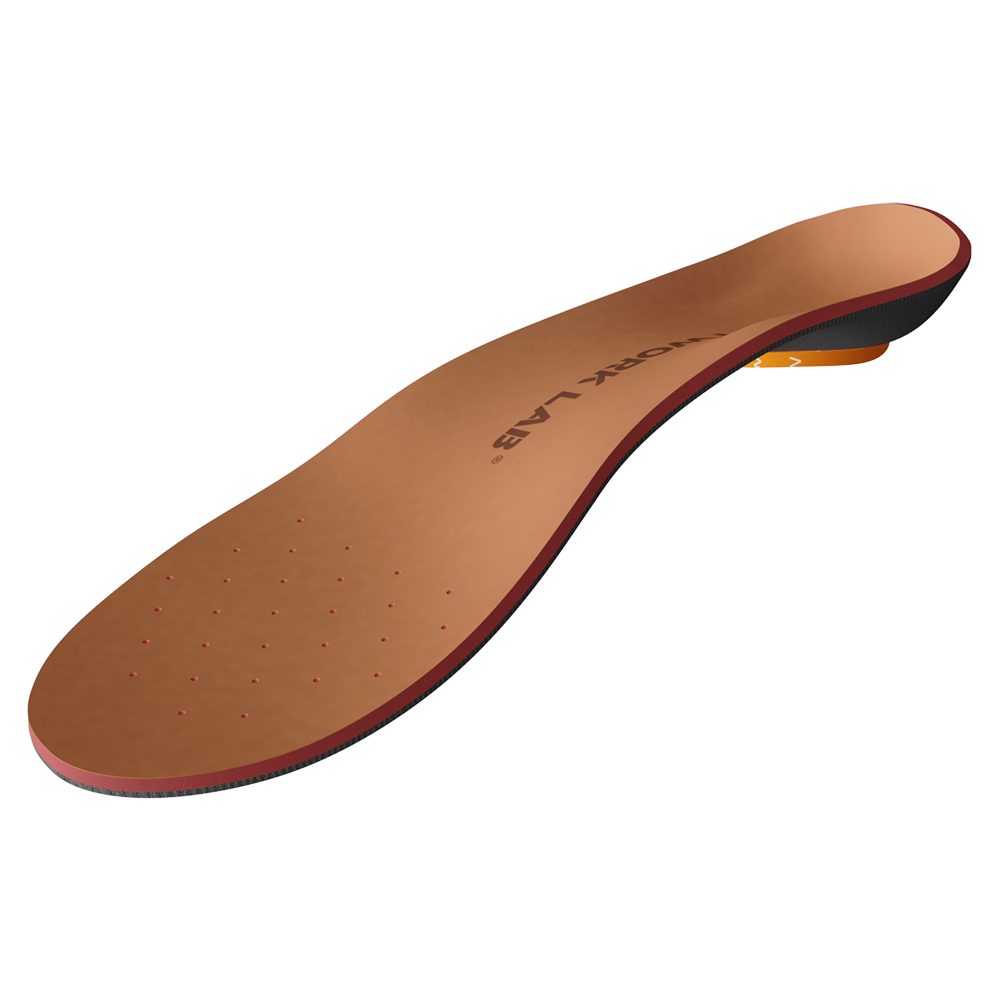
One pair of shoes carrying two floors
The footwear situation deserves a proper look before anything is placed inside the shoe. Ask to see the actual work shoes, both pairs if there are two, and put each job’s demands next to each shoe’s condition. The three things to check are straightforward. First, wear: a sole worn through on one edge changes how the foot sits before any support is added, and a two-job worker often wears shoes faster than a single-job colleague because the hours double. Second, interior volume: the shoe has to accept whatever goes inside without pinching the top of the foot or sliding the heel, because a loose heel in an evening shift is its own complaint. Third, the fit between the jobs: if the customer changes shoes between shifts, the support question becomes a two-pair question, and if they do not change, one build has to serve both floors.
Most two-job workers, in practice, do not change. The gap between shifts is short, the second job’s uniform rarely allows dressier footwear, and the car or bus ride between jobs does not come with a shoe swap. That reality should shape the whole brief. A support setup designed only for the morning job’s walking will spend its evenings under a standing load it was not shaped for, and vice versa. Say this plainly to the customer, because it resets expectations: the pair is being asked to cover two very different eight-hour demands, and the design has to be negotiated between them rather than optimised for either.
Where the shoes themselves are failing, say that too, and separately. No insole rescues a shoe whose sole has worn asymmetrically or whose upper has collapsed, and putting a new build into a dying shoe produces a fair result for neither the customer nor the build. The order of operations matters: sort the footwear first where the footwear is the problem, then place the support into shoes that can carry it. A retailer advising two-job customers will find this conversation comes up constantly, and having a set order for it saves an argument every time.
Recording a week that has two halves
When it comes to assessment, the question is not only whether to record but when. A record taken fresh in the morning, before either shift, shows the foot at its most rested. A record taken after the dominant shift shows the foot as it actually spends most of its working hours: loaded, fatigued, settled into whatever posture the day has trained. Neither is wrong, but they answer different questions, and the split-week sheet from the earlier interview tells you which question matters for this customer. If the complaint concentrates in the second shift, a record taken in second-shift conditions is usually the fairer one, and scheduling the session after a representative shift is worth the extra diary effort.
A useful session covers both views in any case. A static record, taken standing, shows how the foot organises itself at rest: the arch profile, how weight sits across the sole, where the load settles when nothing is moving. A dynamic pass, walking across a pressure platform at the customer’s own pace, shows how load moves through the step, which is the part standing complaints can never reach. Both views take minutes, and doing both in one session is standard practice. The equipment produces measurements and images; what those mean, and whether any support is appropriate, is decided by the qualified professional running the session, and that division of labour should be stated to the customer up front.
One comparison is worth doing deliberately when the diary allows it: record at the start of a double day and again after it, on the same day, same protocol, same shoes. The difference between the two records is a picture of what a double day does to this particular foot, and it usually makes the case for the brief better than any conversation could. It also gives the later review something honest to be measured against, because a pair judged on how the customer feels after a double day needs a before-and-after to be judged against at all.
Write the brief for the harder shift first
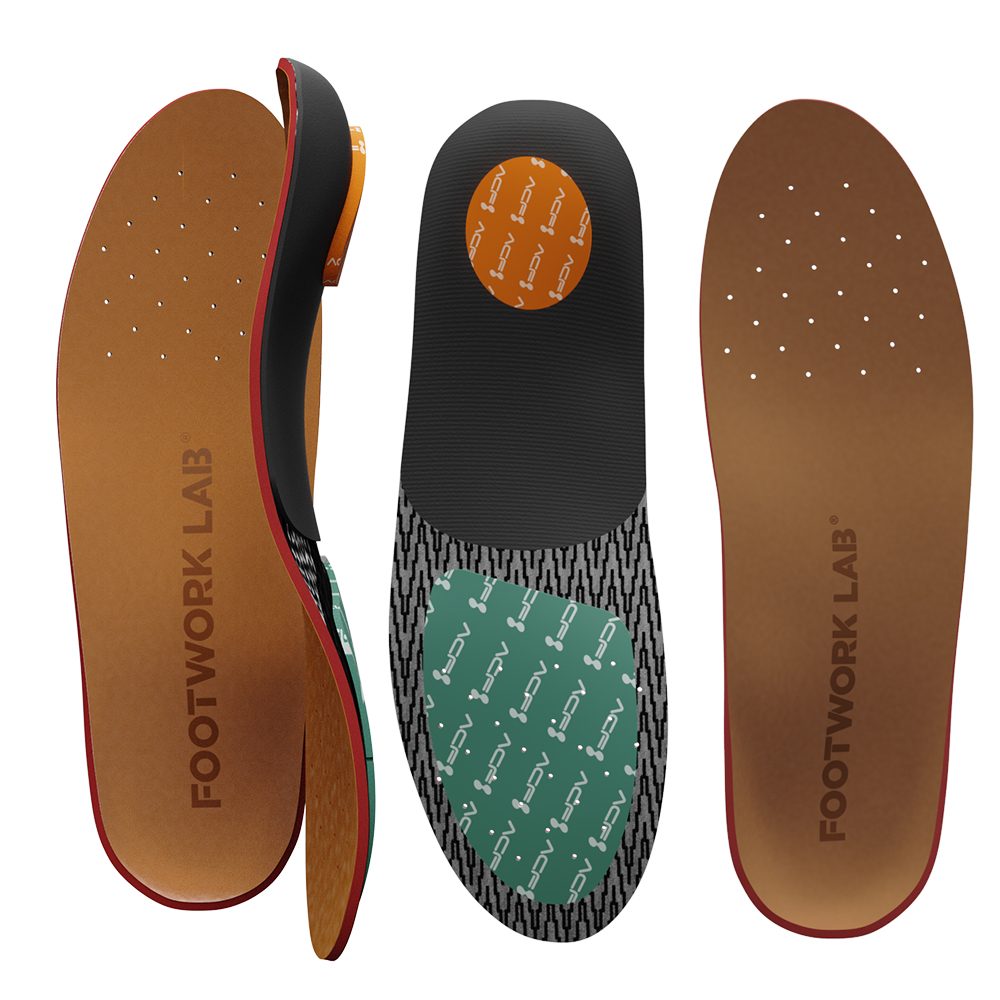
When the professional concludes that support is appropriate, the build brief for a two-job customer should be negotiated, not averaged. Averaging is the tempting mistake: split the difference between a walking brief and a standing brief and end up with a pair that serves neither shift well. The better rule, and one that holds up in practice, is to serve the harder shift first and let the easier shift inherit. The harder shift is the one the split-week sheet points to: the shift where the reports arrive, on the floor where they arrive, in the shoes where they arrive.
In practice that usually means one of two lead priorities. If the standing shift is the harder one, the brief leads with load distribution under the forefoot and an even spread across the heel, because standing pain concentrates where the same small areas carry hours of planted weight. If the walking shift is the harder one, the brief leads with support through the arch and cushioning that survives thousands of steps on hard floors. Either way, add the hold line: the foot must sit firmly inside the shoe, because a foot that slides loses the benefit of every other choice, and two-job workers change speed and direction more often than most. Custom orthotic insoles built to the individual record, like the ranges on our insole categories page, are one route from that record to a wearable result, but the brief, not the catalogue, decides what goes into it.
Write the compromise itself onto the brief as a line. Note which shift got the lead priority, and note what the second shift gives up. A year later, when the review comes around, that line is the difference between a useful conversation and an argument from memory: everyone can see what was decided, why, and what the alternatives were. Customers appreciate it too, because it shows the pair was designed around their actual week rather than picked off a shelf.
Where the compromise fails, and what to do then
Sometimes the two jobs are simply too different for one build. A roofer who does evening security work, a nurse who cleans offices at dawn, a chef who drives deliveries on days off: when the load profiles contradict and the shoes contradict with them, the honest answer is two pairs, one brief per job, and a clear explanation of why. This is not an upsell by default; it is a decision the split-week sheet makes. If one shift produces all the reports and the other shift passes without complaint, one pair aimed at the complaining shift is the correct answer, and adding a second pair for a shift that has no complaints solves a problem nobody has.
When two pairs are genuinely needed, resist the urge to make them identical. Two copies of the same compromise repeat the compromise twice. Two briefs, each optimised for its own shift and its own shoes, let each job be answered properly, and the customer changes builds the way they change shoes, which they already do in this scenario. The one caution worth stating is cost of attention: two pairs mean two break-in periods, so stagger them rather than introducing both in the same week, and let the customer get used to one before the other arrives.
Be equally honest about what a pair, one or two, cannot do. It does not change foot structure, and it does not promise that a double day will stop being a double day. What a well-briefed pair aims to do is give the foot a defined position and spread load across more of the sole, so the same week costs less. Where a report suggests something beyond workload and footwear, the file moves to clinical care, and no supplier conversation should pretend otherwise. Saying this at the briefing stage protects the customer, the fitter and the supplier alike.
The first fortnight and the review
Roll the pair out with a plan rather than a handover. Two-job feet have been carrying unaided for a long time, and a new working position needs a week or two to settle: a few shifts first, then full weeks. Ask the customer to keep the split-week sheet going through the break-in period, marking the same four lines, because the sheet is what makes the review honest. A review held without notes turns into two people comparing memories; a review held with a fortnight of marked shifts turns into a comparison of the same question asked twice, which is the only fair test there is.
Book the review when the pair is issued, a few weeks out, and put it in the diary. At the review, read the sheet against the briefing: is the ache arriving later in the shift, in a different place, not at all, or unchanged? Each answer points somewhere. Later and milder suggest the brief is working and the week simply needs continued settling. Unchanged and in the same spot suggests the lead priority was aimed at the wrong shift, which the sheet will show. Moved to a new spot suggests the load has redistributed, which is itself information a professional can read. And when the sheet says nothing has changed anywhere, the conversation moves from support to clinical, and it should move there without argument.
The two-job customers who do best over a year are the ones whose week was written down before anything was bought, because the week changes slowly and the sheet keeps every conversation anchored. The jobs may change too: a second shift ends, a new one starts, and the split-week sheet gets rewritten before any decision about the next pair. That habit, map the week, serve the harder shift first, review in writing, is the whole method, and it fits on one side of paper.
Frequently asked questions
Can one pair of insoles really serve two different jobs?
Often, yes, provided the brief was written from the actual week rather than averaged between the jobs. The rule that holds up in practice is to serve the harder shift first, the one where the reports arrive, and let the easier shift inherit. Where the two jobs contradict each other completely and both produce complaints, two briefs, one per shift and per shoe, are the honest answer.
Which shift should the assessment be scheduled after?
After the shift the split-week sheet points to, usually the one producing the complaints. A record taken after a representative shift shows the foot in the condition it actually works in, rather than the condition it wakes up in. If the diary allows, a start-of-day and end-of-double-day pair of records on the same protocol is the most informative comparison of all.
Should the customer change shoes between jobs?
Where the jobs demand genuinely different footwear, yes, and the support question becomes a two-pair question with one brief per shoe. Most two-job workers do not change, in which case one build has to serve both floors, and the interior fit of that single pair of shoes matters more than anything else in the brief.
What four questions should every two-job interview cover?
Which shift does the ache arrive in, which floor and activity are underway when it does, which shoes are worn for each job, and how long the gap between shifts runs. Written as four lines on one sheet, the answers convert a vague complaint into a specific brief and become the yardstick for the later review.
What does a build brief for two jobs lead with?
With the load type of the harder shift: load distribution under the forefoot for a standing-heavy shift, arch support and durable cushioning for a walking-heavy shift. Either way the brief should add a firm hold inside the shoe and should record, in writing, which shift received the lead priority and what the other shift gives up.
Will insoles fix the fatigue of working two jobs?
No honest supplier or fitter claims that. A well-briefed pair aims to give the foot a defined working position and spread load across more of the sole, so the same week costs the foot less. The hours remain the hours. Interpretation of any complaint, and any decision about care, belongs to a qualified professional.
When should a two-job customer’s record be retaken?
Whenever the week changes shape: a second job starts or ends, the commute changes, or the footwear changes. The record describes the week it was taken in, so a new week needs a new record before any decision about the next pair. Between changes, the split-week sheet at review is enough to tell whether the current pair still fits the week it was built for.
What we would do next
The working order, in short: map the week on four lines before anything is bought, see both pairs of shoes, record under second-shift conditions, brief the harder shift first with the compromise written down, and review against the sheet a few weeks later. None of it needs equipment beyond a pressure platform and a diary, and every step produces a document the next conversation can stand on. Questions about builds, mixed sizes or sample timing are answered fastest through our FAQ page.
The part worth flagging to colleagues is the averaging trap. It is the most common way a two-job brief fails, and it fails politely: the pair feels acceptable on both shifts and solves neither, so nobody complains loudly, the customer simply stops expecting much. The split-week sheet is the cheapest insurance against it that we know of.
So the question we would put to readers who handle working customers: when a customer’s week is split between two jobs, which shift do you currently treat as the lead brief, the one with the complaint or the one with the hours, and has that assumption ever been wrong on your own records? We ask because we build from records rather than from rosters, and the practitioners who have answered that question for us have usually changed how they schedule the second recording.
This article is intended for professional and educational reference. It is not medical advice. Foot assessment equipment produces measurements and images; clinical interpretation and any decision about care remain the responsibility of a qualified professional. Certification scope is limited to the documentation we hold: European Union certification and ISO quality system certification.