
The train is late, the platform is packed, and for forty minutes nobody on it is going anywhere under their own power. Standing room only: one hand on the rail, feet planted a shoulder’s width apart on a floor that vibrates, weight drifting from one leg to the other as the carriage sways. Multiply that by two journeys a day and five days a week, and the commute becomes the longest uninterrupted standing block in many customers’ week, longer than anything their job asks of them, and the only part of the day they never chose footwear for.
For clinics, retailers and distributors who serve office-working customers, the commute is the overlooked half of the brief. The workday gets assessed and the journey to it gets forgotten, even though the shoes worn on the train are usually the same office shoes, and the standing they contain is a specific kind of load that walking does not train for. This article describes what commuting standing actually does to a foot, how to interview a commute so it can be briefed alongside the workday, and what a fair assessment and a sensible build look like for a customer whose hardest floor is the one between home and the office.
The commute is the longest standing block of the week
Ask a desk-working customer to estimate their weekly standing hours and they will usually answer about their job, then be genuinely surprised when the commute arithmetic is done in front of them. A forty-minute standing ride in the morning and the same again in the evening is more than six hours of standing a week, and it arrives in two dense blocks rather than being spread through the day. Compare that with the office day itself: most desk workers stand in short bursts, to the printer, to the meeting room, to lunch, and sit for the rest. The commute, not the job, is often where the standing load concentrates, and the customer has almost never thought of it that way because the commute feels like waiting rather than working.
The quality of that standing matters as much as the quantity. Commuter standing is not shop-counter standing. The floor moves, the carriage accelerates and brakes, the body micro-adjustes constantly to stay upright, and when a seat never arrives, the feet never get the brief weight shifts that a worker can take at a counter. Holding a rail changes the picture too: the hand takes some of the balance job and the posture leans or twists into whatever position the grip allows, which sends the load to odd corners of the sole rather than spreading it evenly. Regulars will recognise the feeling without being told: the feet that ache on the walk from the station, not during the ride, and the ache that sits in the forefoot or the ball rather than the heel.
The practical upshot for anyone advising such customers is to stop treating the commute as dead time between two more important locations. It is a standing shift with no uniform, no mat and no breaks, and it deserves a place in the interview and the brief. The good news is that it is also the easiest load in the customer’s week to map, because it repeats almost identically every day: same line, same duration, same carriage, same shoes.
Why standing on a moving vehicle is its own load type
Static standing and moving-vehicle standing load the foot differently, and the difference is worth spelling out because it changes what a build has to do. On a fixed floor, the foot settles into a position and the load concentrates wherever that position puts it; the problem is duration. On a moving floor, the foot never settles: the body makes hundreds of small corrections per journey, each one shifting weight across the sole, gripping through the toes, rocking toward the outside edge on a turn. The problem is repetition of unstable positions. A foot that must constantly re-grip works its small muscles and its forefoot in a way that an hour of plain standing never does.
Vehicle standing also has a posture component that a plain stand does not. The rail grip tilts or twists the torso, one leg often takes the brace position while the other rests, and over a journey the two legs trade jobs unevenly. Regular commuters develop a favourite stance, and a favourite stance means the same areas of the same feet take the same load every single day, five days running. Ask any commuter which foot aches and most can answer immediately, which is itself a useful observation to write down.
Then there is the arrival half of the journey, which regulars under-report: the walk to and from the stations, the stairs, the connection sprints when a connection is tight. The commute is actually two standing blocks with walking in between, done in the same shoes, back to back, twice a day. The walking is fast and the standing is long, and a build aimed only at the standing half will spend its stair sprints and platform dashes doing a job it was not shaped for. A fair brief for a commuter covers the block, not the carriage.
Interview the journey, not just the job
The commuter interview extends the standard workday questions with a journey section, and four lines capture most of it. Line one: how long is the standing portion of each journey, door to door, morning and evening, and does a seat usually appear? Ask in minutes rather than stops, because customers know minutes. Line two: what are you standing on and holding, a rail, a pole, nothing, and which stance do you default to when the carriage is full? Line three: what does the walking portion look like, plain platform walking, stairs, a hill, a running connection? Line four: which shoes, and are they the same pair as the office day, or do you change at the desk?
Two follow-up questions earn their place. Ask when the ache arrives: during the ride, on the walk from the station, or later in the office day, because the timing distinguishes standing complaints from walking complaints. And ask what happens on the days the commute is skipped, a home working day or a holiday, because if the reports vanish with the commute, the journey is the load that matters, whatever the customer assumed. That single comparison, commute day against no-commute day, is the cheapest diagnostic interview move in the whole conversation, and it costs nothing but a question.
Write the journey onto the same sheet as the workday, not on a separate one, because the brief has to cover both. A customer with a short walk to work and ninety standing minutes each way is a different build from a colleague with a twenty-minute platform sprint and a seat the whole way, even if their job descriptions are identical. The sheet makes those two customers visibly different on paper, which is exactly what it is for. Retailers can run this interview at the point of sale with nothing but the four lines and a pencil; clinics can fold it into their standard intake; either way it takes minutes and it surfaces the half of the week nobody assessed.
Office shoes doing transit work
The shoe mismatch sits at the centre of the commuter problem. The shoes were chosen for an office: appearance first, standing second, gripping a moving floor third. Smooth soles that behave perfectly on carpet are a different proposition on a wet platform, and dress shoes with a narrow toe box concentrate the entire standing load of a forty-minute ride onto a small strip of forefoot. Nobody picks their commute shoes, because the commute inherits the office shoes, and so the same pair absorbs the walking, the standing, the stairs and the standing again without ever being chosen for any of it.
Ask to see the actual commute shoes, because they are usually the same pair the assessment will be briefed around, and check three things. The sole: worn tread on a commuter shoe is a grip complaint waiting for rain, and it changes how the foot braces during vehicle standing. The interior: a heel that lifts during the walk phases slides during the standing phases too, and the foot ends up re-positioning itself inside the shoe all journey long. The toe room: standing load drops more weight through the forefoot than walking does, and a narrow toe box turns forty minutes of standing into forty minutes of pressure on the same small strip.
Where the shoes themselves are the weak point, say so before anything is placed inside them, and say it as a separate conversation from the support one. Some customers can be steered toward a second pair, transit shoes carried in a bag or a modest change of office dress code, and that single change can reduce the load more than any insole discussion. Others cannot, and for them the build has to work inside the shoe the office chose. Knowing which situation you are in, before the brief is written, is the difference between a pair that fits the week and a pair that merely fits the foot.
What a fair record looks like for a commuter
When it comes to assessment, the commuter’s week raises the same timing question the two-job week does: record before the commute, or after it? The honest answer is that both views say something, and the session can often capture both cheaply. A record taken in the morning, before the journey, shows the foot at its most rested. A record taken after a representative commute shows the foot in the state the journey actually leaves it in, which is the state it starts its office day in. If only one session is possible, schedule it after the morning commute, because that is the condition the customer spends most of their standing hours in.
Within the session, cover both views as standard. A static record shows how the foot organises itself at rest: arch profile, where weight settles across the sole, how the load sits when nothing moves. A dynamic pass, walking at the customer’s own pace, shows how load travels through the step, which speaks to the platform-walking and stair half of the commute. Neither view measures standing-on-a-moving-train directly, and no assessment can, but the two together show how the foot distributes load and where the same daily concentration is likely to fall. The equipment produces measurements and images; what they mean and whether support is appropriate is the qualified professional’s call, and the session should be framed that way from the start.
The shoe question belongs in the record too, because the commute is done in office shoes and the record should say so. Whether the capture runs shoes-on in the actual commute shoes or barefoot is a protocol decision the professional makes, but whichever it is, note the shoes on the file. A commuter’s record without its shoe context is a half-documented week, and the half that is missing is the half with all the standing in it.
Briefing a pair for the ride and the desk
When the professional concludes that support is appropriate, the commuter brief has to cover the whole journey, and that usually means forefoot first. Standing load on a moving vehicle concentrates under the ball of the foot and the toes that grip, so the lead priority is even load distribution under the forefoot, with enough depth under the arch to stop the foot collapsing toward its favourite stance over a long ride. Cushioning matters at the heel for the walking phases, but the heel is rarely where commuter reports point, and a brief that leads with heel softness is answering the wrong half of the journey.
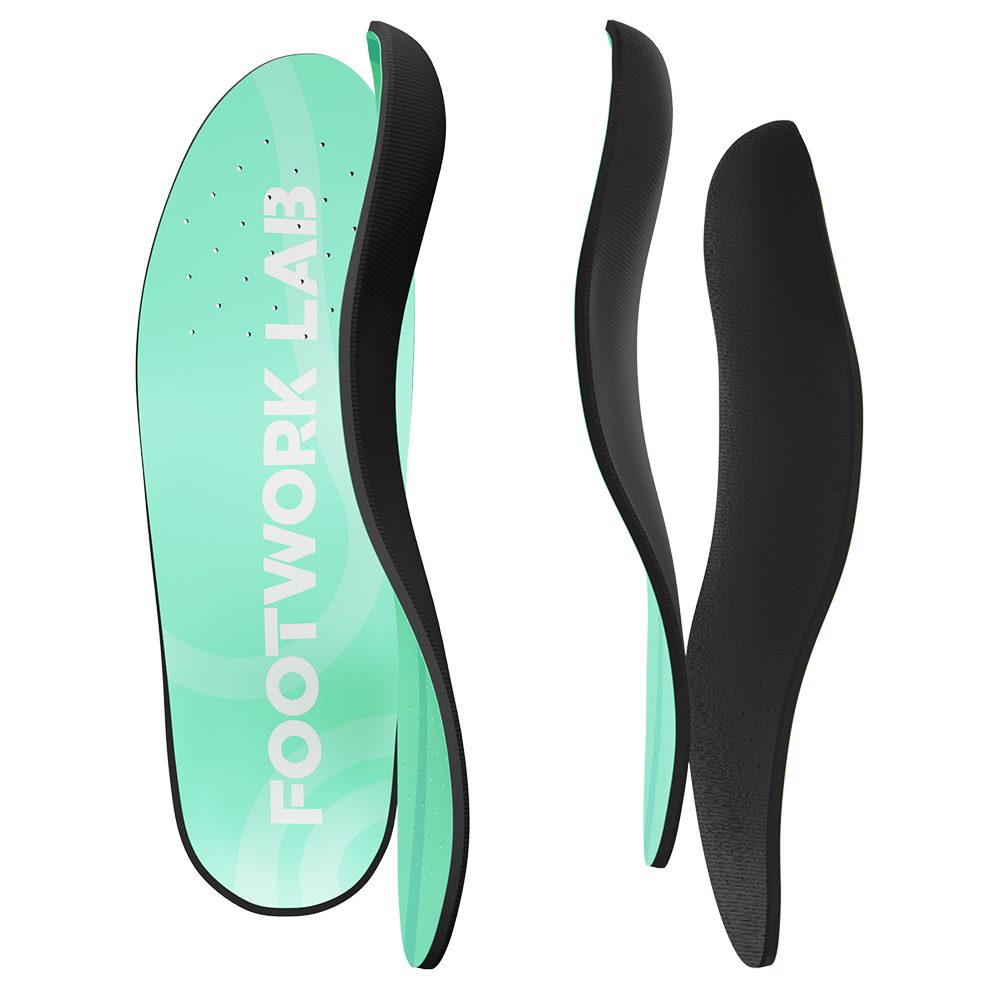
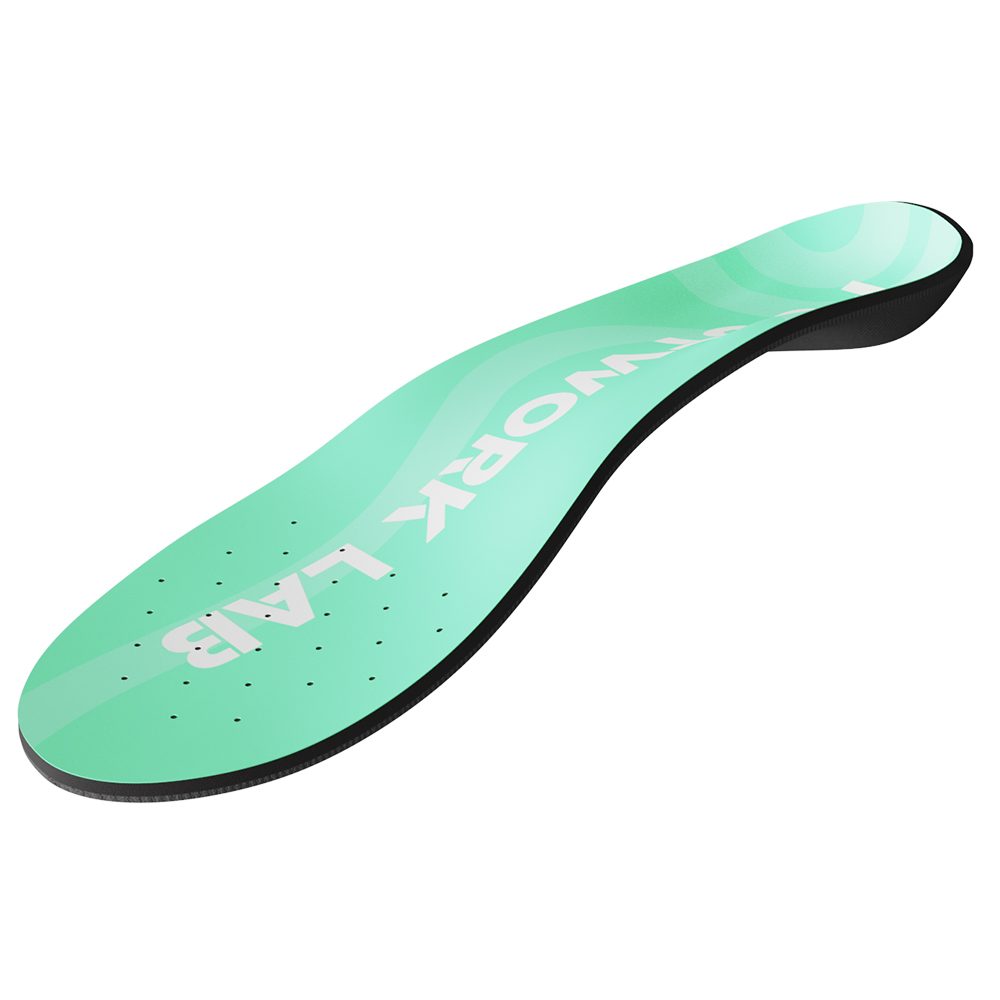
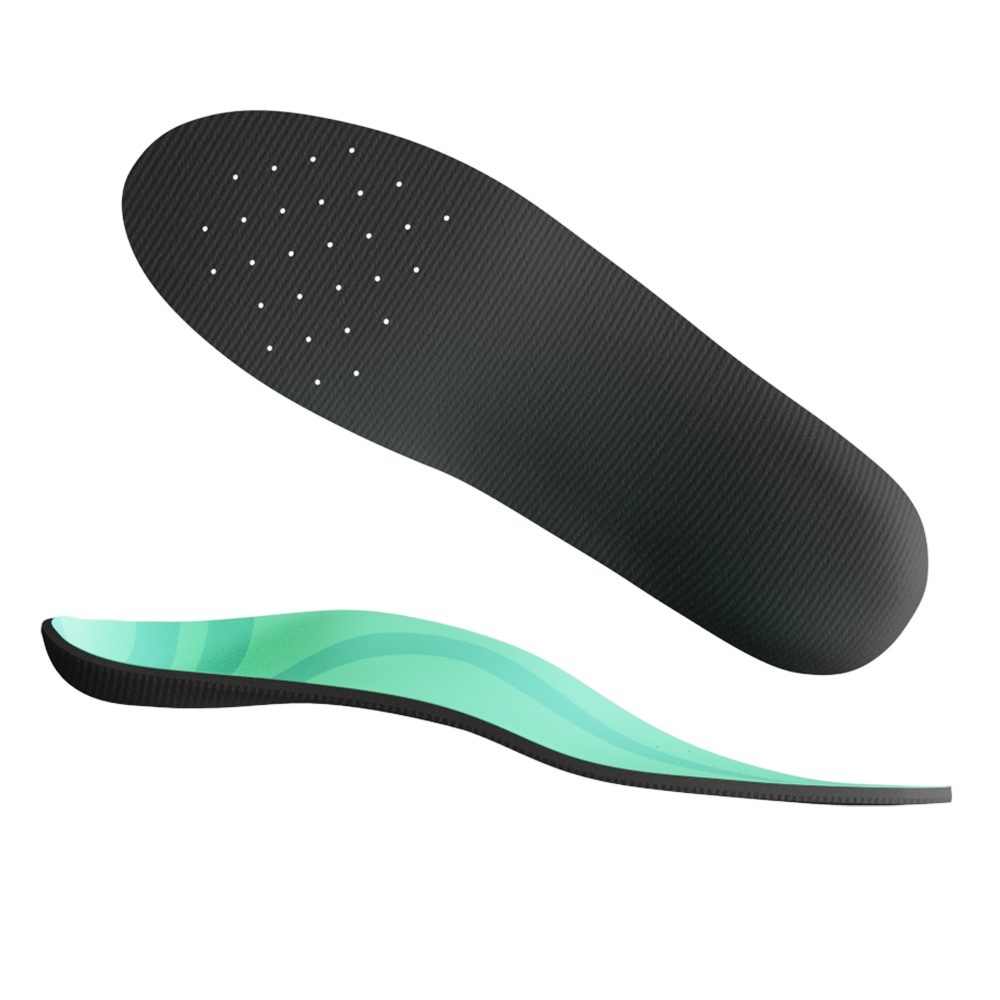
The second priority is hold. A foot that slides inside the shoe loses position every time the carriage brakes, and a build that cannot keep the foot defined will spend the whole ride being re-found rather than being used. Say this to the customer in one sentence: the pair has to keep the foot still inside a shoe that is not gripping the floor. That sentence, more than any feature list, is what separates a commuter brief from a generic standing one. Custom orthotic insoles built to the individual record, like the ranges on our insole categories page, are one way to carry that record into the shoe, but the journey, not the catalogue, writes the priorities.
Write the compromise on the brief where the office day and the commute disagree. Most desk jobs are seated, in which case the commute dominates the brief and there is little conflict. But a customer who stands at work as well, a retail assistant on their feet all day who also commutes standing, is carrying two standing shifts, and the brief has to decide which one leads. Let the split-week arithmetic decide, exactly as it would for any two-job customer, and note the decision. A year later the review will ask what was prioritised and why, and the note answers it.
The break-in, the review and what honesty requires
Roll the pair out with the commute in mind. The first week or two of a new working position needs settling, so suggest shorter journeys where the customer’s schedule allows: getting off one stop early is a commute trick worth suggesting, and it doubles as a graduated break-in. Ask the customer to keep the four-line journey sheet going through the first fortnight, marking when the ache arrives and where, because the review will be read against it. Feet that have braced through months of unsupportive rides do not reorganise in a day, and a review booked too early measures the settling, not the pair.
Book the review a few weeks out, at the point of issue, and read the sheet against the briefing. The outcomes sort into the same familiar shapes as any review: ache later in the journey, ache milder, ache gone, ache unchanged, ache moved. Each points somewhere specific. Unchanged and in the same forefoot spot may mean the hold was never achieved inside the shoe, which sends the conversation back to the shoe rather than the build. Moved toward the heel may mean the load has redistributed, which is an observation for the professional rather than a conclusion for the fitter. And where a report suggests something beyond workload and footwear, the file moves to clinical care without argument, because no support conversation should pretend to be one.
Be plain about the limits, to the customer and in the file. A pair does not change foot structure, does not shorten the train, and does not turn standing into sitting. What a well-briefed pair aims to do is give the foot a defined position and spread the load of the journey across more of the sole, so the same forty minutes costs less. Customers who hear that framing engage better with the break-in period, because they know what to look for and, just as importantly, what not to.
Frequently asked questions
Is commuting standing really a big enough load to assess?
Do the arithmetic with the customer rather than assuming. Two standing rides of forty minutes each way add up to more weekly standing than many desk jobs contain, and it arrives in dense unbroken blocks. For a large share of office workers, the commute is the longest standing stretch of their week, and it is the part nobody has assessed.
Why do commuters report forefoot ache rather than heel ache?
Standing on a moving vehicle loads the ball of the foot and the toes that grip, with the body making constant small corrections through the forefoot. The heel takes more of the walking phases, but the standing blocks dominate the journey time, so the reports concentrate where the standing concentrates, under the forefoot.
Should the assessment be scheduled before or after the commute?
After a representative commute where the schedule allows, because that is the condition the foot actually spends its working hours in. A rested morning record is still useful as a comparison, and a session can capture both, but if only one slot exists, the post-commute state is the fairer one to record.
What should a commuter insole brief lead with?
Even load distribution under the forefoot and enough arch depth to hold the foot’s position through a long ride, with a firm hold inside the shoe so the foot stays put when the vehicle brakes. Heel cushioning matters for the walking phases but should not lead the brief, because the standing blocks are where the reports come from.
Do office shoes need to be replaced before any insole conversation?
Check them first: worn tread, a loose heel and a narrow toe box are shoe problems that no build fully works around. Where the shoes are the weak point, that conversation comes first and separately. Where the shoes are sound, the build is briefed around them, because most commuters will keep wearing what the office chose.
Can insoles make a standing commute comfortable?
No honest claim of that kind should be made. A well-briefed pair aims to give the foot a defined position inside the shoe and spread load across more of the sole, so the same ride costs the foot less. The train does not shorten. What any individual ache means is a matter for a qualified professional, and the session should say so up front.
When should a commuter’s record be retaken?
When the journey changes shape: a new line, a new duration, a move that replaces the standing ride with a walk, or a change of commute shoes. The record describes the week it was taken in, so a new journey needs a new record before any decision about the next pair. Between changes, the journey sheet at review is enough.
What we would do next
The working order, in short: run the four-line journey interview alongside the workday questions, ask the no-commute-day comparison, see the actual commute shoes, record after a representative journey with the shoes noted, brief forefoot and hold first, and review against the journey sheet a few weeks in. Every step produces a line on a sheet the next conversation can stand on, and none of it needs the customer to buy anything first. Supply questions, from builds to mixed sizing, are answered fastest on our contact page.
The blind spot we would flag to colleagues is the arithmetic. Customers genuinely do not count their commute as standing, and neither do practitioners whose intake forms ask about occupation but never about the journey to it. One extra line on the intake form catches a load the whole process otherwise misses, and the customers it catches are often the ones whose complaints never made sense under the workday model.
So the question we would put to readers: when you assess a desk worker, do you currently ask how they get to work, and if a customer’s worst reports come from the journey rather than the job, whose file does that conversation belong in, yours or the employer’s? We ask because we hear the commute question arrive at the retailer and at the clinic from opposite directions, and the practitioners who have thought it through usually run the interview differently from the ones who have not.
This article is intended for professional and educational reference. It is not medical advice. Foot assessment equipment produces measurements and images; clinical interpretation and any decision about care remain the responsibility of a qualified professional. Certification scope is limited to the documentation we hold: European Union certification and ISO quality system certification.