
The second room opened on Monday, and by Wednesday nobody in the practice fully trusted its records. The system itself had travelled carefully enough — carried across town in someone’s estate car, set up in an afternoon, working when switched on. But the records it produced in the new room looked somehow different: not wrong, exactly, yet not the same as the ones the first room produced. The team was now quietly keeping two kinds of records in their heads, the first room’s and the second room’s, and no one had agreed on which one to believe. Nothing had broken. Everything had merely moved, and moving turned out to be the problem.
This is one of the most common untracked events in multi-site practice: a system set up patiently in one room, then carried casually into another, starts producing records nobody quite trusts. The good news is that the fix is entirely procedural — transport, placement, verification and documentation, none of it technical, all of it doable before the first customer of the day. Below is the whole move, planned properly: how the equipment should travel, what the new room demands, how to verify before the first capture, and how to keep records from the two sites comparable for as long as the practice runs both.
The second room is never the first room
The instinct after a move is that the same machine in a different building should produce the same records. It is worth dismantling that instinct gently, because a capture is a product of more than the equipment: the floor, the space around it, the lighting, the ambient rhythm of the room. The first room had a floor the system sat on for years; the second room has a different slab, a different level, a different resonance when people walk past. None of this shows on a spec sheet, and all of it shows in a record that is being compared against records from somewhere else.
Rooms differ in the ways that matter for capture. Floors vary in level and stiffness, and a floor that flexes transmits the footsteps of the corridor into the measurement area. Lighting changes what the operator sees and how customers position themselves. Doorways bring drafts and interruptions; waiting customers mill through the sightline the walk-up path needs. Even the room’s sound changes the verbal cues an operator uses, and verbal cues are part of every protocol whether or not anyone wrote them down. The second room is a new measurement environment before it is anything else.
The professional response is to expect the difference rather than be surprised by it. A practice that treats the move as “carrying a machine upstairs” will discover the differences one customer at a time, each one wearing the costume of a fault. A practice that treats the move as establishing a new measurement environment — and plans a verification session before the first capture — finds the differences on its own terms, in a room with no customers in it.
So the first line of the move plan is a sentence, written down before anything travels: this is a new room, and the system will need to be re-established in it, not merely re-erected. Everything that follows is what re-establishing means in practice.
How the equipment actually travels
Most damage and most drift do not happen in the new room; they happen between the rooms, on the loading step that nobody planned. A system that was unpacked from its packaging once, years ago, and has lived in one room since, travels badly by default: loose cables tucked wherever they fit, accessories in drawers, the unit itself carried by whoever has the free hands that afternoon. The journey does not need to be long to do its work — a staircase and a car boot are enough.
The transport standard is simple to state and easy to skip: original packaging or an equivalent rigid container, the unit fixed so it cannot shift, cables detached and bagged rather than dangling, accessories inventoried against a list before the vehicle doors close. The inventory is the part that saves the afternoon — the second room’s first setup always stalls on a missing part, and a written list checked twice turns that stall from a hunt into a glance. Photograph the connections at the first room before anything is unplugged: the photo is worth more than memory on reassembly day.
Who carries matters as much as how. The person who should plan the route is the one who knows the equipment — the operator, not whoever is free — because the operator knows which parts are delicate, which connectors are fussy, and which way the unit likes to be tilted. Two people carry what two people should carry; the heroic single-person carry is where most transport stories end badly, usually at a doorway or a vehicle tailgate.
Plan the second room’s arrival path with the same care: which door, which corridor, how many turns, where the unit waits while the room is prepared. Ten minutes of walking the route in advance — measuring nothing, just looking at the corners — prevents the mid-corridor improvisation that turns a careful transport plan into a bad afternoon.
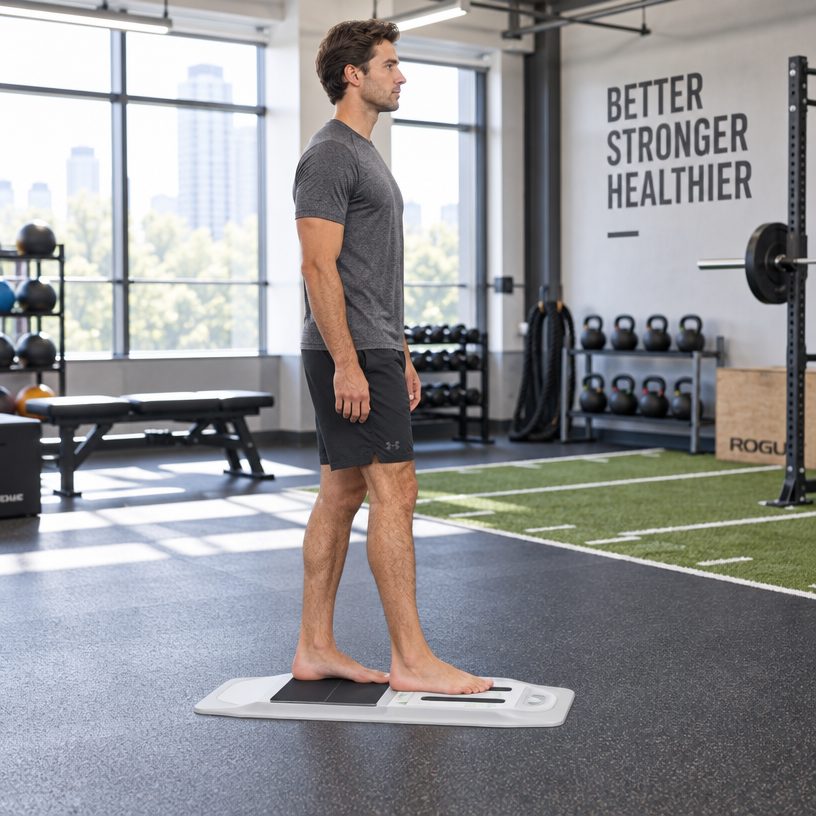
Choosing the spot in the new room
The new room’s best position for the system is rarely the first position that looks convenient. The placement decision deserves its own quiet session, before the unit is unpacked into it, because moving the system across a room after it is set up is exactly the kind of casual second transport this article exists to prevent.
The criteria, in order. Floor: level, firm, and not shared with a doorway’s traffic or a corridor’s footsteps — a floor that trembles when people pass is a floor that adds noise to every capture. Space: the walk-up path needs its full length clear, because a customer who starts a walk early because the approach was tight produces a record that reflects the room, not the foot. Power: a socket the unit does not share with anything that switches on and off. Light: enough to see the customer’s feet and the screen without glare, positioned so nobody stands between the light and the capture area.
Then the human factors, which matter as much as the physical ones. Privacy: customers remove shoes, and a capture spot visible from the doorway produces hesitant captures. Flow: the spot should sit where a customer naturally arrives and leaves without crossing the walk path of the next one. Noise: a room where the operator’s cues are heard the first time is a room whose protocol runs the same every time. Mark the chosen spot — tape on the floor is enough — so that every future setup reproduces it exactly, not approximately.
The mark is the small habit with the largest long-term payoff. Systems drift across rooms over months: moved for cleaning, nudged for a wheelchair, rotated for a photoshoot. A taped outline and a marked walk-up start turn “somewhere around here” back into a fixed position, and every record the room ever produces benefits silently from it.
Setup and the first verification
Reassembly follows the photographs taken at the first room, and it should be done by the operator, not by goodwill and guesswork. Cables reconnect in their photographed positions; accessories return to their places from the inventory; the unit sits inside the taped outline. Nothing about this needs technical depth — it needs the two artefacts the transport plan produced: the photographs and the list. A move that ends with both checked off is a move that went to plan.
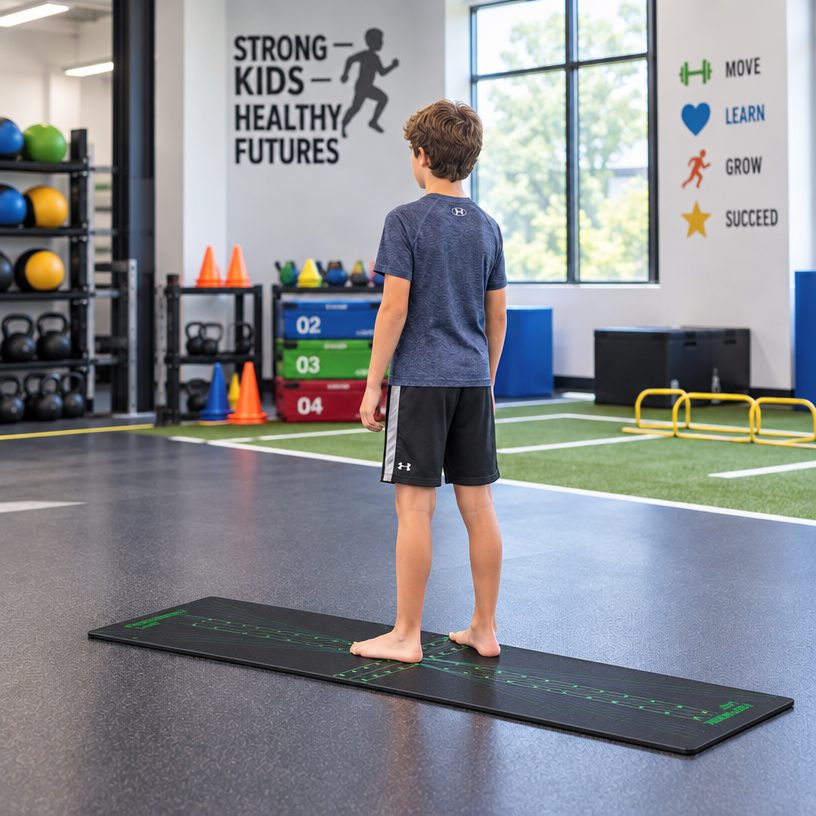
Then the part most practices skip, and the part that decides whether the second room’s records are trustworthy from day one: the verification session, run before the first customer. Its core is a comparison against a trusted reference. Every practice has records it knows intimately — a staff member’s own capture, a long-standing returning customer’s file. Capture a fresh record of the same trusted foot, in the new room, under the same protocol as always, and read it against the reference. If the known foot reads the way it has always read, the new room is ready. If it does not, the room has told you its difference before any customer paid for the discovery.
Run the verification in two parts, exactly as a normal session runs: a stationary capture, then a moving one. The two exercise the system differently, and a room can disturb one while leaving the other untouched — a tremor in the floor shows in the moving record before it shows in the standing one, and lighting shows in positioning first. Read the pair together, the way every record should be read, and the room’s behaviour reveals itself in ten minutes.
Write the result down. One entry in the practice log: date, second room, verification against the named reference, stationary and moving, result. The entry converts the room from “new” to “verified” in the practice’s own history, and every later comparison between the two sites stands on it. Unverified rooms stay suspect forever; verified rooms retire from the conversation.
The calibration question
At some point in the move, someone in the practice will ask the question: does the system need recalibrating for the new room? It deserves a careful answer, because it hides two different questions that lead to two different actions. One question is whether the equipment itself needs adjustment after transport — and that question belongs to the manufacturer’s documentation and support, not to the practice’s guesswork. The other is whether the room changes what the system sees — and that question has already been answered by the verification session.
The honest sequence is verification first, and escalation only on evidence. If the trusted record reads as it always has, both stationary and moving, the move is complete and no further action is needed. If it does not, the practice has a genuine finding, and the right move is the support channel rather than experimentation: contact the supplier, describe what the verification showed, and follow the guidance. Suppliers who support their equipment properly can see far more from a described symptom than a practice can from poking at the room, and our own support runs on that principle — dedicated channels and direct engineer contact, with remote assistance when a problem genuinely needs it.
What a practice should not do is quietly improvise adjustments between sites — nudging, re-seating, re-positioning in ways nobody wrote down. Each improvised adjustment creates a third software-state-like unknown: records produced under conditions that exist nowhere in the documentation. If something needs to be changed, it is changed once, deliberately, with the supplier’s guidance, and written into the log with the same one-line discipline as the verification entry.
The same discipline covers the routine that is not calibration but feels like it: re-checking the physical setup each time the system is set up in a room — level, position, walk path, light. That check is the practice’s own, it takes minutes, and it prevents most of the situations that would otherwise end in a support call. Documentation first, verification second, escalation on evidence: that order keeps both rooms honest.
Keeping records comparable across sites
Once both rooms are verified, the practice’s real work begins: keeping the records from the two sites comparable, because the whole value of a second room is that its records speak the same language as the first room’s. Comparability is not produced by the equipment alone. It is produced by protocol — the same script, the same shoes-off rule, the same stationary-then-moving sequence, the same verbal cues — applied identically in both rooms by everyone who captures.
The documentation habit that carries most of the weight is the site stamp: every record is marked, at capture time, with which room produced it. One word, entered as routinely as the date. Without it, any later comparison — this month against last, this site against that — starts with an archaeology question, and comparisons that begin with archaeology rarely finish with conclusions. With it, every comparison starts knowing its own terms.
Protocols deserve the same explicitness across sites that they have within one. Write the capture protocol down once, as a single page — foot placement, posture cues, the words said before a stationary capture, the words said before a walk — and make it the protocol for both rooms. When a new operator joins, they learn the protocol as it is written, not as the person training them happens to run it that week. Practices that keep one written protocol per practice, rather than per room or per person, are the ones whose records remain comparable years later.
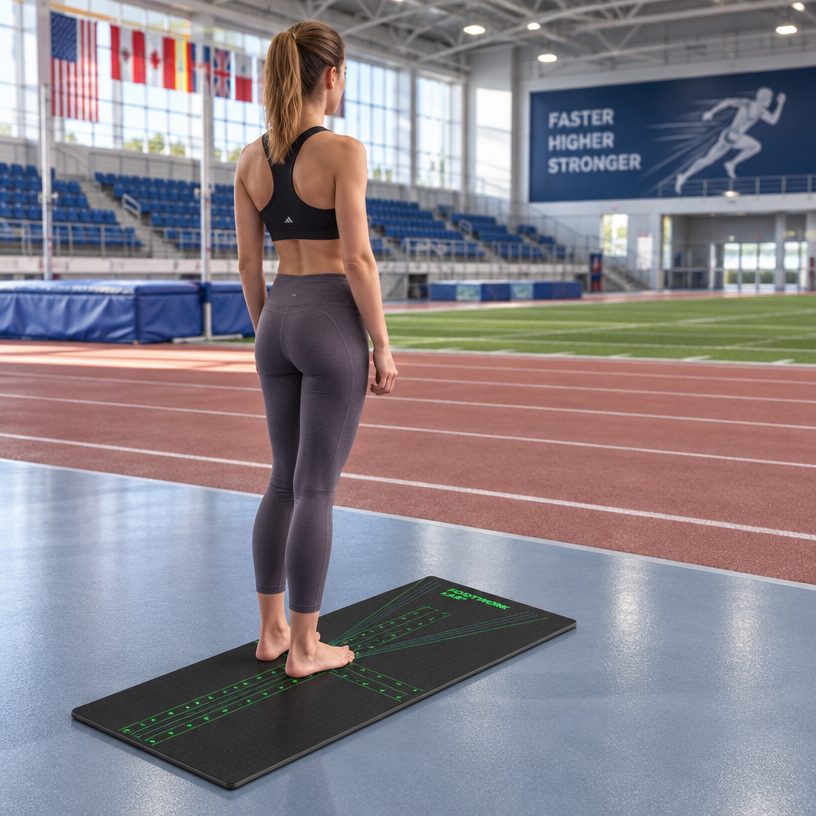
The remaining comparability risk is drift between sites — small procedural differences that grow when two rooms work under two habits. The remedy is periodic cross-checking: capture the trusted reference in both rooms, now and then, and read the pair. When the known foot reads the same in both rooms, the practice’s comparability is confirmed by evidence rather than by hope. That check, logged like all the others, closes the loop the move opened.
Making the move routine
The first move between sites is a project; the goal is that no later move is one. The way to get there is to turn everything above into a kit and a checklist that live with the equipment, so the third move is executed by whoever is available, correctly, because the plan is written rather than remembered.
The kit: rigid transport packaging kept rather than discarded, the cable bag, the accessory inventory, the connection photographs printed or saved on the practice’s shared drive, the floor tape for marking the position, and a laminated one-page checklist — inventory, disconnect, pack, route, unpack, place, reconnect, verify, log. The checklist mirrors this article’s sections in the order they happen. Practices that laminate the page and keep it in the transport packaging never improvise a move again.
The log completes the system. Every move gets its entry: date, from and to, who transported, verification result against the named reference, anything unusual. Over a year the log becomes the practice’s own manual for its equipment in its rooms — better than any generic document, because it describes the actual corners, floors and sockets involved. When the practice opens a third site, the log is the plan.
And the division of labour stays where it belongs throughout: the equipment produces measurements, the verification confirms the room, and the interpretation of every record remains the qualified professional’s work, whichever room it was captured in. We manufacture the systems and support them through exactly these events — transport, second rooms, the questions that come up between sites — but the records’ meaning stays in the professional’s hands, and a good move plan exists precisely to keep it that way.
Frequently asked questions
Does moving a foot assessment system to another room change its records?
The equipment does not change, but the room does: floor, light, space, traffic and sound all form part of the measurement environment. A system carried casually into a new room can produce records that read differently without anything being faulty. Treat the move as establishing a new environment, and run a verification session before the first customer.
How should assessment equipment be transported between sites?
Original packaging or an equivalent rigid container, the unit fixed so it cannot shift, cables detached and bagged, accessories inventoried against a written list. Photograph the connections before disconnecting, plan the route through doorways in advance, and let the operator — not whoever is free — plan and lead the carry.
What is the fastest way to verify a system in a new room?
Capture a fresh record of a trusted foot — a staff member’s own test capture or a well-documented returning customer — under the same protocol as always, and read it against the reference record. Run both a stationary and a moving capture, and log the result. If the known foot reads as it always has, the room is ready.
Does a system need recalibration after being moved?
Verification comes first, escalation on evidence. If the trusted record reads as it always has in both stationary and moving captures, no further action is needed. If it does not, contact the supplier’s support with what the verification showed rather than experimenting in the room — improvised adjustments create conditions that exist in no documentation.
How do we keep records from two sites comparable?
One written protocol for the whole practice, applied identically in every room, plus a site stamp on every record at capture time. Then cross-check periodically: capture the trusted reference in both rooms and read the pair. When the known foot reads the same in both rooms, comparability is confirmed by evidence rather than hope.
Why mark the system’s position on the floor?
Because systems drift: moved for cleaning, nudged for access, rotated for convenience. A taped outline and a marked walk-up start point turn “somewhere around here” back into a fixed position, so every capture in that room runs under the same conditions as the last one. The tape is the cheapest comparability tool a practice owns.
What should a move checklist contain?
The sequence in the order it happens: inventory against the list, disconnect, pack, transport route, unpack, place, reconnect from the photographs, verify against the trusted reference, log the entry. Laminate the page and keep it in the transport packaging, so the third move is executed correctly by whoever is available — because the plan is written, not remembered.
What we would do next
If a second room, a second branch or a mobile clinic is in your plans, build the transport kit and the laminated checklist before the first move, and schedule the verification session into the move day itself — before the first customer, not after. The one-day cost buys years of records you never have to doubt. The comparability logic continues past the equipment itself: our earlier piece on one customer, two machines covers how to decide which record answers the question when two systems are in play, and the second operator covers how a new team member learns to capture a fair record.
We manufacture the assessment systems this plan is written for — our plantar pressure and posture system is one of them — and we support them through exactly these events, from transport questions to a second room’s first capture. What we do not do is interpret records; that work stays with the qualified professional, whichever room the capture ran in.
And the question we would put to practices that run more than one room: what did your first move between sites teach you that no manual did — and would your current checklist catch it if it happened again? The answers we have heard from multi-site teams differ in detail and agree in spirit, and the differences are worth a wider audience.
This article is intended for professional and educational reference. It is not medical advice. Foot assessment equipment produces measurements and images; clinical interpretation and any decision about care remain the responsibility of a qualified professional. Certification scope is limited to the documentation we hold: European Union certification and ISO quality system certification.