
Clinical biomechanics is the study of how the body moves and carries
load, and in a working room it is mostly a discipline of deciding what to measure and then being
disciplined about what the measurement means. Teams that get this right end up with records
that are comparable across sessions and useful months later. Teams that get it wrong collect
impressive-looking images that nobody revisits, or worse, present those images as conclusions they
cannot support. The equipment is rarely the deciding factor. The routine is.
FOOTWORK LAB has built foot assessment equipment since 2014 and has operated its own plant in
Ruichang, Jiangxi Province since 2018. Our systems are used in clinics, rehabilitation units,
laboratories and retail settings, and the questions we get from buyers are remarkably consistent
across all of them: which measurements matter, how to keep them comparable, and where the line sits
between what the equipment reports and what a professional decides. This article addresses those
three questions in order.
What clinical biomechanics is concerned with
At its core, the discipline is interested in position, load and movement, and in the relationships
between them. Where does the body’s mass sit over the feet at a given moment? How does load
distribute under each sole? How does the lower limb line up, and how does that change as a person
moves? Each of those is a measurable quantity, which is what makes the field a natural fit for
instrumentation.
It is worth separating that from what the discipline is sometimes assumed to be. It is not a
lookup table that converts a measurement into a recommendation. Two people can present with similar
positions and loads and still require different professional responses, because history, activity,
footwear, symptoms, expectations and many other factors sit outside any single recording. The
instrumentation describes; the professional weighs.
This matters commercially as well as clinically. A buyer who expects a machine to produce
answers will be dissatisfied with any system on the market, because no system does that. A buyer who
understands that the machine produces a comparable, repeatable record of position and load will
find it an extremely productive addition to a room.
There is a second reason the discipline suits instrumentation. Movement and loading change over
time, and human memory for a visual pattern is poor. A record that can be returned to, re-measured
and compared removes a large share of that uncertainty, and it gives colleagues who were not
present a way to take part in the conversation. In a unit with rotating staff, that last point
matters more than it first appears.
Where measurement enters the picture
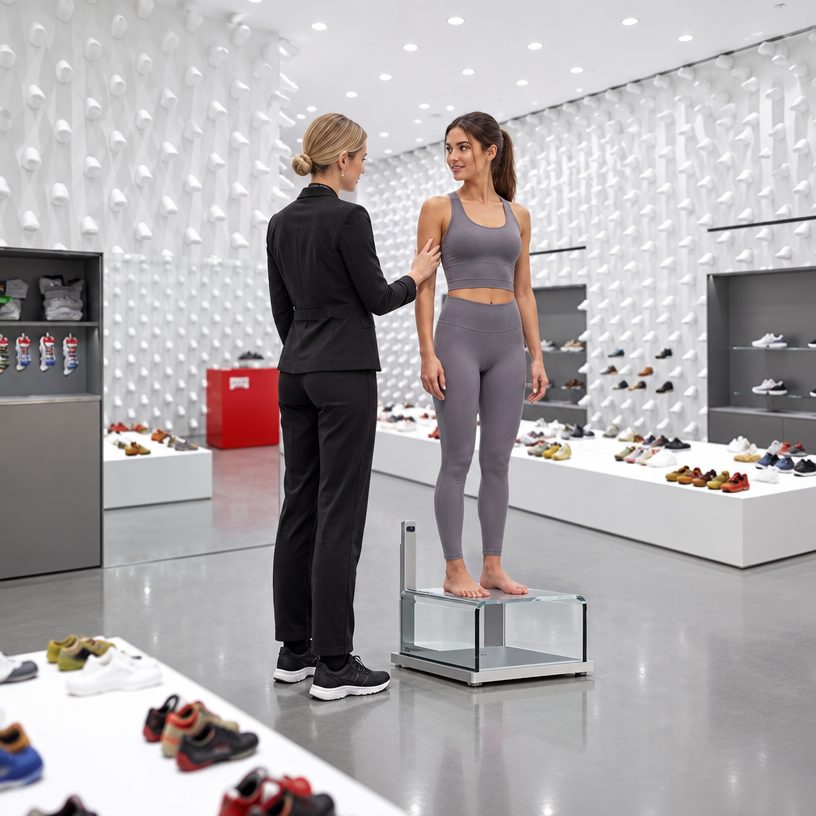
There are three broad families of measurement used in foot and lower-limb work, and they answer
different questions. Knowing which one a piece of equipment belongs to is the fastest way to
evaluate whether it belongs in your room.
- Shape and geometry. Records the profile and outline of the foot: the arch
shape, length and width. This is the family that feeds the design of a formed product, because a
formed product must be built to a shape. - Pressure and load. Records how load is distributed under the sole, either while
standing or during movement. This family answers questions that geometry cannot, because two feet
with the same outline can load very differently. - Position and alignment. Uses camera-based capture to describe how the lower
limb and body sit over the foot, including posture. This family connects what happens at the sole
with what happens above it.
Most rooms end up wanting more than one, and the sensible sequence is to buy the complement
first. If a clinic already captures shape for insole work, the next useful addition is usually load
or alignment rather than a second shape system.
The vocabulary that keeps teams aligned
Terminology is not pedantry in this field; it is the mechanism that lets two colleagues look at
the same record and reach the same description. When terms are used loosely, records stop being
comparable, and a set of recordings becomes a pile of pictures.
Four terms carry most of the weight. Plantar pressure refers to the distribution
of load under the sole. Centre of pressure describes the location of the resultant
of that load at a moment in time, and its path over a sequence is what makes a dynamic recording
informative. The gait cycle is the repeating sequence from one contact event to the
next, and it provides the shared frame of reference that makes two recordings comparable.
Force-line alignment describes how the leg loads over the foot, which is where
camera-based capture typically contributes.
Two habits keep this vocabulary honest. The first is to say “measurement” when describing what
the equipment produced, and reserve words like “assessment finding” for what a professional
concluded. The second is to state the capture condition every time a recording is discussed —
standing or moving, barefoot or in shoes, on which surface. A recording without its conditions
attached is not evidence of anything.
A third habit is worth adding: agree which quantities the team actually reviews. A report can
contain a great deal of output, and teams that try to discuss all of it end up discussing none of
it. Choosing a short list of measures as the standing agenda for a review keeps meetings focused and
keeps the recording in its proper place as supporting evidence.
Where measurement stops and judgement begins
Perhaps the most useful sentence a supplier can offer a clinic is a clear statement of the
boundary. Ours is this: foot assessment equipment produces measurements and images, and any decision
about a person’s care remains the responsibility of a qualified professional.
The boundary has practical consequences. It means marketing material should never suggest that a
machine produces an answer. It means reports should be labelled as measurement output rather than
instruction. And it means that when something goes wrong with a record — a poor capture, a
misapplied marker, a subject who moved unexpectedly — the response is to repeat the recording, not
to interpret around it.
Buyers should apply the same standard to every supplier they evaluate. A supplier who describes
their system as producing a conclusion is either unfamiliar with their own product or willing to
overstate it. Either way, that supplier will be a poor partner in year two, when the practical
questions arrive.
Building a repeatable assessment routine
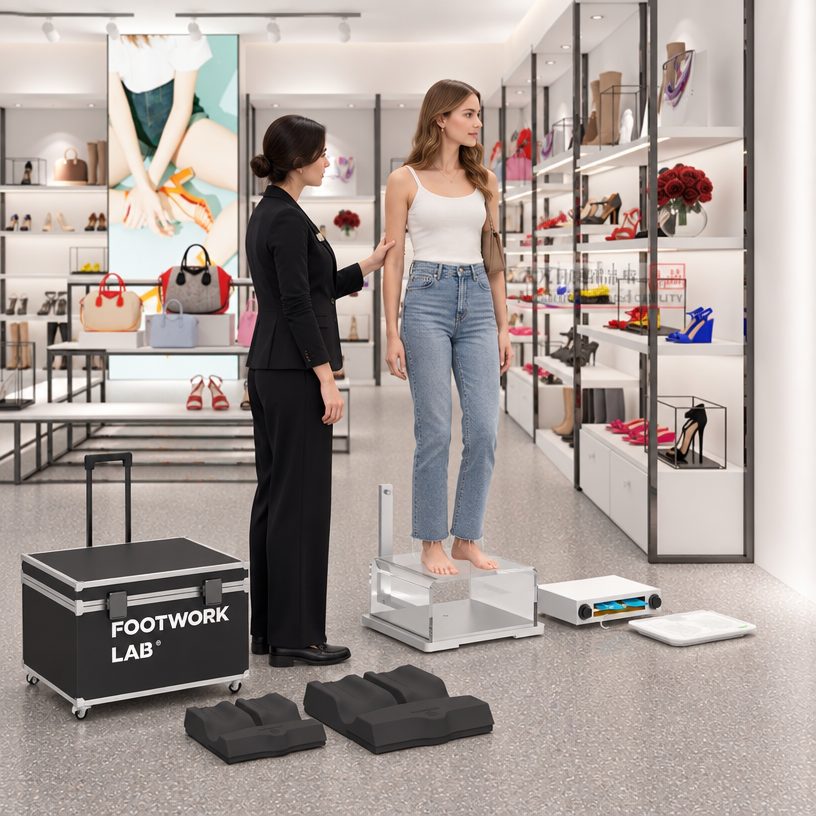
Repeatability is worth more than sophistication, and it is cheaper to achieve. A simple routine
that everyone follows beats an elaborate routine that only one person can perform.
Standardise the capture conditions
Decide the surface, the footwear condition, the number of passes and the position of the subject,
then write it down. Every later recording should match the first one as closely as the setting
allows.
Keep the sequence the same
Capture in the same order every time. If posture capture always precedes a walking capture, a
later reviewer knows what they are looking at without needing to reconstruct the session.
Keep the record-keeping consistent
Attach the conditions, the date and the operator to every recording. Teams that do this can
compare recordings a year apart. Teams that do not usually cannot compare recordings a week
apart.
Review together, occasionally
A short periodic review of recent recordings, with the whole team present, is the single most
effective way to keep terminology and expectations aligned. It also surfaces problems early —
including problems with the equipment, which is precisely when a supplier’s support channel earns
its cost.
None of these four habits requires new hardware, and all of them are easier to adopt at the start than to retrofit later. A unit that begins with a written routine will still be using it in a year; a unit that begins with equipment and adds process afterwards usually finds that the process never quite arrives. Buyers who are choosing their first system are therefore in an unusually strong position, because they can design the routine and the specification together rather than reconciling one with the other.
Equipment choices that support the routine
Once the routine is defined, specification becomes a matter of matching hardware to it. Five
points cover most of the decision.
- Capture conditions the room needs. Standing, walking, running, barefoot or in
shoes. This determines the platform configuration more than any other factor. - Repeatability of the capture. Ask how the system helps an operator reproduce
the same conditions session after session. Guides, prompts and stored protocols matter more here
than extra sensors. - How records leave the system. Export formats, integration with existing
records, and whether the interface language can be changed. A system that cannot share data is
duplicated by hand, and hand duplication is where routines die. - Who operates it. A device used by a single specialist can offer a deeper
interface than one used by rotating staff across shifts. - Support in year two. Sensors, software and consumables have life spans. Ask who
supplies them, how quickly, and through which channel.
We publish our own answers rather than waiting to be asked. Machines carry a twelve-month
warranty covering non-human damage with free spare parts within that scope. Support runs through a
dedicated WhatsApp group with direct engineer access, remote assistance where the setting allows,
and over-the-air updates for connected units. Every unit is tested in-house with a seven-day testing
period before dispatch, and the minimum order quantity for machines is a single unit, which lets a
buyer run the routine in their own room before standardising.
Working with a supplier on a biomechanics-led specification
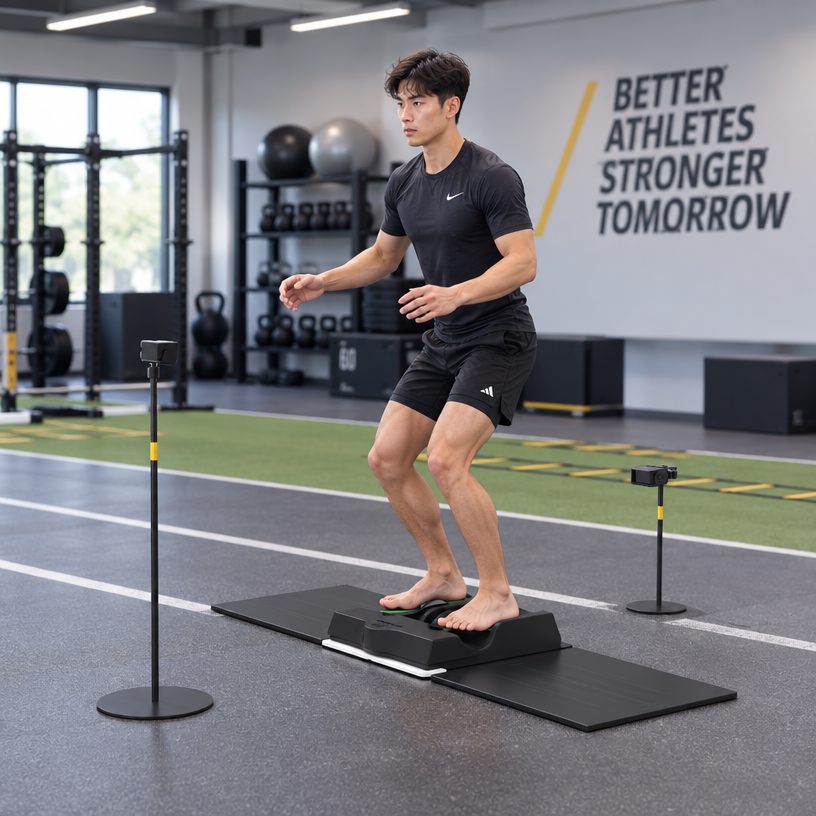
A specification conversation goes faster when both sides bring the same structure. In our
experience the most productive version starts with three sentences from the buyer: what the room
does today, what it cannot currently do, and what a good outcome would look like in six months.
From there, the useful questions are technical but not exotic. Which capture conditions are
required? How many recordings per session, and per week? Who reviews them, and with what? What
happens to a record after the session ends? A supplier who can map those answers onto a
configuration without overselling is a supplier worth keeping.
It also helps to know what the supplier will decline. We do not manufacture laser scanning
hardware and we say so plainly, because a buyer who specifically needs optical surface capture
should be directed somewhere else rather than steered towards a pressure platform. We also decline
to quote figures for a bespoke configuration in an article like this, because the honest number
depends on configuration, volume, service scope and destination, and a figure given without those
variables would mislead more than it informs.
What we do offer is a manufacturing relationship rather than a transaction. We are a factory
rather than a trading company, which means technical questions reach the people who wrote the
software, and changes to report format or interface language are feasible because the tooling and
the code sit in the same building. On certification we stay within documentation we hold: European
Union certification and ISO quality system certification.
One more point is worth stating for buyers who are new to sourcing industrial equipment. A
factory relationship is not only about price. It is about whether a question can reach the person
who can answer it. When the tooling and the software sit in the same building, a request to adjust a
report field or to change an interface language is a scheduling question rather than a negotiation
with a third party. That difference shows up most clearly in the second and third years of
ownership.
Frequently asked questions
What does a biomechanics-led assessment room actually need?
It needs a defined routine before it needs hardware: consistent capture conditions, a consistent sequence,
consistent record-keeping, and clarity about who reviews the output. Equipment is specified to fit
that routine, and the three measurement families available are shape and geometry, pressure and
load, and position and alignment.
Can equipment decide what a person’s measurements mean?
No. Assessment equipment produces measurements and images. Deciding what they mean for a
particular person, and what should happen next, is a professional judgement made by a qualified
practitioner using the recording as one input among several.
Why does capture consistency matter so much?
Because comparison is where measurement data earns its value. A single recording in isolation
says very little; the same person recorded at two points in time under the same conditions says a
great deal. Variation in the method can easily exceed variation in the person being recorded.
Should we buy shape capture or pressure measurement first?
Buy whichever complements what you already have. Where shape capture exists for insole work, load
or alignment is usually the more useful addition. Where a room has no instrumented capture at all,
the choice should follow the questions the team most often cannot answer.
Can we start with one system and add more later?
Yes. Our minimum order quantity for machines is one unit, and buyers frequently begin with a
single system in one room. Insoles can be mixed across models and sizes within an order, and our
insole sample turnaround is three days.
What warranty and after-sales support do you provide?
A twelve-month machine warranty covering non-human damage, with free spare parts within that
scope. Support includes a dedicated WhatsApp group with direct engineer access, remote assistance
where the setting allows, and over-the-air updates for connected units.
Do you hold the certification and how is production tested?
Our documentation covers European Union certification and ISO quality system certification. Every
machine is tested in-house before dispatch, with a seven-day testing period under our own roof.
What we would do next
Write the routine first, then match equipment to it. If you want to see how the measurement
families are implemented in practice, the technology overview
explains our sensing and camera-based capture, and the F2 and FMP
platform is the family most assessment rooms compare first. For movement-led work, the
F5-LAB dynamic gait system is built for walking and
running capture, and this article on posture analysis explains what
camera-based capture adds to a pressure record. If you would rather discuss a specification
directly, contact the team or read the
answers we publish openly first.
This article is intended for professional and educational reference.
It is not medical advice. Foot assessment equipment produces measurements and images; clinical
interpretation and any decision about care remain the responsibility of a qualified professional.
Certification scope is limited to the documentation we hold: European Union certification and ISO
quality system certification.