
A shop owner sends a photograph of a bench she has been quoted for and one question underneath: is this everything I need to start doing custom arch support? The honest answer takes longer than a yes, because a custom arch support machine is not a machine so much as a bench plus a workflow — a session that records the foot, a specification that turns the record into a build, a forming step that shapes the material, and a restock line that keeps the bench fed. The bench is the cheapest of the four. What decides whether the venture works are three questions the quotation never asks: how many willing customers walk past the bench in a day, what the bench consumes in a week, and who is going to run the session when the person who was trained is on holiday. This article takes those three questions in order, describes the starter combination we actually recommend to first-time buyers, and explains what the daily casual build is made of — the structure that sits under most first orders and most restocks.
We wrote this from the factory side, and the position has shaped the advice. We sell the recording systems and supply the insole line, so we know exactly what a bench does and does not do on the day it arrives. A buyer who settles the three questions first usually orders less than they walked in wanting and does more with it than the buyer who ordered everything.
The phrase hides a bench and a workflow, and only one of them ships in a crate
The search phrase promises hardware, because hardware is what can be photographed and quoted. But the machine that forms arch supports is the middle of a chain, and a chain with only its middle installed produces nothing. Upstream of the bench there has to be a record: a session that captures how the foot loads, where the arch sits, how the leg aligns above it. Downstream there has to be finishing, fitting and a customer conversation that turns the build into a repeat visit. The crate contains the middle. The rest arrives as habits, and habits take longer to ship.
This is why the same bench succeeds in one shop and gathers dust in another. The difference is almost never the hardware; it is whether the shop designed the session around it — where the customer stands, who explains the record, how long the appointment runs, what happens to the pair afterwards. A bench bought without a session design becomes the most expensive coat rack in the shop within a season, and the vendor who quoted it is usually the last to find out.
So the order of the conversation matters. Before any demonstration, before any quotation, we put the three starter questions on the table. They are unglamorous and they are the whole difference: footfall, consumables, staffing. A shop that can answer all three in numbers is ready for a bench. A shop that answers in hopes should spend the first year buying finished pairs and watching which specifications its customers actually ask for.
First question: how many sessions a day is the footfall really worth
The first question is arithmetic dressed as optimism. Every shop we meet believes it has footfall; far fewer can say how many of those visitors would stop for a foot session, and fewer still can say how many of those would accept a build at the price the bench economics require. The honest method is to count, not estimate: a fortnight of noting how many customers pause, how many accept a free screening, how many convert to a paid or product-attached session. That fortnight turns a feeling into a number, and the number either justifies the bench or redirects the plan.
The number also decides the shape of the purchase. A shop converting a handful of sessions a day does not need production machinery; it needs a clean capture routine and a forming capability sized to appointments, with the rest of the volume bought from a factory line. A shop converting dozens needs to think about queue management, a second forming station and finishing hands — which is a different conversation and a different order. The mistake we watch for is the middle: a shop with a modest number buying a bench sized for a volume it will never see, and financing the gap with enthusiasm.
There is a sequencing answer that works when the number is uncertain, and we recommend it often. Start the service with capture and factory supply — record feet in the shop, order builds against the records, learn the demand curve with no bench on the balance sheet. When the record shows the session rate is real and stable, buy the forming step against the demonstrated volume rather than the imagined one. The bench arrives a year later than the buyer wanted and a year earlier than it would have paid off otherwise.
Second question: what the bench consumes in a week
The second question is the one nobody budgets for. A forming bench is a consumer: blanks of the right material, covers, adhesives, the shaping pillows that define the contour families, and the small parts that break or walk away. None of it is expensive individually; all of it is essential, and a bench without its consumables on the shelf is a bench that stops the day the first blank runs out. We ask buyers to sketch a week of consumption at their expected session rate before we quote anything, because the sketch usually surprises them.
The consumables question also decides how much of the build the shop can genuinely do in-house. A daily casual build has a structure — we will come to it in a moment — and each layer of that structure is an inventory line. A shop that stocks all of them holds working capital and a storage problem; a shop that stocks none of them is not forming, only fitting. The honest middle for most starters is a short list: the blank, the cover, and the contour families their records actually produce, everything else ordered as needed.
And consumables are where the factory relationship earns its keep. Our insole side ships samples within three days and takes orders from two hundred pairs, mixed across styles and sizes, which means a shop can keep the slow-moving layers out of stock entirely and pull them against demand. What cannot be outsourced is the discipline of counting: a stock check on a fixed weekday, a reorder point written down, and somebody whose job includes noticing that the blank drawer is half empty while there are still four sessions on the book.
Third question: who runs the session, and who covers the gap
The third question is people, and it is the one shops answer least honestly. A session needs someone who can position the customer, run the capture, read the record well enough to specify a build, operate the forming step, and explain all of it in sentences the customer can repeat to their family. That is one skilled role, not a task you attach to whoever is free. When the trained person is off, the options are stark: another trained person, a session cancelled, or an untrained improvisation — and the third is how shops acquire their first complaints.
We split our training deliberately. Operation — running the capture, positioning, printing, the session routine — is ours to teach and we teach it thoroughly. Specification — reading the record and choosing the build — we deliberately leave to the qualified person, because that judgement is professional and a vendor course cannot confer it. Shops should be equally deliberate: decide who specifies, make sure that person is genuinely qualified to do it, and make sure at least one other person can operate the machine on the days the specifier is not there. Two trained operators is the minimum defensible coverage for a bench the shop intends to use daily.
The people question also sets the pace of the launch. A new workflow fails quietly in its first month — sessions run too long, records taken inconsistently, builds specified in a hurry at closing time — and the failure looks like weak demand. Shops that schedule the first weeks lightly, review the routine weekly, and fix the session design before scaling the marketing get a service that survives the person who created it. Shops that push volume through an unsteady routine get refunds, and the refund conversation is where the bench usually meets the coat rack.
The starter combination, described without wishful thinking
When a shop has answered the three questions and the answers point at a bench, the combination we recommend is smaller than most quotations. One capture system — a pressure and alignment record with static, dynamic and balance passes, and cameras for the lower limb so the specification covers how the leg carries, not just how the sole sits. One forming setup — a heating box, shaping pillows in adult and children’s sizes, and the accessories that keep the cycle moving. That is the whole starter bench: capture, specification from the record, forming on site, everything else bought from the factory line until volume says otherwise.
The report from the capture is the document the whole service leans on. It carries named quantities — contact area, footprint length and width, foot axis angle, contact and flat phase proportions, peak and mean pressure — and it states on its face that the data is for reference, with interpretation belonging to a qualified professional. That sentence is not small print; it is the design of the service. The shop reads nothing into the record that its qualified person does not read, and the record is still precise enough to specify against.
What the starter combination deliberately leaves out matters as much as what it includes. No carving station, because the contour families come from pillows rather than from individual models and the workshop-grade finishing step can stay at the factory. No production machinery, because the arithmetic from question one says appointments, not output. No second forming station until the queue proves one is needed — and queues prove it faster than forecasts do.
The daily casual build: structure, stock and the restock line
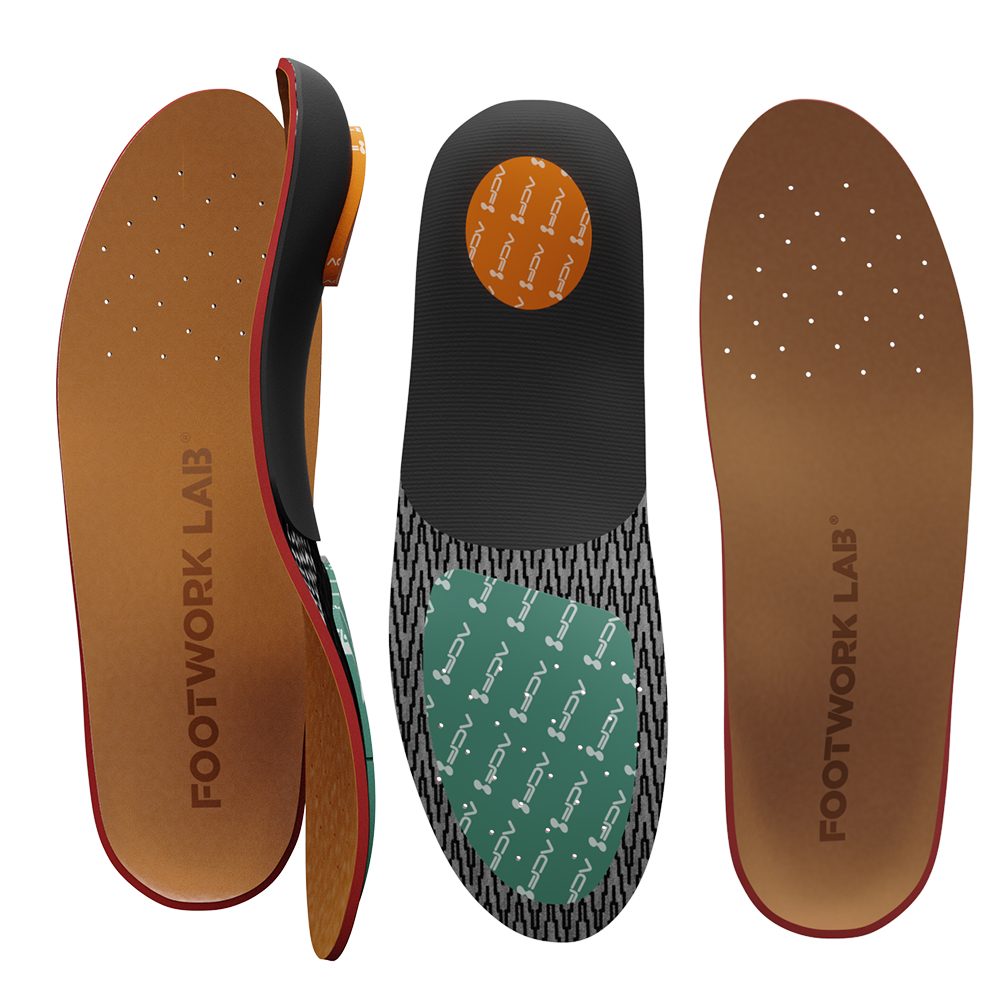
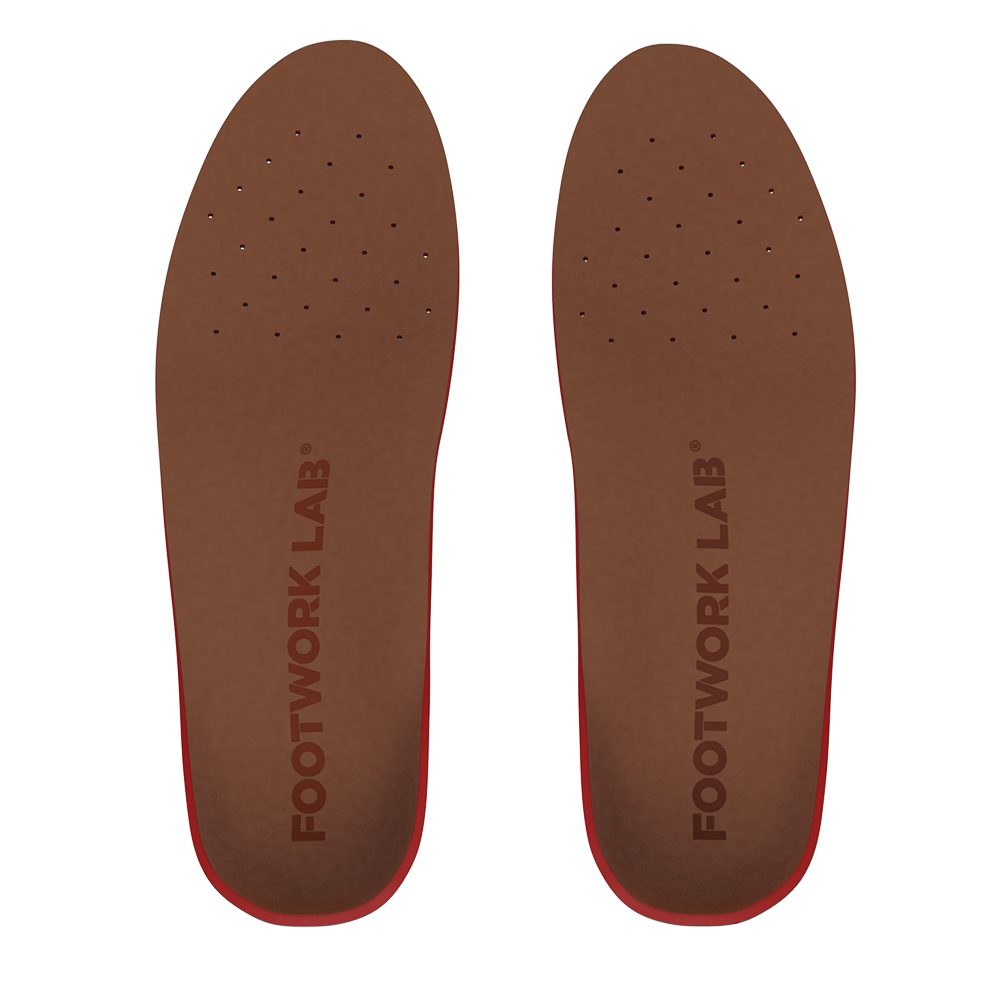
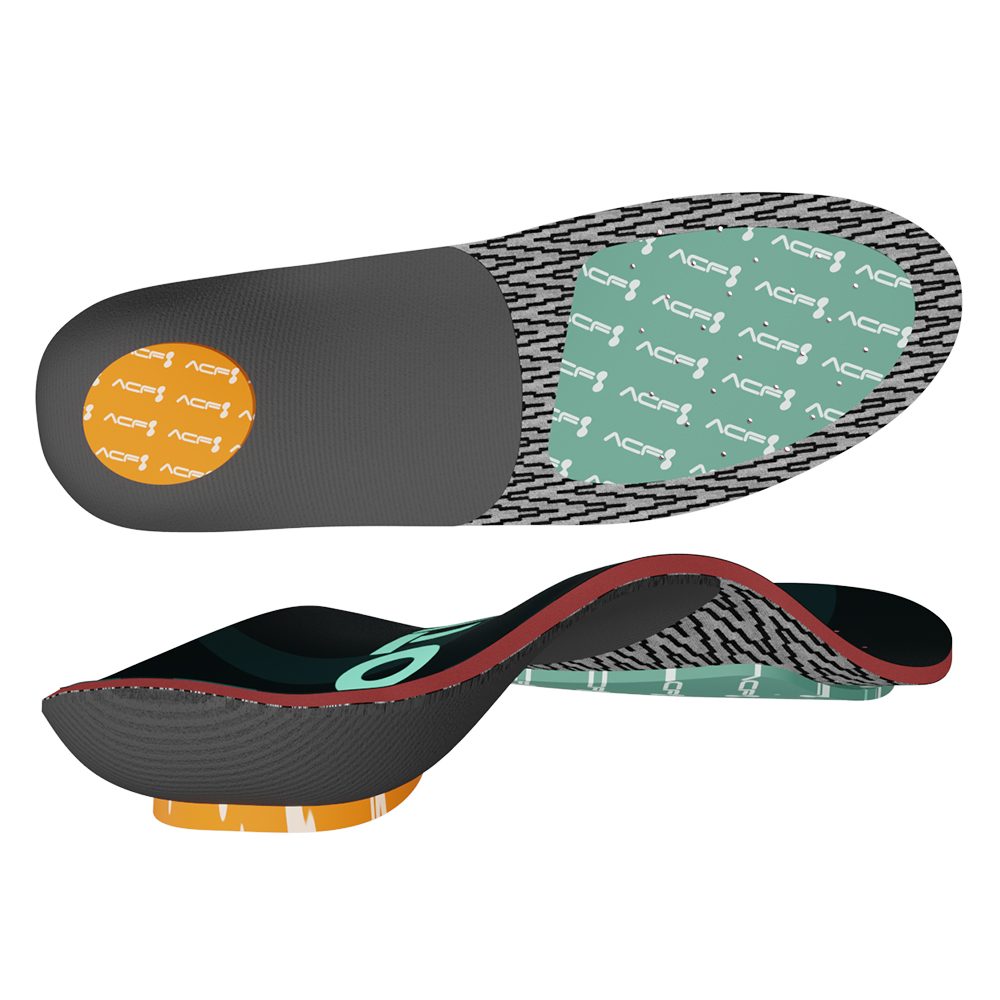
Most first orders, and most restocks, are the daily casual build — the one that suits ordinary walking, everyday shoes and customers who stand for a living. Its structure is three layers, and each layer has a job. A mesh fabric on the surface for breathability and wear; an OrthoLite-style cushioning layer for everyday comfort under the foot; and an AQ polymer shaping board underneath, which is the layer that takes the contour and holds it. Three layers, no exotic parts, and that plainness is the point: a build a shop can form, inspect and repeat at counter pace.
The structure is also the shopping list. A shop running the starter bench needs the blanks, the covers and the pillow families its records produce; a shop running capture-only needs finished pairs specified from records. Either way, the factory line behind the bench is the same: our daily range runs from two hundred pairs per order, mixed across styles and sizes, with samples shipped within three days. The mix matters — a first order should mirror the specifications the fortnight of counting produced, not an even spread across a catalogue nobody in the shop has sold yet.
The restock rhythm is the last habit to install, and it is what separates a service from a launch event. A weekly stock check against the reorder point, an order placed before the drawer empties rather than after, and a quarterly look at which specifications are moving — the last of these is how a shop discovers that half its range is carrying the other half, and prunes accordingly. We watch accounts through this cycle, and the ones that thrive are rarely the ones with the most equipment; they are the ones whose bench, stock and staff move at the same speed.
Frequently asked questions
Is a custom arch support machine a single purchase?
No. It is a bench plus a workflow: a capture session that records the foot, a specification read from that record, a forming step, and a restock line feeding the bench. The hardware in the crate is only the middle of that chain.
What are the three questions to settle before buying?
Footfall — how many sessions a day the shop’s traffic genuinely converts to; consumables — what the bench consumes in a week and what stays in stock; and staffing — who runs the session and who covers the days they are away. A shop that answers all three in numbers is ready.
What does a starter combination include?
A pressure and alignment capture system with static, dynamic and balance passes and lower-limb cameras, plus a forming setup with a heating box and shaping pillows in adult and children’s sizes. Finishing and production-scale machinery stay at the factory until volume proves otherwise.
What is the daily casual insole made of?
Three layers: a mesh fabric surface, an OrthoLite-style cushioning layer, and an AQ polymer shaping board that takes the contour and holds it. The structure suits everyday walking, everyday shoes and customers who stand for a living.
What are the insole order terms?
Orders start at two hundred pairs, mixed across styles and sizes, with samples shipped within three days. The first order should mirror the specifications the shop’s own records actually produce.
Can a shop start without a bench?
Yes, and we often recommend it. Record feet in the shop and order builds from the factory against those records until the session rate is demonstrated; buy the forming step against proven volume rather than forecast.
Who specifies what the build should be?
A qualified person reading the record. The report states the data is for reference, and interpretation belongs to professional judgement. The equipment records; a qualified reader specifies; the bench forms.
What we would do next
Answer the three questions on one page: counted sessions per day, a week of consumption sketched, and the names of the people who will run and cover the session. Send it through the contact page and we will tell you which combination fits the answers — sometimes none does yet, and the first year should run on factory supply.
The insole range page sets out the three series and the four gradings, including the daily casual build’s structure. Your first orthotic insole making machine walks the first-bench checks, and buying an insoles machine covers the questions a quotation should answer.
Two more go deeper on the shop side. A fit insole machine still needs a fitter makes the staffing case in full, and in-house or factory weighs the bench against the restock line when the numbers are uncertain.
This article is intended for professional and educational reference. It is not medical advice. Foot assessment equipment produces measurements and images; clinical interpretation and any decision about care remain the responsibility of a qualified professional. Certification scope is limited to the documentation we hold: European Union certification and ISO quality system certification.