
“If we buy the machine, do we stop ordering from you?” A retailer asked us that at a trade event in Dubai, half-joking, and it is the question behind almost every first purchase of an orthotic insole making machine. The buyer — usually a clinic or a footwear store that has been ordering finished pairs — imagines the machine as a replacement for the supply chain rather than a new branch of it. The honest answer is that insole production splits into two routes that do different jobs: the on-site process that shapes a single pair while the customer waits, and the factory line that produces the range the shelf lives on. This guide walks through that split for the FX insole line: what the chairside process handles, what belongs to the factory, and how a first-time buyer usually ends up combining the two.
The product behind the machine decision is the FX series — biomechanically assessed custom insoles built on BODYFIT AI assessment and senthmetic flexible-fabric sensing technology. The manual’s wording matters here: the data features captured during assessment allow the insole to be customised on specific devices, and the manual pairs the FX line with the X5 human biomechanics detection system as the assessment side of that combination. Every insole is built to four grades — support, anti-torsion, cushioning and starting ability — and the series spans daily comfort, rehabilitation care and sport directions. Those facts stay constant whichever route produces the pair; what changes is where and when the forming happens.
The first orthotic insole making machine is really a routing decision
Search the term and the listings blur a bench and a factory into one phrase. On our side of the market, the phrase covers two very different setups. The chairside route is a compact kit — a heating box, a shaping-pillow set with adult, child and auxiliary pieces, and the forming bench — that turns an assessment record into a finished pair at the point of service. The factory route is a production line: forming at batch scale, shaping and finishing stations, batch discipline and the logistics that move finished pairs to a shelf or a storeroom. Both produce biomechanical insoles; they answer different questions about volume, timing and who does the work.
So the decision a clinic or store actually makes is not “machine or no machine”. It is a routing decision: which pairs should be made while the customer is present, and which should arrive from a line that runs all day. Getting that split wrong in either direction is expensive — a bench bought to replace a factory will drown in volume it cannot hold, and a factory order placed for same-day fitting needs will disappoint a customer who expected to walk out with the pair. The two sections below take each route on its own terms first. One more framing note before they do: the assessment record is the hinge between the routes. Captured once on the paired detection system, it drives the four grades whichever route forms the pair, which is exactly why a store can mix bench work and factory orders without rebuilding its data or re-training its staff on two incompatible systems.
What the on-site chairside process handles
The chairside route exists for the pair that cannot wait. A customer has been assessed — foot data, biomechanical alignment, the working notes from the session — and the fitting decision is made in the same appointment. The heating box conditions the materials, the shaping-pillow set holds the form while the insole takes the shape, and the four build grades are set according to what the assessment recorded: how much support, how much anti-torsion, where the cushioning belongs. The customer leaves with the pair the same day, fitted into the shoe they brought with them.
Three properties define what this route is good at. It handles single pairs without waste — no batch minimum sits behind a one-customer appointment. It compresses the service into one visit, which matters enormously in retail: a store running a measurement-plus-fitting service converts at the counter, and a two-week wait kills the conversion. And it makes the fitting itself part of the product — the customer watches the pair take shape, which is the most persuasive demonstration of custom work a store can stage. Wear life belongs in the same counter conversation: the manual’s daily-wear figure of four to six months turns a one-time sale into a scheduled service interval, and a store that plans for it keeps the customer returning rather than drifting. The insole series covers sizes 24 to 53 across sneakers, casual shoes and outdoor shoes, so the counter service spans most of the customers who walk in.
The limits are equally concrete. Throughput is one pair at a time and depends on the operator: the heating, the forming, the trim and the fit check are skilled hands-on work, and a shop that sells the service without training the operator will deliver inconsistent results. Batch consistency — the same grade repeated across twenty pairs — is not what a bench is built for. And the rehabilitation directions in the FX line, such as the flat-foot and plantar-fasciitis builds, involve design decisions that a professional should supervise rather than a counter assistant. In our pre-sales calls, the buyers who are happiest with a chairside setup are the ones who treat it as a service station with a trained person behind it, not as a small factory. A related read on that point: a fit insole machine still needs a fitter.
What the factory line handles
The factory route inverts every one of those properties. At our plant in Ruichang, in operation since 2018, the FX line runs forming and finishing at batch scale: orders arrive as specifications, sheets are conditioned and formed in sequence, shaping and finishing stations bring each pair to its trim line, and pairs are packed against the order sheet rather than against a single customer. Walking the floor during a production run, the difference from a bench is easiest to see at the stacking racks — hundreds of pairs at the same grade, same size run, same build, waiting for the packer. No counter could hold that, and no counter needs to: that repetition is precisely the factory’s job.
The commercial terms follow from the process. The minimum order for insoles is 200 pairs, and those pairs can be mixed across styles and sizes, which lets a store build genuine range depth — every daily-walk and long-standing variant, the four rehabilitation directions, and the sport builds — rather than betting the shelf on one model. Samples ship within three days, so a buyer can test the actual product before committing the order. Line capacity runs at roughly 500 to 1,000 pairs a day, which is why the factory route absorbs seasonal demand swings that would swamp a bench. ODM and OEM work is accepted, so a brand can put its own label on the line’s output. None of this competes with the chairside process; it feeds it, by keeping the store’s range full while the bench serves the same-day pair.
The trade-offs are the mirror image of the chairside route’s strengths. A factory order has a wait measured in transit days — express runs six to seven days, air freight ten to twelve, sea freight thirty to thirty-five — which is fine for restocking and hopeless for a customer standing at the counter. And consistency runs on specification discipline: the order sheet has to carry the model, the size run and the grade for every pair, because a line builds from what is written, not from what was meant. The handover between the assessment record and that order sheet is where most production errors enter, which is why we ask buyers to copy the fields rather than summarise them.
How a first purchase usually combines the two routes
Having described both routes on their own terms, the practical answer for most first-time buyers is a combination, weighted by the business they run. A footwear store typically starts with the chairside service — the measurement-plus-fitting appointment that converts at the counter — and keeps the factory order behind it for range: the sizes and models the bench does not need to form because they are already on the shelf. A clinic does the same in a different proportion: same-day pairs for the appointments where immediate fitting matters, and factory orders for the repeat builds that recur week after week. A distributor skips the bench entirely and buys the factory route, because its volume lives in cases, not counters.
Two numbers settle the weighting faster than any sales conversation. The first is pairs per month: if the demand is single-digit pairs of made-to-measure work, the bench serves it and the factory range stocks it; if the demand is wholesale volume, the bench is a distraction. The second is who operates: a trained fitter behind the bench makes the chairside route a service; an untrained one makes it a warranty liability. Equipment terms support either start — the machine minimum order is one unit, every unit is factory-tested for seven days before dispatch, and support continues through a dedicated WhatsApp group with our engineers, remote assistance and over-the-air updates. The fuller comparison between producing in-house and ordering from a factory is laid out in in-house or factory.
Frequently asked questions
What does an orthotic insole making machine actually consist of?
For the chairside route it is a forming bench plus a heating box and a shaping-pillow set with adult, child and auxiliary pieces, paired with an assessment device — the manual pairs the FX line with the X5 detection system, whose captured data features drive the customisation. The factory route is a full production line with forming, shaping and finishing stations at the Ruichang plant.
Can a store customise insoles on site without a production line?
Yes. On-site biomechanical insole customisation is exactly what the chairside kit is for: the assessment record sets the four build grades, the heating box and shaping-pillow set form the pair, and the customer leaves with it the same day. The machine minimum order is one unit, so a store can start with a single bench.
What is the minimum order for insoles from the factory?
The insole minimum order is 200 pairs, which can be mixed across styles and sizes. Samples ship within three days so the product can be tested before the order is placed, and the line produces roughly 500 to 1,000 pairs a day. ODM and OEM arrangements are accepted.
What are the four build grades an assessment sets?
Support, anti-torsion, cushioning and starting ability. The assessment record — foot data and biomechanical alignment from the paired detection system — determines where each grade sits for that wearer, and both the chairside process and the factory line build from the same grade specification.
How long does a pair of FX insoles last in daily wear?
The manual notes a daily-wear life of four to six months, and states that high-intensity sport shortens both the life and the support and cushioning performance. First-time wearers may need a short adjustment period, so wear time is best extended gradually.
What materials go into the insole?
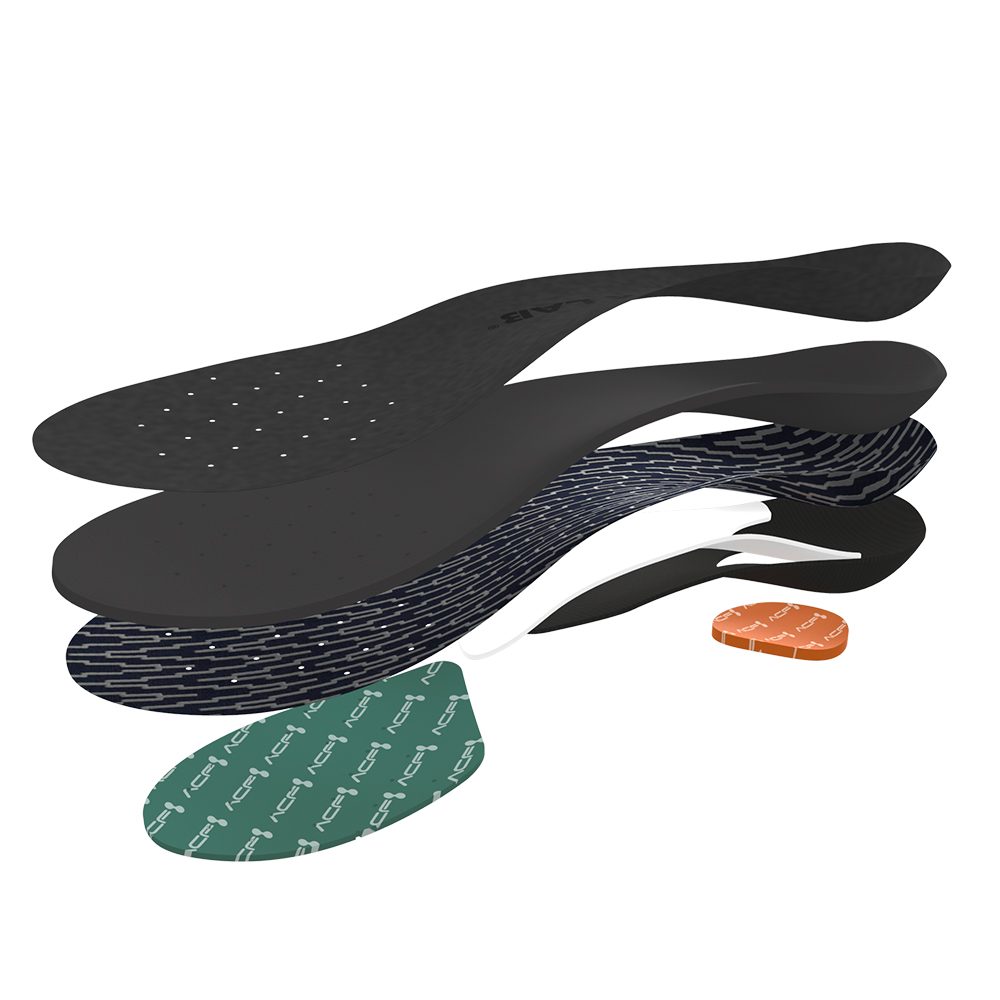
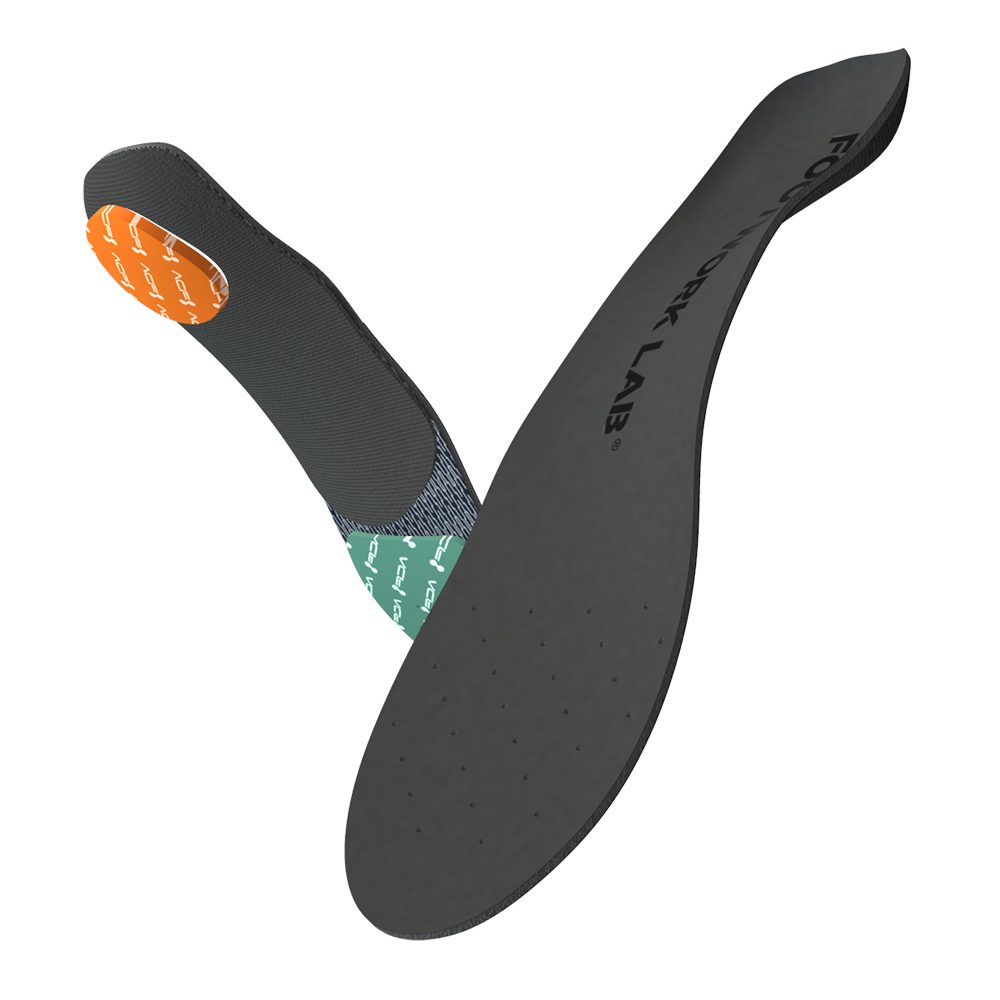
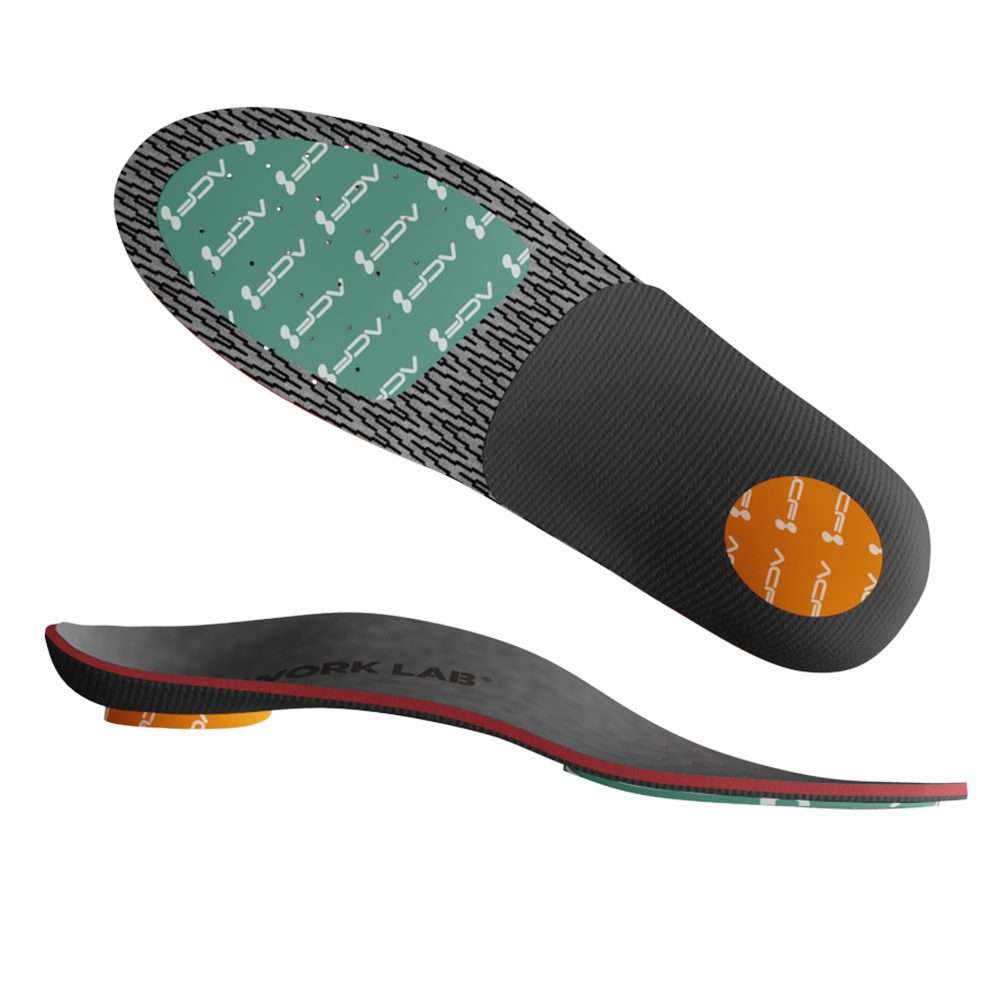
Depending on the model, the build combines a breathable mesh or suede top layer, an Osolite cushioning layer, a polymer shaping and support board, and external cushioning pieces at the heel or forefoot. The exact stack varies by series — daily comfort, rehabilitation care or sport — and no thickness figures are needed to specify an order; the grades carry that decision.
What we would do next
Before quoting anything, write down two figures: the made-to-measure pairs your counter can realistically fit per week, and the range you want on the shelf behind it. Send both with your floor space and who would operate the bench through our contact page, and we will tell you honestly whether your plan points to the chairside kit, the factory order, or — as with most buyers — a combination of both. The full FX range, including the daily, rehabilitation and sport series, is listed on the insole categories page, and the assessment device the manual pairs with the line is described on the X5 foot and posture detection system page.
If you already run a chairside service and the results vary between operators, the fix is usually a written forming and fitting routine rather than new hardware — our team reviews that routine on request. If instead you are stocking a shelf, request samples first: three days to your door tells you more than any catalogue. Our FAQ page carries the order minimums, warranty and transit terms in full.
This article is intended for professional and educational reference. It is not medical advice. Custom insoles provide support, alignment and load distribution; clinical interpretation and any decision about care remain the responsibility of a qualified professional. Certification scope is limited to the documentation we hold: European Union certification and ISO quality system certification.