
The shoes come off, the customer steps towards the platform, and the temptation in a busy room is to start immediately. The appointment is running, the queue is long, and every minute of standing around feels like a minute lost. Experienced rooms run that arithmetic the other way, because feet do not arrive ready to be measured. They arrive shaped by the journey: held by socks for an hour, compressed by work boots since dawn, chilled by a winter car park, still carrying the pattern of whatever they were doing before the customer walked through the door. A capture taken in that first minute records a foot in transit; a capture taken a couple of minutes later records the foot that has settled, spread, warmed and stopped gripping, and the two records can differ enough to change how a report reads. Setting aside a short pause before every capture, run the same way each time, is one of the cheapest protocol decisions a room makes and one of the most visible in the quality of its records. This article walks through what feet bring in with them, what the settling minutes actually contain, what changes between the first pass and a later one, when the pause matters more than usual, and how to write the pause into the session sheet so that two operators produce comparable work.
The record taken too early
A rushed capture has a look that operators learn to recognise, and the signs cluster at the edges of the record. The forefoot reads narrow, because the foot is still holding the shape its socks and shoes gave it rather than spreading onto the surface. The heel carries more than it should, because the customer is cautious on an unfamiliar platform and has not yet let her weight settle. Toes curl or grip, as they do whenever a foot is asked to stand still on a strange surface before it has relaxed. None of this is a fault of the foot or the equipment; it is a photograph of a person one minute off the street.
The trouble is that the image does not look rushed. It looks like a finding. A narrow forefoot on a screen reads like a narrow forefoot, full stop, unless the room knows to ask what the foot was doing before the capture. Rooms that file first and think later accumulate a set of records that quietly disagree with the customers’ own accounts, and the disagreement surfaces months later when a second visit produces a different picture and nobody can explain the gap. Most of those gaps, when they are finally traced, are stories about arrival: the drive, the socks, the cold, the queue.
The equipment is not confused in any of this. A pressure and posture system such as the FMP arrangement records faithfully whatever is on the platform during the pass, and that faithfulness is exactly why the minutes before the pass matter. The machine cannot tell a settled foot from a foot still shaped by its boots; the room has to supply that judgement, and it can only supply it if the protocol makes time for it.
What feet bring in with them
The journey to the appointment shapes the foot in ways worth naming, because each one has a visible trace. Socks compress. A snug pair worn for an hour leaves bands around the instep and toes that take a while to fade, and a foot measured while the marks are fresh reads narrower than the same foot measured after. Shoes hold. Work boots, safety footwear and any stiff formal pair keep the foot in a raised, slightly gripped posture, and the foot carries that posture for a minute or two after the shoes come off. Cold shrinks behaviour as well as temperature: a foot that has crossed a cold car park is drawn in, cautious and less willing to spread, and a print taken then reads small. Our article on thick socks, a cold floor and a footprint that reads small follows one such case in detail.
Activity is the quieter factor. A customer who walked briskly from the station arrives warm and loose; a customer who sat in traffic for an hour arrives stiff, and the first steps onto the platform belong to a foot that has not yet remembered how it moves. Neither arrival is wrong. They are simply different conditions, and a record that does not say which one produced it will eventually be read as though it did.
The two-minute routine, step by step
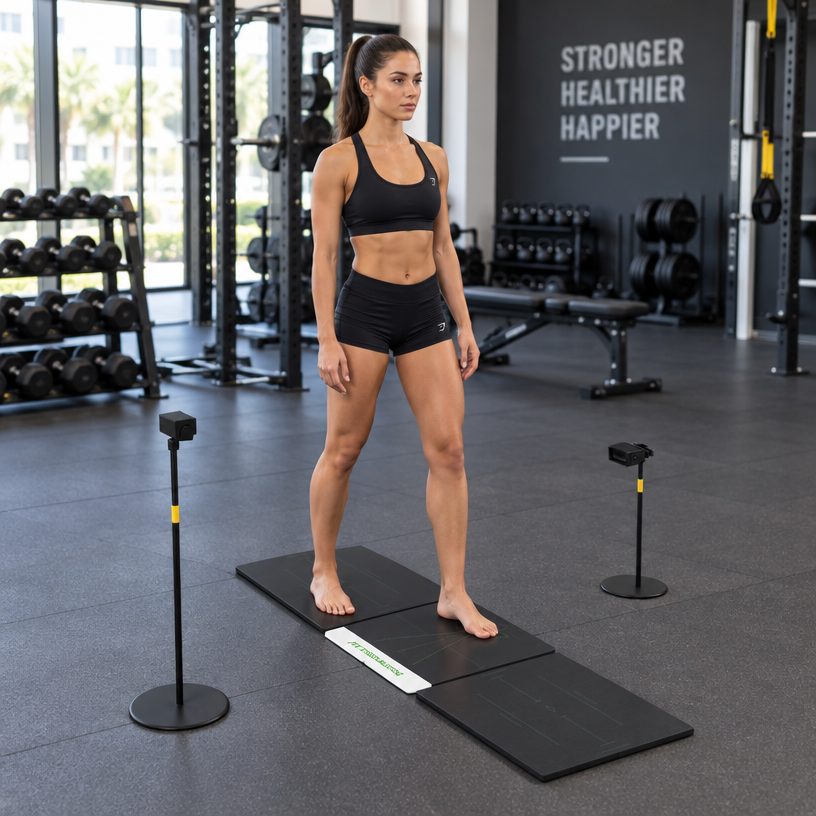
What fills the pause matters as much as the pause itself, and the version that works in busy rooms is built from things that were going to happen anyway. Shoes and socks come off at the start of the appointment, not the end, and the customer is asked to stand or walk barefoot on the room’s floor while the paperwork begins. That is the settling, and it costs nothing: while the feet adapt, the operator fills in the intake form, and the questions are chosen to run naturally with a person standing rather than sitting. Which shoes did you wear here today? How long have you been in them? Did you walk or drive? Any changes in how much you have been on your feet lately?
While the answers are written down, the feet are doing their own work. The sock lines fade. Temperature evens out, and a surface that felt cold at first contact stops feeling cold, which our article on the warm mark a footprint board shows explains in terms any room can use. The grip in the toes releases, usually without the customer noticing, and the foot begins to spread onto the floor in the way it does at home without thinking. Two minutes is a working figure, not a stopwatch ritual; what matters is that the paperwork happens barefoot-standing rather than sitting in the waiting room, so the settling and the form are the same minutes.
One instruction belongs in the routine, and it is worth writing down so it is said the same way every time: let the feet be ordinary. Not “relax”, which sets customers the task of relaxing, and not “stand still”, which recruits the toes. The phrasing that works in practice is the one that gives the feet permission: stand as you would at home waiting for the kettle. How operators phrase instructions at the platform generally, and why a scripted version beats an improvised one, is treated in our piece on capturing a record when the customer cannot stand still.
What changes between the first pass and a later one
Put a rushed record and a settled one side by side and the differences are concrete. The forefoot widens as the foot spreads, sometimes visibly between two passes taken minutes apart. The heel settles back to its ordinary share, because the cautious posture has gone. Toe contact appears where the first pass showed a hollow. The centre of pressure path through stance, on the dynamic record, runs where it usually runs rather than where a stiff, cold foot forces it. Nothing about the foot has changed; the conditions have, and the record is honest enough to show it.
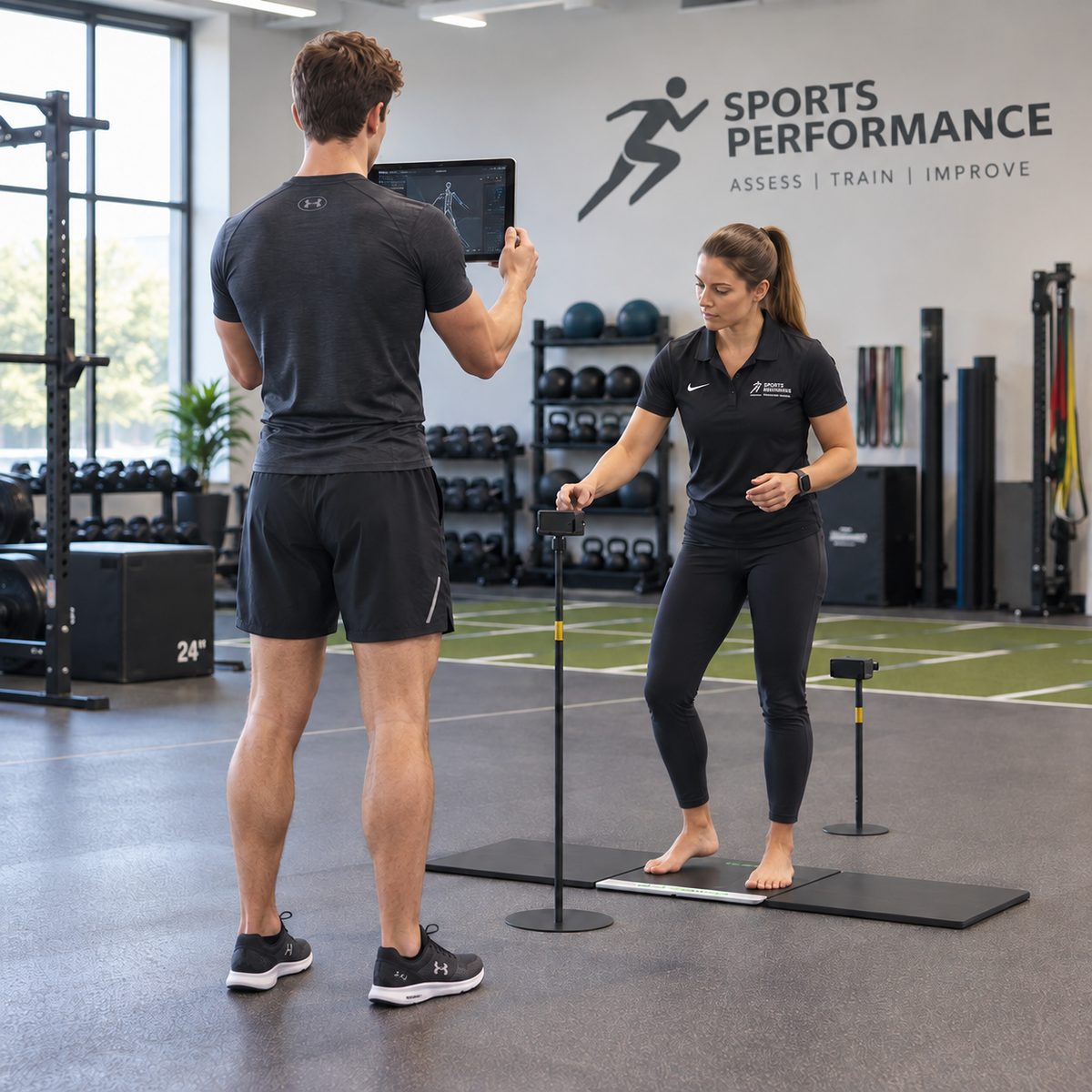
The posture capture responds to settling in its own way. A camera reading of stance taken while the customer is still carrying a bag, still half-turned towards the operator, still standing as she stood in the queue, records that occasion rather than her ordinary alignment; give the bag a place to live, let the customer find her natural stance, and the second reading is one she would recognise as herself. Our article on posture capture in street clothes examines what the camera can and cannot see through layers and slack, and the same logic governs the minutes: the capture should describe the person, not the arrival.
None of this makes the first pass worthless. A first pass taken early, labelled as such, is a legitimate record of one condition, and sometimes the comparison between a rushed first pass and a settled second one is itself the most instructive page in the file. The failure is not taking a record too early; it is taking one too early and filing it as though the conditions had been the ordinary ones.
When the pause matters more than usual
Some arrivals deserve more than the standard pause, and the intake questions flag them before any equipment is involved. The customer who drove for hours, or came straight from a shift in safety boots, brings a foot shaped by those hours, and the settling minutes are doing real work. The winter arrival from a cold street, whose feet need to warm before they will behave normally on the surface, needs the same courtesy. So does the customer who mentions that the appointment follows a long period of unusual sitting or unusual standing; feet adapt to whatever the last weeks asked of them, and the first minutes in the room show the residue.
Contrariwise, some arrivals need almost no pause. The customer who walked over warm and in sensible shoes is already close to settled when the shoes come off, and holding her hostage to a stopwatch wastes goodwill for no measurement gain. The judgement is an operator’s judgement, made from the answers on the form, which is the strongest argument for asking about the journey rather than skipping the small talk. The questions are not courtesy; they are the intake for the settling decision itself.
What no arrival needs is a pause improvised differently each visit. Settling is only worth anything if it is a habit of the room, applied the same way to every customer, because the records the room produces over months are compared with each other, and records only compare when the conditions that produced them were comparable.
Making the pause a protocol, not a mood
The difference between a room that settles feet and a room that sometimes does is usually the session sheet. The sheet gains two short fields, and they cost seconds to fill. The first records what the customer wore and how she travelled: boots, train, drove, walked from the car park. The second records when the shoes came off relative to the capture: pass taken after the intake conversation, or straight away. With those two lines, any record in the file can be read years later with its conditions attached, and a disagreement between two visits becomes a question with an answer instead of a mystery.
Rooms with more than one operator gain the most from writing the routine down, because settling drifts silently when it lives in habits rather than on paper. One operator chats through the intake barefoot-standing; another takes the form in the waiting room and calls the customer over when the form is done; the two produce systematically different records, and the difference never announces itself. Our article on two operators, one protocol works through exactly this problem for a shared platform, and the settling pause is one of the places where a written routine earns its keep fastest. Where a platform moves between sites, our piece on the re-check list before moving equipment makes the same point from the logistics side: conditions travel with the machine, and the protocol has to be written to survive the journey.
What the pause cannot fix
An honest protocol admits its limits, and the settling pause has three. It cannot make up for the wrong footwear in a capture: if the complaint lives in work boots and the pass is taken barefoot, no amount of waiting turns one condition into the other, and the pass has to be repeated through the shoes the complaint names. It cannot substitute for a proper second pass when the first was disturbed, and a settled label on a record is a claim about conditions that has to be true rather than a stamp applied for tidiness. And it cannot turn a measurement into an interpretation. Whether a foot’s settled pattern means anything for the person standing there is a question for a qualified professional with the whole record; the room’s contribution is a capture worth interpreting, with its conditions written beside it.
Within those limits, the pause is the least expensive improvement most rooms can make. It costs no equipment, no software and roughly two minutes per appointment that the paperwork was already filling. What it changes is quieter than any of that: the records stop arguing with the customers’ own accounts, repeat visits start agreeing with first ones, and the reports the room produces describe feet rather than arrivals. That is what a settling protocol buys, and every room that installs one reports the same surprise at how visible the difference is from the very first week.
Frequently asked questions
Do feet really change measurably in the first minutes after shoes come off?
Yes, and the change is visible between passes taken minutes apart. Sock and shoe compression fades, the foot spreads onto the surface, toe grip releases and temperature evens out. A record taken straight after footwear comes off describes a foot still shaped by the footwear, which is a legitimate record only if it is labelled that way.
How long should a customer settle before a capture?
A couple of minutes is the working figure, but the content matters more than the stopwatch. Run the intake conversation while the customer stands or walks barefoot, so the settling and the paperwork are the same minutes. Arrivals from long drives, shifts in safety boots or cold streets deserve more; a customer who walked over warm in sensible shoes needs almost none.
What should I ask while the feet are settling?
The journey questions: which shoes were worn and for how long, whether the customer walked or drove, and any recent change in how much time is spent on the feet. The answers decide how much settling is needed and they belong on the session sheet, because they are the conditions the record was taken under.
Should I discard a capture taken immediately after the customer arrived?
Not necessarily. A first pass taken early can be filed, clearly labelled with its conditions, and the comparison with a settled pass is often instructive. The failure is filing a rushed pass as though conditions were ordinary. If in doubt, take the settled pass and file both.
Does settling matter for the posture capture as well as the pressure record?
Yes. A stance reading taken while the customer still carries a bag, or stands as she stood in the queue, records that occasion rather than her ordinary alignment. Let the customer put things down and find her natural stance first, and the reading describes the person instead of the arrival.
How do I keep the settling routine consistent across two operators?
Write it down: shoes off at the start, intake taken barefoot-standing, the standard instruction phrased the same way every time, and two fields on the sheet recording footwear, travel and when the shoes came off. Habits drift between operators; a written routine on the sheet is what keeps the records comparable.
Can a settling pause fix a capture taken in the wrong footwear?
No. If the complaint is tied to work boots and the pass is barefoot, waiting changes nothing about that mismatch, and the pass has to be repeated through the shoes the complaint names. Settling removes the residue of the journey; it cannot turn one footwear condition into another.
What we would do next
Add the two sheet fields this week: what the customer wore and how she travelled, and when the shoes came off relative to the capture. Then run the intake conversation barefoot-standing for every appointment, with the same instruction spoken the same way each time. Our article on two operators and one protocol covers the written routine that keeps captures comparable across staff, and the piece on thick socks and a cold floor shows what an unsettled arrival does to a footprint in practice. For the temperature side of settling, the warm mark on a footprint board is the shortest read on why warmth changes behaviour, and the FAQ page holds the operational answers we give most often by message. Questions about fitting the routine into your room’s own layout reach us through the contact page.
This article is intended for professional and educational reference. It is not medical advice. Foot assessment equipment produces measurements and images; clinical interpretation and any decision about care remain the responsibility of a qualified professional. Certification scope is limited to the documentation we hold: European Union certification and ISO quality system certification.