
The platform was installed on a Tuesday, and by Thursday the owner had walked the route herself and found the problem. The room was a converted consultation space, not a gait laboratory. From the doorway to the platform there was barely a stride and a half of clear floor, the ceiling sat lower than the installation drawing had assumed, and behind the platform the wall arrived sooner than anyone would have liked. The first recording of the first customer showed it plainly: the opening contact carried the hesitation of someone who had started walking while still turning, and the pace dropped off visibly before the pass ended. Nothing was broken. The equipment measured exactly what arrived at the sensing surface, and what arrived was a walk that had been asked to happen in a space too small for it. Most clinics face some version of this room. The corridor in the brochure is rare; the three-metre consultation room with a desk in the corner is common. This article works through what a short approach actually changes in a walking record, how to place the start of the walk, what to do about the turn, what a low ceiling costs the camera capture, which protocol variables have to be written down for the record to stay comparable across visits, and the honest point at which a room should be declared unsuitable for dynamic capture at all.
The corridor most rooms do not have
Walking records ask a simple thing of a room: that the customer approaches the sensing surface already walking, crosses it at their ordinary pace, and keeps walking out the other side. Everything awkward in a small room follows from the fact that this simple thing needs floor in three places, not one. There has to be ground before the platform for the customer to settle into their stride, ground across the platform while the contact is recorded, and ground beyond it so the walk does not end with a brake. A corridor gives all three for free. A converted consultation room usually gives only the middle one, and the two ends have to be invented by arrangement.
The constraint is not a defect of the equipment. A pressure platform records what reaches its surface, and a walk that begins in hesitation records hesitation. The camera beside the platform records posture and alignment, and a customer hunched around a doorframe records the doorframe. Rooms that get honest records in tight spaces are not rooms with better machines; they are rooms where someone has thought through the geometry once and then repeated the same arrangement for every customer, so that the conditions sit behind the numbers instead of inside them.
It is worth saying early that small rooms are the normal case. The majority of installations we support are not purpose-built laboratories but existing consulting rooms, fitting rooms and shop corners, arranged around whatever floor was already there. The habits described in this article were collected from those rooms, not from the showroom, because the showroom has the corridor and the customer usually does not. A short approach is not a failed session waiting to happen. It is a condition, and like any condition it can be fixed, written down and reproduced.
What a short approach does to the first contact
The first contact on the platform carries whatever the customer was doing in the moments before it. Given a long approach, a person reaches the sensing surface several strides into a settled walk: cadence steady, gaze forward, weight transferring the way it does on the pavement outside. Given a short approach, the customer is still assembling the walk as they arrive. The opening steps after a standing start are mechanically different from mid-walk steps, longer in some phases and shorter in others, and the customer knows it. They are thinking about where the platform is, which changes where they look, which changes how they place the foot.
On the record, a contaminated opening shows up in ways an operator learns to recognise. The first contact lands harder or softer than the contacts that follow it. The path of load across the foot reads differently from the same customer’s later passes. Sometimes the whole pass reads as careful rather than ordinary, the walking equivalent of someone reading aloud instead of talking. None of this is error in the instrument. It is the measurement faithfully reporting a walk that was never settled.
The practical defence costs nothing: never file the first pass. Whatever the approach length, the opening passes are warm-up, and the customer needs a few crossings of the platform before the walk on the record looks like the walk they do outside. In a long room two settling passes may be enough. In a short room, give the customer more, and let the first crossings happen with recording switched off if your workflow allows it, so the customer is not performing for the machine while they find their pace. What you file should be the pass that resembles the customer’s ordinary walk, not the pass that resembles their first attempt in a strange room.
Deciding where the walk starts
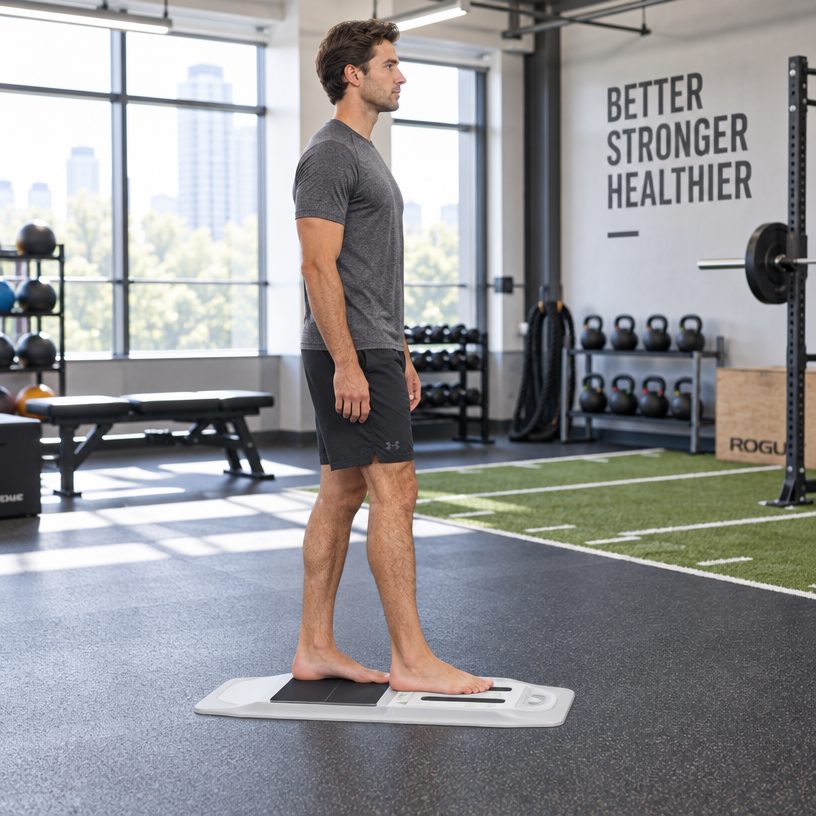
In a short room the single most useful decision is where the approach begins, and the answer should be one fixed spot, marked and used every time. Some rooms mark the floor with a small piece of tape that lives in that spot all year; others use a seam in the flooring or the edge of a mat. The mark matters less than the fact that it is always the same mark. A walk that starts from a fixed point, at a fixed instruction, produces passes that can be laid beside each other honestly. A walk that starts from wherever the customer happened to be standing produces a folder of passes that all begin differently.
The instruction matters as much as the mark. Walk customers through the sentence once before the first recording: start at the tape, walk at your normal pace, keep walking to the far wall. Operators who demonstrate the crossing themselves first get better first sessions than operators who only describe it, because the customer’s mental model of the route is the biggest variable in the room. A customer who has watched the crossing once stops planning it, and an unplanned walk is the walk you actually want on the record.
There is a compromise worth naming. Where the room genuinely cannot fit a settled approach, some operators start the customer a step or two closer and accept that the opening contact will read tentatively, then judge the pass on its middle crossings rather than its first. That is a legitimate arrangement, but it is an arrangement, and arrangements belong on the session sheet. What damages a folder is not the short approach itself; it is a short approach on one visit and a long approach on the next, with nobody able to say afterwards which one produced which numbers.
Handling the turn at the end of the walk
Behind every platform in a small room there is a wall, and every walk ends in a decision about the wall. The options are few. The customer can stop naturally after clearing the surface, turn on the spot, and walk back for the next pass. The customer can exit sideways through a gap the room allows. Or the room can be arranged so the walk continues through a doorway into an adjoining space and the return happens out of sight of the platform. What must not happen is the turn happening on the platform or immediately at its edge, because the deceleration and pivot before the turn travel backwards into the contacts the record is trying to capture.
Operators watching for it will see the turn contaminate the end of a pass: push-off weakens as the customer begins to brake, the later contacts shorten, and the last stride on the surface belongs to the turn rather than the walk. The fix is distance, and where distance cannot be had, the fix is instruction. Ask the customer to keep walking their normal pace until told to stop, and stop them well clear of the platform. It feels over-directed the first time; by the second pass it is routine, and the end of the record stops belonging to the wall.
However the return is handled, decide it once and repeat it. A room where some passes end in a stop-and-turn and others end in a walk-through has two protocols running at once, and the difference is real on the record even when it is invisible on the floor. The turn is also where fatigue shows first in longer sessions, so for customers who tire, let the return happen at whatever pace the customer chooses and start the next pass only when they are ready. A hurried return manufactures exactly the hesitation the short approach was trying to remove.
A low ceiling and what the camera still sees
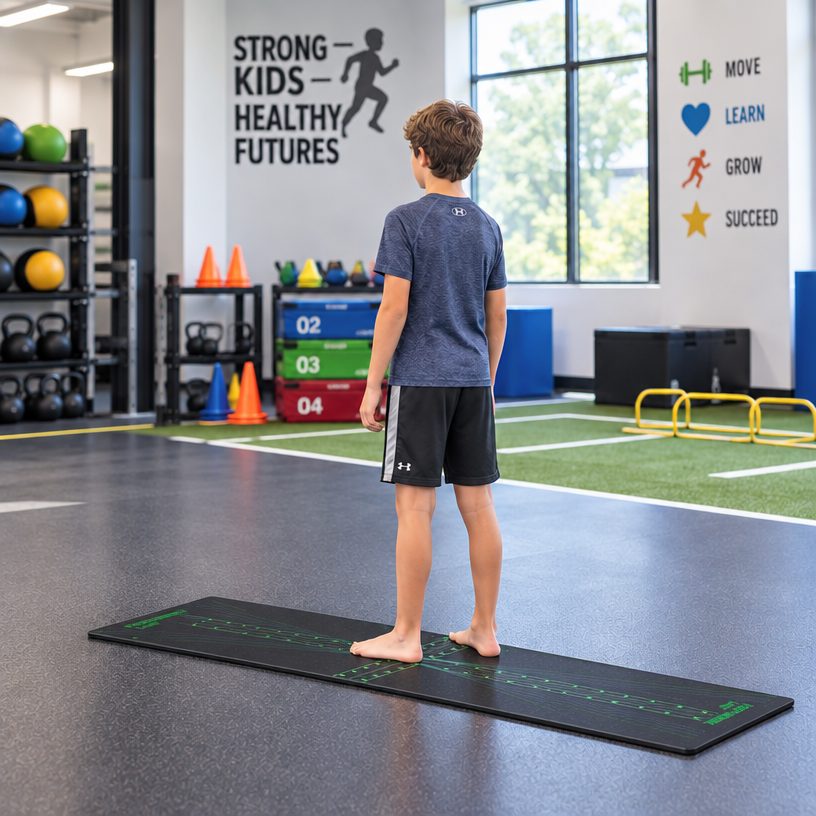
The camera capture beside a pressure platform exists to record posture and alignment while the feet are being recorded, and its field of view is a function of distance as much as angle. In a room with a low ceiling or a camera mounted close to the walking line, the full figure may not fit in frame, and the operator has to decide what the camera will cover instead. This is not a reason to abandon the capture. It is a reason to choose its purpose deliberately and write the choice down.
When the whole body will not fit, most rooms choose one of two framings and stay with it. One is the lower body: pelvis, legs and feet in frame for the whole crossing, which answers questions about how the leg moves over the foot and how the customer carries themselves through contact. The other is a fixed rear or front view that captures general alignment even if the frame crops the extremities. Either is defensible. What is not defensible is varying the framing between visits, because a comparison built on camera records assumes the camera saw the same thing both times.
Low ceilings and tight corners also introduce occlusion, and the operator should walk the line once before the first customer of the day to find what blocks the view: a lamp, a shelf edge, the corner of the desk. The walking line may need to shift a few hand-widths sideways so the camera sees the customer rather than the furniture, and if it shifts, it should then stay shifted. A camera record is cheap to take and expensive to take twice, and the cheapest habit is a thirty-second check of the frame at the start of every session, before anyone takes their shoes off.
The protocol variables that belong on the sheet
A walking record taken in a small room carries more hidden variables than one taken in a corridor, which is precisely why the session sheet has to carry more lines. The short list is not long. It should state where the walk started, meaning whether the approach was the room’s fixed mark or the shortened compromise. It should state how the turn was handled at the far end. It should state what the customer wore on their feet, bare or socked, and which socks if socked. It should state roughly the pace asked for, ordinary or instructed. And it should state how many passes were recorded and which one the report was built from.
Each line earns its place by answering a question that arrives later. Six months on, when the second record is laid beside the first and something reads differently, the sheet is the only document that can say whether the difference belongs to the foot or to the room. If the starting mark, the turn, the footwear and the pace all match between visits, the comparison is honest and the operator can talk about the foot with confidence. If any one of them moved, the conversation starts there, with the room, before anyone says anything about the customer.
The habit transfers between operators, which is its quiet value. Rooms change staff; locums cover holidays; a second operator trained on a different sheet brings different assumptions. A written protocol turns the arrangement of the room from personal habit into house practice, and the folder stays readable by whoever opens it next. We have seen enough folders from rooms that relied on memory to say plainly: the sheet outlasts the staff member, and the record only stays comparable if the conditions outlast them too.
When the room is the wrong room
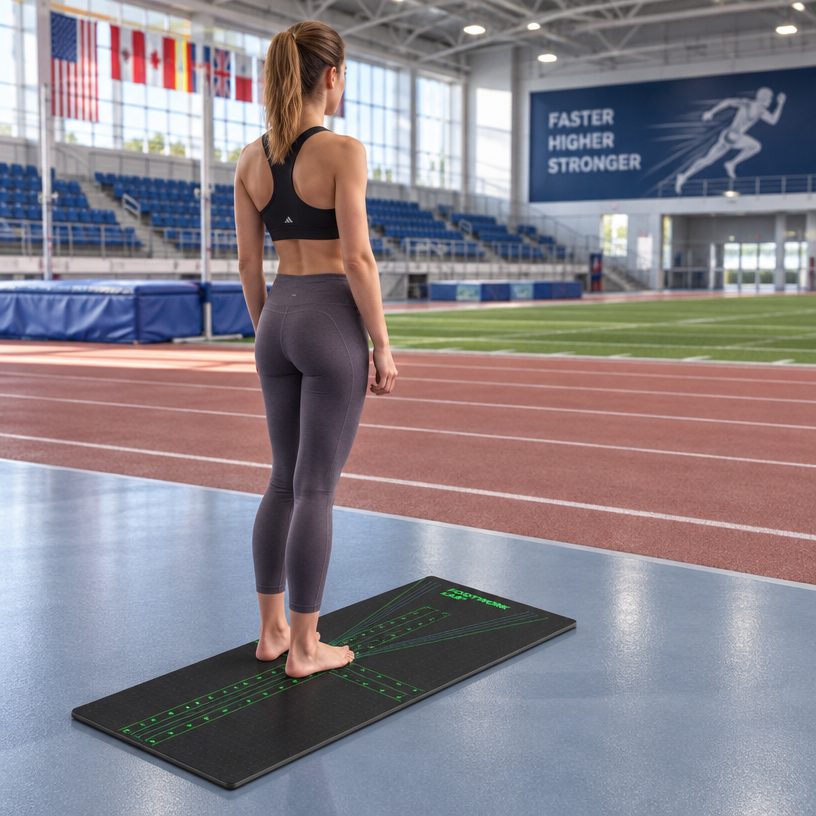
There is a point past which a room should honestly be declared unsuitable for dynamic capture, and it is better said by the installer than discovered by the customer’s third disappointing session. The signs are consistent. If the approach cannot be settled even with marking and instruction, so that every filed pass still opens on a hesitant contact, the room is fighting the record. If the far end forces a turn so close that braking contaminates every crossing no matter how the instructions are phrased, the room is fighting the record. If the camera cannot be placed to see anything useful at all, the dynamic capture has lost half its purpose.
In those cases the sensible move is to reduce the ambition of the session rather than defend the protocol. Standing records, single-step captures and partial-load positions all fit into rooms that will not carry a walking protocol, and a folder of honest standing records is worth more than a folder of walking records that nobody trusts. Some rooms split the difference: dynamic capture happens elsewhere, in a corridor or an adjoining space on certain days, and the small room handles the standing work. Others accept that this is a standing room and price their service around it. All of those are workable. Pretending a hostile room is a gait laboratory is not.
The plain way to test the room costs one cooperative colleague and half an hour. Have them walk the route a dozen times while someone watches the early records, and ask one question of each pass: does this look like walking outdoors or does it look like navigating a room? If the honest answer is the second, adjust the arrangement once, retest, and if the answer is still the second, the room has told you what it is. Saying so on installation day is a service to the buyer, and we would rather have that conversation in the room than by email a season later.
Frequently asked questions
How much approach does a walking record actually need?
Enough floor before the platform for the customer to reach their ordinary pace, and enough beyond it to finish the walk without braking. There is no single required distance; what matters is that the approach is the same marked distance every visit. Where the room cannot provide a settled approach, shorten it deliberately, judge passes on their middle contacts, and write the compromise on the session sheet.
Can records taken with a short approach still be compared across visits?
Yes, provided the protocol is reproduced. A short approach is a condition, not a defect. If the starting mark, the turn handling, the footwear and the pace match between visits, the records sit in the same language and differences can be read honestly. Comparison fails when the arrangement changes between visits, not because the room was small in the first place.
What should be written down about the walking protocol?
Where the walk started, how the turn at the far end was handled, what the customer wore on their feet, the pace asked for, how many passes were recorded and which pass the report was built from. One dated block on the session sheet. These are the variables that quietly decide whether two records taken months apart can be laid beside each other.
Does the camera still add value in a low room?
It does, if its framing is chosen deliberately. When the full figure will not fit, fix on either the lower body or a consistent whole-body alignment view, and keep the framing identical between visits. Walk the line before each session to check for occlusion from furniture or fittings, and shift the camera position only as a lasting decision, never visit by visit.
How many passes should be recorded in a small room?
More than in a long room, because the approach is shorter and the opening contacts settle later. Let the first crossings run as warm-up, then record several settled passes and file the one that best matches the customer’s ordinary walk. The number itself belongs on the sheet, so the next operator knows what the report was built from.
Should the customer turn on the platform or walk past it?
Neither contact should end on the platform if it can be avoided. Ask the customer to keep walking at ordinary pace well clear of the surface, then stop and return. Whichever arrangement the room allows, fix it and repeat it for every pass and every visit. A stop-and-turn on one visit and a walk-through on the next are two different protocols.
When should a room be declared unsuitable for dynamic capture?
When the approach cannot be settled even with marking and instruction, when braking from the far wall contaminates every pass, or when no camera position produces a usable view. Then move the ambition instead: standing records, single-step captures or dynamic work in another space on set days. An honest standing record outperforms a walking record nobody trusts.
What we would do next
Mark the start of the walk, fix the turn instruction, and put the protocol block on the session sheet before the first customer arrives. If the room is new to you, test it with a colleague before the first session, not during it. Commissioning a platform in a working clinic walks through the installation-day decisions that include exactly this room check, what the camera adds beside the pressure mat covers the framing choices in more depth, and keeping a record comparable over time extends the session-sheet habit to calibration and care. The F2-PRO system page describes the walking and standing session types in the equipment’s own terms, and the FAQ page collects the operational answers we send most often by message.
This article is intended for professional and educational reference. It is not medical advice. Foot assessment equipment produces measurements and images; clinical interpretation and any decision about care remain the responsibility of a qualified professional. Certification scope is limited to the documentation we hold: European Union certification and ISO quality system certification.