
A footcare product range is a set of jobs, not a list of items, and distributors who build one from a catalogue end up with a shelf that looks complete and sells unevenly. The items that move are the ones attached to a decision a customer is already making; the ones that sit are the ones attached to a category nobody asked about.
The problem is visible in the arithmetic. A distributor adds twelve products, sells four repeatedly, and carries eight as decoration. The four are not better products; they are products connected to a question that arrives at the counter — the shoe rubs, the insert slips, the heel feels hard, the insole smells after a month.
This article sets out a way to plan a range around those questions, decide what belongs beside an insole line, and keep the range from growing faster than the staff can explain it. We produce insoles, so the anchor of the discussion is the insole line and the products that support it.
Start from the questions at the counter
Every sale begins with a complaint or a request, and the phrasing is remarkably consistent across markets: something rubs, something slips, something is too hard, something wears out too fast. Those four sentences describe most of the accessory demand in footcare.
A range built around them has a shape. Friction complaints point at covers and patches; slip complaints point at inserts with a grippier base or a different trim; hardness complaints point at cushioning layers; wear complaints point at durability and at replacement expectations.
The advantage of this approach is that it produces a range the staff can navigate without a manual. Each product answers a sentence, and the sentence is what the customer says, so the conversation starts in the same place every time.
The disadvantage is that it looks narrower than a catalogue. That is usually an improvement: a range of twenty items that answer six questions outsells a range of sixty that answer none clearly.
The phrasing also predicts the price point. A customer who says something rubs is usually solving a small problem and will accept a small price; one who says nothing works is solving a large one and needs a conversation, not a product. Ranges that treat both as the same sale tend to lose the second customer.
There is a fifth sentence that arrives regularly in some markets: the product did not last. That one is about durability and about expectation, and it is answered by a range that states its replacement rhythm rather than by a product that claims to be indestructible.
The anchor: the insole line
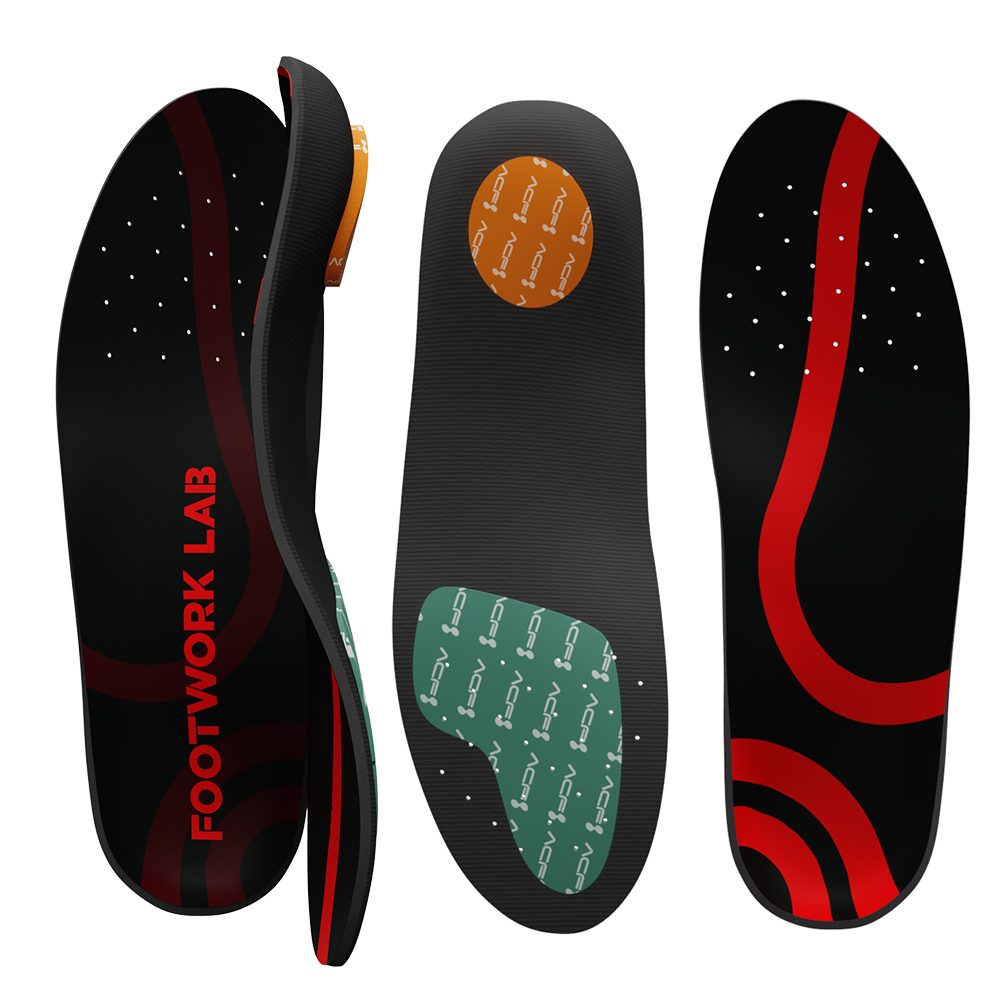
An insole line is a good anchor because it is the product most customers arrive intending to buy, and because it creates the questions that accessories answer. Once a customer owns an insole, the follow-on purchases are predictable: a second pair for another shoe, a cover for a shoe that rubs, a freshening product for daily wear.
That predictability is a planning tool. A distributor with an insole line can forecast accessory demand from insole volume rather than from guesses, and can stock accessories in proportion rather than in bulk.
The anchor also sets the quality bar. Accessories sold beside a well-made insole are judged by the same standard, and a cheap cover on a good insert reads as a cheap insert. Consistency of quality across a range is worth more than breadth.
Our own production runs a two-hundred pair minimum with mixing, which suits a distributor building an insole range across several models; the accessories that follow can then be ordered against the same customer base.
It also predicts the shelf. Insole volume is concentrated in a few sizes and a few constructions, while accessories are concentrated in a few uses. Planning the shelf around those two distributions is more useful than planning it around a product hierarchy.
What belongs beside the insoles
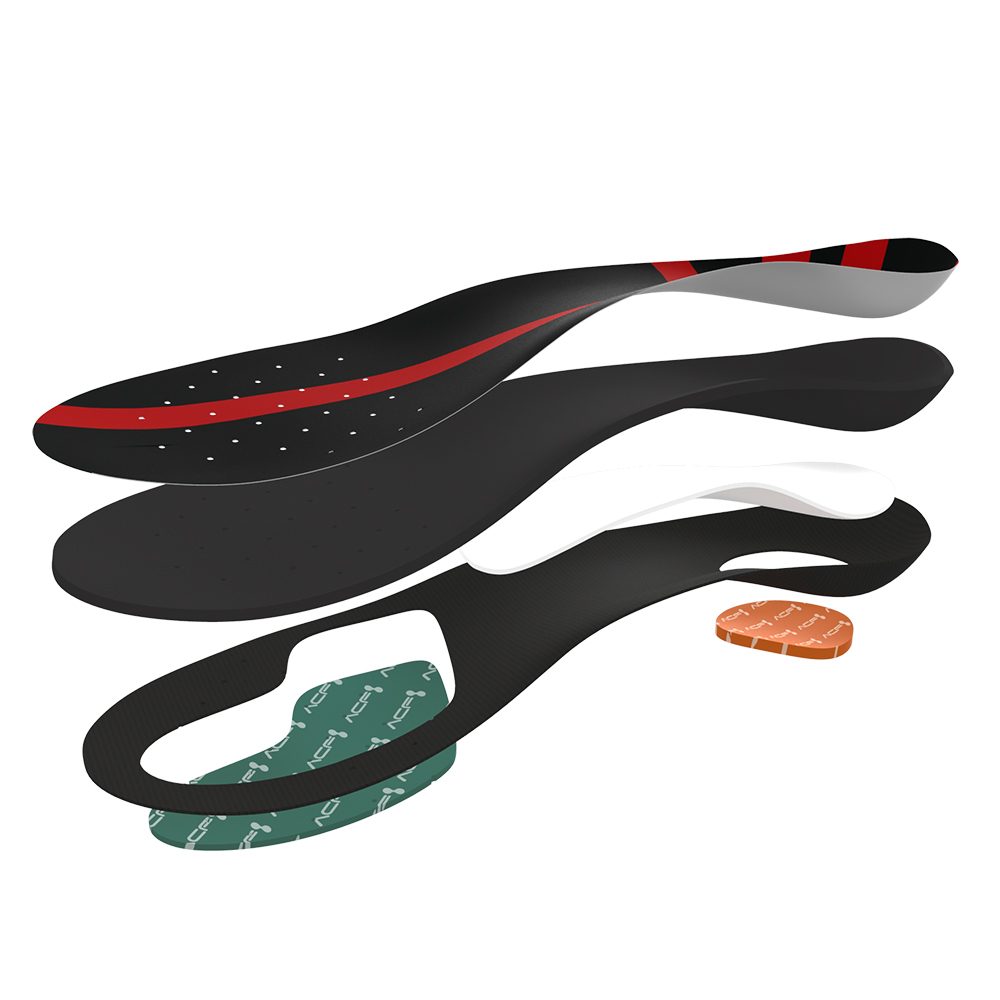
Four categories earn their place in most ranges. Covers and top-cover replacements, for durability and for customers who want a different feel under the foot. Heel and forefoot pads, for targeted cushioning and for fitting adjustments. Shoe-care items that affect the insole’s environment, such as drying and odour management. And measuring or fitting aids, which turn a retail sale into a repeatable process.
What usually does not earn its place: devices that require clinical judgement to sell, products whose benefit cannot be explained in one sentence, and items that exist only to fill a catalogue page. Each of those consumes shelf space and staff attention without producing a repeat sale.
There is a middle category worth considering: seasonal products tied to footwear changes. Insoles and covers for sandals, for work boots, for winter footwear. Seasonal items create a reason to talk to existing customers, which is worth more than the margin on the item.
The test for any new item is a sentence: which customer question does this answer, and how often does that question arrive. If the answer is vague, the item is a decoration.
It is worth deciding which category the shop will be known for. A range that is deep in cushioning reads differently from one that is deep in fitting aids, and customers return to the shop that solved their particular problem rather than to the shop with the widest shelf.
It is worth checking whether the accessories a distributor plans to stock can be replenished at the same rhythm as the insoles. A range where one category reorders monthly and another quarterly creates two stock cycles in one shelf, and the slower cycle is the one that runs out.
Deciding depth versus breadth
Depth means several versions of one product; breadth means one version of several products. A range with depth serves the customer who has a specific requirement; a range with breadth serves the customer who is browsing.
In footcare, depth usually outperforms breadth, because the customer arrives with a specific complaint. Three thicknesses of a cushioning insert will outsell three unrelated products in the same space, provided the staff can explain which thickness suits which shoe.
Breadth has its place at the entry point: a small number of clearly different products that let a customer discover what category they need. Once discovered, the range should deepen around that category rather than widen into another.
The planning consequence is a two-tier range: a shallow discovery layer of four to six items, and a deeper layer around the two or three categories that actually sell. That structure fits a shelf and a conversation.
Depth also has a stock consequence. Deeper ranges need fewer units per variant and more variants, which is easier to replenish in small batches. A distributor with a fast reorder route can afford depth; one without it drifts back to breadth.
It is worth reviewing depth annually rather than adding depth reactively. Ranges that grow one item at a time end up with three products that overlap and none that covers the gap, and the overlap is invisible until someone counts.
The seasonal layer deserves its own small plan. Two or three items tied to a change of footwear give the shop a reason to contact existing customers twice a year, and a reason to contact is worth more than the margin on the item itself.
Teaching the range in an afternoon
A range that requires a manual will be sold badly. The training that works is a single sheet listing each product, the question it answers, the shoe it suits, and the one thing it does not do. Four columns, one page.
The fourth column matters most. Staff who know what a product does not do stop overselling, and overselling is what generates returns in a category where the customer’s expectation is easily inflated.
Add a short escalation rule: if the customer’s question is about their feet rather than about the product, the answer is an assessment, not a different insole. A range plan that includes that rule protects the shop from the most expensive kind of sale.
Half a day of training, one page, and a rule. Distributors who invest that much find that the same range sells measurably better, because the staff are choosing products instead of guessing.
The sheet should also say which product pairs with which. A cover that suits a firm shell may be wrong for a soft one, and a pad that suits a walking shoe may be wrong for a work boot. Pairing notes turn a list into a system.
The pairing notes also give the staff a reason to ask a follow-up question, and follow-up questions are how a single sale becomes a range sale. A sheet that prompts the question is worth more than a poster that advertises the range.
Pricing structure without quoting numbers
A range needs a visible hierarchy: an entry product, a core product, and a specialist product. The hierarchy is communicated by position on the shelf and by the depth of the explanation, not by a discount structure that trains customers to wait.
The entry product should be genuinely useful, not a loss leader that disappoints. In footcare, a disappointing first purchase ends the relationship, because the customer attributes the failure to the category rather than to the price point.
The specialist product needs a reason to exist that the staff can state in one sentence. Without that sentence, the specialist becomes the item that gathers dust while the core product does the work.
Cost structure should follow the production reality: depth of customisation, material family, cover, and finishing all move the cost. Our own quotations describe those components rather than a single figure, because a distributor needs to know which lever changes the number.
It also helps to separate the price of the product from the price of the service. A fitting, a measurement or a follow-up has a cost, and hiding it inside the product price makes the product look expensive and the service look free. Customers value what they can see.
The hierarchy should also be visible in the packaging. A customer who can tell the entry product from the specialist one on the shelf does not need a conversation to start, and shops with limited staff time depend on that.
It also helps to show the hierarchy on the shelf rather than in a document. Position, height and grouping communicate more quickly than a label, and a shelf that reads clearly needs fewer staff minutes per sale.
Reviewing the range each quarter
A quarterly review with three numbers per item is enough: units sold, returns, and how often staff had to escalate. Items with low sales and high escalation are candidates for removal regardless of margin.
The review should also look at the questions customers asked that the range could not answer. That list is the shopping list for the next season, and it is more reliable than any supplier’s new-product presentation.
Then look at the production side: which items can be reordered quickly, which have a long lead time, and whether the mix rules allow small replenishments. A range that cannot be replenished in small quantities will drift towards whatever is in stock.
Three numbers, one question, one replenishment check. It is a short meeting, and it is the difference between a range that improves and a range that accumulates.
The review should also look at the supplier side. Which items arrived on time, which needed chasing, and which changed specification without notice. A range is a set of relationships as much as a set of products, and the relationships are what make replenishment predictable.
It also helps to write the review date on the range document itself, so the meeting happens because it is scheduled rather than because something went wrong. A range reviewed on a calendar improves steadily; one reviewed after a complaint improves in bursts and forgets between them.
Frequently asked questions
What products should sit beside an insole range?
Covers and top-cover replacements, targeted pads, shoe-care items that affect the insole environment, and fitting or measuring aids. Each should answer a question customers actually ask.
How many products should a first range contain?
Fewer than most distributors expect. A discovery layer of four to six items plus depth around the two or three categories that sell is easier to explain and easier to replenish.
What is your minimum order for insoles?
Two hundred pairs, mixable across models and sizes, which supports a range rather than a single product.
Can we order accessories alongside insoles?
We produce the insole ranges shown on the Insole Categories page and can discuss which adjacent items make sense for your market. Accessory sourcing is confirmed per enquiry.
How quickly can we restock?
Samples ship within three days; production capacity on our own line runs roughly five hundred to a thousand pairs a day, with transit by express, air or sea.
Can the range carry our brand?
Yes, as ODM or OEM for insoles, with the design following an agreed specification and your branding applied.
How do we keep staff able to explain the range?
One page per season: product, question answered, shoe it suits, and what it does not do. Plus an escalation rule for questions about the customer’s feet.
What we would do next
Build the range around the four sentences customers actually say, then deepen rather than widen. The Insole Categories page lists our insole ranges, and Our Factory describes lead times and production capacity.
The article on custom inserts sets out the three personalisation levels a retail range can carry, which is usually the next decision after the range itself.
This article is intended for professional and educational reference. It is not medical advice. Foot assessment equipment produces measurements and images; clinical interpretation and any decision about care remain the responsibility of a qualified professional. Certification scope is limited to the documentation we hold: European Union certification and ISO quality system certification.