
The phrase dynamic fitness assessment system belongs to gyms as much as to clinics. Search traffic for it comes from performance studios, physiotherapy chains and hotel wellness floors, and most of those buyers meet foot assessment for the first time through exactly this vocabulary. That makes the term a useful front door — and a risky one, because expectations formed at the front door are hard to redecorate later.
What such a system actually does is narrower than the phrase promises. It records how the foot behaves during movement tasks: load distribution, timing, and the posture above the sole. It does not measure cardiovascular fitness, body composition or anything else the word fitness drags in. Buyers who know that boundary in advance buy well; buyers who do not, buy twice.
We manufacture foot assessment equipment — pressure sensing, camera capture and analysis software — and the custom insole line that some of its records feed. This article translates the fitness-system search term into a specification a buyer can actually check, and marks the lines our equipment will not cross.
Translating the search term into a specification
Strip the marketing vocabulary and the buyer is shopping for three subsystems. A pressure sensing layer that reports how load lands and moves across the sole during a task. A camera subsystem that captures posture and alignment in the same session. And analysis software that assembles the two into a record a staff member can run and a professional can read.
That is the whole instrument, and it is worth saying so plainly because listings in this category decorate the description with everything from body composition to wellness scores. A buyer who anchors on the three subsystems can compare listings like-for-like and notice quickly which vendors are selling one instrument and which are selling a subscription with sensors attached.
Our own position in the category is stated in every quotation: we build foot assessment systems in exactly the sense above, and we do not claim the wider fitness meanings. Buyers coming from a gym context usually find the narrower instrument is the one their floor actually needed — the wide version was a wish, not a workflow.
The three-subsystem framing also disciplines the upgrade conversation. When a vendor offers a new module, the buyer can place it: does it improve the pressure layer, the camera, the software, or none of them? Modules that improve none — badges, leaderboards, engagement dashboards — are retail decisions, not instrument decisions, and pricing them as retail keeps the assessment budget honest.
What the movement record can and cannot say
The dynamic record describes the task: how load moved through the sole during walking, stepping or a recorded exercise, and how the body lined up above it. Those are facts about a performance on a day, and they are genuinely useful — they show asymmetries, hesitations and the regions of the sole that carried disproportionate work.
What the record does not say is what the person is capable of, or what they should do next. Fitness decisions — programme design, progression, load management — belong to the coach or clinician who knows the member’s history. An instrument that handed down training verdicts would be overstepping its evidence; ours is built to hand over records instead.
Buyers should test suppliers against that boundary during the demo. Ask what the system concludes and what it merely shows. A vendor whose answer blurs the line is promising the floor a decision-maker it will not get, and the disappointment lands on your staff six weeks after installation, when the reports are still reporting and nobody is reading them.
The record’s honesty extends to its failures, and buyers should ask how the system reports them. A capture where the subject stepped off early, where the camera lost the frame, where the surface had not settled — a well-designed instrument marks these rather than rendering them as smooth results. Our reports carry session-quality notes for exactly this reason, and buyers comparing vendors should ask to see one.
Session-quality notes also train the operators who read them. A capture flagged for an interrupted task tells the assistant what to repeat and the professional what to discount; the flag is a lesson embedded in the file. Studios that review the flags monthly find their capture quality rising without a single retraining session — the notes do the coaching at the pace the work arrives.
The gym and studio use case, honestly scoped
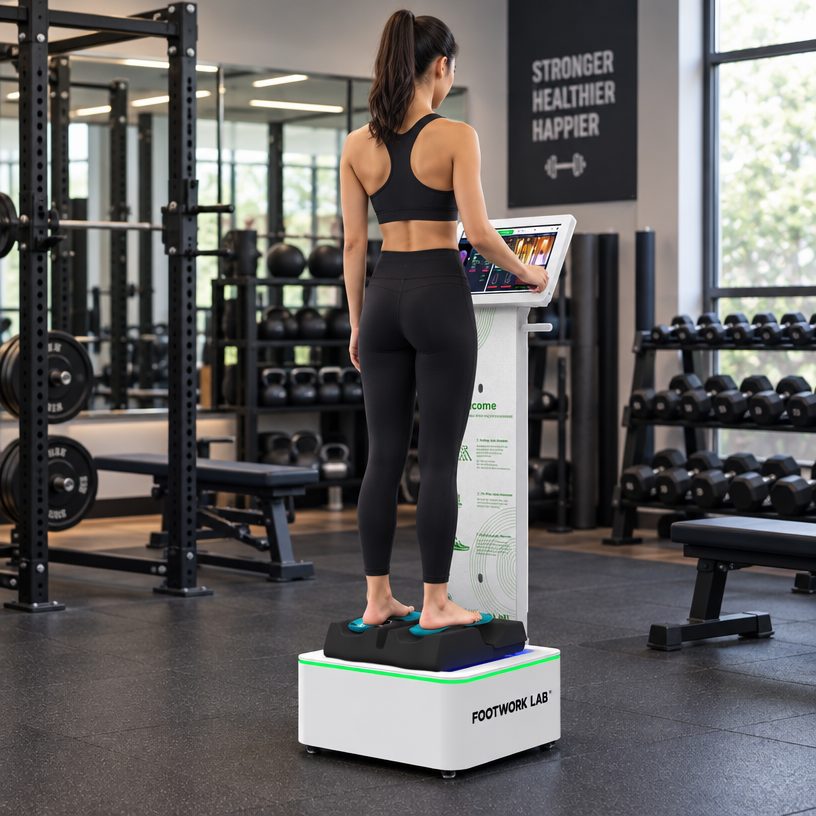
For a performance studio, the realistic job is member-facing assessment: a standing record and a movement task that produce a personal map the coach can talk through. The value is engagement and retention — members see their own data, the coach anchors advice to something visible, and the re-assessment three months later becomes an appointment the member keeps.
For a physiotherapy or rehabilitation context, the same instrument serves intake and progress records, with the professional’s interpretation attached. The difference is who reads the record and what follows it; the capture is identical. This is why our reports are built to serve both readerships: plain pages for the member conversation, full data export for the professional file.
Neither use case needs the word fitness to be stretched. A studio that markets an assessment as what it is — a record of how your feet move, with your coach — keeps the promise it makes. One that markets a wellness verdict sells an expectation the hardware cannot cash, and the hardware gets blamed.
The studio conversation also has a membership-data dimension worth planning early. Assessment records are personal data; the studio’s privacy policy should state what is stored, for how long, and on whose servers. Our systems keep export and storage under the studio’s control precisely so that the policy can be simple. Studios that inherit a vendor’s cloud by default inherit the vendor’s policy by accident, and members ask.
Synchronisation: the specification question that matters most
If the pressure layer and the camera are to be read together, they must be captured together. Synchronisation — the alignment of the two streams in time — is the single most consequential line in a system specification, and the one least visible in a brochure. Two records captured seconds apart cannot be compared frame to frame, and the comparison is where the reading happens.
Buyers should ask how the alignment is achieved and what happens if a session is interrupted mid-capture. Our systems pair the streams in one session by design; the question is not whether we claim it but whether a competing vendor can demonstrate it live. Demos exist for exactly this — ask to see the alignment on the screen, not the claim on the slide.
The same question extends to re-assessment. A studio that compares a member’s month-one record with month-four needs both captures taken under the same instructions and stored in a comparable form. Systems that export the underlying record make that routine; systems that export a summary page make it impossible, quietly.
Synchronisation also has a maintenance question: what happens after an update. Software that revises its capture pipeline can silently desynchronise the streams it once aligned, and the studio would never see the drift — only stranger and stranger comparisons. Our update process re-verifies the alignment before release, and buyers should ask every vendor the same question in the same words.
Staffing and the daily routine
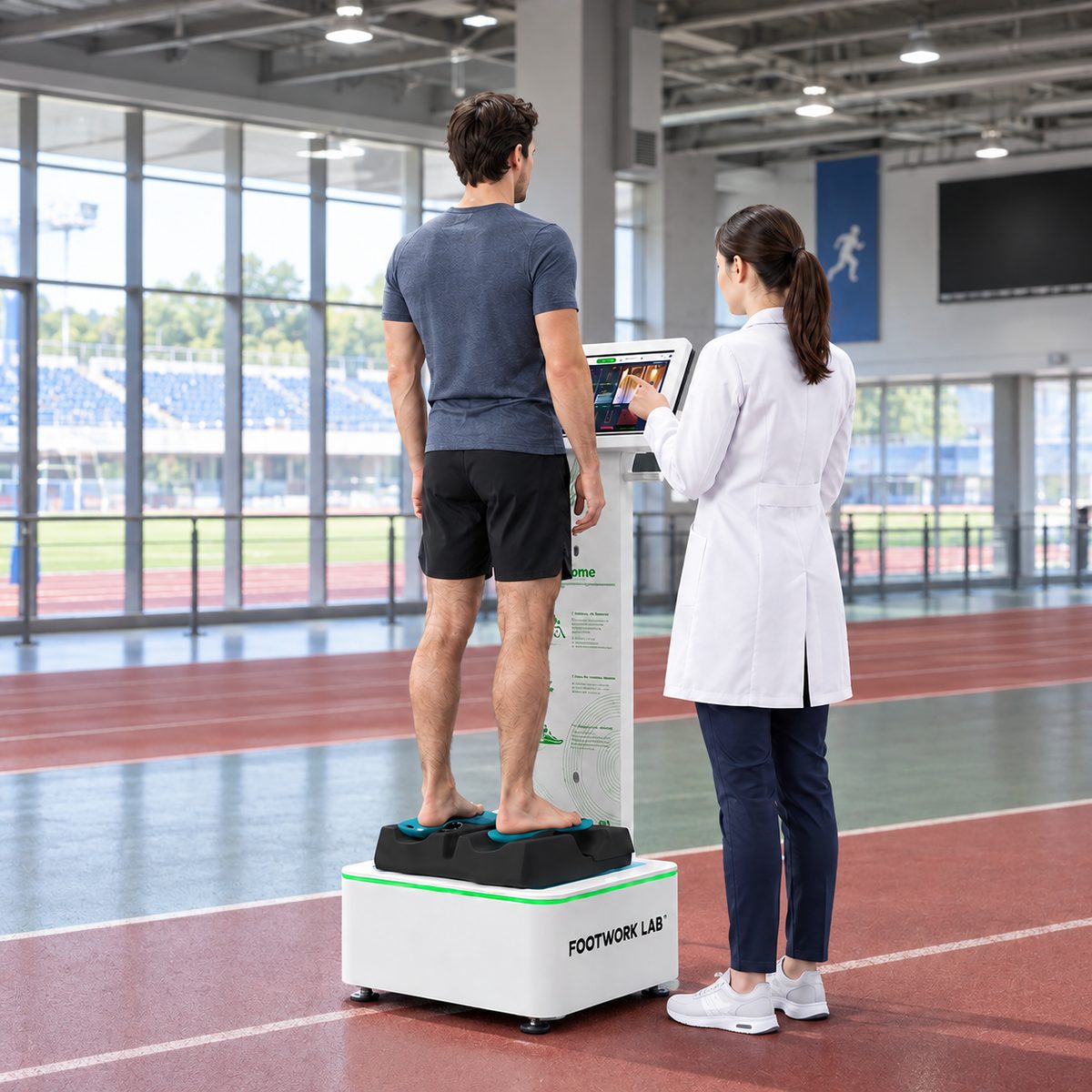
An assessment corner lives or dies on routine. The capture must be simple enough that a coach or assistant runs it between appointments: a standing record, a short movement task, a session name, done. Rooms that need a specialist present for every capture end up with an expensive instrument and an empty corner by month three.
Our workflow is built for the assistant-led capture: the software guides the steps, the report assembles itself, and the professional review happens where it belongs — in the conversation, not in the operation. The support model behind it assumes the same: a dedicated WhatsApp group with an engineer reachable, remote assistance for software questions, and over-the-air updates for connected units.
Reliability completes the routine. Every system ships after seven days of factory testing, and the warranty runs twelve months — terms stated in writing because a floor that schedules assessments cannot absorb surprises. Buyers should hold every supplier to the same written standard before comparing anything else on the quotation.
The assistant-led routine also has a hiring benefit worth noting: the capture role trains quickly, which means the studio’s assessment service survives staff turnover. A capability that depends on one specialist dies with their notice period. Buyers evaluating systems should therefore time the training — an afternoon for a capture routine is a system the studio owns; a week is a system that owns the studio.
Feeding the retail or insole side
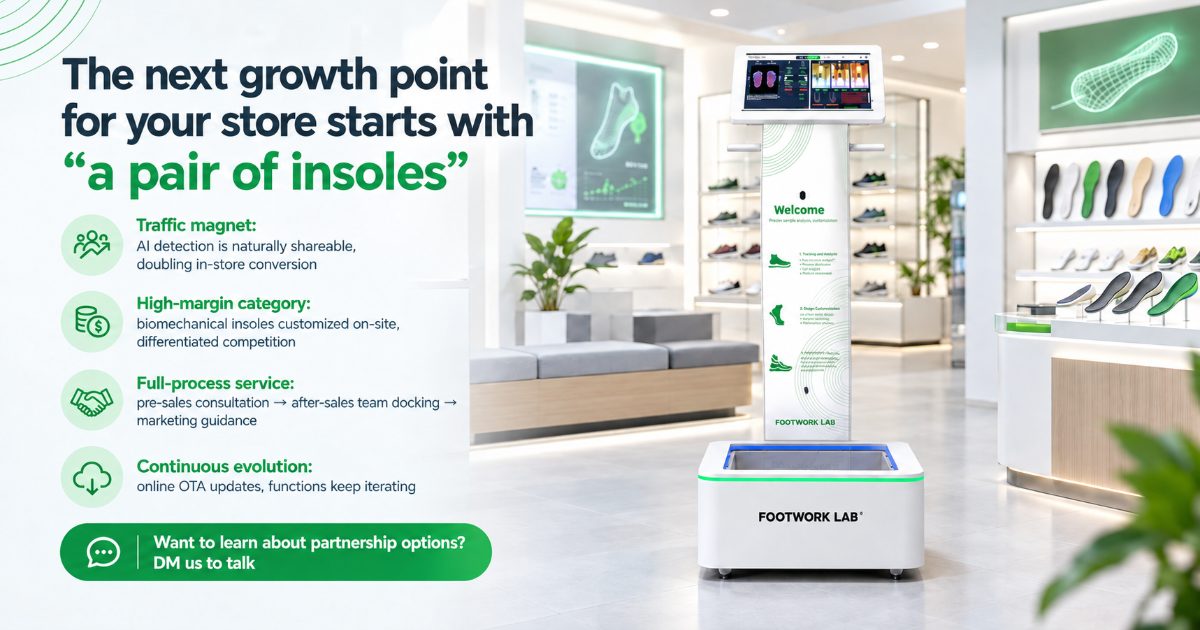
For studios and clinics that retail insoles, the assessment record does the selling that shelf cards cannot. A member who has seen their own pressure map accepts a load-distribution explanation immediately, because the picture came first. The recovery and daily ranges fit this entry role well — low-commitment, simply fitted, and honest about what they do.
For custom work, the record feeds the factory brief through the professional’s selection of fields. Our insole line accepts those briefs at a two hundred pair minimum, mixed across models and sizes, with samples shipping in three days for the shoe-context test. A studio that assesses, orders and re-assesses has built a closed loop that retains members and funds the equipment.
The loop only closes if the records stay exportable and the briefs stay written. Buyers who keep both disciplines find the fitness-system search term led them somewhere real: not a wellness oracle, but an instrument that produces records their staff use, their members understand and their production partner can build from.
The retail connection has a sequencing rule for studios: the assessment first, the shelf second. Studios that open the insole corner before the assessment routine stabilises sell from enthusiasm; studios that open it after sell from records, and their returns show it. The corner is a consequence of the instrument, and sequencing it earlier only borrows the credibility the instrument has not yet earned.
The loop’s first turn also deserves planning: the studio’s first re-assessment campaign. Three months after opening, invite the first cohort back, run the comparison on screen, and let the members narrate their own before-and-after. The campaign costs a week of slots and produces the studio’s most persuasive marketing — its own members, describing changes in their own records.
A buying checklist for the category
Compare candidates on five lines. One: the three subsystems — pressure layer, camera, software — and whether the first two are synchronised. Two: the report, seen live, including export. Three: the capture routine, timed, run by the least senior person you would actually employ. Four: support and warranty in writing. Five: the commercial structure — what is base, what is subscription, what is optional.
We answer all five in every quotation, and we encourage buyers to put the same list in front of every vendor on the shortlist. The exercise usually shortens it quickly, which is the point: the category’s noise lives in the descriptions, and the list lives in the demos.
Bring a real case to the demo if you can — a member or patient whose record you have seen before. Watching a system describe a foot you already know tells you more in ten minutes than a month of brochures, and it will tell you how the vendor behaves when the data does not flatter the instrument.
A closing note on the phrase that led here. Dynamic fitness assessment system will keep attracting gyms because it describes what a gym floor wants to be — evidence-based, personal, current. The instrument that honours the phrase is the one that does less than it says: it records feet moving, it stores the records honestly, and it hands the interpretation to the professional whose floor it sits on. That restraint is not modesty; it is the reason the phrase will still be on your marketing in five years.
Frequently asked questions
Is a dynamic fitness assessment system a fitness tracker?
No. It records how the foot behaves during movement tasks — pressure, timing and posture. It does not measure cardiovascular fitness or body composition, and we do not claim it does.
Can the system tell a member what training to do?
No. It produces records; programme decisions belong to the coach or clinician. An instrument that issued training verdicts would exceed its evidence.
What are the three subsystems to compare between vendors?
Pressure sensing, camera capture and analysis software. The critical specification question is whether the pressure and camera streams are captured in the same synchronised session.
Why does synchronisation matter so much?
Because the pressure timeline and the posture frames are read together, frame against frame. Records captured apart cannot be compared, and the comparison is where the reading happens.
Can re-assessment records be compared months apart?
Yes, when both captures follow the same instructions and the underlying records are stored. Our reports export the full record for exactly that purpose.
What support comes with the system?
A dedicated WhatsApp group with engineer support, remote assistance, over-the-air updates for connected units, seven days of factory testing before shipment and a twelve-month warranty.
Do you sell body composition or wellness scoring features?
No. We manufacture foot assessment equipment and custom orthotic insoles. We state the boundary in every quotation so buyers can plan their floor around what the instrument truly does.
What we would do next
Send us your floor plan and the member or patient flow you intend to run; we will return a system proposal with the five checklist lines answered in writing, including support, warranty and the commercial structure.
For buyers building the full loop — assessment, insole retail, custom production — one factory conversation covers the equipment, the daily and recovery insole ranges, and the custom line behind them.
This article is intended for professional and educational reference. It is not medical advice. Foot assessment equipment produces measurements and images; clinical interpretation and any decision about care remain the responsibility of a qualified professional. Certification scope is limited to the documentation we hold: European Union certification and ISO quality system certification.