
Most people picture a foot pressure plate as a bolted-down instrument: a fixed room, a fixed walkway, patients brought to the machine. That picture describes one deployment and misses the other. Buyers searching for a “foot pressure plate” often work in places where the feet travel and the room does not exist yet — a trade-fair aisle, a store floor on a promotion weekend, a client’s own premises. The FMP was built for exactly that second case: the manual names it a Foot Pressure & Posture Detection Insoles Customization System and describes a mobile intelligent scenario solution that carries detection, analysis and on-site insole customization in one kit. This guide is for clinic owners, store operators and distributors deciding between a fixed install and a travelling setup, and for anyone who has already booked an event and needs to know what the setup actually demands.
The comparison matters because the two deployments answer different commercial questions. A fixed installation optimises for repeatability: the same room, the same capture protocol, records that compare cleanly across months. A mobile deployment optimises for reach: meeting people who would never book an appointment, capturing a first record on the spot, and — with the FMP — finishing with a pair of biomechanical insoles shaped in front of the customer. Neither replaces the other, and a buyer who orders one while needing the other usually discovers it mid-event. The sections below walk through what each deployment answers, how a mobile session is set up, where the on-site loop is most fragile, and which buyer fits which configuration.
Two deployments of a foot pressure plate, two different questions
A fixed pressure system in a clinic or lab answers questions that assume continuity. The plate sits in one room, the operator runs the same standing, walking and balance captures every time, and a second visit can be placed beside the first without caveats. That continuity is the whole value: a baseline that holds still long enough to show a direction of change. The F2 and F2-Pro lines serve this deployment well, and a previous article on pressure plate scanning in a small room covers the layout discipline a fixed install needs.
A mobile kit answers a different set of questions. How do you screen a group at a sports venue without a clinic room? How does a shoe store turn a Saturday promotion into recorded assessments rather than guesswork? How does a distributor demonstrate the product to a dealer without shipping it twice? The manual lists the FMP’s core functions as static, dynamic and balance pressure detection and evaluation, full-body biomechanical alignment detection, and on-site customization of biomechanical insoles — the same capture states a fixed system offers, plus a customization module that turns the record into a finished product before the customer leaves. Under the hood it runs BodyftAi machine vision recognition and senthmetic flexible-fabric sensing, with AI-assisted report generation building the on-screen layout.
The practical difference is not in what the system measures but in what surrounds the measurement. A fixed room hides its infrastructure: mains power behind the wall, a controlled floor, a door that keeps the queue out. A mobile kit has to carry its own infrastructure in a portable suitcase — the FMovePro host, the pressure plate, a pair of high-precision cameras with a bracket, a hub, the heating box, a floor mat, and the shaping pillow set for adults, children and auxiliary accessories. Everything the fixed room takes for granted becomes a line item the operator has to confirm before the event.
Setting up the FMP at an expo, a store event or a client site
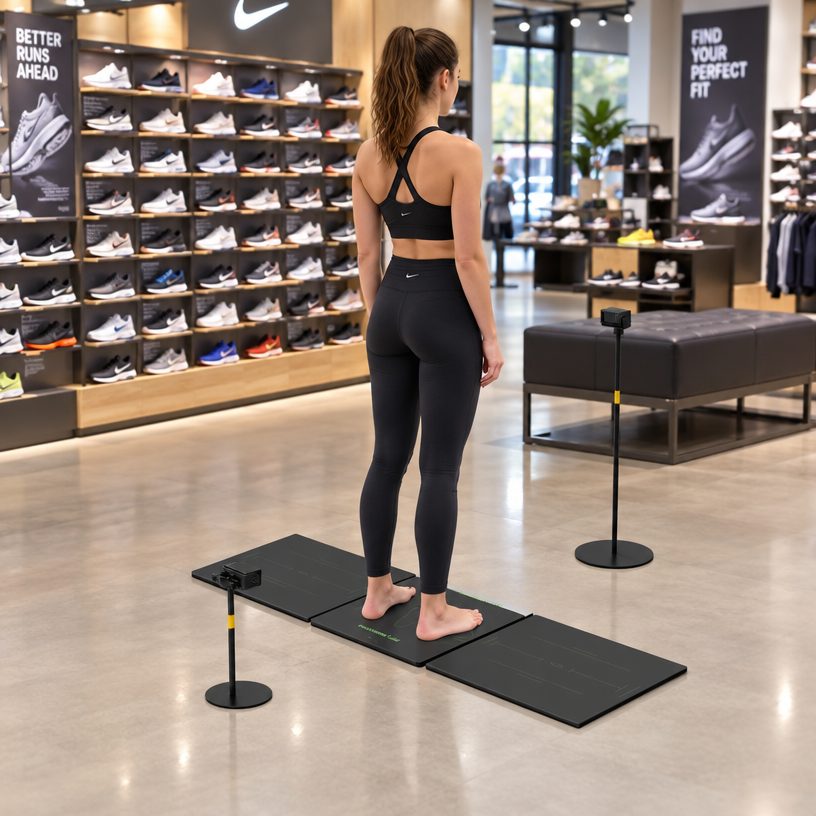
The setup follows the same shape in all three venues, and it starts with the walking line, not the machine. A dynamic capture needs a clear approach path so the person walks naturally onto the pressure plate rather than stepping onto it from a standstill; at a booth or on a store floor, that path competes with foot traffic. We learned the layout at our own exhibition stands: at one Canton Fair booth, the first arrangement put the plate parallel to the aisle and every capture caught a passer-by in the corner of the frame, so we turned the line ninety degrees into the booth and capped the queue at the entrance. The records improved immediately, and the queue itself became part of the demonstration — people watch the report appear on screen and join the line for it.
Power and floor are the two conditions to confirm in advance. The FMovePro host, the cameras and the heating box all draw from the venue’s supply, so a booth with a single shared socket or a client site with no free outlet near the demonstration area is a problem to find a week before the event, not an hour before. The floor under the pressure plate should be firm and level; a thick carpet or an uneven temporary floor shifts the plate’s behaviour, which is why the kit includes a floor mat and why the walking surface deserves a walk-through during setup, plate barefoot first, before any visitor steps on it.
The flow of people decides whether the session holds together. A workable arrangement at an event is three stations in sequence: a short intake where the visitor’s details are entered, the capture area with the plate and the alignment cameras, and a reading bench where the report is walked through. The report — pressure distribution beside the alignment record, produced with AI-assisted report generation — is the conversation opener, and the person reading it should be the same person who ran the capture. Splitting those two roles between two staff members is where event sessions start losing the thread.
Where the mobile loop is fragile: the heating box and the shaping pillows
The FMP’s closing loop — detect, analyse, customize on site — is what separates it from a demonstration-only kit, and it is also where a mobile deployment is most likely to stumble. The customization step depends on the heating box warming the insole blank so it can be shaped on the shaping pillow, and on the shaping pillow matching the person whose feet were just measured. In a fixed install, the heating box lives on a bench and runs all day; on the road, it is packed away, plugged in cold, and asked to be ready when the first customer reaches the bench. The rhythm slips when the operator treats the heating box as something to switch on after the capture instead of before it.
We saw the consequence at a store event our support team helped review afterwards. The store had run captures back to back, the queue was happy, and then every customer reached the bench before a warmed blank was ready — the shaping step stalled, the queue turned, and the afternoon ran at half the morning’s pace. The fix was procedural, not technical: the heating box goes on during the intake station, blanks for the adult and children’s pillow sizes are staged in the order the queue expects, and the shaping pillow set is laid out before the first capture rather than searched for mid-session. A store that adopted that sequence ran its next event without a stall in the loop.
The shaping pillow set deserves the same attention as the electronics, because it is the piece that connects the record to the product. The kit ships with pillows for adults, for children and the auxiliary accessories, and an event with mixed foot sizes — which is most public events — needs all three within reach. The alignment cameras, the hub and the cable runs matter too: a cable across the walking line is both a capture problem and a safety problem, and taping the runs down is part of setup, not an afterthought. None of this is difficult; all of it is the difference between a kit that demos well and a kit that sells on site.
Fixed install or mobile kit: which buyer fits which
In our pre-sales conversations, the buyers who should choose the fixed route are the ones whose service model already brings people to a room. A rehabilitation hospital or podiatry clinic running follow-up records across months needs the controlled environment more than the portability; a gym or sports training institution tracking athletes across a season is in the same position, and the F2 and FMP assessment systems page sets out how the two lines divide that work. For these buyers, a mobile kit is a second purchase, useful for outreach days, not the core instrument.
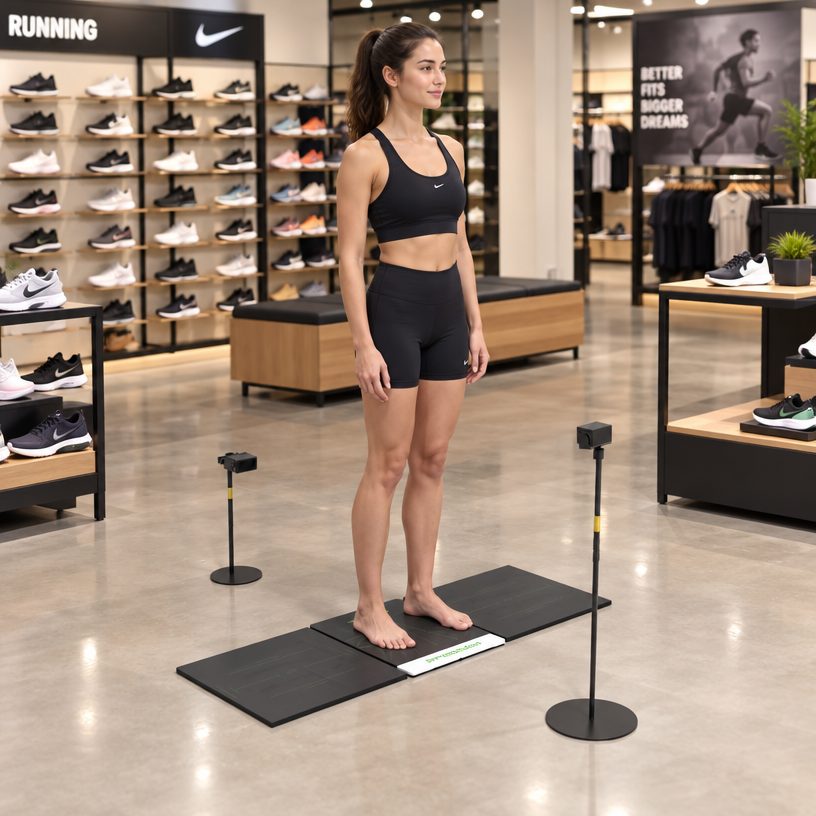
The buyers who should choose the FMP’s mobile configuration are the ones whose customers are somewhere else. A shoe store running in-store customization wants the detect-to-insole loop inside its own floor plan and moved around when the promotion moves; a sports venue or children’s fitness institution screens groups on site; a distributor needs one kit that demonstrates the full loop at a dealer’s premises without a second shipment. For all of these, the record still needs a professional reader and the same capture discipline as a fixed room — mobile changes where the assessment happens, not how it is run. Buyers weighing the trade against a shape-based capture can read our comparison of pressure, camera and 3D-labelled capture methods; the FMP records pressure and alignment, and the customization module reads from that record.
There is also a hybrid case worth naming. Some clinics buy the FMP as their only unit: fixed on weekdays, travelling on outreach weekends. That works when the written capture protocol travels with the kit — footwear off, same stance instructions, same operator where possible — so that a record made at a sports venue can still sit beside one made in the clinic room. Where the protocol does not travel, the two sets of records drift apart and the comparison value is lost, which is a service decision rather than a hardware one. Our article on fitting foot scanning into a shoe shop makes the same point from the retail side.
Frequently asked questions
What exactly travels in the FMP kit?
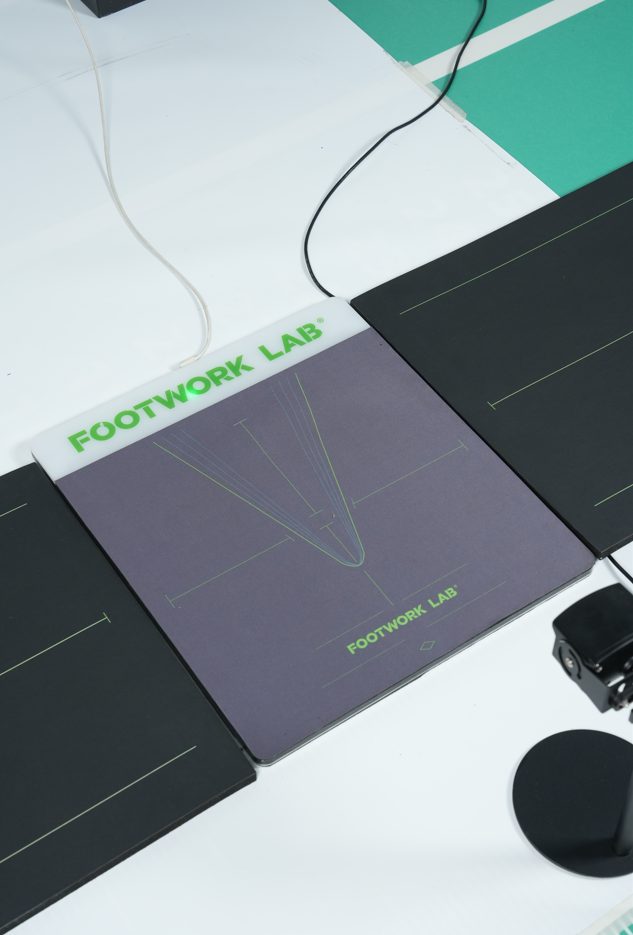
The kit packs the FMovePro host, the pressure plate, a pair of high-precision cameras with a bracket, a hub, the heating box, a floor mat, a portable suitcase, and the shaping pillow set covering adults, children and auxiliary accessories, together with the manuals and installation toolkit. The suitcase is the point: the whole detect-analyse-customize loop fits into a load a single operator can move between a store floor, a venue and a client site without a dedicated vehicle or a dismantled install.
Does the mobile FMP capture the same records as a fixed pressure system?
Yes. The manual lists static, dynamic and balance pressure detection and evaluation plus full-body biomechanical alignment detection as the FMP’s core functions, the same capture states a fixed system runs. What the mobile kit adds is the on-site customization module, so the session can end with biomechanical insoles shaped on the spot instead of a report that goes home in a pocket.
What should we confirm at a venue before the event?
Three things: a power outlet within reach of the host, the cameras and the heating box; a firm, level stretch of floor for the pressure plate and a clear approach path for the walking capture; and a queue plan that keeps bystanders out of the camera frames. Walking the surface and taping down the cable runs during setup prevents most of the problems our support team gets called about after events.
Can children be measured with the same kit?
Yes. The shaping pillow set ships with a children’s pillow as well as the adult pillow and auxiliary accessories, so a mixed public event does not need a second kit. The capture instructions are adjusted for the child and the session is shorter in practice, but the records are produced by the same system and read the same way.
What happens if the heating box or a camera fails during a deployment?
Equipment carries a twelve-month warranty against non-human damage with free parts, and support runs through a dedicated WhatsApp group with our engineers, remote assistance where a screen can be shared, and over-the-air updates for connected units. In practice the most common event-day problems are procedural — a cold heating box, a shifted plate, a cable in the walking line — and a video call resolves them faster than a spare part would.
What is the minimum order for the FMP?
The minimum order for equipment is one unit, and every unit is tested for seven days before dispatch. The software can be customised for a particular report layout or workflow, and that work is quoted separately from the equipment. Full order, warranty and transit terms are listed on our FAQ page.
What we would do next
If you are weighing a fixed install against a travelling kit, write down where your customers actually stand this month: how many arrive at your address, and how many you would have to visit to reach. Send that split with your usual event venues to us through the contact page, and we will tell you which configuration covers the list without buying twice. If an event is already booked, confirm the three venue conditions above in writing with the organiser a week ahead — power, floor, queue plan — and stage the heating box and shaping pillows before the first capture.
If you already run events and the customization step keeps stalling, the fix is usually sequencing rather than hardware: heating box on at intake, blanks staged in queue order, pillows laid out before capture starts. Our engineers can walk your team through the sequence on a call. For the system overview, see the FMP foot pressure & posture detection system page.
This article is intended for professional and educational reference. It is not medical advice. Foot assessment equipment produces measurements and images; clinical interpretation and any decision about care remain the responsibility of a qualified professional. Certification scope is limited to the documentation we hold: European Union certification and ISO quality system certification.