
A performance lab we talked to at the Dubai exhibition ran its first athlete session the week the platform arrived, and its hundredth six weeks later — and the director admitted the two records could not be compared, because nothing except the machine had stayed the same. Different shoes, different warm-ups, a camera moved between sessions, and a report read once and filed. That is the ordinary history of a footscan platform in a busy lab: the hardware captures faithfully from day one, and the operation around it takes a season to settle. This article is about settling it deliberately. It covers why a baseline day belongs on the calendar, what a session on the F5-LAB actually records in walking and running, how many athletes a day a lab can honestly process, what it takes to keep conditions identical across a training block, how the report feeds the conversation between coach and sport scientist, and what installing and supporting the system involves. If you are planning a performance lab rather than a screening corner, the scheduling sections matter more than the specification sheet.
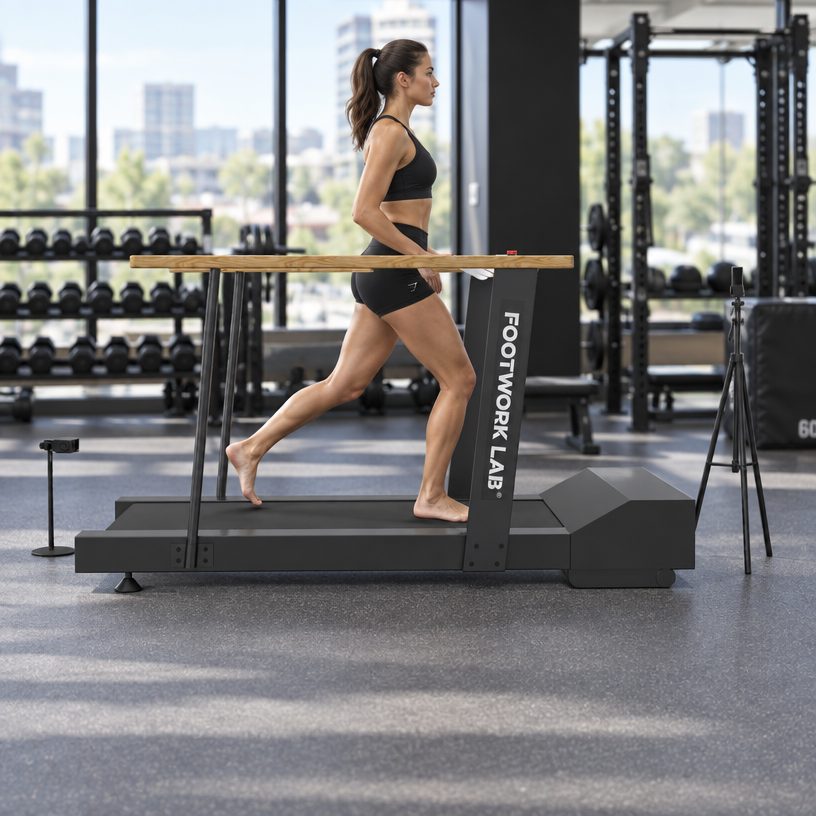
The F5-LAB is a dynamic gait detection system built around a treadmill-form host, with two cameras on stands, a hub and a set of connection cables in the crate. It records gait cycle, motion posture, dynamic pressure and the bipedal butterfly line — the pressure trajectories of both feet drawn over the step — in walking and running modes, combining machine-vision capture with fabric sensing underfoot and AI-assisted report generation. Everything in the paragraphs below depends on one habit the hardware cannot supply: holding the test conditions still.
Why the calendar needs a baseline day
A baseline day is a scheduled session whose only purpose is to record athletes under fixed conditions, so that every later record has something to be read against. It sounds bureaucratic until the first comparison is wanted: a coach asks whether the pre-season work changed anything, and the lab opens a folder of records taken in different shoes, at different times of day, after different warm-ups. The honest answer to the coach’s question is then “we cannot tell”, which is an expensive thing to say after a season of testing.
The baseline day works best at the points the training calendar already marks: the start of a block, the return from a layoff, the transition between surface types. Scheduling it beside those moments gives the record a job — it opens the block, and the retest closes it. Labs that test continuously, whenever an athlete happens to be in, generate plenty of data and very few comparisons, because no two sessions share enough conditions to be read together.
There is also a quieter function. The baseline day is when the operators rehearse. New staff run the session, the prompts are followed aloud, the cameras are checked against their floor marks, and the whole loop from athlete arrival to printed report is walked through with the stakes low. A lab that skips the rehearsal discovers its procedure gaps in front of an athlete, which is the wrong audience for a first attempt.
The baseline file itself deserves a defined shape, decided before the first one is taken. It holds the record from each mode, the conditions page — shoes, warm-up, belt settings, anything that moved — and a short note from the professional who read it, in their own words, about what the session showed. That note is what makes the file usable a season later, when nobody remembers the afternoon it was taken. Labs that store raw records without the reading note end up re-reading everything from scratch at comparison time, and the re-reading is done by someone with less context than the person who originally sat with the athlete.
Ownership matters as much as shape. One named person holds the protocol and the calendar, and their name is on the document, because a rule belonging to “the lab” belongs to nobody the week it is inconvenient. When that person is on leave, the protocol still runs — which is the test of whether the lab built a procedure or a habit.
What a session on the platform holds
The walking mode runs first, and for most athletes it is the more informative half. Walking shows how the foot takes and transfers load when nothing is hurried: the phases of the gait cycle, the motion of the body above it, and the pressure paths under both feet. The running mode then raises the demand, and the record changes character — contact is shorter, forces arrive faster, and the differences between athletes that were hints at walking speed become plain. Both modes belong in a baseline file, because a runner whose running record looks settled may show the interesting behaviour at walking pace, and the reverse.
The two cameras do the work the belt cannot. One follows the motion of the body and limbs, the other frames the lower limbs, and the machine-vision side aligns what is above the foot with what is happening beneath it. The fabric-sensing surface underfoot records the dynamic pressure continuously, so the report can show a whole stride as a sequence rather than a single frame. The bipedal butterfly line draws both feet’ pressure trajectories over the step in one image, which is the picture coaches read fastest: asymmetries, drift and the left-right conversation in a single glance.
Everything lands in one report, assembled with AI-assisted report generation, and everything in it is a record rather than a verdict. The lab’s professional reads the numbers against the athlete, the training phase and the history; the report gives the conversation a shared object. We print that boundary in the report itself — the data is for reference — and the sentence does real work the first time a coach asks the screen for a diagnosis it was never built to give.
Throughput: how many athletes a day is honest
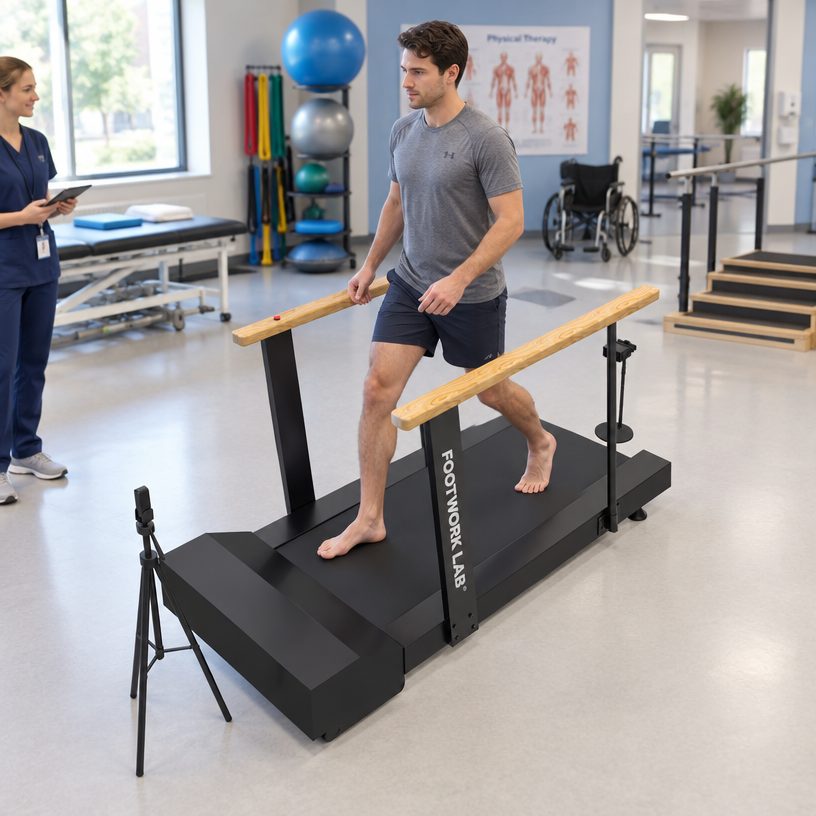
The capture is fast; the interpretation is not. A session block of the kind most labs run — arrival, shoe check, warm-up on the belt, walking passes, running passes, a short review of the report with the athlete — occupies a room and a professional for the better part of half an hour, and the part that must not be rushed is the last item. A lab that schedules capture back to back and defers the reading produces folders nobody opens. The realistic daily number is set by how many interpretation conversations the staff can hold, not by how quickly an athlete can cross a belt.
Screening days change the arithmetic. When the purpose is a first look at many athletes rather than a full file on one, the session shortens: fewer passes, the walking mode emphasised, the reading deferred to a follow-up. A sports venue or an academy running a screening day processes a large group this way and books the athletes whose records warrant a longer session into individual slots afterwards. Both formats are legitimate; the error is running a screening-day pace inside a baseline day and wondering why the records feel thin.
An academy director at the Canton Fair put the constraint plainly: his staff could test a squad in a morning, but the reports piled up unread for weeks. We suggested he schedule the reading, not the testing — fixed interpretation slots after each screening day, with the coach in the room. Throughput, in the end, is a staffing decision wearing a hardware question’s clothes.
Keeping conditions identical across a season
Comparability across a training block rests on a short list, and every item on it is cheap. The same shoes, or the change written down. The same warm-up before the recorded passes, because a cold first pass and a warm fourth pass describe different athletes. The same belt speed settings for each test, written into the protocol rather than remembered. Camera stands returned to their floor marks after every session, and a note in the file whenever anything moved.
Time of day and training load belong on the same list. A record taken the morning after a hard session describes a tired athlete, and comparing it against a fresh baseline produces conclusions about fatigue that the file silently turns into conclusions about the foot. None of this makes the record wrong; it makes the conditions part of the reading, which is why the protocol records them beside the data.
On a support call, our engineers helped a gym-based lab reconcile two running records of the same member that looked nothing alike. The belt settings were identical; the shoes were not — a cushioned pair the first time, a flat pair the second. The file gained a shoe column that afternoon. Nothing in the hardware needed changing, and no update could have caught it; only the written protocol could.
From the report to the training conversation
The report earns its place when it changes what is said in the next planning meeting. The butterfly line gives the coach a picture to argue with; the gait cycle figures give the sport scientist something to put beside the training diary; the posture record gives both a reference for the block ahead. The pattern that works is short and repeated: the professional walks the coach and, where appropriate, the athlete through one page of the report, agrees on what to watch, and sets the retest. Ten focused minutes beat a twenty-page document sent by email.
The boundary stays where it was drawn. We do not write training programmes, and the system does not diagnose; it records gait cycles, motion, pressure and alignment, and the judgement about what those mean for a particular athlete belongs to the qualified professionals in the lab. Where a record shows something the room is not equipped to interpret, the professional refers onward — and the record travels with the referral, which is one of the quiet benefits of having it in writing at all.
Labs that keep the conversation anchored to the report tend to retest, and labs that retest tend to keep the protocol. The three habits feed each other: the report makes the retest meaningful, the retest makes the protocol worth following, and the protocol is what makes the first report worth arguing about.
A word on where the system belongs in the room’s hierarchy of tools. A performance lab usually already carries timers, load cells, video and the coach’s eye; the platform’s contribution is not replacing any of them but putting the pressure and the alignment in the same record as the motion, in a form that survives until the retest. It answers questions the other tools raise but cannot settle — what the foot was doing during the stride the video caught, for instance — and it does so on the treadmill-form host the athletes already know how to use. That familiarity shortens sessions and removes the novelty behaviour some athletes show on unfamiliar equipment, which is one more condition quietly held stable.
What installing and running the system actually involves
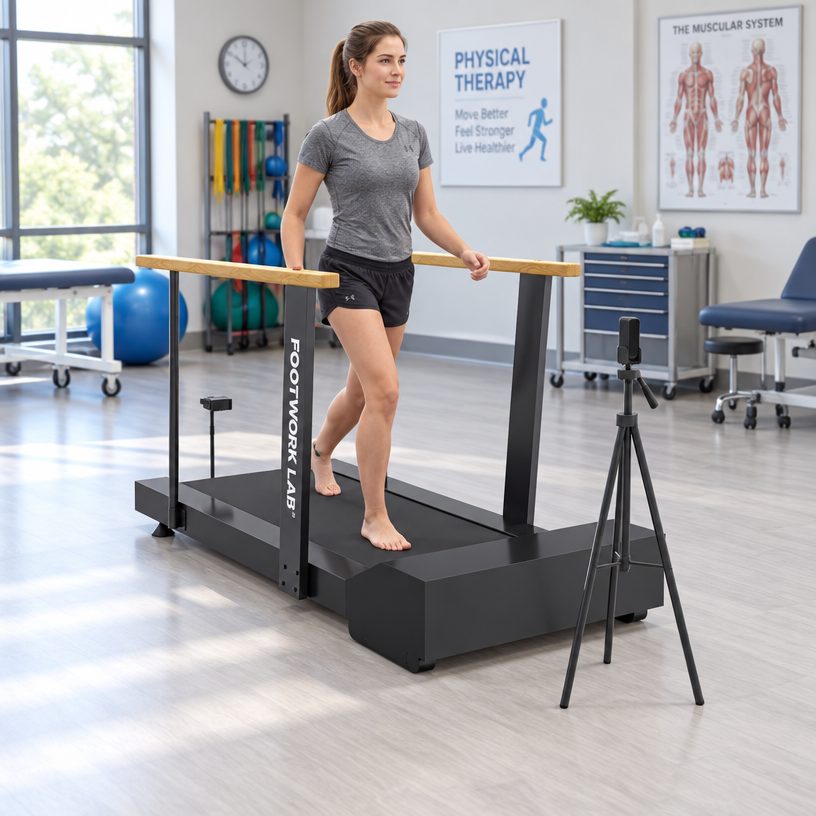
The crate holds a treadmill-form host, two cameras with their brackets and stands, a hub, connection cables, an installation manual, a user manual and an installation toolkit. The room needs a level floor, power and enough clearance around the belt for an athlete to step on and off naturally — a corridor installation defeats the walking mode before the first session. Assembly is a day’s work, and the camera positions should be marked on the floor before the first athlete arrives, for the same reasons they are marked beside a pressure plate.
Support continues after the crate is unpacked: a dedicated support group with our engineers, remote assistance when a question cannot be settled in writing, and over-the-air updates delivered to connected systems. The hardware carries a twelve-month warranty against non-human damage with free parts, and every unit passes a seven-day test at the plant before dispatch. Custom report layouts are quoted separately, which is worth knowing before the lab designs its paperwork around one.
The last item on the installation list is the protocol document, and it is the item we cannot ship. The belt, the cameras and the software hold their part of the comparability bargain from the factory; the shoes, the warm-up, the belt settings and the camera marks hold theirs. A performance lab that writes those four lines down in its first week — as the clinic in the opening paragraph did not — starts accumulating comparable records from the very first baseline day instead of from a season later.
Frequently asked questions
How often should a lab retake its baselines across a season?
At the points the training calendar already marks: the start and end of a training block, the return from a layoff, and any change of surface or shoe regime. Fixed points produce comparisons; continuous opportunistic testing produces folders of records that cannot be read against each other.
Can athletes be tested in their own shoes?
Yes, and for a performance lab that is usually the point — the record should describe the athlete as they train. The rule is that the same pair appears at every test in a comparison, or the change is written into the file, because the shoe is part of the test conditions.
What is the bipedal butterfly line?
It is the drawing of both feet’ pressure trajectories over the step in a single image, produced from the dynamic pressure record. Coaches read it fastest because asymmetries between left and right, and shifts fore and aft, are visible at a glance rather than buried in tables.
Does the platform record walking as well as running?
Yes. The system runs walking and running modes, and most protocols record both in a baseline file. Walking shows the load transfer without time pressure; running compresses the contact and amplifies the differences. The two halves often point at the same question from different ends.
How many athletes can a lab test in a day?
It depends on the reading, not the capture. Full baseline sessions with an interpretation conversation occupy a room and a professional for the better part of half an hour each; screening-day formats shorten the capture and defer the reading to booked follow-up slots. The realistic ceiling is set by how many reports the staff can actually discuss.
What does the machine-vision side add to the pressure record?
It records the motion of the body and the alignment of the lower limbs in the same session as the pressure data, so what happens above the foot can be read against what happens beneath it. The two camera positions are fixed and marked, because a moved camera changes what the images describe.
What does installation and after-sales involve?
The crate includes the treadmill-form host, two cameras with brackets, a hub, cables and the manuals and toolkit, and assembly is a day’s work on a level floor. Support runs through a dedicated group with our engineers, with remote assistance and over-the-air updates; the warranty covers twelve months against non-human damage with free parts, and custom report layouts are quoted separately.
What we would do next
Put the baseline day on the calendar before the next training block starts, and write the four conditions — shoes, warm-up, belt settings, camera marks — onto one page the staff sign. If you want a second pair of eyes on the protocol, send it over; we have read enough of them to spot the gaps. The F5-LAB system page lists the record types and the walk and run modes in the manual’s own wording.
For how the platform sits in the wider category, our article on what a gait analysis system is made of breaks the system into its parts, and running gait analysis platforms covers the running-specific half of the record. Order, warranty and delivery terms sit on the FAQ page, and the contact page reaches the team directly.
This article is intended for professional and educational reference. It is not medical advice. Foot assessment equipment produces measurements and images; clinical interpretation and any decision about care remain the responsibility of a qualified professional. Certification scope is limited to the documentation we hold: European Union certification and ISO quality system certification.