
The list arrived as a spreadsheet with nineteen lines: a second treatment couch, a shortwave unit, a set of resistance bands, a balance pad, a treadmill with a handrail, and a column at the end marked “priority”. The clinic manager had budget for eleven of them. Nowhere on the sheet was there a line for the thing that would tell her, in eight months, whether any of it had worked — a baseline record of how her patients loaded, stood and walked before the programme started. This is a common shape of mistake, and it is not a foolish one: equipment lists are written by people who can see the equipment, and a record is invisible until the day someone asks for a comparison. This article argues for putting the foot record before the next bench purchase, sets out what that baseline should contain, shows how retest points are chosen so they survive a working week, and places insoles where they belong relative to a training programme — as an adjunct to loading, never as its replacement.
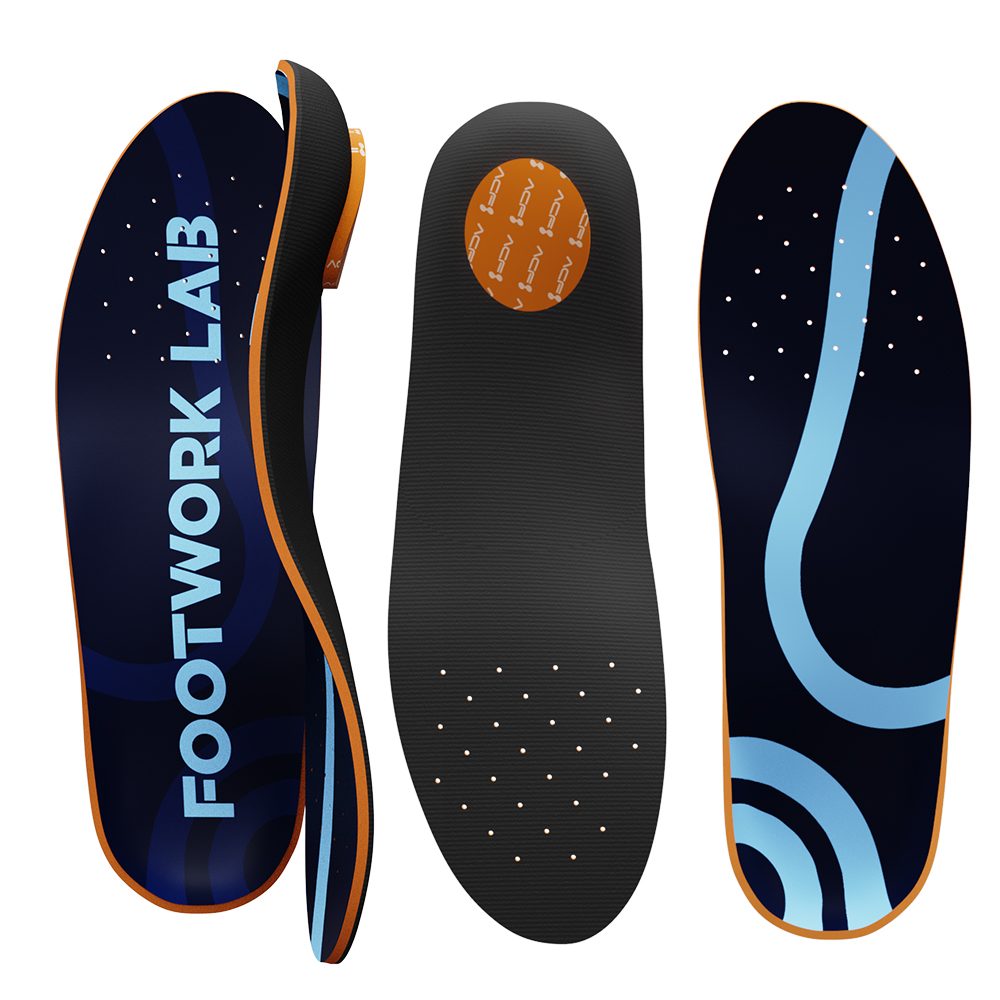
The rehab line in our insole range supports that programme work rather than competing with it: design directions for the flat foot group, pressure relief under a loaded sole, hallux valgus and the plantar fasciitis group, each in four grades of support, anti-torsion, cushioning and starting ability. Which build a patient receives is a clinical decision made with the foot in the room.
A procurement list is a sequence of assumptions
Every line on that spreadsheet assumes something. A second couch assumes a waiting list long enough to fill it. A treadmill assumes a gait programme that someone will run on it. A resistance band set assumes a progression somebody has written down. None of these assumptions is unreasonable, and all of them are unverifiable without a measurement taken before the first session and repeated at intervals afterwards.
Clinics that buy well tend to work in the opposite order from clinics that buy often. They start with the question the clinic is trying to answer — how loading changes across a twelve-week programme, whether a patient returning after an ankle injury is ready for running, whether the orthotics are doing what the prescription intended — and then ask which lines on the list serve that question. The list gets shorter and the purchases get better.
The foot record is unusual among capital items because it makes the other items evaluable. A treadmill without a baseline is a treadmill; a treadmill with a baseline and a retest date is a treatment that can be described to a patient, a referrer and an insurer. The same is true of a balance pad and a set of bands. The record is what converts activity into evidence, and it costs a fraction of the bench beside it.
There is a staffing dimension too. Equipment that nobody has time to use is the most expensive kind. A baseline session that takes twelve minutes and can be run by an assistant is more likely to happen than a full assessment protocol that requires the senior clinician and never gets booked. Design the record around the diary the clinic actually has.
Why the baseline belongs before the next bench
The argument is not that measurement is more important than treatment. It is that a baseline is the only thing on the list that cannot be bought later. Equipment can be added in any quarter; a record of how a patient stood and walked before the programme began can only be taken before it. Clinics that postpone the baseline discover, at the first audit or the first difficult discharge, that the comparison they need does not exist and cannot be reconstructed.
Baselines also change what a clinic can say about itself. A practice that can show a patient’s loading pattern at intake, at the midpoint and at discharge is describing a process rather than an impression. That description is what referrers ask for, what patients repeat, and what makes a second location easier to open — because the protocol, not the personality of one clinician, is what travels.
Money is part of the argument, and it should be stated plainly without quoting figures. A pressure system, a couch and a treadmill are different kinds of purchase: the first produces a file every session, the second produces capacity, the third produces a treatment modality. When a budget is tight, the item that generates a record for every patient is usually the one that improves the clinic’s ability to justify everything else. Buyers who compare line by line on capability often miss that asymmetry.
The exception deserves a sentence. A clinic that already records something — a paper outcome measure, a video, a standardised functional test — is not starting from nothing, and the question becomes whether the existing record captures loading and alignment well enough to answer the questions the clinic asks. If it does, spend the money on the bench. If it does not, the gap will not close by itself.
What a baseline session should contain
Four things belong in the file, and the order matters less than their presence. A standing record: footprint length and width, contact area, the distribution of load across each sole, and the comparison between left and right. A walking record, short if the room is short: the percentages of the contact and flat phases, foot axis angle, peak and mean pressure, the path and speed of the centre of pressure. A balance trial where the room allows it, taken under stated conditions. And the alignment images — lower limb, and posture where the system carries a posture camera.
The fifth element is not a measurement at all: a condition note. Time of day, footwear on arrival, whether the patient had already exercised, what they were asked to do, who ran the session. Without that note, six months of records become a set of numbers with no way to tell whether a difference came from the patient or from the protocol. It takes thirty seconds to write and it is the most-read part of the file in a dispute.
What the file should not contain is a conclusion. The record describes; the clinician interprets. That division is not a formality imposed by manufacturers — it is the reason the record is admissible as evidence of change rather than as an opinion. A file that says “patient overpronates” has replaced a measurement with a label; a file that says “peak pressure under the medial forefoot higher on the left, contact phase longer on the left, barefoot, morning” has kept the measurement intact for whoever reads it next.
Storage and retrieval deserve a moment. A baseline that cannot be found at the retest has the same value as one that was never taken. Files named by patient, date and condition, held in a system that a locum can search, are the difference between a record and an archive. Clinics that run several sites should decide the naming convention once, centrally, before the second site opens.
Setting retest points that survive a clinic week
Retest points are decided at the start or they are not decided at all. The workable pattern for a rehabilitation programme is three: one at intake, one at the midpoint of the block, one at discharge. A fourth, taken a few weeks after discharge, is optional and useful when the question is whether gains held. Each point should be booked into the diary at the same time as the treatment appointments, because a retest that depends on someone remembering will not happen in a busy week.
The conditions at each point should mirror the baseline as closely as the clinic can manage: same time of day where possible, same footwear, same barefoot state, same operator if the clinic has one, same instructions. Perfect control is not available in a treatment room, and it does not need to be — what is needed is that the differences are known and written down, so a later reader can judge what part of a change is attributable to the programme.
Midpoint retests are the ones clinics skip, and they are the ones that change treatment. A patient whose loading has not moved by the middle of a block is information: the programme may need changing, the insole may need adjusting, or the diagnosis may need revisiting. Without the midpoint record, that decision waits until discharge, when it is a post-mortem rather than a correction.
Discharge records have a second life. They are the baseline for whatever comes next — a return to running, a new job on a harder floor, a different shoe. A clinic that hands the discharge record to the patient, in a form they can keep, is handing over the start of the next episode rather than the end of this one.
Ownership is the detail that decides whether any of this happens. One named clinician should hold the retest schedule, with a second trained to run the capture when the first is away, and a rule that a retest is never cancelled to make room for a treatment — moved, but not dropped. Clinics that leave the schedule to whoever is free find that the intake records are excellent and the comparisons are missing, which is the expensive half of the problem to fix later.
Where insoles sit relative to the programme
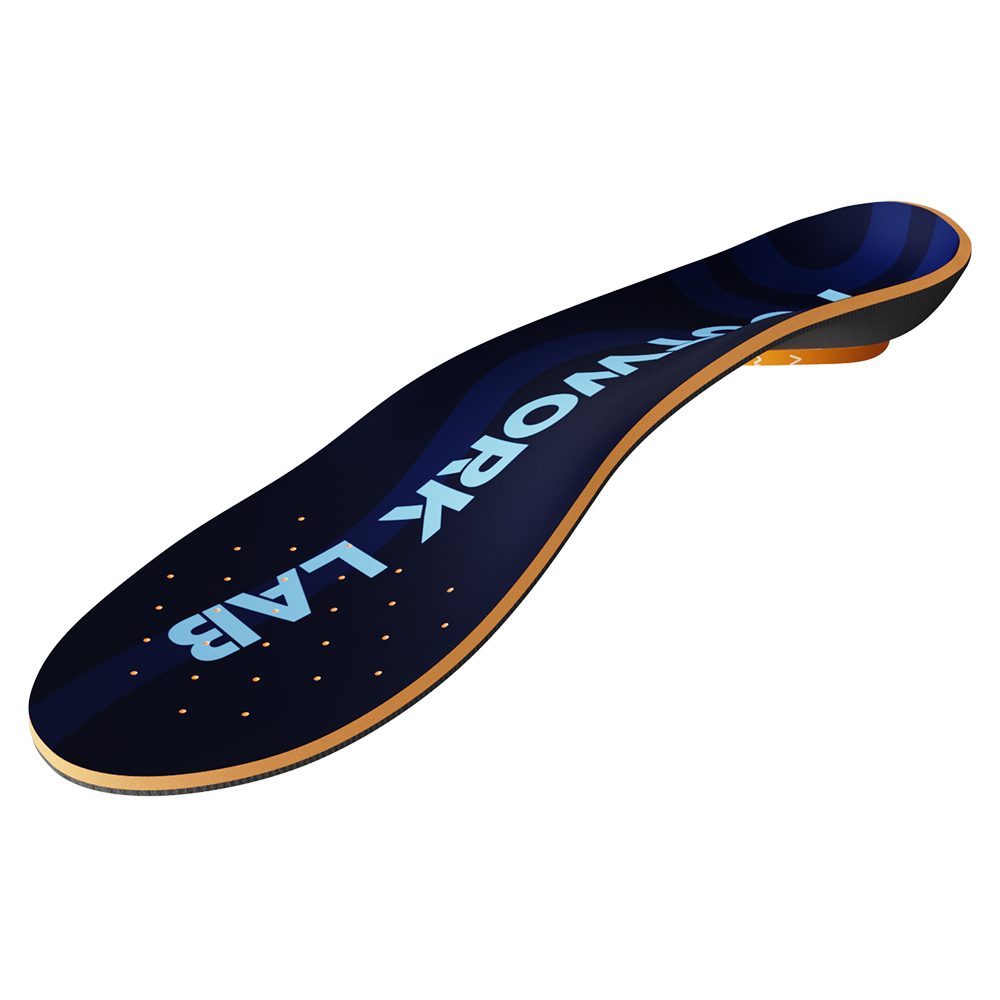
An insole is an adjunct, and the clinics that use it well say so to the patient in the first conversation. It changes where load sits under the sole and how the foot is supported inside a shoe. It does not build strength, it does not create range of motion, and it does not replace the exercises that do. When a patient understands that, the insole supports the programme; when they do not, the insole becomes the programme and the exercises stop.
The four grades give the clinician a vocabulary for the choice. Support describes how much contour the build holds under the arch. Anti-torsion describes how much the board resists a twisting sole. Cushioning describes what sits under the impact points. Starting ability describes how readily the build lets the foot leave the ground. A patient returning from a long rehabilitation may need a different combination at week two than at week twelve, and the grades allow that change to be specified rather than improvised.
The supply side is built for clinics rather than for warehouses. Samples ship within three days, so a build can be tried in a real shoe before a range is committed. The minimum order is two hundred pairs, mixed styles and sizes, which is the quantity at which a treatment room can hold the common sizes and the four grades without tying up capital. Production runs at roughly five hundred to a thousand pairs a day when a clinic group needs to restock across sites.
The relationship between the two purchases should be stated in the clinic’s own protocol: a record at intake, an insole specified against that record and the shoe, a retest at the midpoint to see whether the loading changed as intended, and a decision at discharge about whether the pair continues. That is a loop a clinic can describe to a patient in one sentence, and it is the loop that makes both purchases defensible.
What the equipment list should not promise
An equipment list is a budget document, and budget documents attract language that outruns the equipment. No device on the list treats a condition, and no insole relieves anything by itself; what happens between a patient and a recovery is the programme, the adherence and the clinical judgement, with the equipment contributing measurements and support. Clinics that write the list in that register buy less and use more.
Two limits of ours belong in this section. We do not diagnose, and no configuration of our equipment changes that: reports carry a line stating the data is for reference, and the interpretation belongs to the clinician. And we do not make shape-scanning hardware — a clinic planning to mill devices from a surface model is shopping in a different category, and a pressure record will not substitute for the geometry.
We also do not publish prices in an article like this, because a quotation depends on the configuration, the quantity and the destination. What can be described is the structure of the cost: a device bought once, consumables reordered at a rhythm, and the training time that decides whether either is used. Clinics that plan for all three lines spend less than clinics that plan for the first alone.
The list that works is shorter than the one that arrived. A record before the bench, a retest in the diary, an insole specified against both, and equipment chosen for the questions the clinic actually asks. Everything else on the spreadsheet can wait a quarter, and most of it will look different by then.
Frequently asked questions
Should a foot record come before or after new exercise equipment?
Before, in the sense that the baseline must be taken before the programme the equipment serves. A record can only describe a patient’s starting state once. Equipment added later still has a baseline to compare against; a baseline taken later has nothing behind it.
What belongs in a baseline foot record?
A standing capture, a short walking record, a balance trial where the room allows it, the alignment images, and a condition note covering time of day, footwear, activity before the session, the instructions given and the operator. The note is what makes later comparisons legible.
How many retest points should a programme have?
Three is the workable pattern: intake, midpoint, discharge, with an optional fourth some weeks after discharge to see whether gains held. Book them into the diary when the treatment appointments are booked, or they will not happen.
What has to stay the same between the baseline and the retest?
Time of day where possible, footwear, barefoot state, the operator, the instructions and the plate position. Where a condition cannot be held, record what happened instead. A known difference can be discussed; an unknown one contaminates the comparison.
Do insoles replace exercise in a rehabilitation programme?
No. An insole changes where load sits and how the foot is supported in a shoe. It does not build strength or range of motion. It supports the programme, and clinics that say so at the first conversation get better adherence than those that present it as the treatment.
How are the insole grades chosen?
Against the record, the shoe and the stage of the programme, using four grades: support, anti-torsion, cushioning and starting ability. The combination can change as the programme progresses, which is one reason the build should be specified and written down rather than remembered.
What is the minimum insole order for a clinic?
Two hundred pairs, mixed styles and sizes, which allows a treatment room to hold the common sizes across the grades it uses. Samples ship within three days so a build can be tried in a real shoe before the range is committed.
What we would do next
Take the spreadsheet and add one line above the equipment: baseline record, date, operator, conditions. Then add the retest dates to the diary for the next three programmes the clinic is running. If the dates cannot be found, the list is not the problem and no purchase will fix it.
The insole range page sets out the three series and the four grades in the factory’s wording, which is the vocabulary a clinic protocol should use. Send the protocol through the contact page if you want a second opinion on the retest points; we have read enough of them to know which ones survive a working week.
This article is intended for professional and educational reference. It is not medical advice. Foot assessment equipment produces measurements and images; clinical interpretation and any decision about care remain the responsibility of a qualified professional. Certification scope is limited to the documentation we hold: European Union certification and ISO quality system certification.