
The pair came back in the post two weeks after delivery, folded into the original box, with a note that said the shoe would not close. Nothing was wrong with the build. The scan was good, the cast matched the foot, the finishing bench had done its usual work. What was wrong happened before the order ever reached the workshop: the shoe had a glued-in footbed sitting on a shallow base, and nobody had asked. Half the work of fitting a pair into a shoe is not making the pair. It is deciding, at the counter, whether the shoe has room at all, and a buyer searching for an insole for shoes without a removable footbed is really asking where that decision lives. This article walks through the two builds of shoe and what each one gives the fitter, when the original footbed should come out and when it should stay, the three honest ways to handle a shoe with no space, the shoes we would simply advise against, and the checks a customer can run in the shop before anyone promises anything.
Two builds of shoe, two different starting points
Shoes divide, for our purposes, into two builds, and the division is visible from the inside. The first build has a removable footbed: lift the heel edge, pull, and the footbed slides out, leaving a shaped cavity that was designed to hold it. The second build has a footbed that is glued, stitched through, or moulded into the base, or no distinct footbed at all, just a lining over the midsole. Same shoe from the street. Completely different starting point once a custom pair enters the conversation.
The removable build is the easier conversation because the space already exists. The manufacturer designed a cavity for an insert, the cavity has depth and a heel cup, and the custom pair takes the cavity’s place. Volume has been budgeted by the shoe factory itself. The fitter is swapping one occupant for another, and if the outgoing footbed came out easily, the incoming one has a reasonable chance of settling without fighting the upper, the closure or the customer’s patience.
The fixed build is the harder conversation, and it deserves to be treated as a design problem rather than a sales problem. Whatever goes in has to share volume with the structure that is already there. The foot sits higher, the upper has less depth above it, the closure has less travel left in it. Sometimes the arithmetic works and sometimes it does not, and the fitter who cannot tell the difference beforehand is the fitter who meets the customer’s disappointment at the second visit instead of at the counter.
Neither build is right or wrong as a shoe. A glued footbed is often a deliberate choice by the shoe factory, made for reasons of structure or cost or both, and no amount of enthusiasm at the fitting bench changes what the shoe was built to hold. The honest question is never whether the shoe is good. It is whether this particular shoe and this particular pair belong together.
What a removable footbed actually gives you
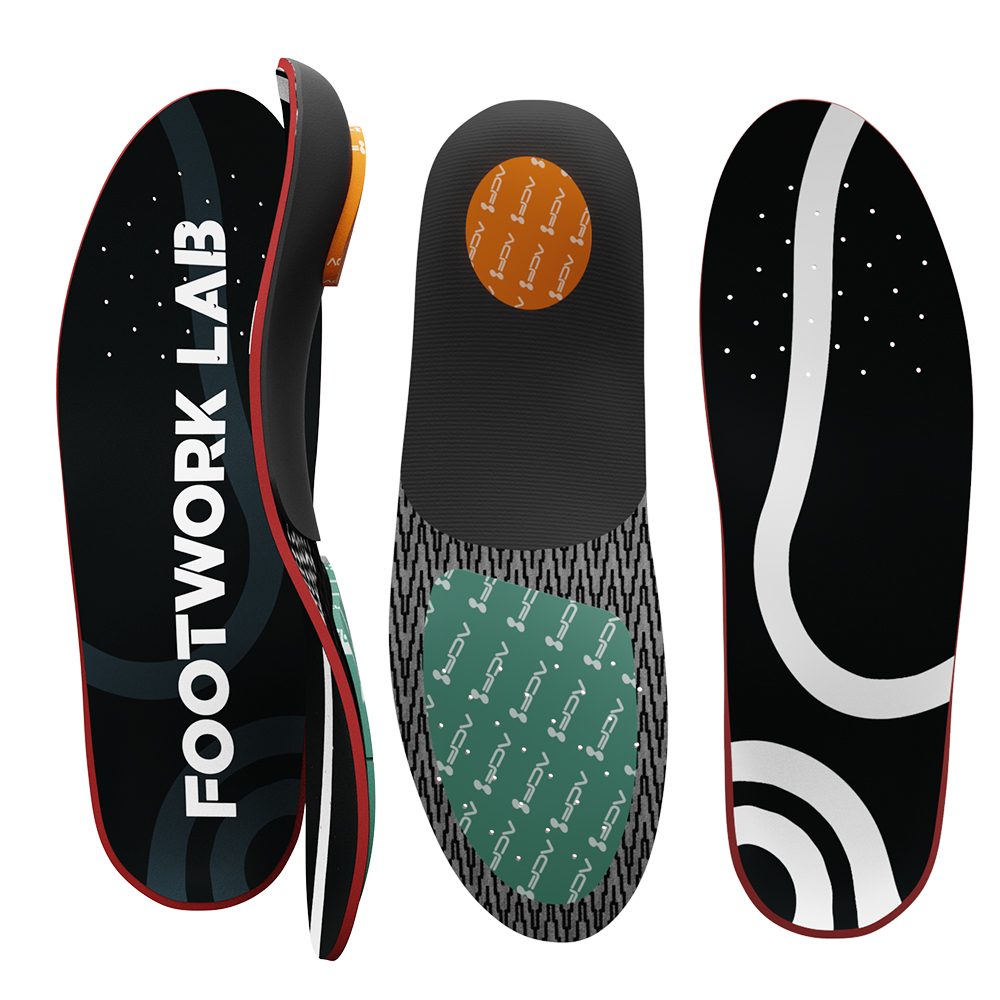
The first thing a removable footbed gives is information, before it gives anything else. Pull it out and hold it against the customer’s foot and you can see, in a minute, how far the shoe factory went: how deep the heel cup runs, whether there is any arch shaping, how thick the cushioning is under the ball. The outgoing footbed is a mould of the volume available, made by the people who built the shoe, and it answers questions that a spec sheet on a website will not.
The second thing it gives is a thickness reference. Lay the custom pair beside the outgoing footbed on the bench and the difference is visible without any measuring tools. If the pair is markedly thicker through the arch or the heel, it will ride the foot higher in the shoe, and the customer will feel that in the first hour as tightness across the instep, long before any fitting benefit has a chance to matter. This comparison takes seconds and prevents the most common return conversation in the trade.
The third thing it gives is the cavity itself. With the footbed out, the shoe shows its true interior: the depth over the toes, the width at the ball, whether the base under the lining is flat or contoured. The custom pair was built to the foot, not to this shoe, and the gap between the two is exactly what the cavity reveals. A fitter who works from the cavity rather than from hope can tell the customer, at the counter, what will fit comfortably and what will be a compromise.
There is a fourth thing worth naming, and it is the habit the removable footbed creates. A customer who has once seen the original footbed lifted out understands, for the rest of their shoe-buying life, that shoes differ on the inside. The check becomes portable. They look at a new shoe differently, they ask the shop assistant a different question, and half of our best referral conversations start with a customer who learned to pull the footbed out and look underneath.
When the footbed is glued or the shoe is built low
The glued or stitched footbed changes the conversation from swapping occupants to sharing space. Whatever the custom pair adds, the foot rises by roughly the same amount, because nothing leaves. The instep has less clearance, the closure has less adjustment left, and the heel sits closer to the collar. Some shoes absorb this easily: a roomy walking shoe with a deep upper takes a modest pair without the customer noticing. Others do not: a shallow court shoe with a firm upper has no slack anywhere, and the same pair that vanished into the walking shoe will fight the closure in the court shoe within an afternoon.
Build height matters as much as glue. A shoe built low over the instep, the kind common in sleek casual and formal lines, has already spent its volume on the outside silhouette. The designers decided how the shoe looks from the street, and the interior is what that decision left behind. There is nothing wrong with the shoe. But the fitting conversation in a low-built shoe is a conversation about giving things up, and it goes better when everyone knows that from the first minute.
The heel cup is where fixed builds usually object first. A glued footbed often has no cup at all, and the pair’s own cup, however modest, stacks on top of the flat base. The customer feels it as pressure at the back of the shoe before they feel any benefit anywhere else. Fitters who have worked through this learn to read the back of a shoe the way they read the toe: press the lining, look at the counter, and estimate honestly what a cup will add before the order is written.
None of this makes the fixed build a lost cause. It makes it a negotiation with a strict counterparty, and the counterparty is the shoe. The pair cannot be argued thinner on the customer’s behalf; it is what the foot needed. The shoe cannot be stretched open without a cobbler and a request. The only free variable in the conversation is the decision about whether to proceed, and that decision belongs at the counter, in the first five minutes, not at the second fitting.
Whether to take the original footbed out
Where the footbed can be removed, the next question is whether it should be. The default answer in most fitting rooms is yes: the original footbed comes out, the pair takes its place, and the volume arithmetic works the way the shoe factory intended. Two inserts stacked are almost always too much. The customer rides high, the closure runs out of travel, and the stack also slides against itself, which no fitter wants inside a shoe they have put their name on.
But the default has exceptions worth knowing. Some original footbeds are not flat pads but structural parts of the shoe: a moulded cup glued at three points, a base board that gives the sole its shape, a wedge the whole midsole was built around. Pull that out and the shoe loses something it was designed around, and the customer feels it underfoot even with the new pair in place. Where the outgoing footbed is structural, the honest options are to match the pair’s thickness to the footbed’s rather than to the cavity’s, or to accept that this shoe is not the right host.
There is also the customer who will not remove it. Some people pull the footbed out, see the raw cavity, and lose confidence in the shoe; others simply want their own footbed back for the days they wear the shoe without the pair. A fitter can note this preference on the order, because a pair that lives on top of a footbed has different thickness requirements from one that replaces it, and the workshop can only honour the difference if the order says so.
Whatever is decided, the decision travels with the pair in writing. The service record that says which shoe the pair was built for, whether the original footbed stays or goes, and what the customer agreed to at the counter, is the document that settles every later disagreement quietly. Rooms that keep that note answer return questions in a minute. Rooms that do not, answer them twice.
Three ways to handle a shoe without room
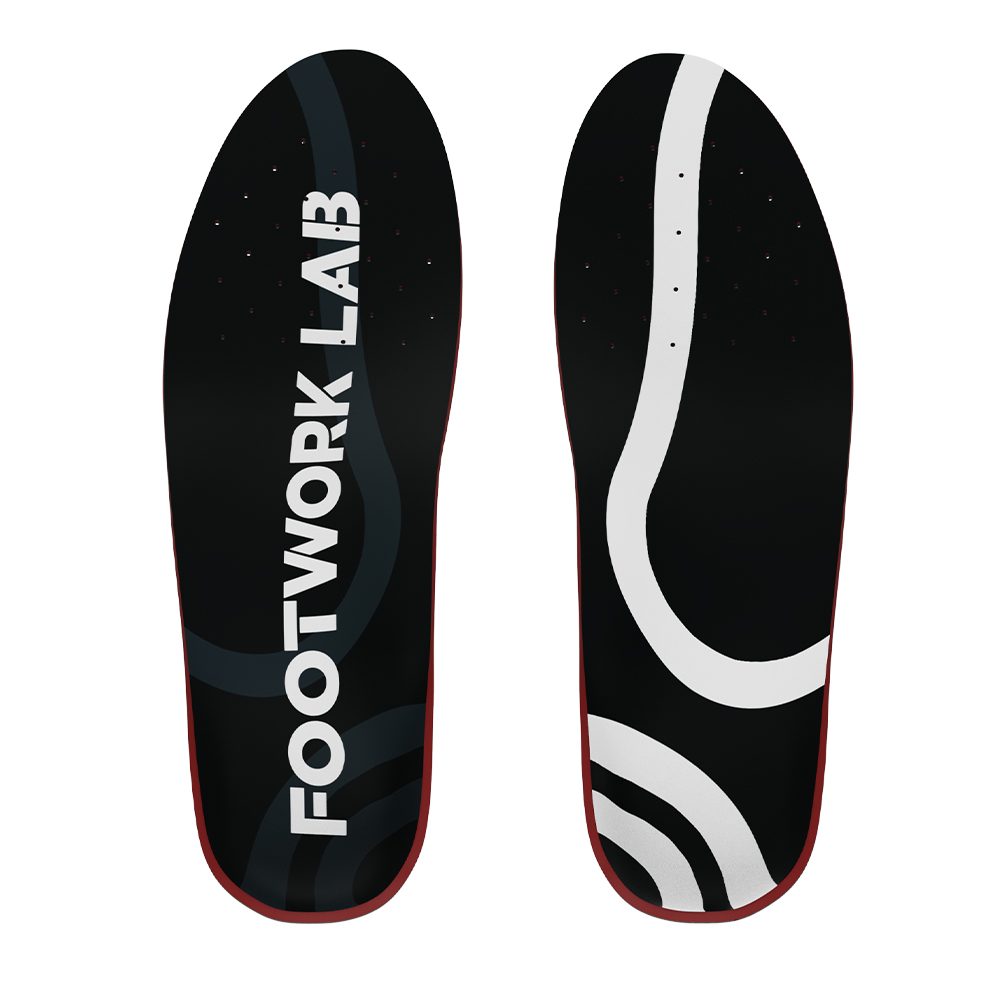
The first way is the thinner build. Where the shoe cannot give volume, the pair can give up some of its own: a thinner shell through the arch, a lower profile at the heel cup, less material everywhere the foot does not specifically need it. This is a real option and a real trade. The pair fits the shoe and gives up some of what the foot scan suggested, and the customer should hear both halves of that sentence before choosing. A thinner build that gets worn every day beats an ideal build that lives in a drawer, but the choice is the customer’s, made with the fitter’s arithmetic on the table.
The second way is to shape the pair to the shoe rather than the reverse. Some workshops will take the shoe’s own cavity into account at production: a narrower heel cup, a profile trimmed to the base the shoe actually has, a form that follows the outgoing footbed where the outgoing footbed is staying. This costs coordination at the order stage, and it works best when the fitter sends the workshop what the workshop needs: the shoe, or the outgoing footbed, or at minimum a clear description of the cavity the pair has to live in.
The third way is the honest no. Some shoes and some feet do not leave room for a pair, and saying so at the counter is a service, not a lost sale. The customer who is told today that their shallow dress shoes will not take a pair keeps their trust for the day a suitable shoe comes along. The customer who is sold a compromise that fights the closure every morning loses trust on the second wearing, and takes the story with them. We would rather our partners made the third call well than the first two badly.
Which of the three applies is decided by two measurements anyone can make at the counter: what the shoe has, and what the foot needs. When the second is larger than the first, the thinner build or the shaped build can close the gap. When the gap is wide, the honest no is the only professional answer, and the shop that gives it is the shop the customer comes back to with a different shoe.
The shoes we would advise against
Shallow dress construction sits at the top of the list. The sleek formal shoe spends its interior volume on the silhouette, has a lining glued close to the base, and leaves the foot sitting exactly where the designer put it. A pair in that shoe pushes the instep into the closure and the toes towards the front, and the customer feels it in the first hour. Most fitting rooms have learned to offer the thinner build for such shoes or to say no, and the ones that say no without apology keep those customers for the shoes that do work.
Footwear with an integrated structural footbed is the second category. Some walking and hiking lines build their footbed into the chassis of the shoe, with the midsole contoured around it and the upper fitted to the result. Lifting anything out is not possible, and stacking on top changes the geometry the shoe factory tuned. The safer conversation in that shop is about the shoes where a pair does fit, or about a rebuild for the seasons when the customer’s needs have genuinely changed, rather than a compromise stacked into a shoe that was not built for one.
Tight-fitting athletic shoes with performance uppers are the third. A close-fitting running or court shoe locks the foot to the shoe deliberately, and the same snugness that helps the foot and shoe move as one leaves no slack for an added layer. Where a customer wears such shoes for sport, the realistic options are a very thin build with modest aims, or a different pair of shoes for the days that matter, and we would rather our partners said that plainly than sold a squeeze.
What unites the three is not difficulty but arithmetic. In each case, the space the shoe offers is smaller than what the foot needs, and no finishing technique at the bench closes a gap that was decided at the design stage. The counter conversation that names the gap early is shorter, kinder and cheaper than any of the alternatives, and it is the conversation that keeps a fitting service credible.
How a customer checks at the counter
The first check costs nothing and takes ten seconds: try to lift the heel edge of the footbed. If it lifts and slides out, the shoe has a designed cavity and the conversation starts from a good place. If it will not lift, or lifts with tearing resistance, the shoe is in the second category and everything that follows should be said with that on the table. Customers can run this check themselves in any shop, on any shoe, before the fitting conversation is even proposed.
The second check is the depth look. With the footbed out, or with a glance under the lining where it cannot come out, look at how much vertical space sits above where the foot will be. One practical proxy: with the customer’s own foot in the shoe and laced normally, is there visible slack over the instep? A shoe that fits snug with nothing added has spent its volume already, and a pair on top of that fit has nowhere to go but into the closure.
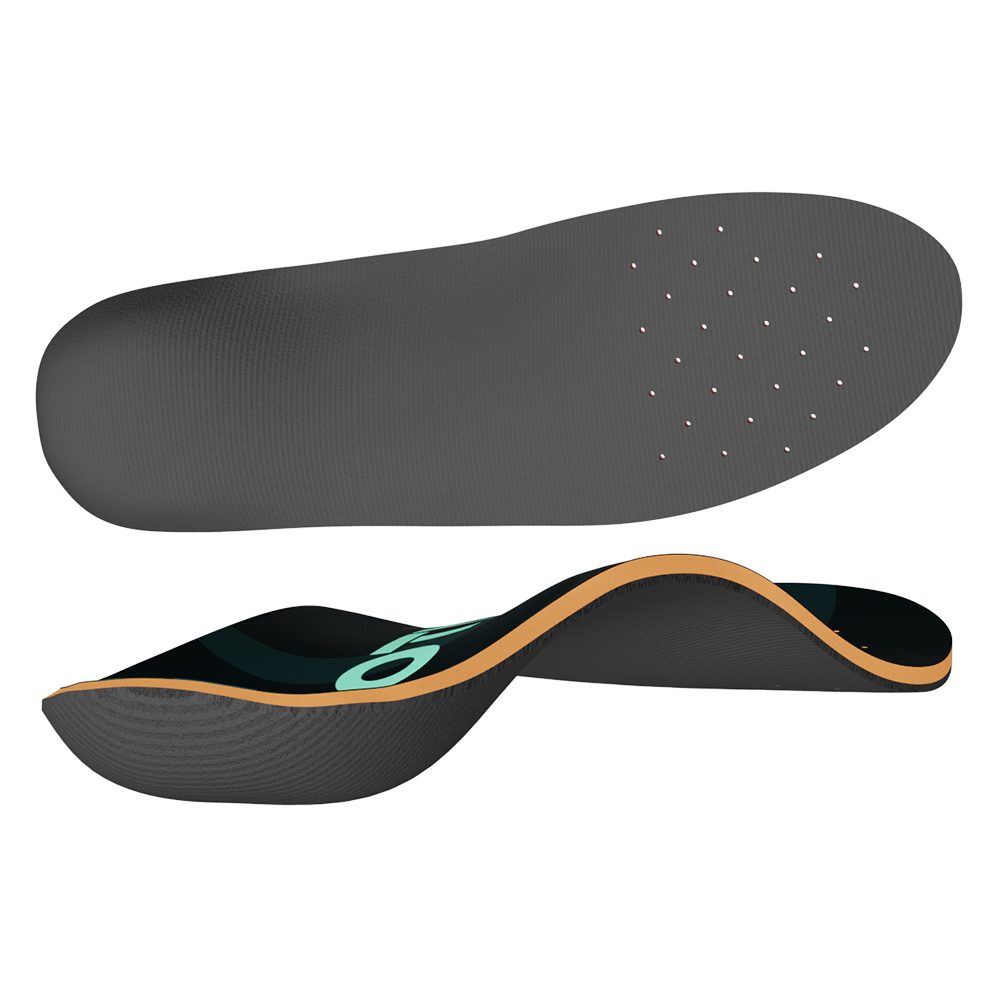
The third check is the thickness comparison on the bench. Any fitter can lay a finished pair beside the outgoing footbed and see the difference in silhouette. Where the pair is clearly thicker through the arch or the heel, the customer should be shown, not told, because the visual settles questions that words reopen. The pair that will replace a thick cushioned footbed with a firm build rides the foot differently, and the customer who sees the two side by side understands the change before wearing it.
None of these checks replaces the foot record or the fitting appointment. They are counter tools: quick, honest, and available before anyone writes an order. The shops that teach them to every member of staff, including the Saturday cover, get fewer surprise returns and more of the conversations that matter, which is the whole trade-off, and a good one.
Frequently asked questions
Can a custom pair go into a shoe with a glued-in footbed?
Sometimes, depending on the volume left above the foot. Nothing comes out, so the foot rides higher by the thickness of the pair, and the closure and upper have to absorb that. A roomy shoe with a deep upper can take it; a shallow, close-fitting shoe usually cannot. The check at the counter is the depth of the instep with the shoe worn normally.
Should the original footbed always be removed when a custom pair goes in?
Usually yes, because two inserts stacked make the foot ride too high and slide against each other. The exceptions are structural footbeds that the shoe was built around, and customers who want the original back for other days. Either way the decision should be written on the order so the workshop builds to the right thickness.
What if my shoe’s footbed will not come out?
Treat the shoe as a fixed-volume space. Look at the instep slack with the shoe worn, press the lining to feel what sits underneath, and ask the fitter for an honest read. The realistic options are a thinner build, a pair shaped to the shoe’s own cavity, or a decision that this shoe is not the right host.
Which shoes should not take a custom pair at all?
Shallow dress construction, footwear with a footbed integrated into the structure, and close-fitting performance shoes with snug uppers are the three categories where the space is usually smaller than what the foot needs. A good fitting room says so plainly and helps the customer find a shoe that does work instead of selling a squeeze.
How thick can the pair be for a shoe without much room?
Thickness is decided by what the foot needs and what the shoe offers, and the answer differs from foot to foot and shoe to shoe. The practical method is a bench comparison: the finished pair laid beside the outgoing footbed, with the customer shown the difference before wearing. We deliberately avoid quoting fixed figures, because the useful answer is the comparison, not the number.
Will a thinner build still do the job?
A thinner build trades some of what the foot scan suggested for the ability to live inside the shoe, and whether that trade is acceptable is the customer’s decision, made with the fitter’s explanation on the table. For many customers a build that is worn every day is worth more than an ideal build that never leaves the drawer, but the trade should be named, not assumed.
Can the workshop build the pair to match a specific shoe?
Yes, when the order carries the information the workshop needs: the shoe itself, the outgoing footbed, or a clear description of the cavity the pair must live in. A pair shaped to the shoe’s own base and closure behaves better than a pair trimmed down after the fact, and the coordination happens at the order stage, not at the bench.
What we would do next
Run the lift test on the five shoe models you sell most often and write the answer next to each one on the display card, so the counter conversation starts with facts instead of guesses. Then put the bench comparison, the outgoing footbed beside the pair, into your standard fitting routine. Thin insoles for dress shoes, and what has to be given up covers the first honest option in detail, insoles inside safety boots, where the toe space is fixed covers a host shoe with its own rules, and choosing insole materials between mesh, foam and board explains why thickness is a material decision before it is a fitting one. The insole categories page lists the builds we produce in our own terms, and the FAQ page carries the answers we give most often by message.
This article is intended for professional and educational reference. It is not medical advice. Foot assessment equipment produces measurements and images; clinical interpretation and any decision about care remain the responsibility of a qualified professional. Certification scope is limited to the documentation we hold: European Union certification and ISO quality system certification.