
The shoes come in a bag, and they have things to say. A customer sets a worn pair of trainers on the bench, heels sanded down at an angle, one toe box scuffed grey, and asks whether the way they wear out explains the way they feel at the end of a day. The question arrives at clinics, physiotherapy studios and shoe shops every week, and it deserves better than a glance at the heels and a nod.
Shoe wear is the longest continuous record a foot ever produces: months of real walking on real ground, written on the outsole. A pressure record is the opposite kind of evidence, a short, careful sample of today. Set the two side by side and each checks the other; read either one alone and you only have half the story. This article is for professionals who want a working method: what wear can and cannot tell you, how to handle the moments when the two sources agree or clash, and a bench routine for writing it all down.
The trainers on the bench
Begin with what the object itself represents. A pair of shoes worn daily for a season carries more steps than any assessment room will ever capture: thousands of heel strikes, hundreds of kilometres of pavement, rain included, in the shoes the customer actually chose. That record has three qualities a clinic record cannot have. It is long, so ordinary days outweigh unusual ones. It is unobserved, so nobody walked politely for it. And it is cheap, in the sense that the customer brings it with them and it costs the session nothing to read.
It also has limits worth stating before anything else. Wear shows where the shoe touched the ground and how the outer materials coped, not how the foot inside felt, and not what the foot did above the sole line. Two people can produce similar outsole wear from different walking habits, and the same person can produce different wear in different shoes. The outsole is a record of the shoe’s life, not a verdict about the foot, and anyone who reads it as one is skipping the measurement half of the conversation.
So the habit this article proposes is simple: when a customer brings worn shoes, treat the bench as a second station in the session, equal in standing to the platform. Read the shoes with the same care you would give a record, write down what they show, and keep the two documents together in the file. The rest of this article is about how to do that reading and what to do when the two stories argue. Customers take the bench seriously the moment the room does, and the practice of being asked to bring worn shoes tends to spread by word of mouth among the very customers whose files benefit most.
What outsole wear can and cannot tell you
The reading starts at the heel, where most wear concentrates. Note where the deepest wear sits: centred, worn toward the inner edge, or worn toward the outer edge, and whether the two heels match. Then move forward: does wear continue under the forefoot, and if so under which metatarsal region and which toe? An outsole that ends its story at the heel tells a different walking story from one that carries load all the way through to the big toe side. Finish at the toe box and upper: scuffing there says something about ground contact and dragging that the sole alone will not.
Then read the wear the way a record is read, for pattern rather than for drama. A slight difference between the two heels is ordinary; people are not symmetrical and shoes are not either. What deserves a note is consistency: the same region worn on both shoes, wear concentrated in one small spot rather than spread along an edge, or a pattern the customer cannot connect to any habit they recognise. Those are observations to write down, not conclusions to announce. What a wear pattern means, if it means anything clinically, is interpretation work for a qualified professional.
Be equally clear about the classic temptation: reading a worn inner heel edge as a diagnosis by itself. The edge wear is a real observation, and it may line up with what a pressure record shows, or it may reflect years of walking on cambered pavements, an old pair of shoes, or simply how this person turns corners. The outsole raises questions; it answers them only when a current measurement sits beside it. That is the whole reason the two documents belong in one file instead of in two conversations.
Wear is history, the record is today
The deepest difference between the two sources is time. The outsole is a diary written over months, the pressure record is a snapshot taken in minutes. Most of the time the diary is the fairer witness to ordinary walking, because no one performs for their own shoes. But the diary is also slow to update: it includes every walk since the shoes were new, including the job that has since changed, the knee that has since been operated on, or the three months of a different commute. A person’s walking today is not obligated to match their shoes’ biography.
That is why the session should ask the shoes to identify themselves before being read. How old are they, roughly? How many days a week were they worn? Are these the shoes the complaint happens in, or a retired pair brought along as evidence? Is there a newer pair at home, and if so, why were these chosen for the visit? None of this is small talk. A shoe worn daily for two months and a shoe worn occasionally for two years produce wear of completely different meaning, and the bench reading changes accordingly.
When the shoes turn out to be recent, or barely worn, the pressure record gains importance, because the outsole has had too little time to write anything reliable. When the shoes are genuinely old and consistently worn, the outsole earns real authority as a record of habitual walking, and a record that disagrees with it deserves a second capture before anyone concludes anything. Our article on when each foot needs its own build (/news/6430//) describes a related discipline: comparing left against right before deciding anything applies to outsoles exactly as it applies to records. The comparison costs a minute at the bench and prevents a season of misread shoes.
When the two stories agree
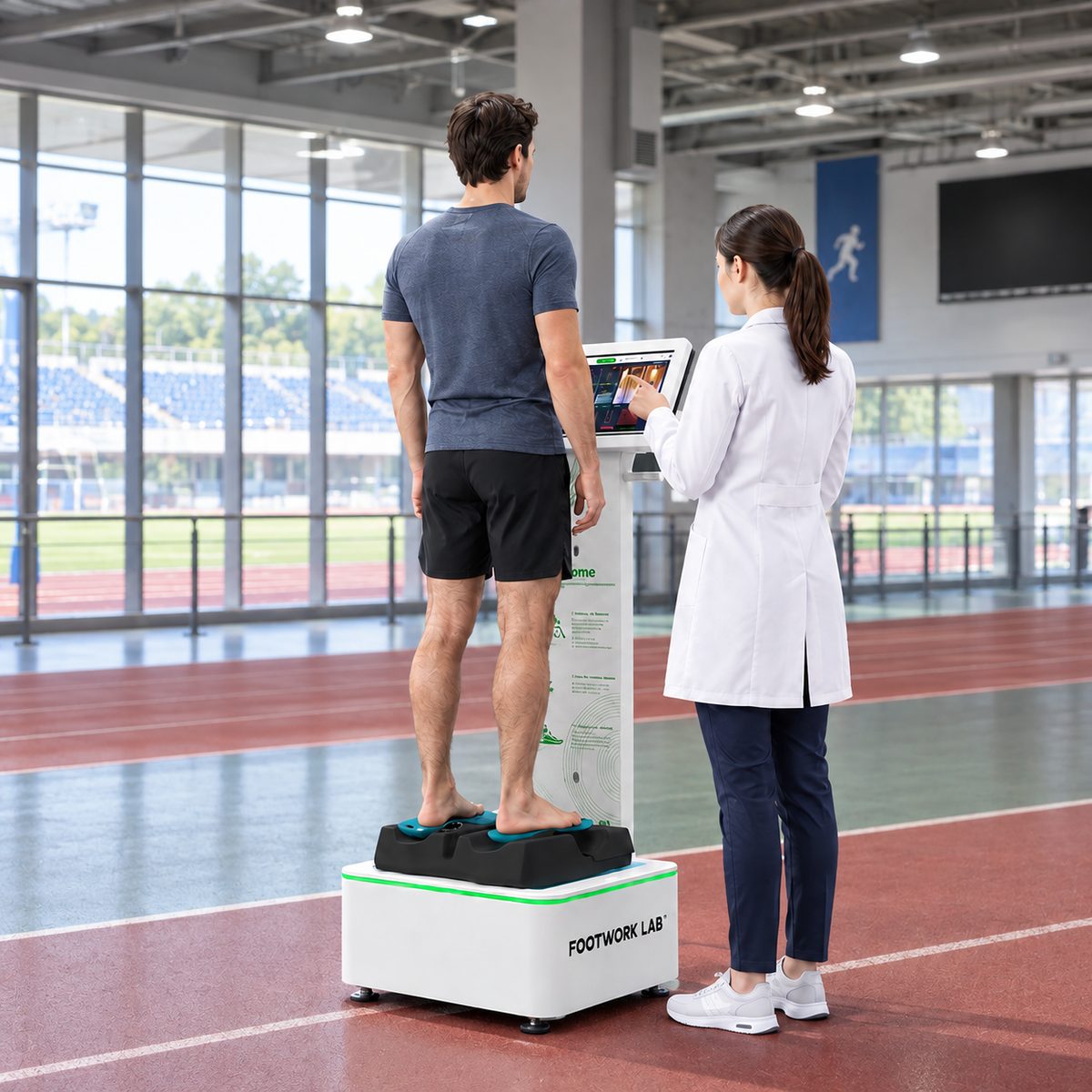
Start with the satisfying case, because it is the common one. The outsole shows heel wear concentrated in one region, the pressure record, captured on a foot, ankle and posture system like the one on our X5 page, shows load arriving in the same region, and the customer’s complaint sits in the same place again. Three independent documents, three different timescales, one story. When that happens, the session has earned something valuable: confidence. The professional interpreting the file now knows the pattern is not an artefact of one morning on a platform, and the customer can see the agreement with their own eyes, which does more for engagement than any explanation.
Agreement also upgrades the record’s usefulness for later. A file where today’s record matches a season of outsole history is a file that next year’s comparison can build on; a follow-up session that shows the record has shifted while the wear pattern has stayed the same now means something specific, because the baseline was confirmed from two directions. That is the quiet argument for writing the bench reading into the file rather than treating it as conversation: agreement documented today becomes the interpretation backbone of every later document.
One practical note on presenting agreement to the customer. Keep it descriptive: the wear sits here, the record shows load there, the complaint lives in the same region. Do not let agreement drift into a diagnosis by side effect, and do not let the customer leave with the idea that three matching observations are a treatment plan. The agreement is a measurement finding, and what flows from it is exactly the kind of decision the disclaimer at the end of this article reserves for qualified professionals. Say that once, plainly, and the file stays clean.
When the two stories disagree
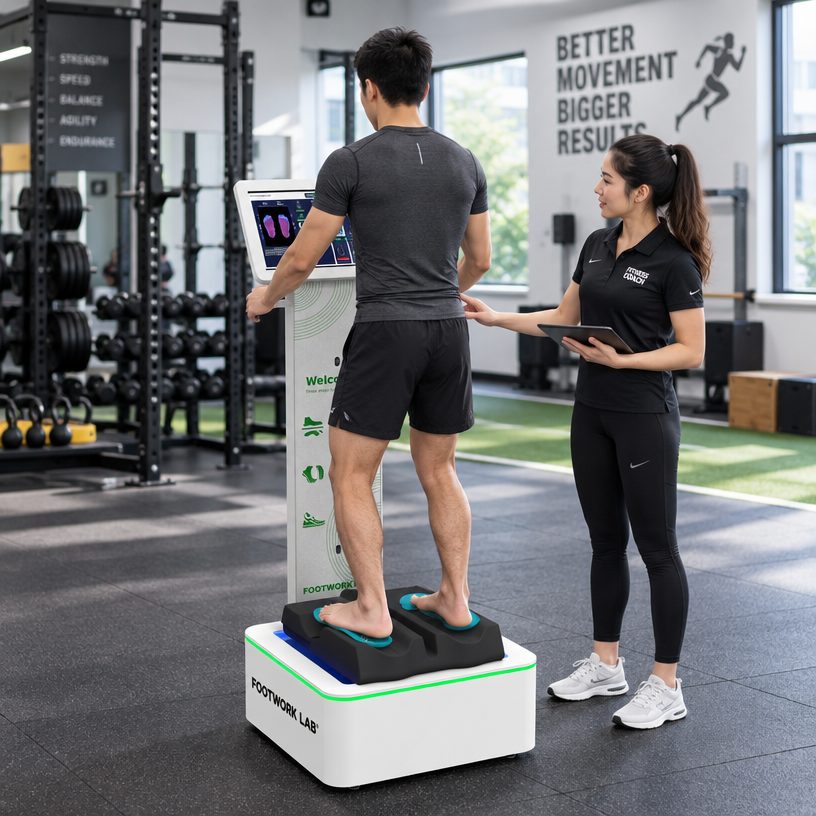
Now the more interesting case, and the one that separates a careful room from a casual one. The outsole shows one pattern, the record shows another. Before deciding that either document is wrong, work through the ordinary explanations, because most disagreements are ordinary. The shoes are old and the pattern is a summary of a different working life. The shoes are new and have not written enough yet. The record was captured in conditions the shoes never see, such as barefoot on a flat floor for a customer whose complaint lives on slopes. The wear is from one activity, the record from another, and neither is lying.
When the ordinary explanations run out, a disagreement earns a second capture rather than a conclusion. Repeat the record under conditions as close to the shoes’ daily life as the room allows, the article on keeping conditions fair across a day of records covers how much that matters, and see whether the second pass moves toward the outsole or holds its ground. A record confirmed by repetition that still disagrees with the outsole is a genuine finding: today’s walking and the shoes’ history have diverged, and that divergence is itself information a professional may care about. It deserves to be written down as exactly that, not smoothed over.
What the room must not do in a disagreement is quietly pick a winner. Deleting the record because the heel wedge looked convincing, or dismissing the outsole because the platform is the newer instrument, both throw away one of the two witnesses for the comfort of a tidy file. Keep both documents, label the disagreement, and let the qualified professional who interprets the file see the tension rather than a verdict. Rooms that handle disagreement this way build files that other professionals trust on arrival.
The bench routine: four lines per pair
The method compresses into a bench routine that takes five minutes and works for any footwear a customer carries in. Line one: age and usage. How old, worn how often, and are these the shoes the complaint happens in. Line two: wear location. Where the deepest wear sits at each heel, what continues under the forefoot, and what the upper and toe box add. Line three: symmetry. Do the two shoes tell the same story, and does the difference between them, if any, match the difference between the two feet elsewhere in the file.
Line four: agreement. Does the wear pattern line up with today’s record, disagree with it, or simply describe something the record cannot see, such as wear from a second pair of shoes or a sport the session did not capture. Those four lines fit on the same sheet as the capture notes, and they turn the bench from a courtesy into a station. The routine also disciplines the reader: anyone who has to write the fourth line honestly cannot skip the comparison step, which is where casual readings usually go wrong.
A standing desk aid sharpens the routine further. Keep a simple side-view check at the bench, because the outsole explains where the shoe met the ground and the side view shows how the shoe has deformed above it: a collapsed heel counter, a stretched upper, a sole that leans under no load at all. Our article on what a pressure map cannot give you (/news/6435//) makes the general case: the view from the side answers questions the map from below never asks. Two minutes at the bench, one glance from the side, four lines on the sheet, and the shoes have said everything they are going to say.

Into the file, and where the limits sit
The last step is archival, and it is the one that turns a good session into a good service. File the four bench lines with the capture record, the conversation notes and the date, under the same customer reference, so that any later document can find them. A year on, the follow-up session reads this file in sequence: last year’s record, last year’s wear notes, this year’s record, this year’s shoes. Few things in foot assessment are as persuasive, to professionals and customers alike, as a documented story that has been consistent across twelve months of real walking.
The limits deserve their own paragraph, because the bench invites overconfidence more easily than the platform does. A shoe is not a diagnostic instrument, wear is not a symptom, and reading outsoles is observation, not interpretation. Where a customer’s story suggests something beyond workload and wear, a complaint that has progressed steadily, sensations that persist away from the shoes, the file goes to a qualified clinician, and the bench notes travel with it as context rather than as conclusions. Equipment and observation produce measurements; decisions about care remain professional work, and the earlier in the process that boundary is stated, the cleaner everything after it stays.
Used this way, the bench routine costs minutes and buys a second witness for every file that carries it. The shoes came in a bag with their story already written; the room’s job is to read it fairly, write it down, and let it argue or agree with the record on record. Rooms that adopt the habit rarely give it up, because the bench repays attention from the first week, in better files, calmer conversations and customers who bring their evidence willingly instead of waiting to be asked.
Frequently asked questions
Can shoe wear patterns replace a pressure record?
No, and they are not competitors. The outsole is a long, unobserved diary of walking in real conditions, while the record is a careful, current sample. The diary cannot show what the foot does today, and the sample cannot show the season. Used together, each checks the other; used alone, either one invites overconfident conclusions.
What does wear on the inner edge of the heel usually mean?
As an observation, it says load concentrated there over the shoe’s life. What it means for the foot depends on age of the shoes, how often they were worn, and whether a current measurement shows the same pattern. It is a note for the file and a question for interpretation, not a diagnosis, and interpretation belongs to a qualified professional.
The record and the outsole disagree. Which one wins?
Neither. Work through the ordinary explanations first: shoe age, usage, conditions, different activities. If the disagreement survives all of those, repeat the capture under fair conditions and keep both documents, labelled. A confirmed disagreement between today’s walking and the shoes’ history is real information, and it belongs to the professional who interprets the file.
Should customers be told to bring old shoes to a session?
Yes, it costs nothing and adds a witness. A retired pair worn for months shows the walking history behind today’s complaint, and a current pair shows the environment the feet work in now. Ask, when booking, for the shoes the complaint happens in and, if available, one older pair; the bench reading takes about five minutes.
How old should shoes be before the wear pattern is reliable?
Reliability comes from consistent use rather than age alone. A pair worn daily for two months writes a clearer story than a pair worn occasionally for two years. What matters is that the wear reflects the walking the complaint lives in, which is why the first bench line asks about age and usage together rather than trusting the calendar.
What should be written down about the shoes?
Four lines: age and usage, wear location at heel and forefoot, symmetry between the two shoes, and whether the pattern agrees with the day’s record. Filing those lines with the capture notes gives every later session a baseline to compare against, and it takes less time than most of the conversation already on the sheet.
Can wear patterns show whether an insole is working?
Only partially, and never alone. A new pair of shoes worn with a different insole will write a new wear story over time, which can be compared with the old outsole at a review. But the fairer check is a repeat record against the original file. Wear is a slow witness; it confirms a story after months rather than answering a question in a week.
What we would do next
Starting tomorrow, the change costs one sentence at booking: ask customers to bring the shoes the complaint happens in, plus an older pair if they have one. Then run the four-line bench routine, file it with the record, and see within a month how often the two documents agree. The answers are usually more consistent than rooms expect, and the files get noticeably easier to interpret. If supply questions follow, what the factory ships, in what quantities, on what timelines, the contact page reaches us directly.
The disagreement protocol is the part worth adopting formally. Deciding in advance that a confirmed disagreement keeps both documents, labelled, removes the temptation to tidy files after the fact, and that decision is much easier made on a quiet afternoon than during a busy session.
So here is the question we would ask colleagues who read shoes at the bench: when the outsole insists on one story and a twice-confirmed record insists on another, which document does your file lead with, and how do you phrase the difference for the customer? We ask because we hear genuinely different practices on this, and the rooms that have written their answer down seem to hand over much cleaner files than the ones deciding it case by case.
This article is intended for professional and educational reference. It is not medical advice. Foot assessment equipment produces measurements and images; clinical interpretation and any decision about care remain the responsibility of a qualified professional. Certification scope is limited to the documentation we hold: European Union certification and ISO quality system certification.