
Ask a factory what an insole is made of and the answer is a materials conversation; ask a listing and the answer is one acronym. TPU — thermoplastic polyurethane — has become the shorthand that sport insole listings reach for first, and like most shorthands it carries less information than the confidence around it suggests. TPU is a family of materials, not a material, and two sport orthotics both labelled TPU can differ in every property a wearer actually feels.
We produce custom orthotic insoles at five hundred to a thousand pairs a day, across several sheet families, and thermoplastic polyurethane is one of the workhorses among them. This article explains what TPU actually brings to a sport insole, how it behaves under the loads sport puts on a product, where it loses to the alternatives, and what a buyer should confirm with the factory before the order rather than after the first month of wear.
The through-line is the one this site applies to every material question: the material is a decision in the design, not a feature on the box — and the decision is only as good as the record and the wear profile it was made from.
What TPU actually is, in working terms
Thermoplastic polyurethane is a family of engineering materials that combine two personalities in one polymer: the elasticity of a rubber and the processability of a plastic. It melts and flows under heat, which is why it suits molding production; it returns to shape after load, which is why it suits repeated impact; and it resists abrasion, which is why it suits surfaces that spend their lives being stepped on.
Within the family, the grades differ enormously. Hardness spans a wide range; so does the balance between resilience — how much energy the material returns — and damping — how much it absorbs. Two sheets of TPU from different grades can feel as different as a court shoe from a trail boot. This is why the factory question is never “is it TPU” but “which TPU, at which hardness, in which layer, bonded to what”. A listing that stops at the acronym has told you the least interesting fact about its own product.
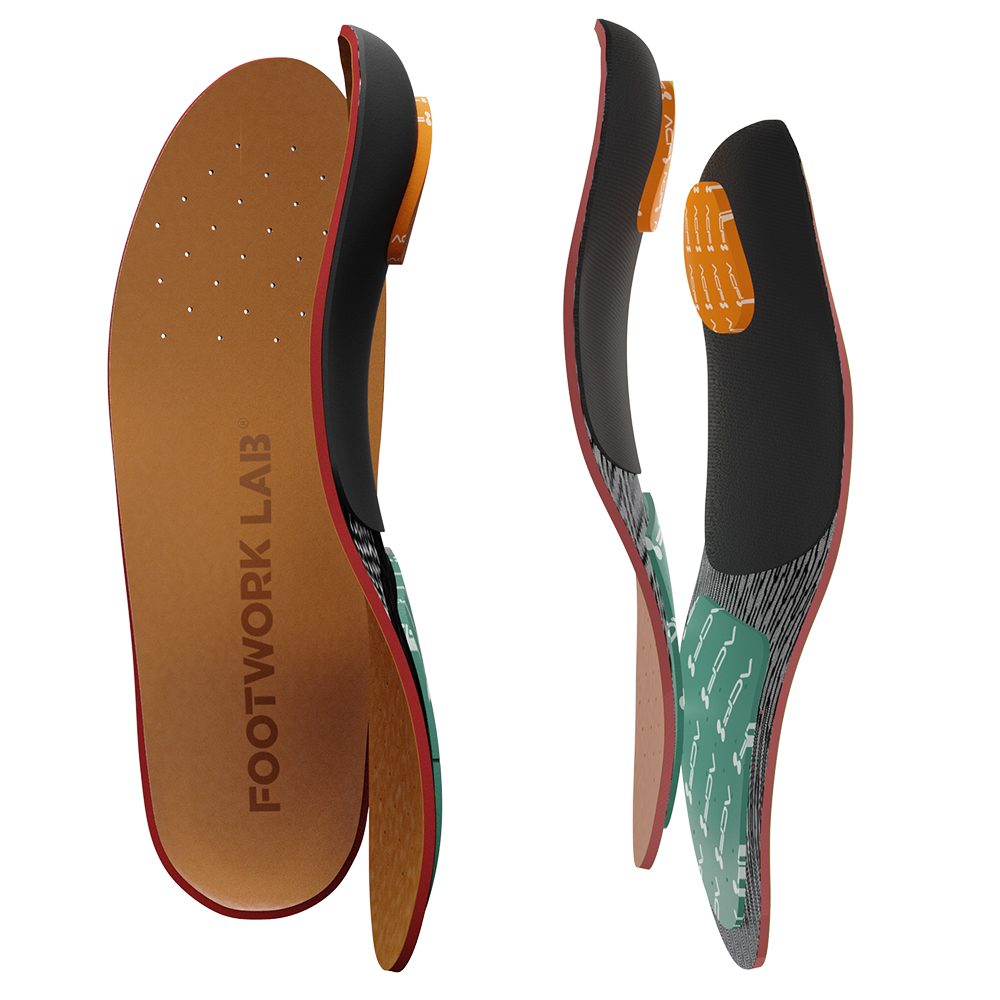
In our production, TPU appears most often in the structural roles: shells that must hold a contour under repeated load, top layers that must survive abrasion, and regions where the design needs firmness that a foamed material cannot hold. Softer roles — the immediate comfort layer under the heel, for instance — often belong to other families, and a well-specified sport insole usually mixes them deliberately. The material map is part of the build sheet, layer by layer, and that map is what a reorder rebuilds from.
For the buyer, the working takeaway is simple: TPU is a good answer to specific questions — shape holding, abrasion, repeated load — and the wrong answer to others, such as maximum softness or the lightest possible build. The wear profile decides which questions the product faces; the material map answers them.
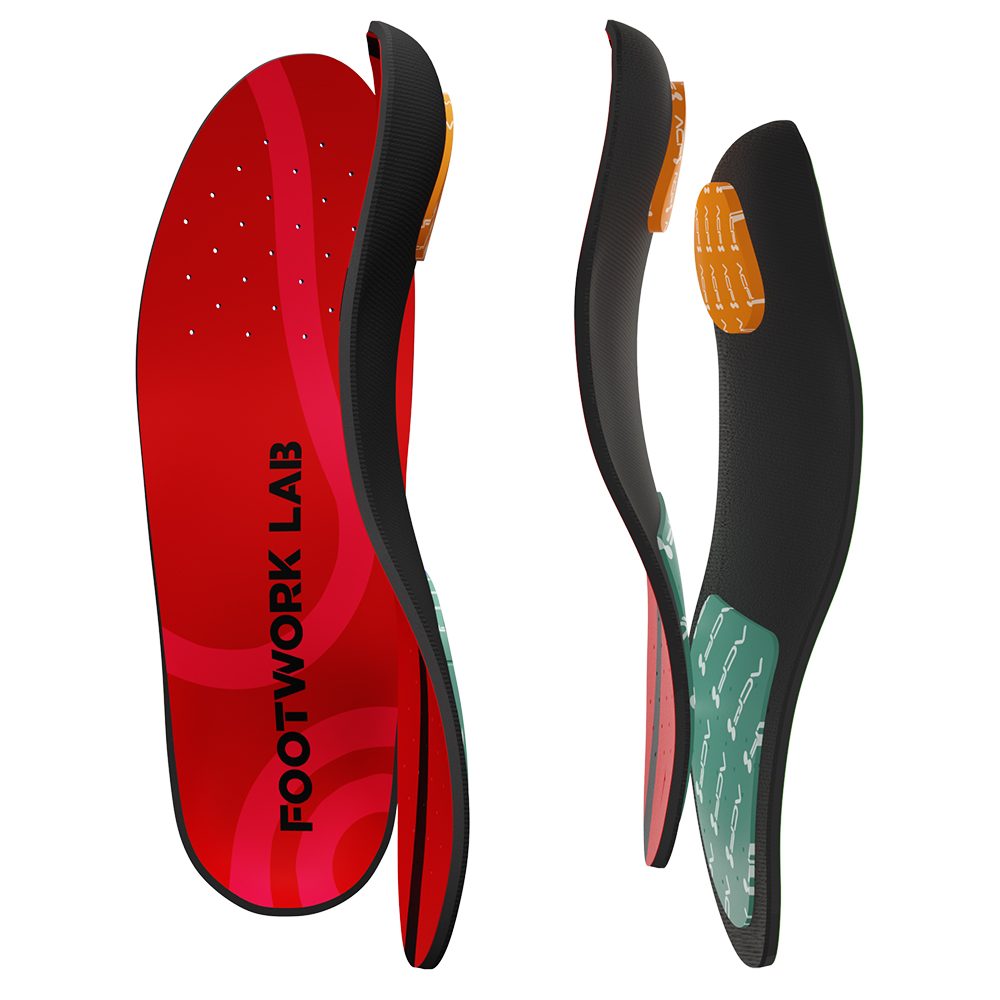
A note on grade selection, because it is where buyers can participate without laboratory vocabulary. The design conversation works from your wear profile, not from polymer names: state the sport, the frequency, the surfaces and the shoes, and the profile selects the grade’s working properties — how much shape holding, how much damping, where the abrasion will concentrate. A buyer who arrives with a precise profile gets a precise material map; the same conversation started from an acronym gets a compromise. Precision in, precision out — the materials version of every other rule on this site.
What sport actually asks of an insole
Sport loads a product differently from daily wear, and the differences decide the material conversation. The loads are larger and arrive faster: each stride, jump or stop delivers a brief, heavy event rather than a steady press. The repetitions are higher: a season of training compresses years of ordinary walking into months. The environment is harsher: moisture, temperature swings, abrasion against the shoe’s own interior. And the user notices sooner: an athlete reads their equipment the way a driver reads a car.
Under those conditions, the properties that matter sort into three groups. Shape holding: does the structure keep its contour through a season, or does the arch region flatten into a suggestion? Energy behaviour: does the material return or absorb, and is that behaviour consistent from the first kilometre to the thousandth? Durability at the edges: do the heel strike zone and the forefoot push-off zone survive the two places where sport concentrates its wear?
TPU’s strengths sit squarely in the first and third groups. Its resistance to abrasion and its ability to hold a molded shape under repeated load are the reasons it appears in sport structures across the footwear industry, well beyond insoles. Its behaviour in the second group — energy return versus damping — is where grade selection does the real work, and where the honest factory conversation happens: what does this client’s activity reward, and which grade delivers it?
Our design workflow asks for that activity in the context sheet — sport, frequency, duration, surface — because “sport insole” is not a specification. A product for long-distance running on road and a product for court sports face different event profiles, and the material map should differ between them even when both carry the TPU label.
TPU against the alternatives, honestly
A material article that only praises its subject is a brochure, so here is the fair comparison. Foamed materials — the EVA family most familiar from midsoles — are lighter and often softer underfoot, and for pure immediate comfort they remain the default. Their weaknesses under sport loads are equally known: they compress over time, they lose resilience as cells collapse, and their shape holding depends on density in ways that are easy to underspecify. Many of the “my insoles went flat” complaints in the trade are EVA stories rather than TPU stories.
Gel and silicone inserts bring strong damping in small areas, and they bring weight, temperature sensitivity and structural limits that make them components rather than foundations. Cork and similar naturals bring moisture behaviour and a comfort character their users defend loyally, and they bring variability that manufacturing has to manage. None of these observations is an attack; each family has a job, and sport orthotics that perform well almost always combine families rather than pledge allegiance to one.
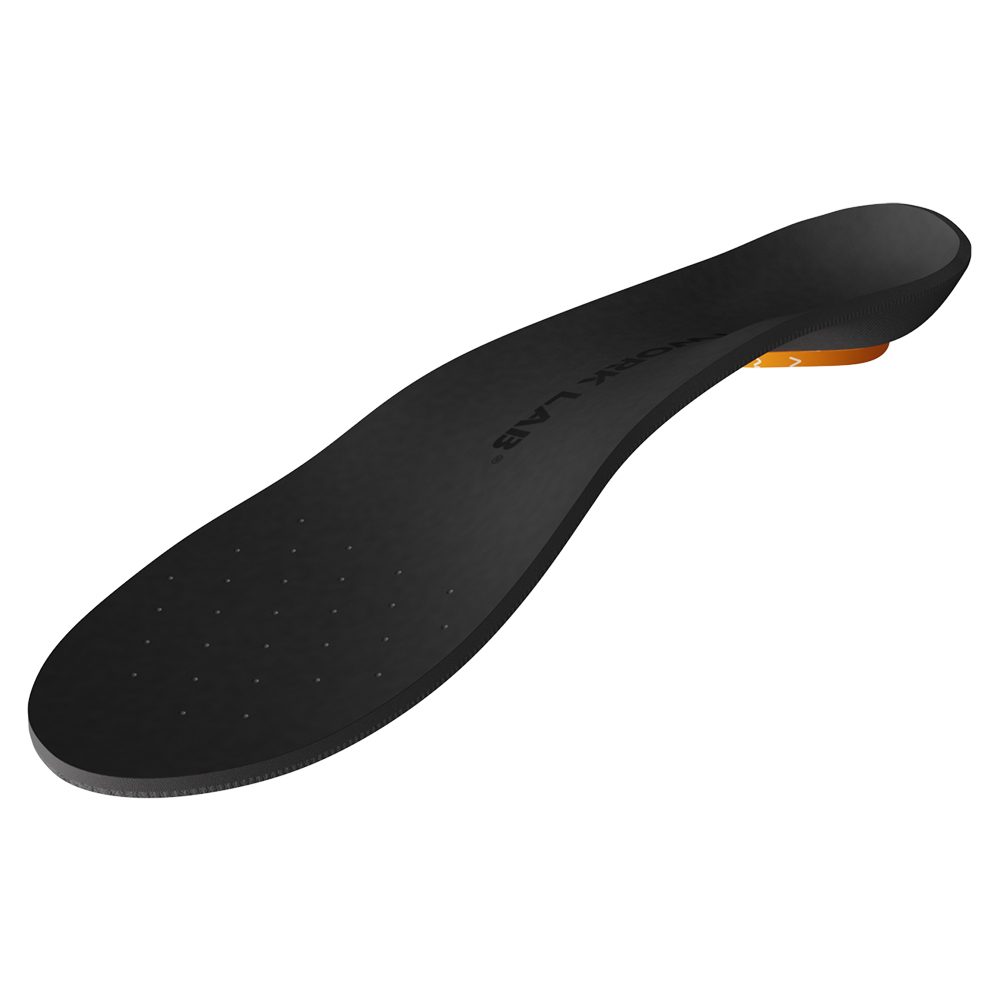
Where TPU genuinely earns its place is the combination of shape holding and abrasion life under repeated heavy load — the structural spine of a sport insole. Where it concedes is weight and, in softer grades, cost. A sport orthotic built with a TPU structure and softer contacting layers is the pattern our line produces most; a full-TPU build is a specific tool for specific feet, not a default.
Buyers comparing products by material label should therefore ask the combining question: which family is doing the structure, which the comfort, which the cover — and was that map chosen from a load record or from a habit? The same question separates a designed product from an assembled one in every material conversation this site publishes.
How the material behaves on the production line
Material choice is not only a wearing question; it is a manufacturing question, and the factory side deserves its own light. TPU is thermoplastic, which means it takes the molding process described elsewhere on this site directly: heated to its working range, pressed to the design’s shape, cooled under control. The grades differ in their working windows — temperature, time, pressure — and a line that runs several grades keeps written windows per grade rather than one habit for all.
Bonding is the next station question. A sport insole is a laminate: structure, cushioning layers, cover. Each interface is a place where the product can fail long before the materials themselves wear out, and each material pairing has its own bonding behaviour. This is why the build sheet records not only the material families but the assembly sequence, and why the station checks include the laminate — a delamination discovered by a client is a factory failure that the checks should have caught.
Consistency across the batch is the third production property. Sheets vary between production lots, and a line running mixed orders — ours runs two hundred pairs minimum, mixed across styles and sizes — manages that variation with batch records rather than hope. When a client reorders in a year, the material map plus the batch discipline is what makes the new pair feel like the old one. Without them, the same “TPU sport insole” can be two different products six months apart, and no label will explain why.
The wear-out question completes the factory view. Every material family ages in a characteristic way, and a factory that has watched its products come back can describe the modes honestly: where the abrasion shows first, how the contour drifts, what the cover does. Ask any supplier to describe their product’s ageing in one minute; the answer is a better quality signal than anything else they will say.
Weight deserves its own sentence in the comparison. Thermoplastic structures trade some lightness for their durability, and in certain sport contexts — where every gram is felt — the trade needs justifying rather than assuming. This is another reason the mixed-family build is our default: the structure takes the loads that require it, the lighter materials take the roles that do not, and the finished product weighs what its design needs rather than what its label implies. Buyers who feel a product is heavier than expected are usually feeling an honest structure; the question is whether their activity rewards it.
Specifying a TPU sport build: what to put on the order
The order that produces a good sport build is specific in the places that matter. The record: load and posture capture under documented conditions, a walking or running pass where the service supports it. The wear profile: which sport, how often, how long per session, on what surfaces, in which shoes. The purpose sentence: what the product is for, in one line. The material preferences: where the buyer has them — and where they do not, the design conversation supplies them from the record rather than from habit.
What the order does not need is material vocabulary the buyer does not have. “Firm structure that holds the contour through a season, softer under the forefoot, hard-wearing cover” is a specification our design workflow can translate into grades and layers; the buyer does not need to name polymers. What the order must not do is stop at “TPU sport insole” — that phrase is a category, and categories do not describe products.
Sampling closes the loop the same way it does across our insole production: samples leave within three days of design confirmation, made on the production line with the production materials, so the material map can be felt and tested before the two-hundred-pair minimum. A sport product especially rewards this step, because the difference between grades shows up in use faster than in hand.
Caring for the product, and the remake boundary
Thermoplastic materials have one household enemy worth naming: heat. A sport insole left in a car through a hot afternoon can drift from its designed shape, because the property that made it moldable at the factory does not disappear in the owner’s car. The care instruction is unglamorous and effective: dry them at room temperature, keep them out of direct heat, and let them rest between heavy sessions. Products die of storage more often than they die of sport.
When a pair does come back, the remake boundary described across this site applies unchanged: a product fault is the factory’s account; a changed design decision is a new order. The material map and batch records are what let that conversation stay short — the factory can read what was built and what aged, rather than negotiating from memory. Buyers who keep their side of the records — the wear profile, the footwear, the usage notes — make every such conversation faster and fairer.
Frequently asked questions
Is TPU the material of all your sport insoles?
No — and that is deliberate. TPU is one family among several we run, and our sport builds usually combine families: TPU where the structure must hold shape and resist abrasion, softer materials where comfort and damping lead. The material map is part of the confirmed design, recorded layer by layer.
Why do two TPU insoles feel so different?
Because TPU is a family of grades, not one material. Hardness, resilience and damping vary widely across grades, and layer position matters as much as grade. The acronym alone tells you the least interesting fact about the product.
Does TPU last longer than foamed materials?
In shape holding and abrasion under repeated heavy load, generally yes — that is why it anchors the structural layer in sport builds. Foamed materials remain lighter and often softer, and they age by compression. The honest comparison is per role, not per acronym.
What do you need from us to specify the materials?
The measurement record, the wear profile — sport, frequency, duration, surfaces, named shoes — and a one-line purpose. You do not need polymer vocabulary; the design conversation translates the profile into grades and layers, and the summary returns it for written confirmation.
What is the minimum order and sampling time?
Two hundred pairs, mixed across styles and sizes. Samples leave within three days of design confirmation, made on the production line with production materials, so the material map can be tested before volume.
How should the finished insoles be cared for?
Dry at room temperature, away from direct heat — thermoplastic materials can drift in a hot car — and let them rest between heavy sessions. Most premature ageing in this category is a storage story rather than a material story.
What if a pair fails in normal use?
A fault that follows from production is our account; a changed design decision is a new order. The material map and batch records on file are what keep that conversation short and fair for both sides.
What we would do next
Compare the sport-oriented families on the insole categories page and the commercial terms on the FAQ page. For the record that should inform any material choice, the F2 plantar pressure system page describes the equipment side. For the neighbouring sport specification, specifying a sports orthotic insole and custom insoles for running shoes cover the load and footwear questions in the same no-hype format.
This article is intended for professional and educational reference. It is not medical advice. Foot assessment equipment produces measurements and images; clinical interpretation and any decision about care remain the responsibility of a qualified professional. Certification scope is limited to the documentation we hold: European Union certification and ISO quality system certification.