
Ask a runner what they want and you will hear about their sport. Ask the shoe what it will accept and you get a different answer. A custom insole for running footwear is not specified by pace, distance or training block. It is specified by the volume inside the shoe, the shape of the last, the height of the heel counter and whether the original sockliner can come out. Get those four things wrong and a technically well-made pair will sit in a drawer, because it changed the fit of a shoe the runner already trusted.
This is the part of insole specification that gets skipped in most buying conversations, because it happens before any material is discussed. A clinic or a brand collects a foot measurement, chooses a material family, and only then discovers that the resulting build lifts the heel enough to change the shoe’s feel. The pair reads well on the bench and sits badly in the shoe.
We produce custom insoles to specification in our own plant in Ruichang, and we also build the assessment systems that collect the foot data going into them. That means we see the specification twice: once as a measurement problem, and once as a manufacturing problem. This article is about the second, written for clinics, running retailers and brands ordering their first production run.
The shoe decides more than the sport
Running footwear is a category, not a shape. Two shoes sold for the same purpose can differ in internal depth by enough to change which insole build fits, and can differ in last shape by enough to change where the insole’s edge sits under the metatarsals. A specification written for “running” is therefore a specification written for nothing in particular.
The practical consequence is that a single insole design rarely serves a runner’s whole rotation. Most runners keep several pairs: a daily trainer, something lighter for faster sessions, and often an older pair for wet weather. Those shoes have different volumes. A build that fits the trainer may need to be thinner, or trimmed differently, to sit in the lighter shoe.
This is why we ask for shoe details before we quote a production order, and why the answer sometimes changes the material recommendation. The same foot, in two shoes, can justify two builds. Selling one build and telling the runner to move it between shoes is a support decision made by the customer’s laundry habits rather than by anyone who understands the footwear.
What the words on the box do not tell you
Manufacturers describe running shoes with a vocabulary built for retail: cushioning level, heel-to-toe drop, intended pace. Useful for choosing a shoe, insufficient for specifying an insole. What a production team needs is the internal geometry: the depth of the heel pocket once the original sockliner is removed, the width at the metatarsal heads, the shape of the arch shelf, and whether the shoe has a lasting board under the footbed.
The removable sockliner is the single most important detail. If it comes out and leaves a flat, clean cavity, there is room for a full-length build. If it is glued down, or if removing it exposes a stitched seam, the insole has to be thinner or partial-length, and the specification changes accordingly. Buyers who have never taken a sockliner out of the shoe they intend to use are specifying blind.
Heel counter height matters for a different reason. A deeper, stiffer counter holds the heel and gives a rearfoot post something to work against. A soft, low counter gives less, so a build that relies on a firm heel cup may feel unstable even when the geometry of the insole is sound.
Then there is the drop. Adding thickness at the heel changes the effective drop of the shoe. A runner who is used to a particular feel will notice a change of a few millimetres in the heel more than they will notice the arch profile. This is one reason we recommend building the forefoot thickness to match what the shoe already provides, rather than adding material uniformly.
Measure the inside of the shoe, not only the foot
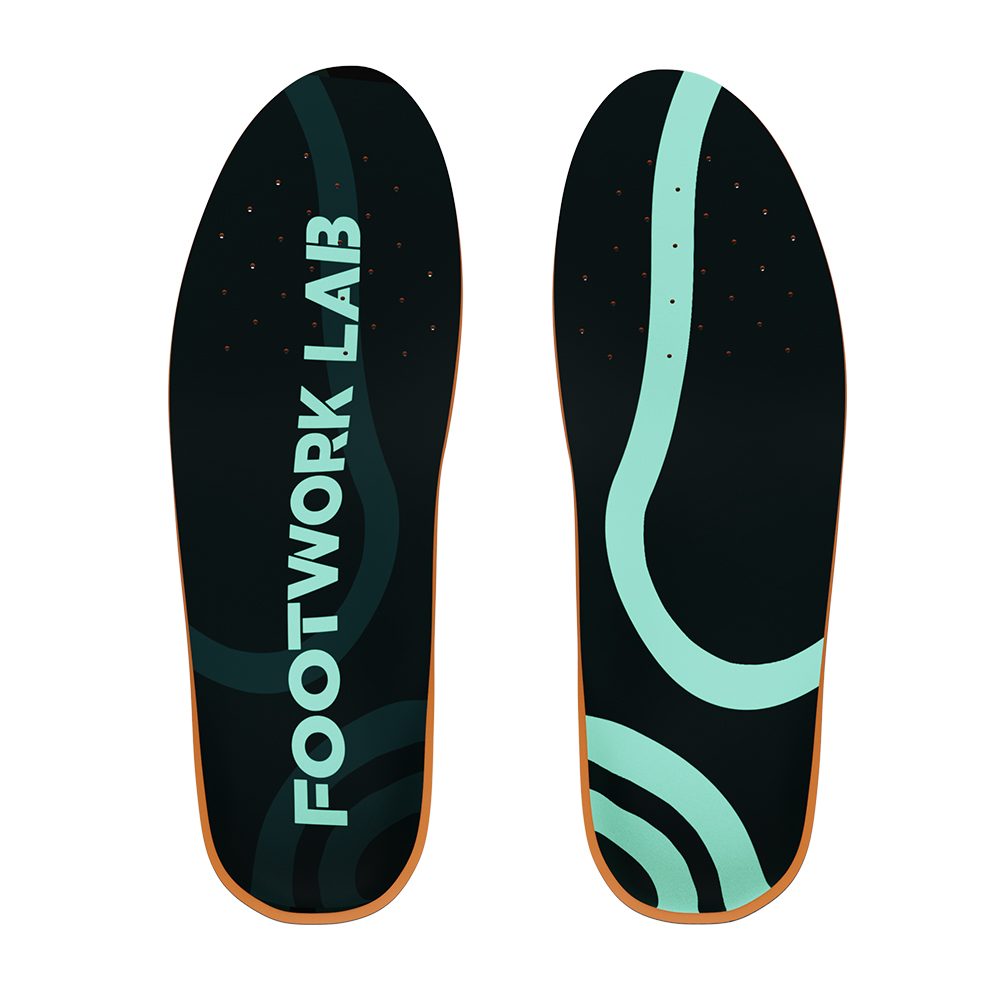
A foot measurement tells you what the foot needs. A shoe measurement tells you what the shoe will accept. Both belong in the file, and the second is usually missing. The simplest version of the shoe measurement is a tracing of the original sockliner, plus its thickness at the heel and forefoot, plus a note on whether the cavity is flat or contoured.
Where a clinic has a pressure platform, the shoe can be measured under load as well: the client stands in the shoe, and the recording shows how the foot sits inside it. That is not the same as a barefoot recording, and the difference is instructive. A foot that loads evenly barefoot can load unevenly inside a shoe with a narrow waist or a stiff shank.
For brands ordering volume, the useful unit of specification is the shoe model, not the size range. One build per model, adjusted by size through the last, is manageable. One build per size band across three models is a production planning problem that shows up as a lead-time surprise.
Three build families and what each does to fit
The first family is a cushioned full-length insole that replaces the original sockliner and adds comfort without changing the shoe’s geometry much. It is the safest first product for a retailer, because it is easy to fit and rarely changes how the shoe feels. Its limit is that it does little for alignment, so it belongs in a comfort conversation rather than an assessment one.
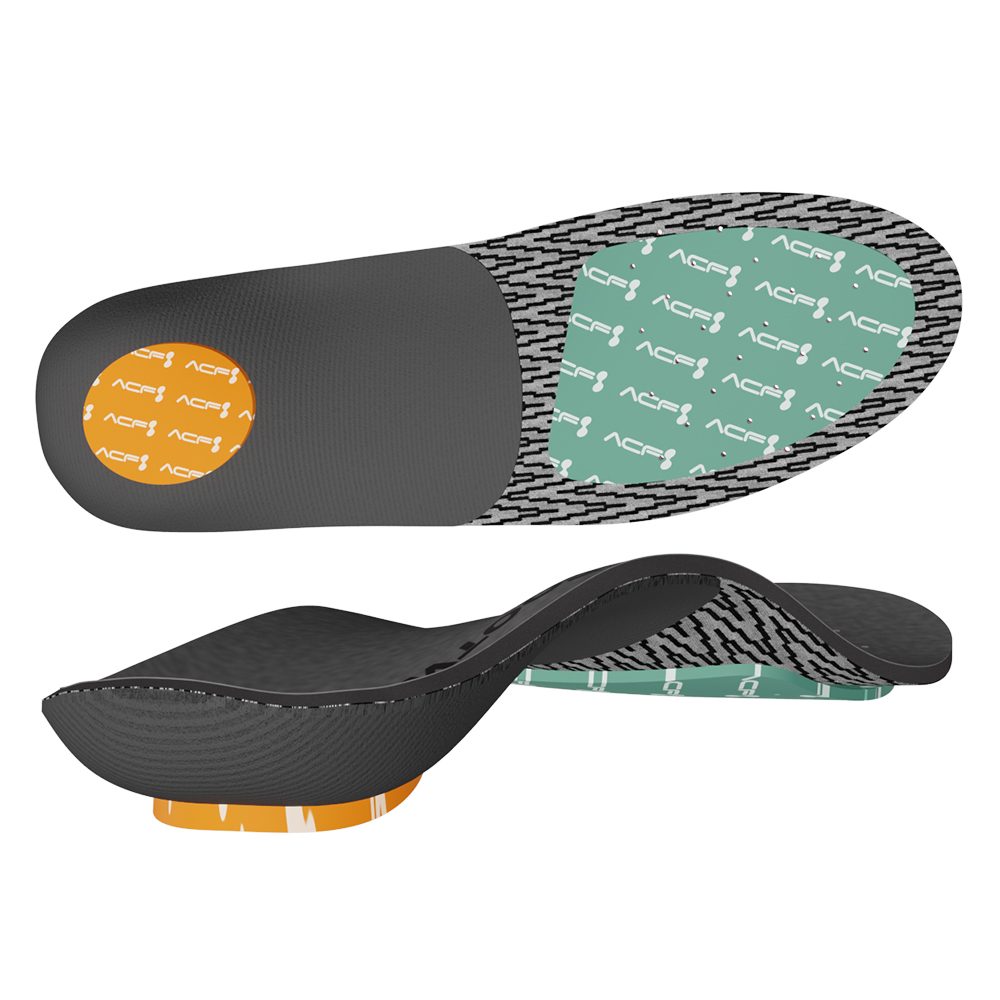
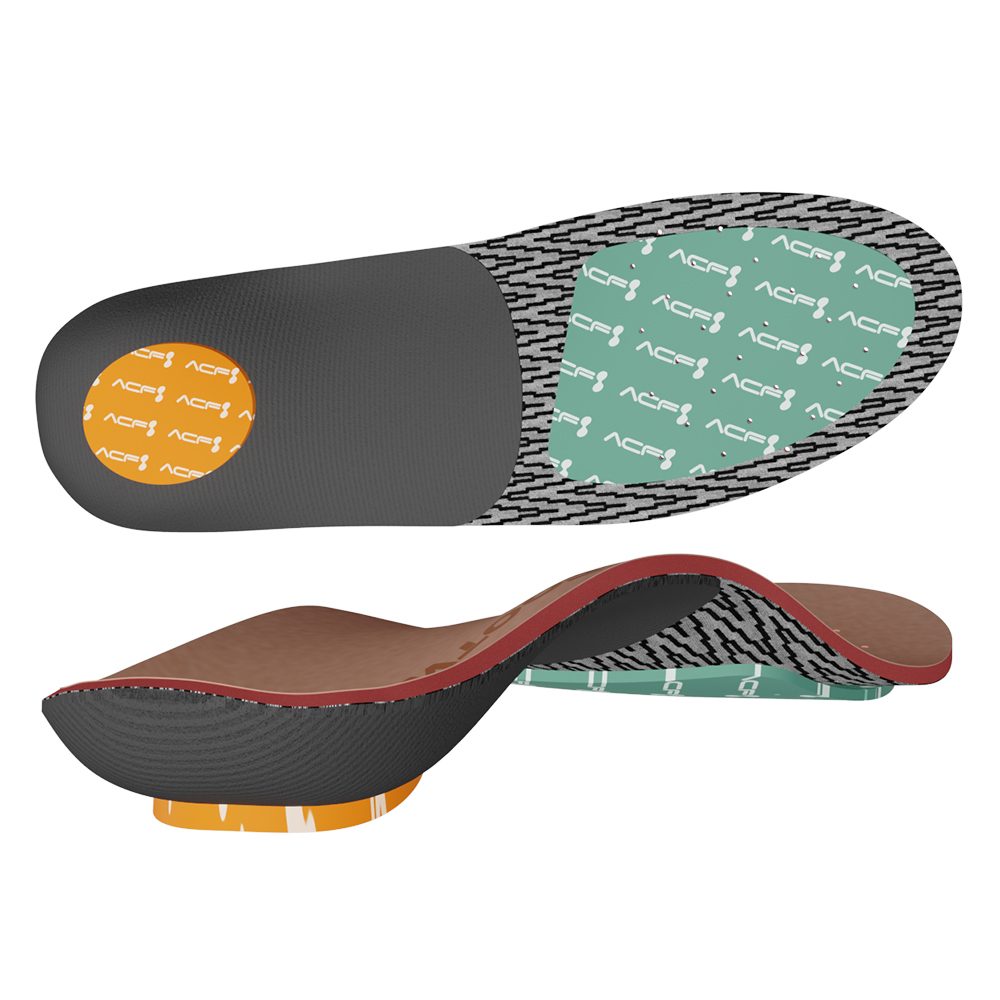
The second family is a semi-rigid shell with a cushioned top cover, built to hold a position under load. This is the build most clinics want, and it is the one that most often collides with shoe volume: the shell needs depth, the shoe may not have it, and the compromise usually lands on the top cover thickness, which then changes durability.
The third family is a thin, stiff forefoot addition used for propulsion-oriented work, often paired with a minimal heel cup. It fits where nothing else will, and it is unforgiving: a poor trim line becomes noticeable immediately, and the shoe’s own flex point has to match the build’s flex point or the pair will feel like it is fighting the foot.
Each family has a different failure mode in the field. The cushioned build fails by flattening. The semi-rigid build fails by lifting the heel. The stiff forefoot build fails by creasing at the wrong place. Knowing which failure you are most able to handle after delivery is a legitimate way to choose between them.
The specification sheet a factory actually needs
A production order that arrives as a foot measurement and a photograph of a shoe will generate questions. A production order that arrives as a structured sheet goes into the queue the same day. The sheet does not need to be elaborate; it needs to be complete on the points that change tooling.
What we ask for: shoe make, model and size; whether the sockliner is removable; internal length and width at the widest point; the intended build family; top cover material preference; thickness at heel and forefoot; any posting or wedge instruction; left-right differences; and the finish expected at the edge. Where the order is for a clinic, we also ask for the assessment record that the design is based on, so the build can be checked against its own rationale.
The point of the sheet is not bureaucracy. Each of those fields removes a round of questions, and each round of questions is a week. Buyers who send complete sheets get samples faster, and their first production run is closer to what they intended.
Durability and the rotation problem
A running insole lives in a wet, warm, repeatedly compressed environment, and it is expected to survive several hundred kilometres. Material choice dominates durability, but construction decides whether the material gets a chance. A top cover bonded with too little adhesive fails at the edge before the foam has compressed. A shell trimmed with a rough bevel concentrates stress and cracks from the rim inward.
The rotation problem is commercial rather than technical. A runner who moves one pair between three shoes will destroy it faster than a runner with three pairs, and will blame the insole rather than the routine. If you sell to runners, say this at the point of sale. It protects the product’s reputation and it is also true.
For clinics, the equivalent issue is the review interval. A build that was specified for a training block may be wrong six months later, not because it degraded but because the shoe changed. Recording the shoe model alongside the assessment means the next order starts from the right place.
Test before you commit to volume
Run the first pair through a real week, in the shoe it was built for, with the runner doing what they normally do. Then check three things: whether the heel still sits down in the shoe, whether the arch feels present rather than intrusive, and whether the edge of the insole is visible when the shoe is on. Those three checks catch most of the specification errors that a bench inspection cannot.
Then check the shoe again after a month. Top covers compress, and a build that felt right on day one can become loose without any manufacturing defect. If the compression is more than the runner finds acceptable, the answer is usually a different top cover rather than a thicker shell.
For a clinic ordering from a factory, the sample stage is where this work belongs. Our own sample turnaround is three days from specification approval, which exists precisely so that a practice can test before committing to a production run. The minimum order for insoles is two hundred pairs, and it can be mixed across models and sizes, so a first order can cover several shoes and several build families rather than one bet.
What clinics get wrong when they order for runners
The first mistake is specifying from the foot alone. A clinician measures the foot carefully, orders a shell that reflects the measurement, and then hands the client a pair that will not sit in the shoe they run in. The assessment was good; the order sheet was incomplete.
The second is treating the running population as one group. A runner training for a first half marathon and a runner doing weekly intervals have different shoe rotations and different tolerances for change. The first wants continuity with what already works. The second is more willing to accept a different feel if it buys something measurable.
The third is ordering one build for both feet. Most runners have a dominant side and a slightly different loading pattern on each foot, and the assessment record usually shows it. Averaging the two sides saves a small amount of production time and costs the pair its main advantage over an off-the-shelf product.
The fourth is forgetting the sockliner question until the sample stage. If the original insole is glued in, the whole specification has to be revisited, and the sample is wasted. Ask before you measure.
Each of these is cheap to avoid at the order stage and expensive to discover after delivery. A clinic that addresses all four will find its remake rate falls for reasons that have nothing to do with manufacturing quality.
Frequently asked questions
Can one insole be moved between running shoes?
It can, but the fit will differ. Internal volume, heel depth and last shape vary between models, so a build that sits correctly in one shoe may lift the heel in another. If a runner rotates shoes, specify per shoe rather than per sport.
Do you need the actual shoe to make a pair?
Not always, but the order is more reliable with it. A tracing of the original sockliner plus its thickness and a note on whether the cavity is flat or contoured covers most of what we need. Where the shoe is unusual, we ask for photographs of the cavity with the sockliner removed.
What is the minimum order for custom insoles?
Two hundred pairs, mixable across models and sizes. Samples are dispatched within three days of specification approval so a clinic can evaluate the build before committing to a run.
Do you offer ODM and OEM on insoles?
Yes, both. We produce to specification and we produce under a customer’s brand. Machine orders are separate: those start from a single unit and we accept ODM on the equipment.
How long should a running insole last?
It depends on material, body weight, surface and how many shoes the pair is rotated through. We do not publish a distance figure, because a number would be a guess presented as a specification. Inspect the top cover at the heel and forefoot, where compression shows first.
Can you thin a build to fit a tight shoe?
Yes, within limits. Reducing forefoot thickness is usually straightforward; reducing heel depth changes how the rearfoot sits and may remove the support the design depended on. Where the shoe is very tight, a partial-length build is often the better answer.
How do you handle left-right differences?
We build each side to its own specification when the assessment record supports it. Send both sides in the order sheet with the difference noted, rather than an average, so the pair is built as measured.
What we would do next
Before requesting a quotation, take the sockliner out of the shoe your client actually runs in, trace it, measure its thickness, and note whether the cavity is flat. That single page will change the questions you ask, and it will shorten the sample cycle. Our insole categories page lists the build families we produce, the FAQ page covers minimum order, samples and ODM terms, and our article on sports insoles for shoes covers how the load changes between walking, training and competition. If you are sourcing for a retail programme rather than a clinic, the piece on orthotic insoles for shoes deals with the trade vocabulary.
This article is intended for professional and educational reference. It is not medical advice. Foot assessment equipment produces measurements and images; clinical interpretation and any decision about care remain the responsibility of a qualified professional. Certification scope is limited to the documentation we hold: European Union certification and ISO quality system certification.