
Comfort is reported by the wearer and engineered by the design, and the two are not the same thing. An insert that feels right on the first day can be wrong by the third week, and one that feels unusual at first can be the pair a wearer keeps for years. Understanding which decisions produce which outcome is the difference between a product that gets reordered and one that gets returned.
The category language does not help here. Inserts are described by what they are for, and the descriptions tend to compress a long chain of design decisions into a single outcome. That compression is convenient in a listing and misleading in a fitting, because the outcome depends on decisions the listing does not mention.
We manufacture inserts and the equipment that specifies them, so we see the design side and the feedback side. What follows is the chain from a wearer’s report to a design decision, the points where a small change produces a large difference in how a pair feels, and what a practice can reasonably say to a person standing in front of it.
What the wearer is actually reporting
A wearer reports comfort, and comfort is a composite. It includes pressure under the foot, how the shoe closes over the device, whether the heel stays put, temperature, and how the pair feels after four hours rather than four minutes. A report of “better” or “not better” does not say which of these changed.
Separating them is worth the two questions it takes. Where do you feel it, and when does it start? A person who feels something under the arch immediately is describing a shape question. A person who is comfortable for two hours and not for four is describing a material or a load question. Those have different answers, and the same pair will not fix both.
This matters because the most common fitting error is solving a load problem with a shape change. The wearer reports discomfort, the fitter adds arch height, the pressure moves somewhere else, and the report returns. Asking when it starts usually prevents the whole sequence.
The design decisions behind how a pair feels
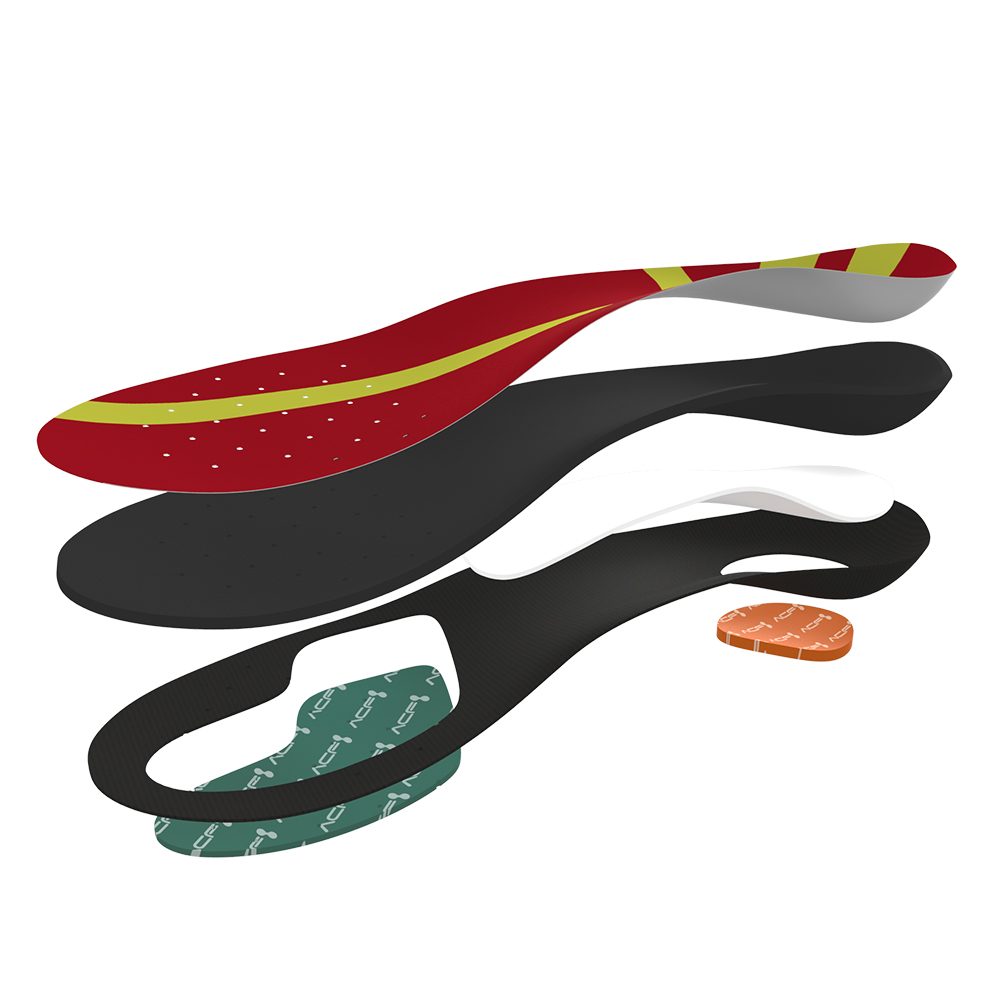
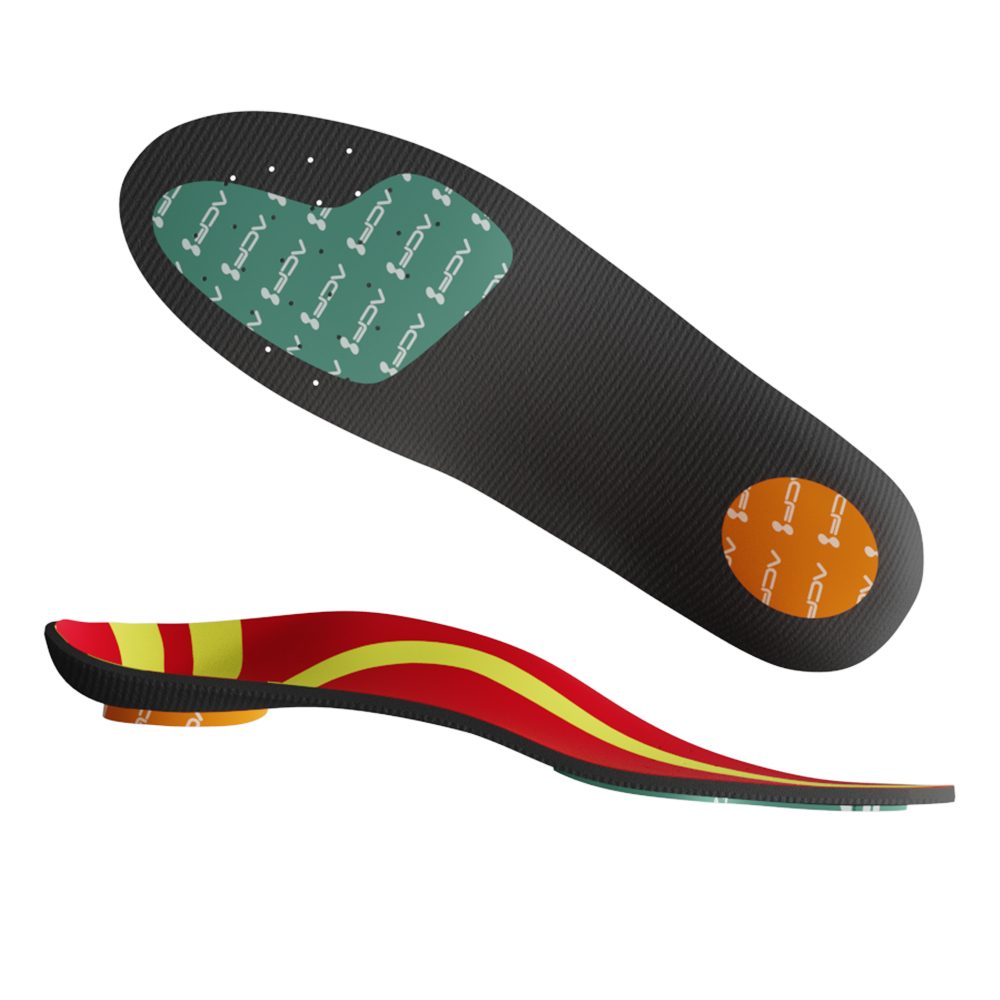
Four decisions determine most of how an insert feels. The first is the shell: how much it resists under load, and whether it flexes with the shoe or against it. The second is the top cover, which decides friction, temperature and how the pair feels against a sock. The third is the arch geometry: not how high, but how the height is distributed along its length.
The fourth is the posting and the heel seat, which decide whether the device stays where it was put. A pair that migrates forward in the shoe produces a report of discomfort that has nothing to do with the arch or the material, and it is usually the first thing to check when a fitting fails.
These decisions are separable, which is the useful part. A wearer who likes the support but dislikes the heat gets a different top cover, not a different device. A practice that specifies all four from the start can adjust one without rebuilding the pair.
Stiffness is a decision, height is a measurement
Arch height gets measured and gets written on the specification. Stiffness usually does not, and it is at least as important. Two pairs with identical geometry and different shell stiffness will feel like different products to the same wearer, and the difference is larger in a stiff-soled work boot than in a soft trainer.
The rule of thumb that survives contact with reality: the shoe and the activity set the stiffness, and the measurement sets the geometry. A person in a rigid work boot on concrete needs less shell resistance than the same person in a minimal shoe on a track, because the shoe is already doing some of the work.
This is also where body weight and activity hours belong. A specification that records the measurement but not the wearer’s day will produce a pair that is correct on the bench and wrong by lunchtime. Two extra lines on the specification form prevent it.
Why the shoe matters as much as the device
An insert is built to go inside something, and the something constrains it more than most specifications acknowledge. Toe box depth decides whether the pair fits at all. Volume decides whether the foot sits where the device expects it. Closure type decides whether the device stays seated through a shift.
The practical consequence is that a device specified without the shoe is a guess. A practice that asks a wearer to bring the shoes the pair is for, and notes the model, produces fewer adjustments. It also produces better reorders, because the same shoe is usually bought again.
Where a wearer has several pairs for different purposes, the honest answer is often two devices rather than one compromise. That is a more expensive conversation and a more accurate one, and practices that have it tend to keep the wearer.
What a practice can promise and what it cannot
A practice can promise that a pair was built to a written specification, from measurements taken under stated conditions, with materials chosen for the stated use. That is a real promise and a checkable one, and it is what a professional indemnity position usually rests on.
A practice cannot promise an outcome. Bodies respond differently, footwear changes, and activity changes. Saying so at the start of a fitting is not caution for its own sake; it is what makes the follow-up appointment legitimate rather than apologetic, and it is what turns a first pair into a programme rather than a transaction.
The wording that works is short: this pair was built for the use you described, from the measurements we took, and we will look at how it is doing after you have worn it. That sentence sets a review, and the review is where a fitting service becomes worth having.
Adjustment is part of the product, not a failure of it
Most first pairs need something: a top cover change, a small posting adjustment, a different stiffness for a second shoe. Treating adjustment as a defect leads to defensive fittings and unreported problems. Treating it as a stage leads to a second appointment, which is where the relationship is actually built.
Practices that book the review before the person leaves the room get more of them, and the ones that get more of them write better second specifications. Over a year this compounds: the specification file gets more accurate, reorders get faster, and the conversation gets shorter.
For a clinic or retailer building this as a service rather than an add-on, the equipment question follows from the workflow. A device range that can be specified along these four axes is more useful than a large catalogue organised by name.
Reading feedback at the review appointment
The review appointment is where a fitting service is actually built, and it is the appointment most often treated as an afterthought. A wearer returns after three weeks, says something short and ambiguous, and the fitter has to decide whether that means adjust, rebuild or leave alone. Three sentences of preparation make that decision straightforward, and without them it becomes guesswork.
The first useful question is about time: when in the day does it start, and how long has it been happening. Discomfort that appeared in the first week and stayed usually points to geometry. Discomfort that appeared in the third week usually points to materials, or to the wearer’s activity having changed rather than the device. The two have different remedies and the question costs ten seconds.
The second is about the shoe. A wearer who changed shoes halfway through the period has changed the conditions, and a device that was right in the first pair will be reported as wrong in the second. Asking this before adjusting anything prevents the most common unnecessary rebuild, which is the one that fixes nothing because the variable was elsewhere.
The third is about what improved. Wearers report problems more readily than improvements, and a device that solved two things and left one is a success in progress rather than a failure. Establishing that early changes the tone of the appointment and, more practically, tells the fitter which part of the specification to leave alone.
Recording the answers on the specification file is what makes the next pair better. A file that carries the measurement, the decisions and the three-week outcome is a genuinely useful document. A file with the measurement alone means the next fitting starts from the same place as the last one, which is how a practice ends up making the same adjustment twice.
A word on expectations at the point of sale, because it decides whether a review is a success or a complaint. A wearer who was told the device would solve a problem will report anything less as a failure. A wearer who was told the device was built for a stated use, and that the review is where it gets tuned, will report the same outcome as progress. The device is identical; the conversation is not, and the conversation is the part a practice controls.
That also means the review date should be set before the wearer leaves with the first pair, not offered later. A booked review is attended; an offered one is not. The difference in attendance rates is large enough that it alone justifies writing the date into the fitting routine.
It is worth saying what a device cannot do, because the category is marketed in a way that blurs it. A device changes load and how the foot sits in the shoe. It does not change the structure it was built around, and it does not replace a change of footwear where the footwear is the problem. A fitting that says this plainly, in the room, is a fitting that does not have to revisit it later.
That honesty also makes the specification better. A wearer who understands the device is for a stated use will describe that use accurately, including the parts of the day the device is not worn. A wearer who believes the device addresses a condition will describe the condition instead, which is information a bench cannot act on. Two sentences at the start of a fitting improve the specification more than any additional measurement.
The final practical point is about pairs rather than pairs-and-parts. Where a wearer’s day splits clearly between two activities, the honest specification is usually two devices used alternately rather than one used continuously across both. That is a more expensive first conversation and a better one, and it is the conversation that produces a reorder rather than a return.
What we would do next
Start with two questions at the fitting: where does it hurt, and when does it start. Write down the shoe, the activity hours and the use, not just the measurement. Then specify stiffness and top cover as decisions rather than defaults, and book the review before the wearer leaves. Our frequently asked questions set out minimums, sampling and lead times, and a short conversation usually settles whether a custom range or a modular one fits a practice better.
Frequently asked questions
What should I tell a wearer a custom insert will do?
That it was built to a written specification, from measurements taken under stated conditions, with materials chosen for the stated use. An outcome cannot be promised, and saying so makes the review appointment legitimate.
Why does a pair feel right at first and wrong later?
Usually a material or load question rather than a shape one. Discomfort that starts after several hours points to shell stiffness or top cover; discomfort that is immediate points to geometry or the heel seat.
Does the shoe matter as much as the device?
Yes. Toe box depth, volume and closure type decide whether the pair fits and stays seated. Specifying a device without noting the shoe is the most common cause of an unnecessary adjustment.
Can one pair serve several different shoes?
Sometimes, but a compromise pair often underperforms in all of them. Where a wearer has a work boot and a running shoe, two devices built separately usually serve better than one built in between.
What is the minimum order for a custom range?
Two hundred pairs, mixed across models and sizes. Samples ship within three days of agreement, which is how most practices test a range before committing.
Can we put our own brand on the devices?
Yes. OEM and ODM are both available for insoles. Machine ODM is available; machine OEM is quoted case by case.
This article is intended for professional and educational reference. It is not medical advice. Foot assessment equipment produces measurements and images; clinical interpretation and any decision about care remain the responsibility of a qualified professional. Certification scope is limited to the documentation we hold: European Union certification and ISO quality system certification.