
The batch is scheduled, the material for the top covers is on the shelf, and the order sheet is still open on the desk with three fields empty. Nothing in the factory moves. This is not stubbornness and it is not paperwork for its own sake. A blank field is a question nobody has answered yet: which foot goes where, which sizes run in which models, what the top cover should be, whether the packaging carries the buyer’s brand or ours. Every one of those has an answer somewhere — usually buried in a message thread from three weeks ago — but an answer in a thread is not an answer on the sheet, and a production line cannot search chat histories to build a pair. The order sheet is where an order stops being a conversation and becomes something a line can run. Most of the delays we see in custom insole work trace back to a sheet that was returned unfinished, and almost none of them trace back to capacity. This article works through what the sheet has to answer before a batch can start, block by block, the way our production desk actually reads it.
The sheet decides the start date
Between a confirmed order and a running line sits a list of questions, and the order sheet is that list made physical. Materials, moulds, workforce — a factory can have all of them ready and still not start, because the sheet is what tells them what to make. A blank field is not a delay in paperwork; it is a question the line cannot answer for itself, and no amount of scheduling shifts it.
The pattern repeats often enough to be predictable. The conversation goes well, the sample is approved, everyone is keen, and then the sheet goes back and forth for a week because the size run was never written down, or the left and right requirements were assumed to mirror each other and do not. The material waits, the production slot waits, and the delivery date everyone quoted quietly moves. Nothing went wrong in the factory. The factory was never told.
Buyers who receive insoles on time are usually buyers who returned a complete sheet. The factory side can chase fields by message — and we do — but every chase costs a day, and ten fields chased one at a time cost a fortnight. Completing the sheet in one sitting, with the professional who specified the build at the table, is the cheapest acceleration available to anyone ordering custom work, and it costs an hour.
What the sheet has to answer about the feet
The first block describes what the build is for. A pressure record, a mould, a cast or measurements taken from an existing footbed — whichever inputs this order uses, the sheet says which, and the files or references are attached to it rather than promised in a separate thread. If the record comes from a foot assessment session, the capture conditions belong here too, because a record taken seated under partial load does not describe the same foot as one taken standing, and the build reads them differently.
The block also states anything particular about the feet. A build that differs left from right, an area that needs more support than the standard pattern, an activity the pair has to survive — hiking weekends, court sports, a job spent standing. None of this is diagnosis, and the sheet is not a medical document. It is the translation layer between what a qualified professional observed and what a production line needs in order to act.
The discipline that pays here is carrying the customer’s own words next to the technical instruction. A line like the ache sits on the inside of the heel after long shifts tells the builder something no specification row does, and it survives in the file long after the conversation is forgotten. Our article on turning the customer’s own words into a build spec is, at bottom, an argument for the space on the sheet where those words go.
What it has to answer about the pair
The second block is arithmetic, and it is where most delays actually live. Which models, in which sizes, in which quantities — written out line by line, not summarised as the usual run. A summary forces the production desk to guess, and a guess on a size run is a batch that cannot be packed, because nobody knows how many of each size exist until the boxes are open and the answer is wrong.
The block also has to allow for what feet actually are. Left and right are specified separately, because they are sometimes not the same size, and a pair built as a mismatched pair has to have been ordered as one. Our article on two different feet in one order and how a mismatched pair is built covers what the factory does with such an order; the sheet’s job is to have said so in the first place, so the halves go down the line as a deliberate pair rather than a query.
Quantity questions belong in the same block, and they are friendlier than most buyers expect. Our minimum order for custom insoles is two hundred pairs, and models and sizes can be mixed freely within it — a first batch spread across several models and a real size run is a normal order here, not an exception. Capacity on our insole lines runs between roughly five hundred and a thousand pairs a day, so what the sheet decides is not whether the factory can make the run. It decides which run, in what mix, starts when.
What it has to answer about the build
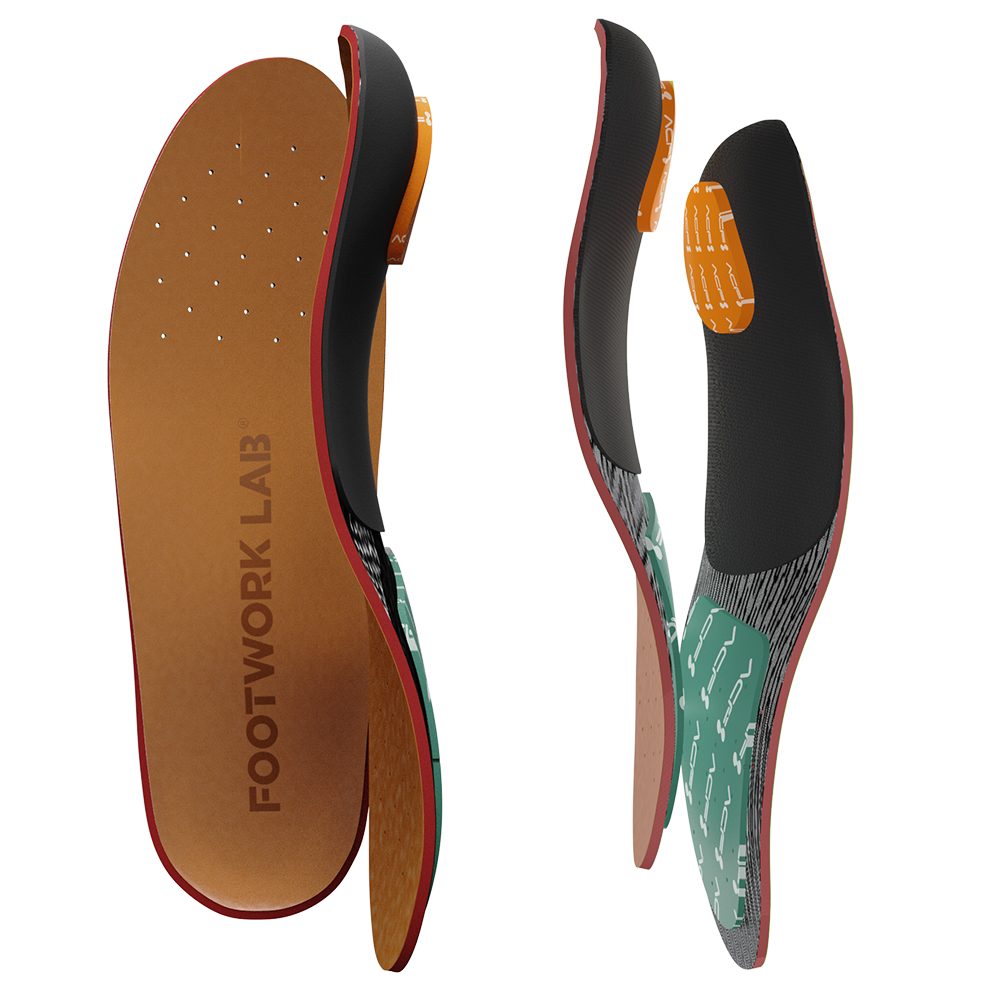
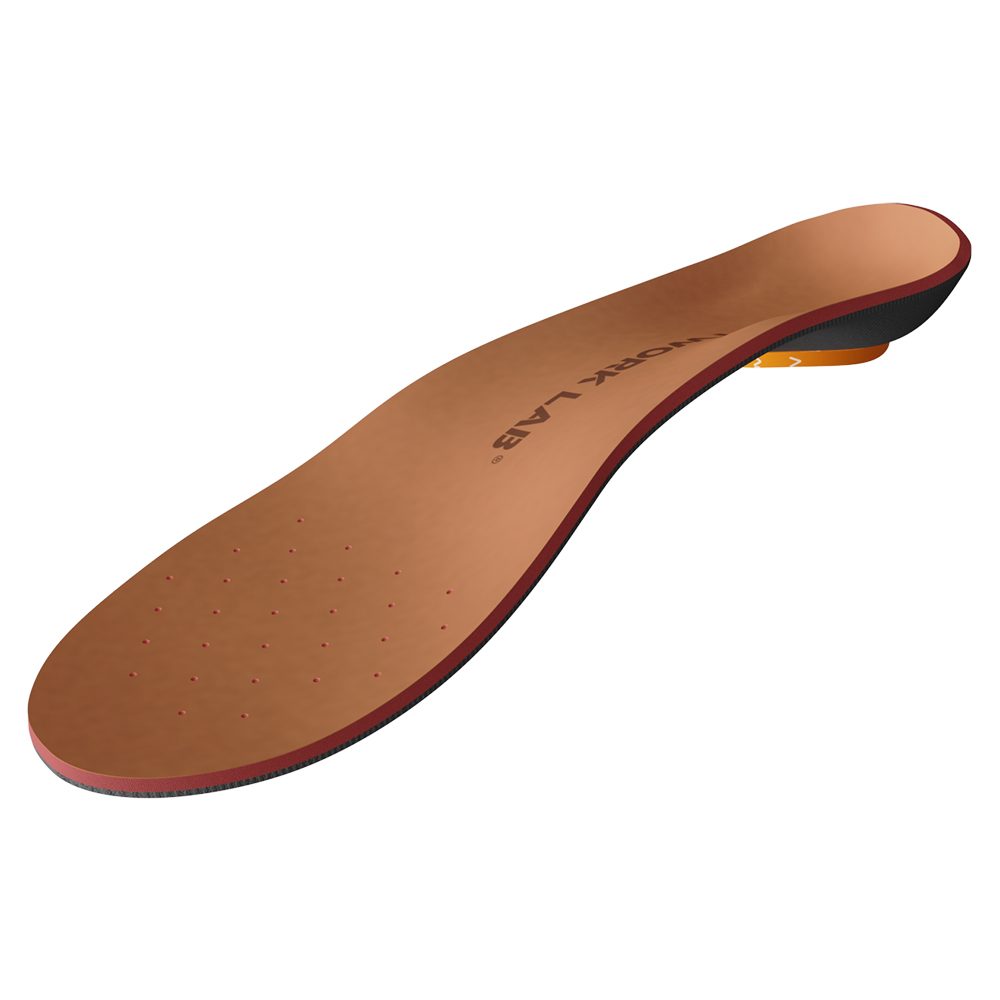
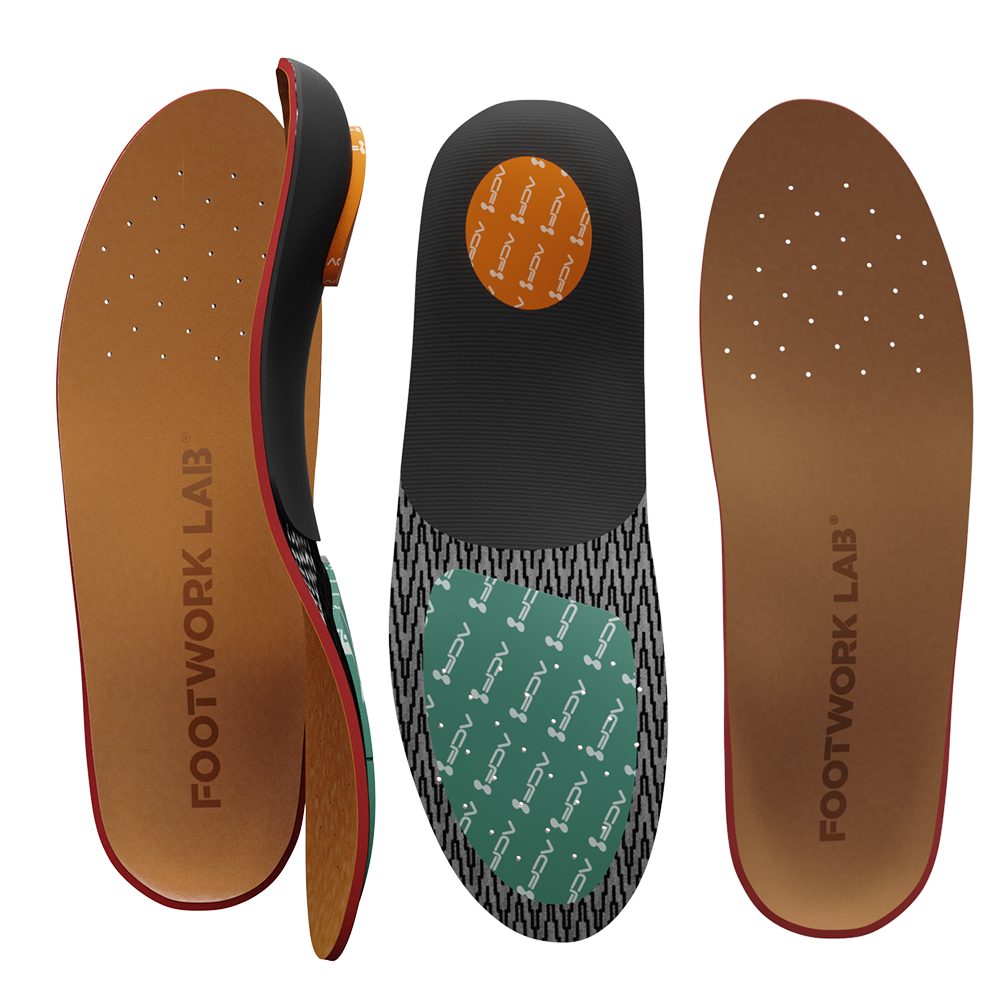
The third block is the build itself: top cover material, cushioning choices, the posting decisions a professional has specified, thickness where the design calls for it, firmness notes where words suffice. None of these need laboratory values on the sheet. They need decisions, made once, written where the builder reads them. A build described as like the sample is a half answer; samples anchor conversations, but the sheet should state what the sample demonstrated, because samples get lost and sheets get filed.
Cover decisions deserve their own line, because covers fail differently from everything else in the build. Adhesion between cover and core depends on material, preparation and press work, and a cover chosen for feel alone can be a cover that lifts early at the toe; our article on adhesive, primer and press, and what decides whether a cover stays on sets out that side of the trade. The sheet does not need the chemistry. It needs the decision, and the conditions the pair will live in — shoes, climate, hours per day — written beside it.
Where the build repeats, the sheet can be short. A clinic reordering a specification that already exists references the previous build instead of re-describing it, and the factory’s own records carry the rest. Builds are filed so they can be found again; our article on moulds, files and a build that has to be found again is about exactly that. The reference only works if the sheet carries it, which is why the previous-order field sits on the form at all.
What it has to answer about the brand
The fourth block matters only when the insoles carry someone else’s name, but when it applies, it applies hard. Private label work — packaging in the buyer’s design, labelling to their scheme, the quantities behind both — cannot start from a conversation or a mock-up on a phone. It starts from the sheet’s brand fields: whose name goes on the product, what the packaging must state, what must not appear on it, and which files the artwork arrives as.
The details are unglamorous and decisive. A label text that the printing setup renders differently from the design file. A bar code supplied as a screenshot instead of a print-ready file. Packaging quantities that were never separated from product quantities. Each of these has held up a real batch somewhere, and each of them is one field on the sheet. Our article on private label insoles, packaging, labelling and the order behind it walks through that order; the sheet is where it gets written down before production, not reconstructed after the boxes arrive wrong.
Buyers sometimes treat branding as a late-stage detail to bolt on once the product is approved. On the factory floor it runs the other way: branding choices shape what the line has to prepare, so they belong on the sheet from the first return. We take both ODM and OEM arrangements for insoles, and the practical difference between them is largely a difference in how much of the sheet the buyer fills in — the ODM buyer fills less, the OEM buyer fills more, and neither path works off an unfinished form.
Who fills it, and who checks it
A sheet with two authors fails quietly. The professional fills the foot and build blocks; the buyer or distributor fills quantities and branding; neither reads the other’s, and the sheet arrives looking complete with a size run that contradicts the model list. The working arrangement is one owner — whoever placed the order — and one pass where a second pair of eyes checks the blocks they did not fill before the sheet goes back.
The factory runs a check too, and it is worth describing honestly. When a sheet arrives, the production desk reads it for answerable questions, and anything blank or contradictory goes back in a single message rather than a drip of separate queries. Samples shorten the loop: sample pairs ship within three days of a confirmed build, which lets both sides confirm the sheet’s answers physically — cover, shape, firmness — before the full batch of two hundred or more commits to the line.
What the sheet is not is a test of anyone’s patience. Most people ordering custom insoles are ordering them for the first time, and a good form asks its questions plainly rather than assuming the vocabulary of the trade. We would rather rewrite a form than chase a thread. The form scales, the thread does not, and the third order from the same buyer should take minutes, not an afternoon.
What happens to a sheet with blanks
The honest answer is: nothing, for a while. The material waits on the shelf, the line schedules around the gap, and the delivery date drifts by however long the answers take to arrive. Nothing is lost, nothing is penalised, and nobody is blamed; the factory simply cannot start what has not been specified. This is deliberate. Guessing on a custom build is worse than waiting — for the buyer most of all, because a guessed size run or a guessed cover is a batch that arrives finished and wrong.
The practical advice to buyers is therefore unromantic. Put an hour aside for the sheet. Treat every blank as a question rather than a formality. Answer it once, in writing, where production will read it. The fields that feel like bureaucracy — size runs, label text, previous order references — are precisely the ones that decide whether the batch starts on the day it was quoted, and filling them costs an hour while chasing them costs a week.
And when a field genuinely cannot be answered yet — a size run that depends on a fitting that has not happened, artwork still with a designer — say so on the sheet. A stated unknown can be scheduled around, and the factory can hold a slot against it. A silent blank cannot. The sheet that says here is what we know, here is what is coming, and here is when it arrives, is in every practical sense a finished sheet.
Frequently asked questions
What information does an insole order sheet need before production can start?
Four blocks: what the build is for — the pressure record, mould, cast or measurements attached to the order; the models, sizes and quantities written out; the build choices such as top cover and posting; and, where they apply, the branding and packaging fields. A blank in any block is a question production cannot answer for itself.
Can different models and sizes be mixed within the minimum order?
Yes. The minimum order for custom insoles is two hundred pairs, and models and sizes can be mixed within it. A sheet that spreads the order across several models and a real size run uses the minimum well; one written for a single model at a single size usually overstates what a first batch needs.
How quickly do sample pairs ship?
Sample pairs ship within three days of a confirmed build. The sample is how both sides check the sheet’s answers physically — cover, shape, firmness — before the full batch commits, which is why the build fields should be settled before samples are requested rather than adjusted afterwards.
Do left and right insoles have to be specified separately?
Yes, because they are not always the same size or the same build. A mismatched pair is produced as two deliberate halves once the sheet says so; assumed-symmetric orders have to be queried, which costs days. Writing left and right on separate lines is the cheapest way to keep a batch moving.
What is the difference between ODM and OEM for insoles?
In ODM work the factory develops the build and the buyer sells it under their own name; in OEM work the buyer’s specification drives the build and the factory manufactures to it. The difference shows up on the order sheet: OEM orders carry more buyer-filled fields, especially around materials, finishes and branding.
What happens if a field on the order sheet is left blank?
The batch waits. Materials and capacity are held, the delivery date drifts by however long the answers take, and the factory returns the questions in one message rather than one at a time. Nothing is penalised — but nothing starts either, because production cannot guess on a custom build.
How are private label requirements captured?
In the sheet’s brand block: whose name appears on the product, the packaging design and what it must state, the label text and the files the artwork arrives as, and the quantities behind both product and packaging. Branding is a production input, not a late-stage decoration, so it belongs on the sheet from the first return.
What we would do next
Take the last order that slipped and read its sheet against the four blocks above; wherever a blank cost days, write the fix into your own template so the next order cannot repeat it. Then return the completed sheet with the sample request rather than after it — sample pairs leave our factory within three days of a confirmed build, and a sheet that travels with them starts the batch conversation a week earlier. The insole categories page shows the range a sheet can reference, the partner page sets out how distributors and clinics run repeat orders with us, and the contact page reaches the production desk when a field needs a discussion rather than an answer.
This article is intended for professional and educational reference. It is not medical advice. Foot assessment equipment produces measurements and images; clinical interpretation and any decision about care remain the responsibility of a qualified professional. Certification scope is limited to the documentation we hold: European Union certification and ISO quality system certification.