
Heat moldable insoles are sold as a product and behave as a process. The blank is the raw material; the fitting appointment is the manufacturing step. That distinction matters commercially, because a clinic can buy a box of excellent blanks and still deliver a poor result if the heating, positioning and cooling steps are improvised.
This article walks through the workflow in the order it happens, with the decisions that change the outcome at each stage. It is written for the clinic considering an in-house fitting service and for the buyer sourcing thermoformable product at volume, since both end up asking the same question: how do you get the same pair twice?
FOOTWORK LAB manufactures custom orthotic insoles and the assessment equipment that supplies the data behind them, in our own plant in Ruichang, Jiangxi Province. We produce thermoformed and moulded builds daily, and we have seen what happens when a fitting routine is handled as a five-minute formality. The pattern is consistent: the failures are procedural long before they are material.
What thermoformable means in a shoe insert
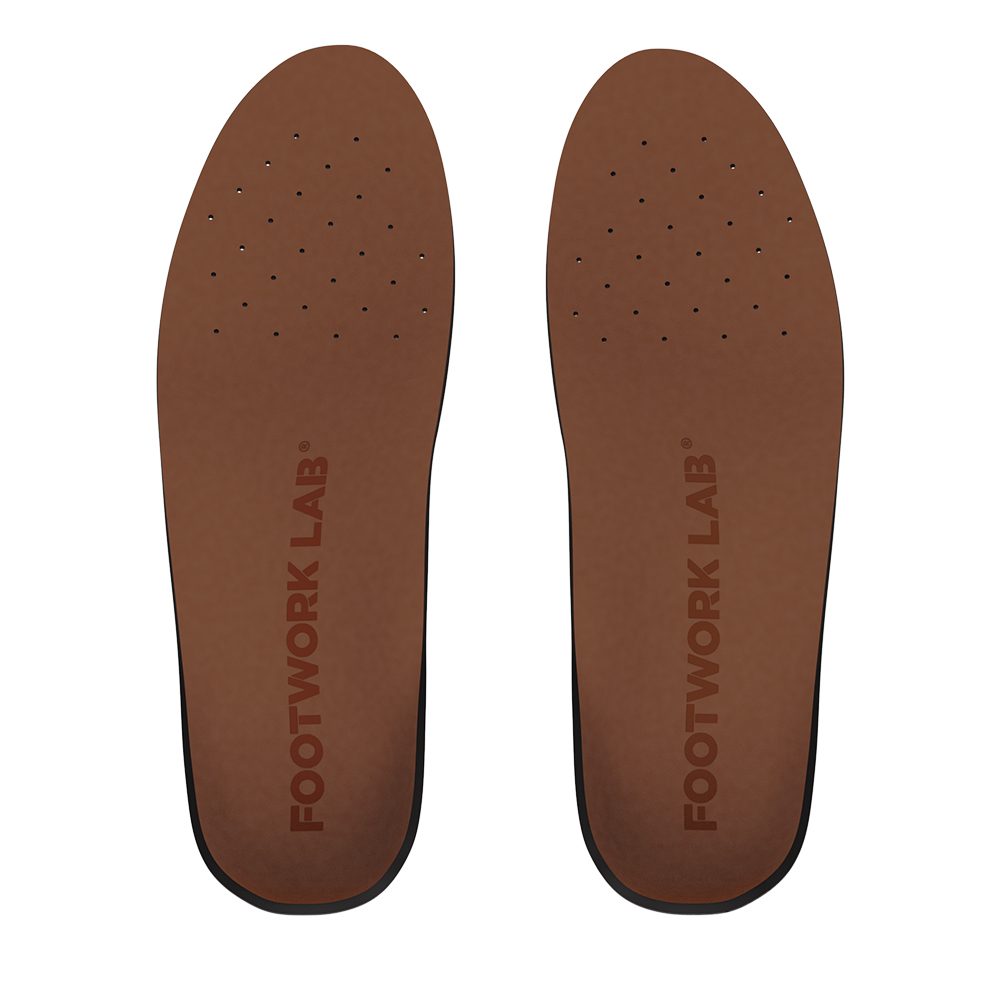
A thermoformable insole contains a layer that softens when heated and stiffens again as it cools. While soft, it can be shaped to a foot or to a model of a foot; once cooled, it holds that shape and provides the structural behaviour the build was specified for. The rest of the insole — cushioning, top cover, reinforcements — is built around that layer.
The practical consequence is that the product is only finished when the last step of the fitting is complete. A blank shipped to a clinic is a semi-finished good, and the clinic is the final manufacturing station. That is a real responsibility, and it is why suppliers who sell blanks without a written routine are selling half a process.
Thermoformability also sets the limits. A material that softens easily is easier to shape and less stable in use. A material that resists heat holds its shape better and demands more control during fitting. The choice between them is a decision about the service the clinic intends to run, not just about the product on the shelf.
Blanks: the material decision comes first
Thermoformable blanks differ in three ways that matter to a fitting service: the temperature at which they soften, how much they soften, and how much memory they retain. A blank that softens at a low temperature is forgiving in a clinic with basic equipment. A blank that requires more heat is less forgiving and more stable afterwards.
Thickness and density then decide how much structure the finished insole carries. A thin blank produces a low-profile insole that fits in more shoes; a thicker one produces more support and takes up more internal volume. Neither is better in the abstract, and a clinic that stocks one thickness will end up refusing customers whose shoes cannot accommodate it.
The third decision is the surface. Some blanks accept a top cover readily; others need surface preparation before an adhesive will hold. That detail only shows up in a service running at volume, when a batch of covers starts lifting after a month of wear and nobody can explain why. Ask the supplier what preparation the blank requires, in writing.
The heating step
Heating looks simple and is where most inconsistency begins. The blank has to reach a temperature at which it deforms evenly, and it has to reach it across its whole area rather than at the edges. An oven with uneven zones produces a blank that is soft in one region and stiff in another, and the resulting insole carries that asymmetry for its whole life.
Dwell time matters as much as temperature. A blank left in too long becomes floppy and loses some of its structural character; one taken out too early resists the shaping and springs back. The routine should state a time and a check, not just a dial setting, because ovens vary and because a busy clinic will otherwise guess.
Write the routine on a card and keep it next to the oven. Include what a correctly heated blank looks like — how it droops, how it feels through a glove, whether it holds a fingerprint briefly. Those sensory checks are what experienced operators actually use, and writing them down is how the next operator learns them without a year of trial and error.
Positioning: on the foot or on a model
There are two positioning routes and they produce different products. Shaping directly on the patient’s foot captures the foot under load, in the position it will occupy in the shoe, and it allows the practitioner to adjust while the material is still soft. Shaping on a model or a cast captures a shape that can be reproduced and stored, at the cost of an extra step and a delay.
Direct fitting is faster and suits a clinic doing a small number of pairs with a strong emphasis on the consultation. Model-based fitting suits a service that expects reorders, because the model can be reused when the customer returns for a second pair. The two can coexist: fit directly for the first pair, keep the model for the second.
Whichever route is used, the position of the foot on the blank decides the trim line and the arch alignment. A blank placed a few millimetres too far forward produces an insole whose arch sits under the wrong part of the foot, and no amount of trimming recovers it. Mark the alignment on the blank before heating, not after.
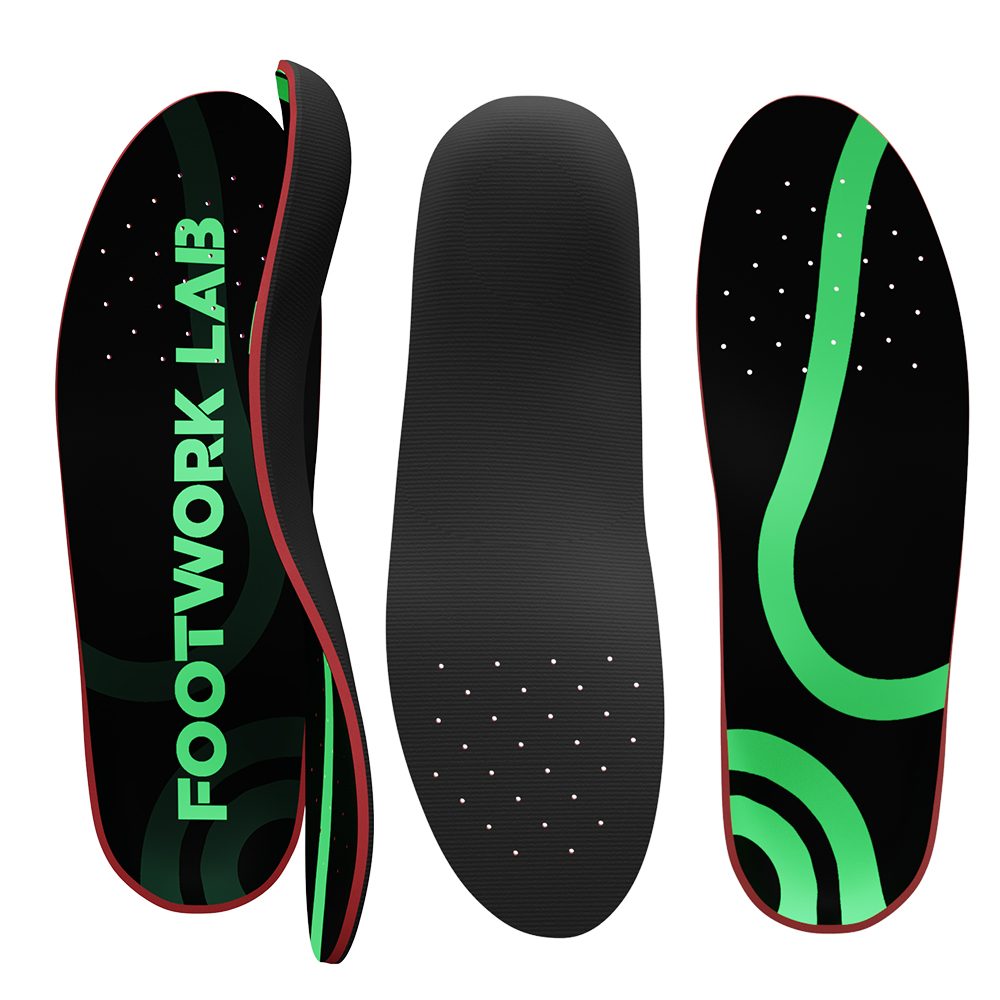
A detail that separates a tidy service from a messy one: keep the customer”’s shoe in the room during positioning. The blank can be shaped perfectly to the foot and still be too wide for the shoe, and the moment to discover that is while the material is soft. Fitting the trimmed pair into the shoe before the appointment ends takes a minute and removes the most common reason for a remake in this product category.
Cooling under load
Cooling is the step that locks the shape, and it has to happen under the load the insole will see in use. A blank left to cool without pressure relaxes back toward its original form. A blank cooled with the foot held in position keeps the shape it was given.
Pressure has to be even. Holding the arch with a thumb while the rest of the insole cools produces a localised shape and a stress point at its edge. The routine should describe how the foot is positioned, how long it stays there and what the patient is asked to do — standing, sitting with the foot loaded, or bearing weight through a specific part of the sole.
Cooling time is not a suggestion. A blank that is trimmed while still warm will deform at the trim line and lose the shape at the exact edge where the fit matters most. Put a timer in the routine and use it, even when the clinic is running late.
Trimming, edges and top covers
The trim line follows the shoe, not the template, whenever the two disagree. Most blanks come with a guide, and the guide is a starting point for a standard shoe. A customer wearing a narrow-fitting trainer needs a different line from one wearing a walking boot, and the difference is visible at the edge where the insole meets the upper.
Edge finishing is the least visible and most felt part of the product. A sharp edge catches the sock liner, wears through it and creates a pressure line along the side of the foot. Deburring, bevelling and smoothing take a minute per pair and remove a whole category of complaints.
Top covers then decide how the insole feels against the skin and how it manages moisture. Bonding has to be complete across the surface: a bubble becomes a pressure point, and a lifted edge becomes a place where the cover peels back. If the blank needs surface preparation, this is where skipping it shows up.
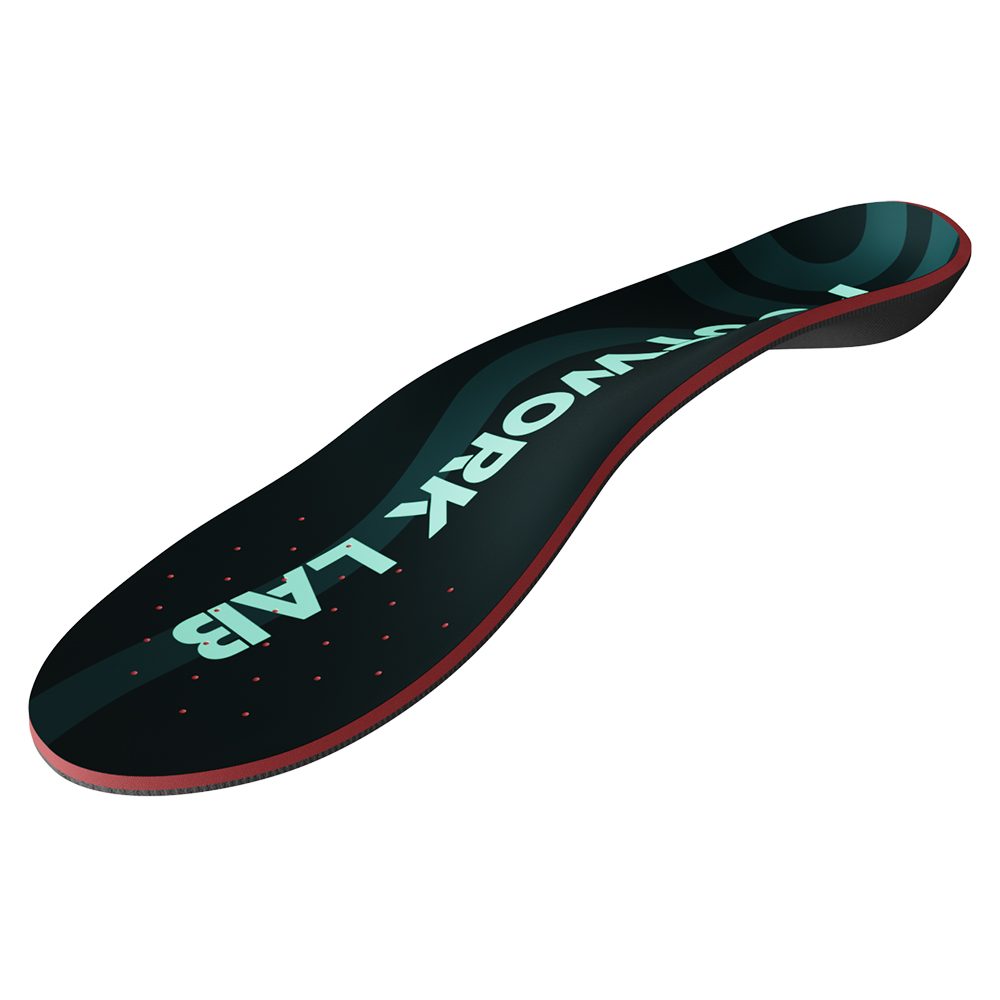
Consumables belong in the same routine. Adhesive, top cover stock, trimming blades and edge finishing materials all run out at the least convenient moment, and a clinic that keeps a week of stock avoids the temptation to substitute. Substitution is where a service quietly changes its product without deciding to.
The second fitting and adjustments
A thermoformed insole is not finished at the first appointment. Feet change shape through the day, shoes break in, and the customer’s tolerance for a new shape is learnt over a week rather than a minute. A second appointment, short and specific, catches the cases that would otherwise become returns.
The review should check three things: whether the insole sits in the shoe without lifting the heel, whether the customer can wear it for a normal day, and whether any specific point feels different from the rest. Localised discomfort usually means a geometry problem at a boundary — an edge, a ridge, a transition between layers — and it can often be adjusted rather than rebuilt.
Record the adjustment. The next pair should include it, and the only way to carry it forward is to write it down against the specification. A clinic that adjusts in the room and records nothing will rebuild the same problem next season.
Records, repeatability and volume
Repeatability is the difference between a service and a series of one-offs. It rests on four records: the assessment, the specification, the material batch and the fitting adjustment. With those four, a second pair can be produced without the customer taking their shoes off; without them, every pair is a new project.
At volume, the arithmetic changes. A clinic producing a handful of pairs a week can afford to shape directly on the foot every time. A clinic producing dozens needs to batch the heating and cooling steps, which means either more equipment or a schedule that groups fittings into blocks. Neither approach is wrong, but the routine differs and the staffing differs with it.
This is also the point at which buying finished pairs from a factory starts to compete with in-house production. A plant that thermoforms daily holds the routine as an institutional skill rather than a personal one, and the per-pair cost reflects that. The right answer depends on whether the clinic’s advantage is the fitting conversation or the manufacturing step.
There is a staffing dimension to this that rarely appears in an equipment quotation. Thermoforming is a skilled task with a short learning curve and a long mastery curve. A new operator can produce a wearable pair in a week and a consistent pair in a few months. If the clinic’s volume depends on one person, the service depends on one person, and the routine document is what reduces that dependency.
Cross-training a second operator is therefore not a luxury. It is the difference between a service that survives a holiday and one that stops for a fortnight. The training does not need to be formal; it needs to be structured around the same written steps, with a comparison of the resulting pairs as the assessment.
Two small habits make the difference over a year of fittings. Photograph every finished pair next to its specification sheet, so that a later question about a specific order can be answered with evidence rather than memory. And keep a reject bin, visible, for blanks that were heated badly or trimmed short: a service that never rejects anything is not checking, and the cost of one discarded blank is trivial against the cost of a pair the customer stops wearing.
Frequently asked questions
Can a heat moldable insole be reshaped if the first fitting is wrong?
Usually, once, and with care. Reheating softens the material again and allows a second shaping, but repeated cycles reduce the structural character of the blank. If the geometry is substantially wrong, a new pair built to a revised specification is the better answer.
Do I need a special oven?
You need even heat and a controllable time. Clinics use purpose-built units for consistency, and the routine matters more than the badge on the door. What you cannot do is improvise with uneven heat and expect repeatable results across a week of fittings.
How long does a fitting appointment take?
Long enough to assess, heat, position, cool and trim without rushing any of those steps, plus time to explain the first week of wear. Compressing it is the most reliable way to produce a pair that comes back.
Should the insole be shaped on the foot or on a cast?
Both work. Direct shaping is faster and captures the loaded foot; a model allows a reorder without a second appointment. Many services shape directly for the first pair and keep a model for later orders.
How do you keep two pairs consistent?
By recording the assessment, the specification, the material batch and any adjustment made at fitting. Consistency is a documentation outcome rather than a manufacturing accident.
What is the minimum order if we source blanks or finished pairs from you?
Two hundred pairs for insoles, mixed across models and sizes. Samples are dispatched within three days of specification approval so the material and the build can be checked before a production order.
Do you supply the ovens and forming equipment?
No. Our scope is foot assessment systems and finished custom orthotic insoles. We will help specify an insole that suits a thermoforming routine, but we do not manufacture the forming equipment itself.
What we would do next
If you are setting up the routine, write the heating, positioning and cooling steps before you buy anything, and test them on colleagues before the first patient. Our article on arch support construction covers the layer choices that sit around the thermoformable core, and the insole categories page shows the builds available for a first order.
For minimum order, samples, OEM and ODM, warranty and logistics, see the FAQ page. To have a routine reviewed against the material you intend to use, contact our team.
This article is intended for professional and educational reference. It is not medical advice. Foot assessment equipment produces measurements and images; clinical interpretation and any decision about care remain the responsibility of a qualified professional. Certification scope is limited to the documentation we hold: European Union certification and ISO quality system certification.