
Every gait analysis supplier will tell you they are a manufacturer. Some are. Others assemble a system from components, add software, and describe the result in the language of production. The distinction matters less for the first purchase than for the third year, when a sensor fails and the answer depends on who actually built the hardware.
The good news is that the question can be settled in a short conversation, without a factory visit, if you know which questions produce answers that cannot be prepared in advance. A supplier who manufactures can describe their own production floor, their own testing routine and their own spare parts. A supplier who resells can describe a catalogue, and the difference appears quickly.
We build gait and pressure assessment systems in our own plant in Ruichang, and we sell them directly. That gives us an obvious bias, so this article is written as a list of questions rather than a list of virtues. Ask them of us as well, and compare the answers.
Start with the physical product
Ask what the platform is made of, how the sensing surface is protected, and what happens when a client steps on it in shoes. A system designed for barefoot standing and one designed for shod walking are different products, and a supplier who has thought about the difference will explain it without prompting.
Ask how the surface is cleaned and what cleaning does to it over time. Clinical equipment spends its life being wiped, and a surface that degrades under the routine it will receive is a surface that will need replacing early.
Ask for the weight and dimensions of the shipped unit, and whether it is installed into a floor or placed on one. The answer determines your room, your access route and your installation cost, and it is a fact rather than a claim.
Ask what the connections look like. Cables are the most common failure point in any assessment system, and a supplier who has designed for cable strain will be able to describe how.
Finally, ask what the unit looks like after three years of use. A supplier with installed systems can send a photograph. A supplier without them will send a rendering.
Then the software, which is where systems differ most
Ask what the software does with a recording after the session ends. Does it store a session with a client reference and a date, can it be exported, and can two sessions be compared side by side without manual work? A system that produces a beautiful report but cannot compare visits is a system for demonstrations.
Ask what happens when the software is updated. Does the update change the appearance of stored recordings, and does it change the values? A change in values invalidates historical comparisons, and a supplier should know whether their updates do that.
Ask about export formats and about the licence model. Per-seat licensing changes the cost of adding a second practitioner; site licensing does not. Neither is wrong, but the difference should be known before the second room is built.
Ask what the reporting module can be configured to include, and whether your own wording can be used. Clinics have house styles, and a system that forces a template will be worked around rather than used.
Ask for a demonstration on your own data rather than on the supplier’s sample case. A recording of a colleague walking across the room is enough to show how the software behaves with an unfamiliar foot.
Production floor, in specific terms
Ask for a video walk-through of the production area, filmed in one continuous take, with the person speaking. Edited footage proves nothing; a continuous take with tools, jigs and work in progress proves a great deal.
Ask which subassemblies are made in-house and which are bought in. No manufacturer makes every component, and the honest answer is a list rather than a claim. What matters is whether the supplier knows the difference and can describe the quality check at the boundary.
Ask how units are tested before shipment and for how long. Our own routine is seven days of testing before dispatch, which exists because intermittent faults rarely appear in an hour. A supplier with a shorter routine will say so, and you can weigh the answer.
Ask what the reject rate is and what happens to a unit that fails. A supplier who says there are no failures is either very good or not measuring, and the follow-up question distinguishes the two.
Ask how long the company has been operating and where the plant is. Ours was founded in 2014, with its own production plant in Ruichang since 2018. Those dates are checkable, and checkable facts are the ones worth asking for.

Service, in numbers rather than adjectives
Ask what the response time is, in hours, and whether it applies outside working hours. A system used two shifts a week has different needs from one used occasionally, and a supplier with a single response commitment for all customers is a supplier who has not segmented support.
Ask what remote assistance requires. Our units ship with a dedicated WhatsApp group, direct access to our engineers, and remote assistance where the site allows it, which covers most first-line questions without a visit. Ask whether your site’s network policy will permit it.
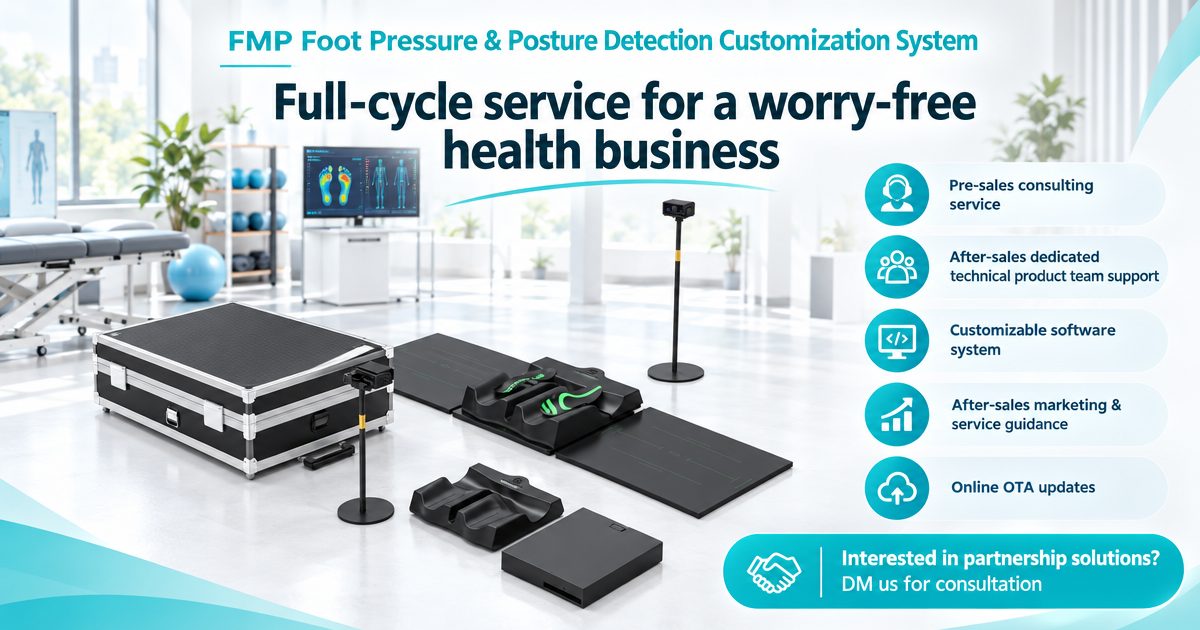
Ask whether the unit can be updated remotely. Connected units in our range receive over-the-air updates, which keeps software current between service visits. A system that requires a site visit for every update carries a cost that appears only in year two.
Ask what the warranty covers and what it excludes. Ours runs twelve months on non-human damage with free replacement parts. Ask what “non-human damage” means in practice, and get the answer in writing.
Ask who attends a service call in your country, and whether that person is employed by the supplier or by a distributor. The answer determines how quickly a fault becomes a remedy.
Commercial terms that reveal the business model
Ask for the minimum order. Ours is one unit for machines, which tells you we are set up to sell to individual clinics rather than only to distributors. A supplier with a high minimum is not necessarily worse, but its business model is different, and the difference affects how it handles a single-unit customer.
Ask whether ODM is available and what it involves. Ours is available on equipment, which means a distributor can have a configuration adapted to a market. Ask what parts of the product can change and what cannot.
Ask how training is delivered and whether it is repeated when staff change. A single commissioning session is a handover, not a training programme, and clinics with turnover need the second thing.
Ask what documentation arrives with the unit: a manual, a maintenance schedule, a spare parts list, and a declaration of the standards the product is certified against. Certification scope for our products is limited to the documentation we hold: European Union certification and ISO quality system certification.
References, and how to read them
Ask for a reference site with your profile, not the largest customer. A clinic with two practitioners and a screening service is a better reference for another clinic than a national distributor.
Then ask the reference a question the supplier cannot prepare: what went wrong in the first six months. Every installation has a story, and a supplier confident in its product will not mind you hearing it.
Ask also how long the reference has had the unit, and whether they have bought a second. Repeat purchase is the only reference that cannot be manufactured by a good sales visit.
Ignore logos on a website. A logo is a claim; a conversation with an operator is evidence.

What you are really buying
You are buying a measurement you can defend, a service you can reach, and a product that will still be supported when the software has moved on twice. None of those appear in a specification sheet, and all of them are decided by whether the supplier manufactures what it sells.
That is why the questions above are worth asking even when the answers are inconvenient. A supplier who answers them plainly, including the parts where the answer is “we buy that in”, is a supplier you can plan around. One who answers everything with a claim is asking you to take a risk you cannot price.
Ask the same questions of us. We would rather lose an order to a clearer answer than win one on a claim we cannot support, because a clinic that discovers a gap after installation does not come back, and does not recommend.
Questions about the place, not the product
Ask where the unit will be built and where it ships from. A supplier who manufactures in one country and ships from another can be entirely legitimate, and the answer still changes the lead time and the service route.
Ask what happens at the port of entry. Duties, clearance and local documentation are usually the buyer’s responsibility, and a supplier who has shipped to your market before will have a routine. Ours ships by express in six to seven working days, by air in ten to twelve, and by sea in thirty to thirty-five, depending on what the order can wait for.
Ask who prepares the export documents and whether they have done your destination before. A missing certificate at customs costs more than the freight, and it is avoidable with one question.
Ask how the unit is packed and whether the packaging is designed for the journey it will make. Equipment that arrives with a bent frame is a supplier problem that becomes a customer problem the moment it is unpacked.
Questions about the people
Ask how many engineers support the product and where they are. Ask whether the person answering your first email will still be there in a year. Low turnover in a small technical team is a genuine indicator of a stable product.
Ask what training the salesperson has had on the equipment. A representative who cannot describe what a recording shows will promise features the product does not have, and the promise becomes your problem at installation.
Ask who writes the documentation and whether it is written in the language of the market you sell into. A manual translated by software is a manual that will not be read, and an unread manual is a support call.
Ask what happens when the person you have been dealing with leaves. A supplier with a CRM and a handover process will answer immediately; one where everything lived in an inbox will not.
Questions about the numbers
Ask how many units of this model are in service, and in how many countries. A small number is not a problem for a new product, but you should know which you are buying.
Ask what the most common service issue is. A supplier who names it plainly has seen enough units to have a pattern, and that pattern tells you what to watch in your first year.
Ask what the spare parts lead time is for the three parts most likely to fail. Compare that number with how long you can operate without the unit, and you have the real risk of the purchase.
Ask whether the price includes installation and training, and what an additional day of either costs. Buyers who compare headline prices without this often choose the more expensive option by accident.
Questions about the future
Ask what the product roadmap looks like for the next two years, and specifically whether existing units will keep receiving software updates. A supplier with a subscription model may stop updating older hardware, which is a legitimate business decision and a material fact for a buyer.
Ask what happens to stored data if the software is discontinued. Export policy is the answer you want, and it should be in writing rather than in a conversation.
Ask whether the company has changed ownership or product line recently. A brand that has moved to a new generation of hardware can leave the previous one supported but no longer developed, which is fine if you know.
Ask for the answer to all of this in an email rather than on a call. Written answers can be compared; recollections cannot.
Frequently asked questions
How do I tell a manufacturer from a reseller?
Ask for a continuous video walk-through of the production area, a list of which subassemblies are made in-house, and the name of the person who tests units before shipment. A reseller can answer the first with stock footage and will struggle with the third.
What is your testing routine before shipment?
Seven days of testing before dispatch. Intermittent faults rarely appear in a short check, which is why the routine is longer than a functional test.
Do you sell single units?
Yes. Machine orders start from one unit, and we accept ODM on equipment. We also supply finished insoles at a minimum of two hundred pairs, mixable across models and sizes.
What support comes with a system?
A dedicated WhatsApp group, direct access to our engineers, remote assistance where the site allows it, and over-the-air updates for connected units. Warranty runs twelve months on non-human damage with free replacement parts.
Can we see an installed system before buying?
Ask us for a reference with a profile similar to yours, and ask that reference what went wrong in the first six months. We would rather you heard it from them than discovered it later.
What certification do your products carry?
Certification scope is limited to the documentation we hold: European Union certification and ISO quality system certification. We do not claim approvals we cannot produce.
How long has the company been manufacturing?
Founded in 2014, with its own production plant in Ruichang, Jiangxi Province, since 2018. We exhibit at trade fairs including Canton Fair, Dubai and Vietnam, and we are happy to be checked against public records.
What we would do next
Send the eight questions above to three suppliers, including us, and compare the specificity of the replies rather than the length. The F5-LAB product page covers one configuration in detail, the factory page shows where the units are built, and the FAQ page answers the commercial questions. For the clinic side of the same decision, our article on matching a scanner to a consultation flow is the practical companion.
This article is intended for professional and educational reference. It is not medical advice. Foot assessment equipment produces measurements and images; clinical interpretation and any decision about care remain the responsibility of a qualified professional. Certification scope is limited to the documentation we hold: European Union certification and ISO quality system certification.