
The label on the box answers a shelf question, not a fitting question. A pair of inserts sold as suitable for plantar fasciitis has passed a marketing decision, not a measurement. What separates a pair that a client keeps wearing from a pair that ends up in a drawer is almost never the wording on the packaging. It is what was recorded before the pair was made, what was decided in the design file, and what happened at the review appointment.
That gap matters commercially as much as clinically. A clinic that buys inserts by label is buying a commodity and competing on cost. A clinic that can describe its fitting process is selling a service, and the object that leaves the room is evidence of the service rather than the whole of it.
We make custom orthotic insoles in the same plant where we build assessment equipment, which means we see both halves of this transaction: the measurement that starts it and the pair that ends it. This article is about the second half, and about the questions that separate a fitting from a purchase.
What the label can and cannot tell you
A condition name printed on a box is a category marker. The phrase orthotic inserts for plantar fasciitis describes a shelf position and the search term it is meant to answer. It tells a buyer where the product sits in a catalogue. It cannot tell you the height of the arch fill inside, the depth of the heel cup, the flex of the shell, or whether the pair was made to a file that describes this client’s foot or to a generic shape that describes an average one.
Two pairs can carry the same words and differ in every dimension that a wearer notices. One is built on a shell that fills the arch and takes up volume inside a close-fitting shoe; another is built flat and thin to sit inside a trainer without disturbing the fit. Both can be described the same way. Only one will suit the shoe the client actually wears to work.
This is not an argument against off-the-shelf products. A prefabricated insert has a legitimate place: it is cheap, immediate, and useful when the question is whether a client will tolerate something under the foot at all. The mistake is reading a prefabricated insert and a made-to-file pair as points on one line, where the second is simply better. They are different instruments in a process, and the process decides which one belongs where.
The label also cannot tell you who made the pair. In this category the same factory may produce for a clinic’s own brand, for a distributor and for a retailer, with the label changing and the construction not. That is normal in manufacturing. It does mean that a buyer who is comparing labels is comparing nothing, and a buyer who is comparing construction is comparing everything.
So the useful question is not what the box says. It is what the supplier can describe about the file behind the pair: what was measured, in what position, how the design was set, and what happens when the result does not sit well in the shoe. A supplier who can answer those four questions is selling a fitting. A supplier who cannot is selling a box.
What has to be recorded before a pair can be called custom
Start with load. A pair designed for a client with plantar fasciitis is designed for a foot that is loaded in a particular way, and load is not visible from the outside. A pressure recording taken standing and walking shows where the sole carries weight, how the two sides compare, and how the pattern changes through the step. That record is the reason a made pair can be different from a generic one in a way the wearer can feel.
Then record shape. Length, width, arch height and heel width set the boundaries of what can be built. Shape taken off weight describes a foot that is not the foot the client walks on, so if the geometry comes from a non-weight-bearing capture it should be read as a starting point that the load record then qualifies.
Then record posture. Where the lower limb sits relative to the foot changes how much support a pair needs to provide and where. A camera capture of stance and gait gives the designer the context: whether the foot is doing all the work of a longer chain, or whether the chain above is already sharing it. Without that context, an insert is designed to a footprint rather than to a person.
Finally, record the shoe. This is the step most often skipped and the one that decides whether the pair gets worn. The internal length, the width at the ball, the depth at the heel, whether the sockliner is removable, whether the heel counter is stiff, and how much volume is available above the foot all constrain the design. A pair built to a beautiful file and dropped into a shoe with no room for it will be uncomfortable for reasons that have nothing to do with the foot.
Four records, then: load, shape, posture, shoe. A supplier who asks for all four is doing a fitting. A supplier who asks only for a size is selling a slightly shaped object with a condition name attached to it. The difference in effort is modest. The difference in what the client experiences is not.
The decisions that live in the file rather than on the box
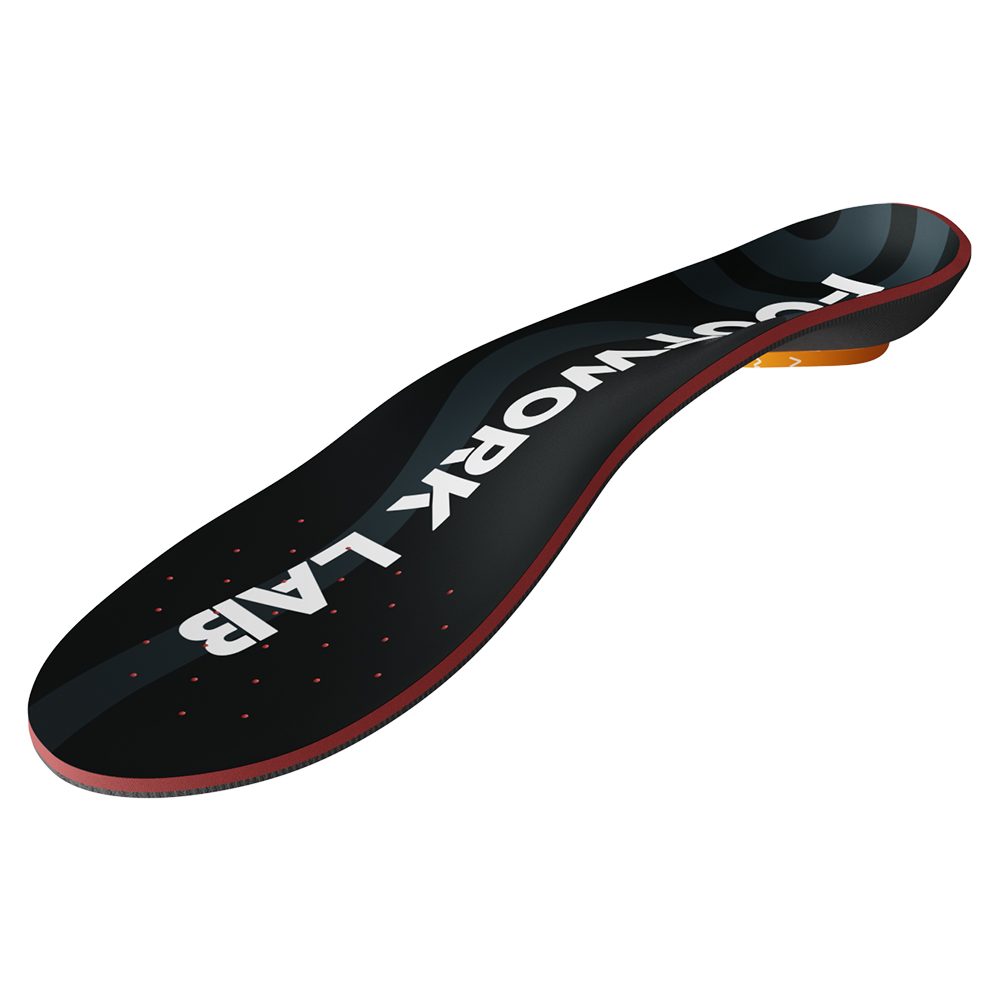
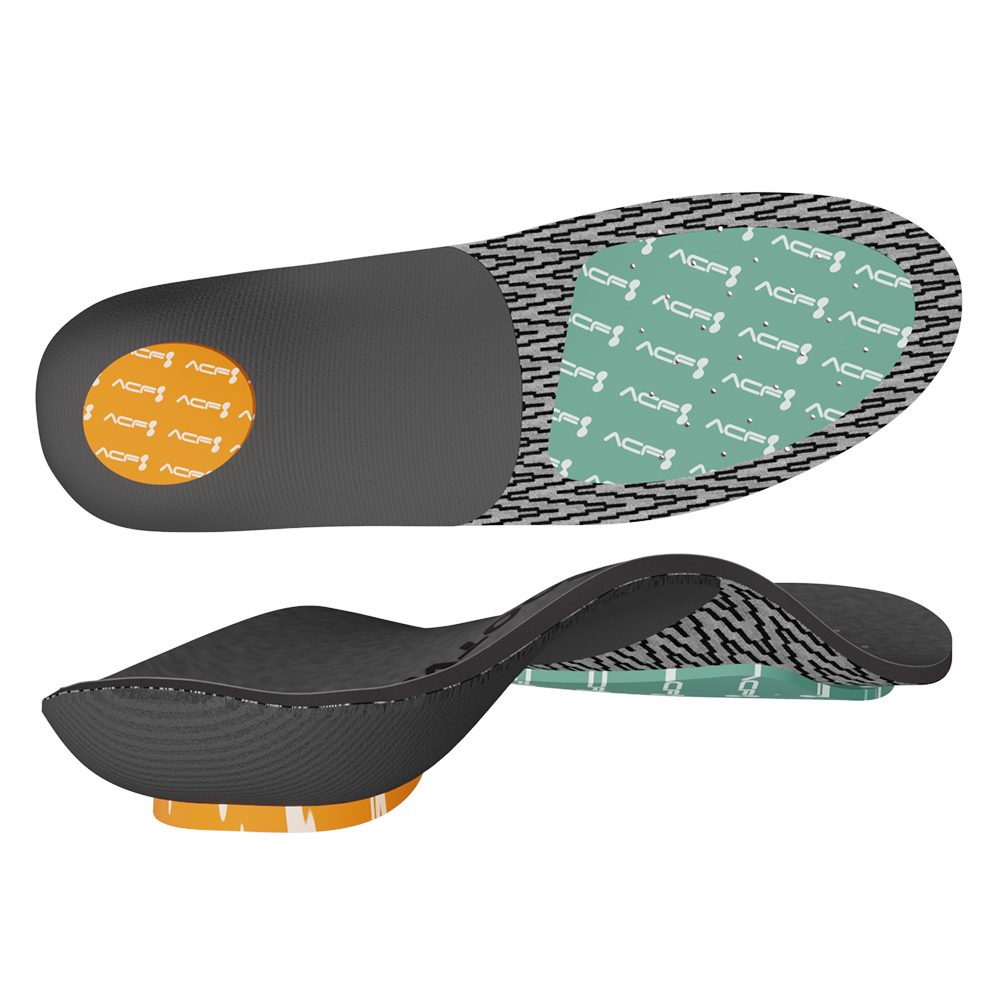
Once the records exist, the design work begins, and this is where a pair becomes specific. The first decision is arch fill: how much of the space under the midfoot the shell occupies, and how gradually that fill rises. Too little and the pair does nothing the shoe was not already doing. Too much and the client feels the insert rather than the ground, which is a reliable way to lose a pair to a drawer.
The second is posting, meaning the deliberate angling of the shell under the heel or forefoot to change how load is shared across the sole. Posting is a design choice with consequences, and it should be written down: how much, in which direction, and why for this client. A pair that arrives with no design note is a pair that cannot be adjusted intelligently at the review, because nobody knows what was intended.
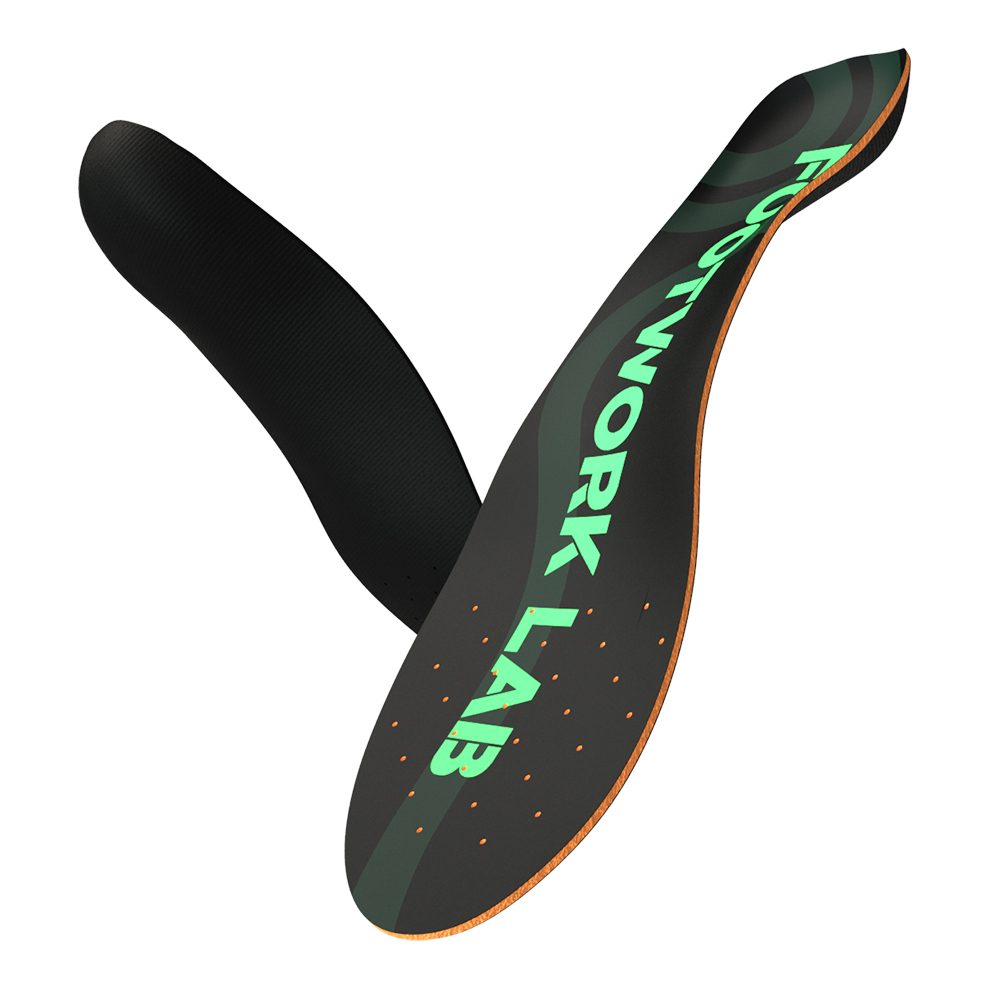
The third is material and thickness. Shell stiffness determines how much the pair resists load and how much it simply passes through. A stiff shell in a soft shoe behaves differently from the same shell in a firm shoe, which is why the shoe record matters at the design stage rather than at dispatch. Thickness also consumes volume, and volume is the currency that shoe fit is traded in.
The fourth is the top cover: the layer against the skin. Its thickness, texture and how it is bonded affect both comfort and durability, and it is the part of the pair the client actually touches. A cover that delaminates after a few weeks is the most common reason a structurally sound pair gets returned, and it is entirely a manufacturing decision rather than a clinical one.
The fifth is accommodation, meaning the places where the pair must not press. A prominent metatarsal head, a sensitive area under the heel, a scar, a toe that needs room to lift: each of these is a note in the file that changes the geometry. A pair made without those notes is made for a foot in general, and the client will find the difference within a week.
The first two weeks and the review appointment
A made pair is not finished when it is packed. It is finished when the client has worn it through a staged schedule and someone has looked at the result. The schedule matters because a pair introduced at full volume on day one produces a reaction that says more about the introduction than about the design: the foot notices the change, the shoe fits differently, and the client concludes that the pair is wrong when it is simply new.
The usual pattern is a short first exposure, then a gradual increase across the first week or two, with the pair worn in the shoe it was designed for. Anything else, including wearing it in a different shoe, changes the geometry the pair was built around. Clients should be told this in writing, because the instruction is easy to forget and impossible to reconstruct later.
The review is where the file earns its keep. If the design note records the fill, the posting and the accommodation, a practitioner can look at what the client reports and decide whether to reduce fill, add posting, adjust a cover or rebuild. Without the note, the only available move is a remake, which is slower, more expensive and teaches nobody anything.
Review also catches the cases where the pair is fine and the shoe is not. A pair that presses under the heel in one shoe and not another is telling you about the shoe. That is useful information, and it is only visible if the review includes the shoe the client actually wears rather than a clinic slipper.
What a remake policy and a tolerance actually protect
Every manufacturer produces the occasional pair that does not match its file. The honest question is not whether that happens but what the terms say when it does. A remake policy that is written down, with a stated trigger and a stated turnaround, is a quality document. A policy that exists only in a sales conversation is a hope.
Ask what counts as a remake. A pair that does not match the design note is a manufacturing fault and should be rebuilt. A pair that matches the note and does not suit the client is a design question, and it should be answered by adjusting the design rather than by repeating it. Conflating the two is how remake rates climb while client satisfaction does not.
Tolerance is the quieter half of the same subject. Two pairs built to the same file should resemble each other, because a client who receives a replacement in six months should receive the same object. Ask a supplier how they check that, and ask to see two pairs from the same file side by side. The answer is more informative than any statement about quality systems.
Then ask what happens to the file. A design file that stays with the manufacturer is a file you cannot take elsewhere. A file you hold, in a format you can read, is an asset that outlives the supplier. For a clinic building a record over years, that single term is worth more than a discount on a repeat order.
Finally, ask how the pair is identified. A serial or a file reference on the pair, matched to the record, turns a return into a conversation about a specific object rather than a general complaint. It is a small manufacturing habit with a large effect on how quickly a problem gets resolved.
Buying the service rather than the object
When a clinic starts looking for a manufacturing partner, the first instinct is to compare unit cost. Unit cost is the least informative number in the conversation, because it is the one figure that can be moved without changing anything the client experiences. The figures that matter are minimum order, sample turnaround, production capacity and what happens after a pair goes wrong.
Our own terms are these. Insole orders start at two hundred pairs, and styles and sizes can be mixed within that. Samples leave within three days. Capacity runs roughly five hundred to a thousand pairs a day, which is what makes a mixed order realistic rather than a special favour. We accept both ODM and OEM on insoles, so a clinic can order to its own design or take ours and put its name on the result.
Ask about the handover between the clinic and the factory. Who converts the measurement into a design file, and who signs it off? A factory that will accept a file and build it exactly is a supplier. A factory that will look at the file and say the posting looks unusual for this shoe is a partner, and the second is worth more than the first when a difficult case arrives.
Ask, too, what the factory will not do. Ours will not describe a pair as suitable for a named condition, because that is a clinical judgement made by the professional who examined the client, not a manufacturing claim. What we can describe is the file: what was measured, what was specified and what was built. That is a narrower claim, and it is the one we can defend in writing.
Frequently asked questions
Are custom inserts the same as the ones a pharmacy sells?
No. A prefabricated insert is made to an average shape and adjusted, if at all, by trimming. A custom pair is built to a file that records load, shape, posture and the shoe it will sit in. The prefabricated version has a place at the start of a process; it is not a cheaper version of the same object.
Can you tell me whether an insert will help my client with plantar fasciitis?
No, and a manufacturer should not try. We build to a specification; the decision about what a client needs belongs to the professional who assessed them. What we can describe is how a pair is designed to share load and how the file records those choices.
How many pairs is the minimum order?
Two hundred pairs, and styles and sizes can be mixed within that order. That threshold is set by the production run rather than by the number of designs, so a clinic with several shoe categories can still fill one order.
How quickly can we get sample pairs?
Samples leave us within three days. Production capacity runs roughly five hundred to a thousand pairs a day, so a sample does not queue behind a large order. Transit after dispatch is six to seven working days by express, ten to twelve by air and thirty to thirty-five by sea.
Can the inserts carry our clinic’s brand?
Yes. We accept both ODM and OEM on insoles, which covers building to your design as well as building to ours with your branding. The details are agreed in writing before the first production run rather than after it.
What happens when a pair does not sit well in the shoe?
The first step is to compare the pair against the design file and the shoe it was made for, because that comparison separates a manufacturing difference from a design question. Whether the answer is an adjustment or a rebuild is agreed before anything is remade.
What certification do you hold?
European Union certification and ISO quality system certification. That is the scope of the documentation we hold, and we do not quote approvals beyond it.
What we would do next
If you are specifying a fitting process, start with the measurement side: the F2 plantar pressure system records the load and posture that a design file depends on, and our article on reading a plantar pressure map explains what the output actually shows. The insole range lists the constructions we build, and the contact page is the shortest route to a conversation about minimum order, samples and file formats.
This article is intended for professional and educational reference. It is not medical advice. Foot assessment equipment produces measurements and images; clinical interpretation and any decision about care remain the responsibility of a qualified professional. Certification scope is limited to the documentation we hold: European Union certification and ISO quality system certification.