
A thermoplastic shell is specified by behaviour — how it resists, how it recovers, how it holds a shape — and most buyers specify it by name instead. The name identifies a family; the behaviour decides whether a pair feels supportive or punishing after a month of wear, and behaviour is what a fitter can actually evaluate.
The gap between the two is where returns accumulate. A shell described as firm arrives and feels rigid under a heel that needed cushioning; a shell described as flexible arrives and collapses under a foot that needed definition. Neither is a production error; both are specification errors.
This article describes what a shell’s material family fixes, how stiffness is actually produced, what happens to a shell over months of use, and how to write a specification in behavioural terms that a factory can build and a fitter can check. We form shells on our own line, so the account follows the bench.
What the material family fixes
A thermoplastic softens when heated and holds a shape when cooled. That single property makes forming possible and also sets the shell’s limits: it will soften again at a higher temperature, which matters for storage, for a hot car, and for any later adjustment.
Within the family, grades differ in stiffness, in the temperature at which they soften, and in how much they recover after loading. A stiffer grade resists more and feels more defined; a softer grade conforms more and feels gentler. Neither grade is better; each suits a brief.
The family also fixes how the shell can be finished. Some grades trim cleanly and hold an edge; others need more work at the border. Edge behaviour is where comfort complaints concentrate, which makes finishing a material decision as much as a craft one.
What the family does not fix is the design. Two shells from the same sheet, formed over different models, behave differently. The material is the constraint; the geometry is the product.
It is worth knowing the softening range of the chosen grade, because it determines what the customer can safely do with the pair. A shell that softens at a modest temperature will deform in a hot car or beside a radiator, and that is a fact to state rather than a risk to discover.
There is one more property worth naming: the shell’s memory. A grade with good memory returns towards its formed shape after loading, which is what keeps a defined arch region feeling defined over months. A grade with poor memory takes a set and stays there, which can be comfortable and can also mean a support region slowly flattens.
How stiffness is actually produced
Stiffness in a formed shell comes from three things: the material’s own modulus, the thickness of the sheet, and the curvature the geometry imposes. A curved section resists bending more than a flat one of the same thickness, which is why arch geometry changes feel as much as it changes support.
This is why specifying thickness alone does not specify stiffness. A thin shell with strong curvature can feel firmer under the arch than a thicker shell with a shallow one, and a specification that names only thickness leaves the factory to choose the curvature.
It is also why two pairs built to the same thickness specification can differ in use. If the geometry varies — because the model varied, or the forming temperature varied — the stiffness varies with it, and the pair that felt right in the sample may not be the pair that arrives.
The implication for buyers is to specify behaviour at three points: heel, arch and forefoot. Those three descriptions, plus the geometry fields, constrain the outcome far better than a single material name.
The cover’s contribution to stiffness is often forgotten. A bonded cover adds a little resistance and a lot of surface continuity, so a shell specified at the margin of comfort can feel different once the cover is applied. Specifications written before the cover decision tend to be revised after it.
It is worth asking a factory to describe the same shell in three thicknesses and to say what changes in each. A factory that can answer that question in behaviour terms is a factory that understands its material; one that answers with a single number is a factory that has a catalogue.
Forming conditions and repeatability
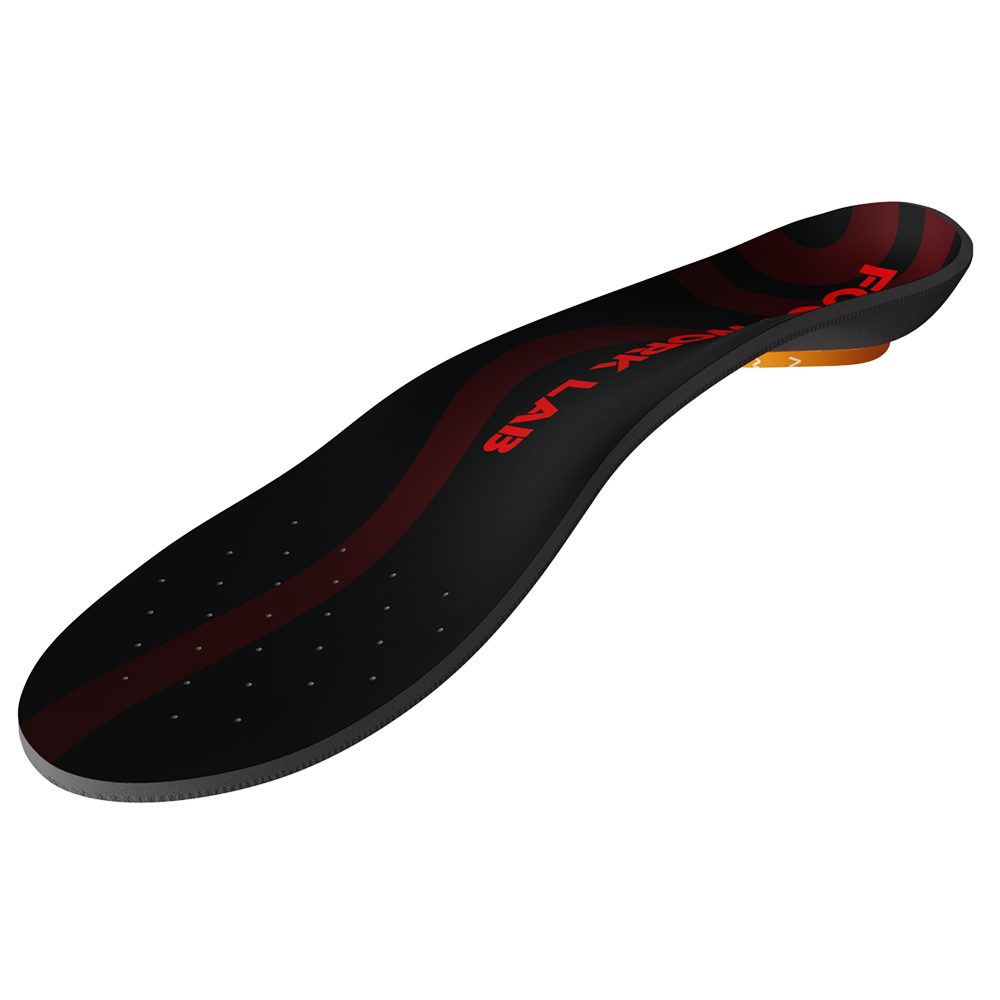
The forming temperature decides how faithfully the sheet follows the model. Too cool and the sheet resists, leaving a shallow reproduction; too warm and it thins where it is drawn, leaving a weak point. The window is narrow enough that temperature control is a production capability, not a detail.
Cooling matters as much as heating. A sheet cooled under load holds its shape; one released early relaxes and loses definition. Workshops that cool in a fixture produce consistent shells; workshops that cool on a bench produce shells that vary with the room’s temperature.
Holding time completes the set. A shell that is trimmed before it has fully set can distort at the edge, which is exactly where a wearer notices. The three conditions — temperature, cooling, holding — are what a factory controls to make a batch match a sample.
When a batch does not match, the cause is almost always in these three rather than in the material. That is why a supplier who can describe its forming conditions is easier to hold to a standard than one who describes only its material.
It is worth asking how a factory records its forming conditions. A log of temperature, time and cooling per batch is a quality system; a memory of how it usually goes is not. The log is also what makes a remake conversation factual rather than personal.
What happens over months of wear
Thermoplastic shells creep: under sustained load they deform slowly and do not fully return. A shell that feels defined in the first week may feel flatter in the third month, and the change is normal rather than a defect.
The rate of creep depends on the grade, the thickness, the temperature of use and the load. A shell worn in a hot environment or left in a warm car will change faster, and a specification written without that context will produce a pair that ages unexpectedly.
Recovery matters for the cover as well. A shell that creeps away from the foot leaves the cover unsupported, and the cover then wears faster at the unsupported region. Wear complaints about covers are sometimes complaints about shells.
Telling the customer that a shell changes over months is part of an honest sale. It also sets a replacement rhythm, which is better for the shop and better for the wearer than a surprise.
The wearer’s own pattern matters as much as the material. A shell worn in the same shoe every day will creep in one pattern; one alternated between shoes will creep differently. That is another reason the footwear context belongs in the specification rather than in the small talk.
It is worth asking how the factory stores finished shells before they are covered. A shell that rests on an edge for a week can take a set at that edge, and the resulting pair is comfortable everywhere except one line under the arch that nobody can explain.
Specifying by behaviour
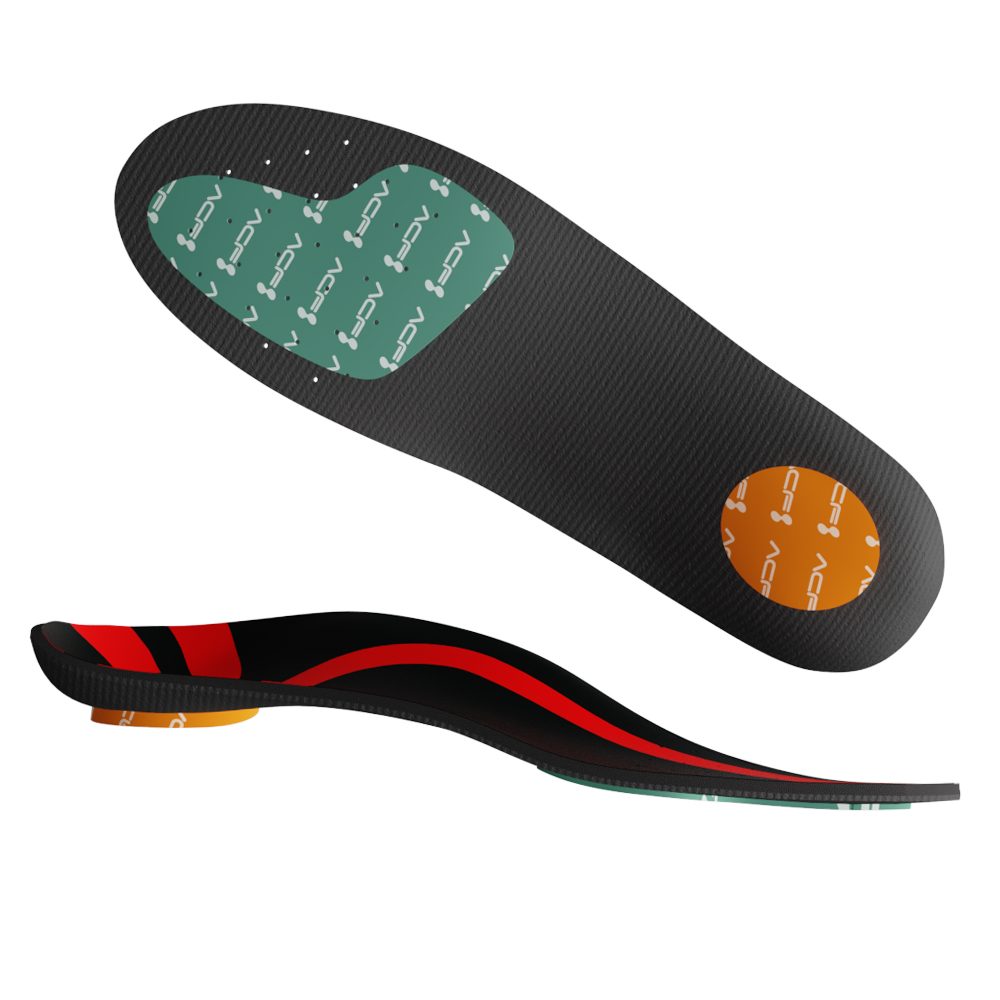
Write three sentences: how the shell should feel under the heel when standing, how it should feel under the arch when weight shifts, and how it should feel under the forefoot when walking. Use words a fitter would use — defined, gentle, resisting, yielding — rather than material names.
Then write the geometry fields that produce the behaviour: arch height, width, apex, blend, heel cup depth. The behaviour is the target; the geometry is the lever. A factory that receives both can hit the target; one that receives only a material name cannot.
Then write the wear context: hours per day, surface, footwear, and whether the environment is warm. Those four facts predict creep and therefore predict how the pair will feel in month three.
Finally write the approved sample with its date and method. Every later batch is compared with it, and the comparison is only fair if the sample’s behaviour was described at the time rather than remembered.
The behavioural description should also name what the shell must not do: must not press at the medial edge, must not lift the heel out of the counter, must not crease at the flex point. Negative requirements are easier to check than positive ones and they catch the failures that matter.
The specification should also say how the shell is finished at the edge, and who is responsible for relieving a pressure point if one appears. That division of labour is where after-sales arguments usually start.
Matching the shell to the wearer
A firmer shell suits a wearer who needs definition: a foot that collapses under load, a shoe with a soft counter, a brief that asks for controlled position during activity. It is less suited to a wearer whose priority is comfort during long standing on hard surfaces.
A softer shell suits accommodation: a foot that needs gentle distribution, a shoe with a firm counter that already provides stability, a wearer who will not tolerate a defined edge. It is less suited to a brief that requires control at speed.
Between the two sits most of the market: a moderate shell, a moderate cup, a cover that softens the first contact. That middle specification is legitimate and it is what many customers will be satisfied with, provided the page describes it accurately rather than as the firmest option available.
The judgement belongs to the person who assessed the wearer. A factory can build to any of the three; it should not be asked to choose.
It also helps to record what the wearer does for a living, in the broadest terms. Standing, walking, driving and sitting all load a shell differently, and the four categories cover most of the variation without asking an intrusive question.
One more consideration belongs in the matching decision: the shoe’s own stability. A firmer shell in a stable shoe compounds stability, which can be right or too much; in a soft shoe it supplies stability the shoe lacks. The pairing is a decision, not a default.
Common specification errors
Naming a material without a thickness or a geometry, which leaves the factory to choose both. Naming a thickness without a geometry, which produces unpredictable stiffness. Naming a stiffness without a wear context, which produces a pair that ages unexpectedly.
Specifying a shell for a shoe that has not been named. Specifying a cover before the shell’s surface is known. Specifying an edge treatment without saying who finishes it, which is how a batch arrives with a border that the fitter then has to correct.
Skipping the sample date, which makes every later comparison informal. And omitting the remake clause, which turns a specification discrepancy into a negotiation rather than a procedure.
Six errors, all avoidable with a one-page form. The form is the cheapest quality tool in the workshop, and it costs less than a single remake.
The last error is treating a sample as final. A sample is a hypothesis about the wearer, and the first month of wear is the test. Workshops that build a review into the first month learn faster than those that wait for a complaint.
The last point is about language: the words a fitter uses to describe a shell are not the words a factory uses to build one, and a specification that bridges the two is worth more than one that is technically precise and clinically silent.
One final error is worth naming: specifying a shell for a wearer whose shoe will change in a month. If the footwear is about to be replaced, the specification should wait, because the volume it is built for will not exist by the time the pair is worn.
Frequently asked questions
What is a thermoplastic shell in an insole?
It is the formed structural layer that holds the insole’s geometry — arch region, heel cup and overall shape. It softens when heated, takes a shape when cooled, and holds that shape during wear.
Is a stiffer shell better?
Not in general. Stiffness should match the brief: definition where control is needed, accommodation where comfort during long standing matters more. A specification should describe behaviour at the heel, arch and forefoot rather than name a material.
Why do two shells of the same thickness feel different?
Because stiffness also comes from curvature and forming conditions. Geometry and the forming process change how a shell resists bending, so thickness alone does not determine how a pair feels.
Do shells change over time?
Yes. Thermoplastic shells creep under sustained load and do not fully recover, which is normal. The rate depends on the grade, the thickness, the temperature of use and the load.
Can you produce to our existing design?
Yes, if the geometry fields and the shell behaviour are supplied, along with an approved sample. Our minimum is two hundred pairs for insoles, mixable across models and sizes.
How quickly can we see a sample?
Samples ship within three days. Test the sample in the target shoe under the target activity and record what needs changing before production.
Do you offer ODM and OEM for insoles?
Yes, both, with the design following an agreed specification and your branding applied. Scope is confirmed in writing before production.
What we would do next
Specify the shell by behaviour at three points, then give the geometry that produces it. The Insole Categories page lists the ranges we produce, and Our Factory describes the forming and finishing steps.
The article on orthotic molding explains why the forming method constrains what a shell can be — read it before fixing the specification.
This article is intended for professional and educational reference. It is not medical advice. Foot assessment equipment produces measurements and images; clinical interpretation and any decision about care remain the responsibility of a qualified professional. Certification scope is limited to the documentation we hold: European Union certification and ISO quality system certification.