
A podiatry assessment is a sequence, and every instrument in the room exists to serve one step of it. The patient arrives, the history is taken, the foot is examined, and somewhere in that sequence a record is made — of the standing shape, of the walking pattern, of the posture above the sole. Equipment that does not map onto a step of the sequence is furniture, however impressive its brochure.
Buyers searching this term are usually furnishing a room or upgrading one, and the useful question is not which instrument is best but which step of their sequence is weakest. A room with an excellent chair-side examination and no records produces opinions that cannot be compared; a room full of instruments and no examination time produces records nobody acts on.
We manufacture the record-making half of the sequence: pressure sensing, camera capture and analysis software, plus the custom insole line some records eventually feed. This article walks the assessment step by step, shows where a screening system fits, and marks — deliberately — the steps it must never pretend to serve.
The sequence, mapped to instruments
The history and the hands-on examination belong to the professional, full stop. No instrument shortens them honestly, and a room that buys equipment to skip them has misread the purchase. What instruments serve is the step that follows: turning observations into records that can be stored, compared and, where relevant, sent onward to a workshop.
The standing record is the first instrument step. Pressure sensing under the feet produces the resting map in seconds — arch shape, heel position, how load shares across the sole. It requires no interpretation to capture, which is why a trained assistant runs it while the professional finishes the previous note. The map does not conclude anything; it fixes a starting point.
The walking record is the second step, and the podoscope sits beside it as the quick-screening view: a look at the sole, the toes and the lower leg while the patient stands or walks. Screening instruments trade depth for speed. They are the instrument equivalent of the first minute of the examination, and their output should be read as exactly that — a fast, structured look, not a verdict.
The sequence mapping also has an audit use that rooms discover later: when an appointment feels crowded, the table shows which step is absorbing the crowd. Usually it is capture running long because the protocol drifted — and the fix is a document revision, not a new instrument. Rooms that keep the table current spend their equipment budget on gaps, which is where it buys something.
Where a screening system earns its place
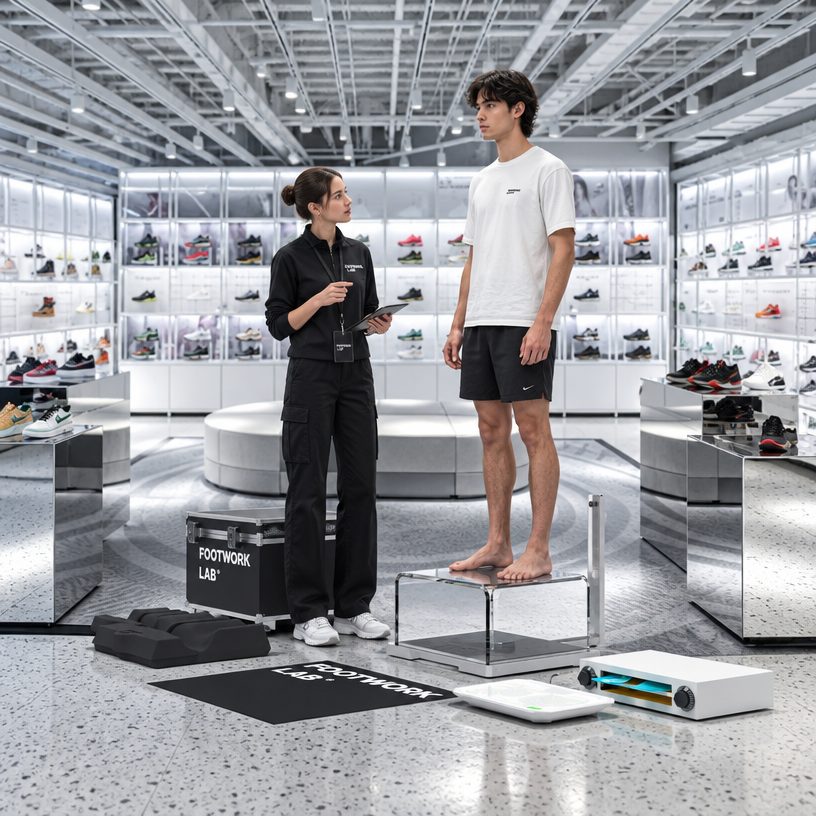
Screening instruments pay for themselves in triage. A clinic that sees many feet briefly — a walk-in service, a screening day, a retail clinic corner — needs the first structured look to happen quickly and consistently. A podoscope does that: the foot and lower leg appear on screen, the operator captures a record, and the appointment either proceeds to full assessment or does not.
The consistency is the part buyers underrate. Every operator captures the same view the same way, so the record from Monday reads like the record from Friday. That property matters less in a room where one professional sees everything and remembers everything; it matters enormously where staff rotate, volumes are high and the professional reads records they did not capture.
What screening does not do is replace the full assessment. Depth of pressure data, the walking timeline, the posture pairing — these belong to the fuller instrument, and a screening record that raises a question should hand the patient to it. Rooms that understand the handover run both instruments happily; rooms that hope one machine does everything discover the gap one busy afternoon at a time.
A worked triage example shows the screening instrument’s real tempo. A screening morning sees thirty feet; perhaps five warrant the full pressure assessment that day. The five arrive at the fuller instrument already briefed, their screening view attached to the file, and the full assessment starts from evidence rather than from introductions. The arithmetic — thirty quick looks, five deep ones — is what the screening purchase is actually buying.
What the record shows, and what it withholds
A screening view shows structure: the sole’s contact pattern, toe alignment, the stance of the leg above it. These are observations a professional would make by eye anyway — the instrument makes them storable, shareable and comparable across visits. The value is not that the machine sees something the eye cannot; it is that the eye’s findings acquire a fixed form.
What it withholds is equally fixed. It does not measure pressure distribution the way a sensor layer does, it does not produce a walking timeline, and it says nothing about why a foot presents as it does. Suppliers who let a screening instrument borrow the vocabulary of a full assessment system — pressure analysis, gait measurement — are borrowing credibility their hardware does not hold.
Our own range draws the line in the catalogue. The Q1P is specified as a quick-screening system for foot and leg views; the pressure systems beside it carry the sensing layer and the timeline. Quotations name the difference, because a buyer who discovers it after delivery will remember which supplier drew the line and which one blurred it.
Vocabulary borrowing also has a consumer-side cost worth naming: the patient who repeats it. A screening view described as pressure analysis in the brochure becomes a patient telling their family they had their gait analysed, and the family’s expectations arrive at the next provider’s door. Suppliers who name their instruments plainly are also, quietly, protecting the profession’s conversation — one more reason to prefer them.
Pairing screening with pressure capture
Rooms that add both instruments discover they are complementary in a specific, practical way. The screening view is fast and structural; the pressure capture is slower and distributional. A session can open with the screening look — is there anything structural worth noting — and proceed to the pressure record when the answer justifies the extra minutes.
The pairing also disciplines the equipment budget. A screening instrument is not a cheaper pressure system; it is a different purchase for a different step. Rooms that buy it as the cheaper substitute end up buying the pressure system anyway once the records start asking questions the screening view cannot answer. Budget honestly: screening for volume and structure, pressure for distribution and timeline.
For buyers planning a single purchase first, the pressure system usually comes first for clinical rooms, screening first for high-volume walk-in contexts. Neither order is wrong. What matters is that the second purchase completes the sequence instead of duplicating it — and that the room’s workflow assigns each instrument its step in writing, so staff do not improvise the assignment daily.
The pairing decision also has a training dimension: the two instruments’ protocols should be written as one document, not two, so the assistant learns the session rather than the devices. The combined protocol names when the session stops at screening and when it continues to capture — the handover rule in writing, exactly where the operator needs it, rather than in a supervisor’s memory.
Records, storage and the review visit
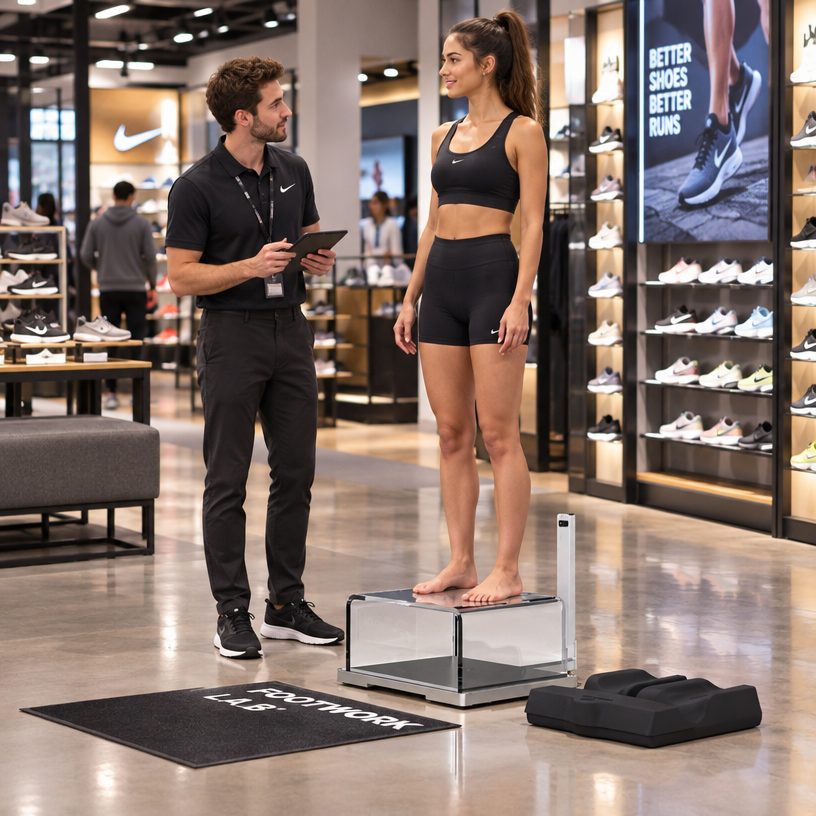
Whatever the instrument, the record’s second life matters more than its first. A screening view stored in full lets the review visit compare structure across months — the toe alignment that changed, the stance that did not. A record kept as a screenshot serves nobody at review time, which is why export and storage belong on the purchase checklist for screening instruments too, not only for expensive ones.
Our systems export the underlying record, and our reports are laid out so a professional can annotate without retyping. The same expectation should be put to any supplier in the category: show the export, show the storage, show the comparison. The demo questions cost minutes and predict the instrument’s useful life better than any specification table.
Review visits are also where assessment earns commercially. A patient who returns is a relationship; the record is the reason the return is worth their time, because the conversation starts from their own before-and-after rather than from memory. Rooms that store well find their recall lists fill themselves, and the recall list is where a practice’s schedule becomes durable.
Review visits also have a data-hygiene habit worth adopting from the start: annotate at the visit, not after. The professional’s reading, written onto the record while the patient is present, becomes part of the stored document; the reading reconstructed that evening is a different, weaker document. Practices that adopt the habit find their records read like consultations — because that is what they are.
Staffing the assessment room
The assessment sequence allocates people, not only instruments. Capture — standing record, screening view, walking task — belongs to a trained assistant working from a protocol. Reading belongs to the professional. Rooms that blur this either waste professional minutes on captures an assistant could run, or ask assistants to read records the professional should own.
The protocol is the bridge. Written steps, fixed instructions, named session files: a new assistant follows the document and produces comparable captures in their first week. Our installation and training materials assume this model, and the support structure behind it — a dedicated WhatsApp group with an engineer, remote assistance, over-the-air updates — assumes the operator is busy and needs answers fast.
Reliability terms belong in the same conversation. Systems ship after seven days of factory testing, the warranty runs twelve months, and the service year’s coverage is stated in the quotation. A room that schedules assessments around its equipment deserves a supplier who schedules their answers the same way.
Staffing has a seasonal test worth planning for: the week the practice is short. Rooms discover their protocol’s true quality in the week the usual operator is away — either the document carries a replacement through, or it does not. Writing the protocol for a competent stranger, rather than for the person who already knows it, is the discipline that turns installation week into a durable routine.
A fit for the room you actually have
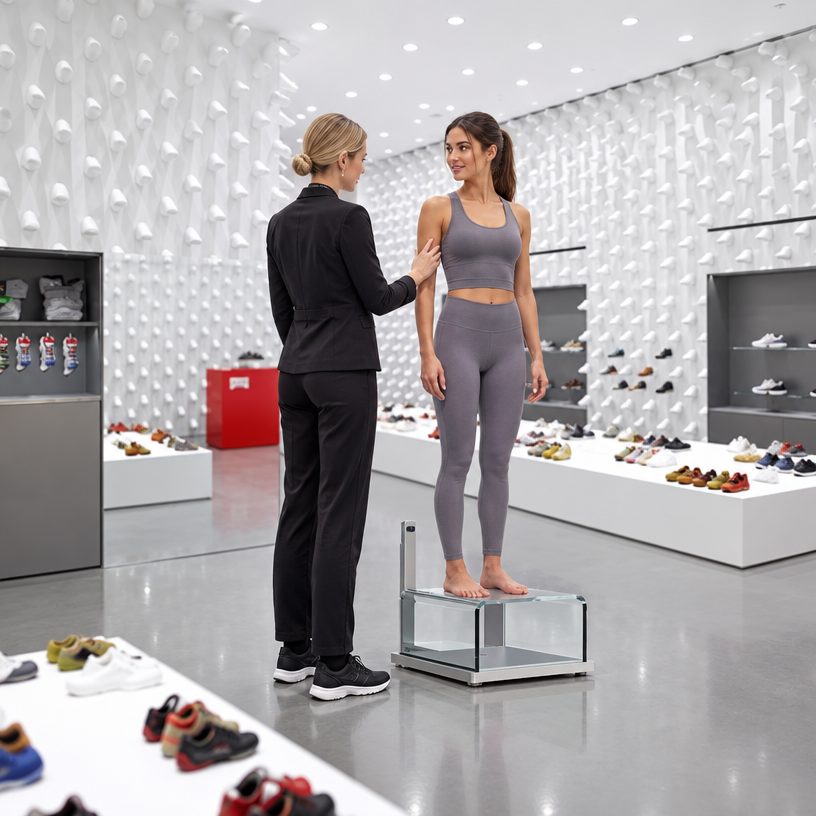
Close the planning the way it opened: on the sequence. Write the steps your room runs — history, examination, standing record, screening view if the volume warrants it, walking record, report, plan — and assign an instrument and an operator to each. The gaps in that table are the purchase list; everything else on the supplier’s catalogue is someone else’s purchase list.
Buyers who plan this way tend to buy fewer instruments than they feared and use them more than they expected, which is the healthiest outcome in the category. The room’s authority stays with the professional, the records accumulate where they can be compared, and each instrument has a step it can point to when the annual budget review asks why it is there.
Our range exists to serve the record-making steps of that table, and we would rather a buyer place us accurately than generously: screening where volume demands speed, pressure where questions demand depth, and the insole line downstream where records become production. Ask us which is which — the answer is the same in the brochure and in the quotation.
A closing word on buying fewer instruments on purpose. The rooms that list their sequence and fill only the gaps often end with two instruments instead of four, and a budget line left over for training and service — the two purchases that actually decide whether the first two earn their floor space. The catalogue rewards completeness; the sequence rewards fit. Plan from the sequence.
Frequently asked questions
What does a screening system add to a podiatry assessment?
A fast, consistent structural view of the foot and lower leg that a trained assistant can capture. It serves triage and volume; the full pressure assessment answers the distribution and timeline questions.
Can a screening instrument replace a pressure system?
No. It shows structure, not pressure distribution or a walking timeline. Rooms that buy it as a cheaper substitute usually buy the pressure system later anyway.
Who should operate the instruments?
A trained assistant runs the captures from a written protocol; the professional reads the records. Blurring that split wastes professional minutes or produces unread records.
Are the records comparable across visits?
Yes, when captures follow the same instructions and the underlying records are stored. Our reports export the full record for exactly that purpose.
Does the equipment interpret what it sees?
No. It produces records; reading and planning belong to the professional. Our reports are laid out to hand the task over cleanly rather than to editorialise.
What support comes with your systems?
A dedicated WhatsApp group with engineer support, remote assistance, over-the-air updates, seven days of factory testing before shipment and a twelve-month warranty.
Do you supply instruments for examination steps like manual testing?
No. We manufacture record-making equipment — screening, pressure sensing, camera capture — and custom insoles. The hands-on examination remains entirely the professional’s.
What we would do next
Send us your assessment sequence — even a rough list of the steps your room runs — and we will return the instrument assignments we would propose, with the lines each one must not cross stated plainly.
Our FAQ page covers minimums, warranty, support and transit in published figures, and our team answers pre-sale technical questions directly; ask one and count the hours to the answer.
This article is intended for professional and educational reference. It is not medical advice. Foot assessment equipment produces measurements and images; clinical interpretation and any decision about care remain the responsibility of a qualified professional. Certification scope is limited to the documentation we hold: European Union certification and ISO quality system certification.