
Plantillas personalizadas — custom insoles — is a search that crosses a language and lands on a factory floor. Spanish-speaking buyers from Spain to Latin America ask the question with their own vocabulary, and the factories that answer well are the ones that treat the vocabulary as a specification rather than a translation exercise. A buyer who writes plantillas personalizadas is not asking for a translated brochure; they are asking whether the production conversation can happen in their terms.
This article is the buying checklist for that conversation, written for Spanish-speaking markets but in the shared trade language of measurements, minimums and freight. It covers what to confirm before ordering — the measurement basis, the specification fields, the branding terms, the transit arithmetic — and where the cross-border parts of the purchase differ from a domestic one.
We are the factory side of that conversation. Our insole line runs in the hundreds of pairs per day, exports worldwide from Ruichang in Jiangxi Province, and works with distributors across Spanish-speaking markets under OEM and ODM terms. What follows is the checklist we wish every enquiry arrived with.
The measurement question comes first
A custom insole is custom only as far as its measurement is honest, so the first question to any supplier is what basis they accept. Three answers exist in the market: a written specification built from an assessment record, a physical impression the workshop shapes from, and — at the low end — a size guess dressed as customization. Only the first two survive a fitting.
For clinics and shops that own assessment equipment, the specification route is the scalable one: the record stays with you, the design decisions travel in writing, and every reorder is measured against the same document. For partners starting without equipment, the impression route works but scales poorly, and the honest supplier will say so rather than sell equipment you do not need yet.
We accept the specification route as the standard, and our template is written so a Spanish-speaking clinic can brief us in its own working language — the production team reads the named fields either way. What matters to the factory is that the fields are named; what matters to you is that they are yours.
The measurement question also has a documentation edge for cross-border buyers: the assessment record should stay with you, in your files, in a form you can read years later. Factories that capture assessments for buyers should export rather than retain — our systems and our insole briefs both work this way — because the record is the buyer’s asset, and assets kept in a supplier’s drawer are the supplier’s leverage.
The specification fields that travel across languages
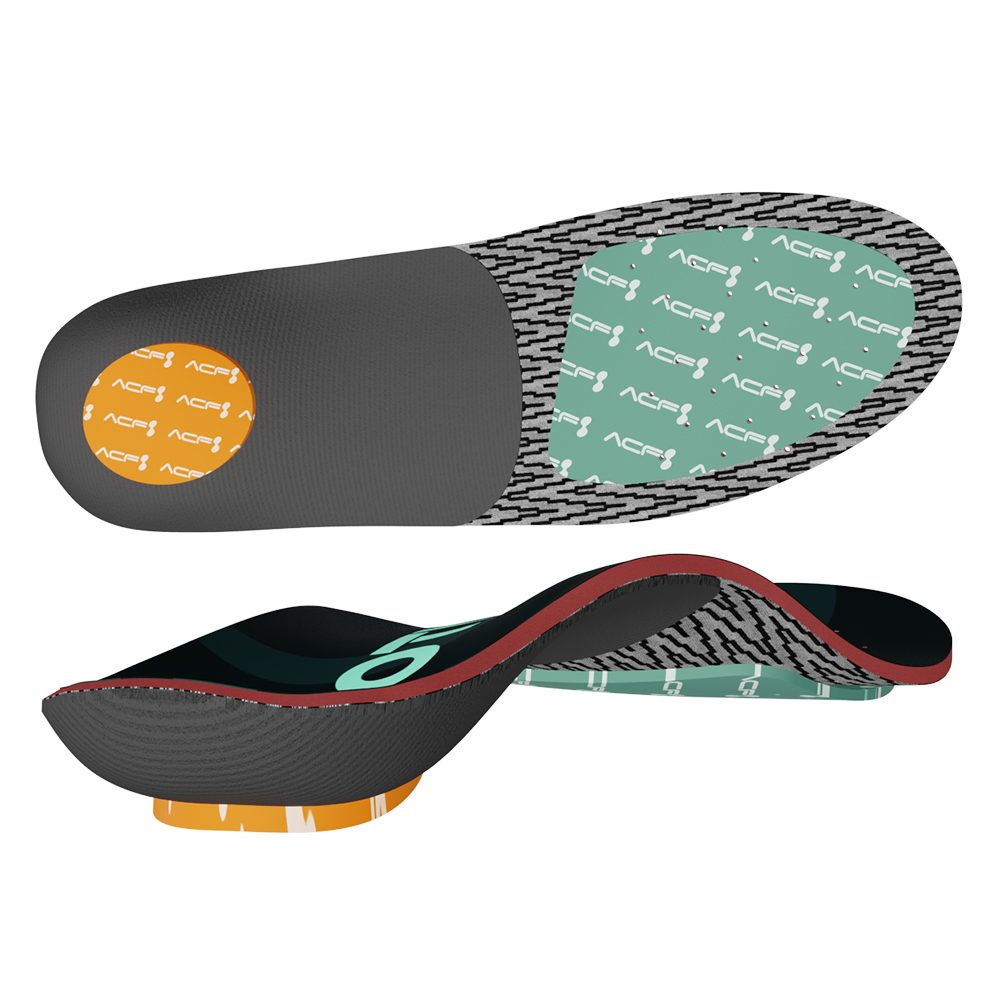
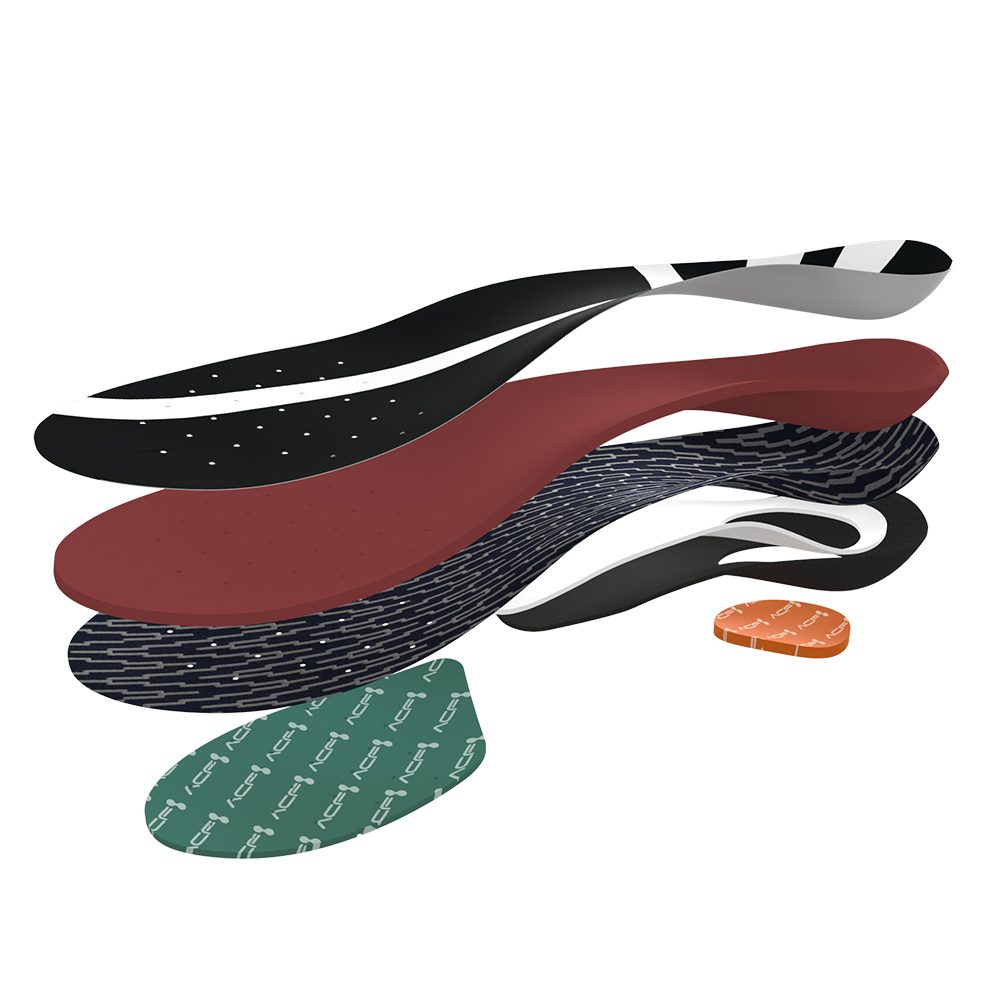
Six fields carry a plantillas order across any language barrier. Arch geometry intent — support, accommodation or neutral. Shell stiffness, named in the factory’s families. The forefoot region decision, which for many customers is the difference between a pair that works and a pair that sits in a drawer. Cover material. Thickness budget within the shoe. And the wear context — daily hours, activity split, the shoe it will live in.
Named fields matter more across languages, not less. A Spanish brief that says firm by its own intuition meets a Chinese factory reading firm by its own — the adjective translates itself into whichever production habit was nearest. Named families, agreed once in writing, remove the whole class of misunderstanding.
Our specification template names the families in English with the Spanish trade terms alongside, and the confirmation reply from our production team restates the brief in its own words before forming begins. That reply is the document to check: if it reads back your order correctly, the language barrier has already been crossed.
Named families also have a verification step for the first order: ask the factory to photograph, side by side, two pairs built from two different named families in your brief. The photographs — geometry, shell, cover visible — turn the vocabulary into something you can file and compare against the pairs that arrive. One email in the first order saves a season of vocabulary disputes.
MOQ, mixing and what a first order should look like
Our minimum is two hundred pairs, and the structure matters more than the number: the two hundred can be mixed across models and sizes, which is what makes the minimum survivable for a first order. A distributor covering a region does not need two hundred of one design; they need enough of several designs to learn what their market asks.
The first order should therefore be a sample of the market, not a bet on it: several design families, the size runs your market actually wears, and the covers your climate and shoe culture favour. Samples ship within three days for the designs you want to feel first, and the production run follows once the sample feedback is in.
Buyers comparing suppliers should ask how the minimum mixes — some factories quote a low minimum that turns out to be per design, which multiplies the real commitment by your range’s breadth. Ask the question in the same words of every supplier; the spread in the answers tells you who has actually served mixed-range distributors before.
The mixing question has a follow-up worth asking in the same email: how the factory prices the mix. Some quotes hold the unit price across the mix; others reprice per design once the run divides. The difference is invisible in a brochure and decisive in a season’s margin, and the factories that answer it in one reply are the ones whose quotations deserve the shortlist.
Branding: OEM and ODM in practice
The plantillas personalizadas trade runs on branding, and the terms deserve precision. OEM in our usage: you supply the design or choose from our ranges, and the product carries your brand, your packaging, your insert cards. ODM extends to the design itself — we develop to your brief. Both are normal for us; neither is a favour, and both are agreed in writing before the line starts.
The written agreement should name what is included: logo method and placement, packaging artwork and who supplies it, insert cards, size labels, and the carton marking for customs. Each of these has a cost and a lead time, and each is trivial to agree early and irritating to discover late.
For buyers building a brand across markets, the packaging conversation is worth an hour with our team before the first order. The factories that serve this trade well treat packaging as part of the specification, subject to the same confirmation discipline as the insole itself — because in the customer’s hands, the box is the first quality check they perform.
The packaging conversation should also settle the artwork’s formats early: print-ready files, the logo’s minimum size, the carton marking language for customs. A brand’s first container is where artwork and logistics meet, and the factories that ask for the formats at quotation are the ones whose first container is boring — which, in shipping, is the highest compliment available.
The customs paperwork also has a pre-shipment habit worth requesting: the document set sent for review before the container moves. Commercial invoice, packing list, certificates as held — reviewed in your inbox rather than discovered at the port. Our shipments follow the habit, and buyers should make it a term with every supplier; the review costs a day and prevents the week that a detained container teaches.
Freight arithmetic and the transit decision
Cross-border plantillas orders live on freight arithmetic, and the numbers are public on our FAQ page: courier roughly six to seven working days, air freight ten to twelve, sea freight thirty to thirty-five. What the numbers mean depends on the buyer’s cash cycle — a distributor restocking a sell-out range evaluates thirty-five days very differently from a clinic placing its second order.
The decision also has a quality dimension. Sea freight is the volume route and costs the least per pair; courier is the sample route and answers questions fastest. A sound pattern for a growing distributor: samples and first fills by air, established ranges by sea, with reorder points set by the transit time rather than by optimism.
Customs paperwork completes the arithmetic. Our shipments go out with complete commercial documentation, and buyers should confirm the same of every supplier — a factory that cannot state its export documentation in one reply is a factory whose first container will educate you at the port.
The freight arithmetic also has a mixed-mode pattern worth naming for growing distributors: the sample-and-fill by air while the established range rides the sea. The pattern costs more than pure sea freight and less than pure air, and it buys the one thing a growing range cannot survive without — the shelf that never goes empty while the containers move. Our team prices mixed shipments as a routine, not as a favour.
After-sales across time zones
Distance survives on response speed. Our after-sales model is built for it: a dedicated WhatsApp group per partner, an engineer on the other end in China’s working day, remote assistance for questions that need screens shared, and over-the-air updates for the connected equipment some partners run alongside the insole line.
For the insole business specifically, after-sales means remake handling. A pair that misses its fitting is measured against the written specification, the revision is documented, and the replacement enters the production queue like any order — which is why the specification discipline from the first section of this article is also the after-sales discipline.
Partners should test after-sales before committing: ask a technical question, in Spanish, and measure the hours to a useful answer. The response time to a pre-sale question is the ceiling of the response time to an after-sale one, and the ceiling is what you are buying.
The after-sales ceiling test has a Spanish-language variant worth running: ask the technical question twice, once in Spanish and once in English. The factories with real cross-market operations answer both in the same hour; the ones with a translation layer answer one and queue the other. The test costs two emails and reveals the operation’s actual shape rather than its website’s.
The response test also has an escalation variant: after the technical question is answered, ask its follow-up — the question the first answer raises. Suppliers with real engineers welcome the chain; suppliers with scripts deflect it. Two rounds of one email each, and the after-sales channel’s depth is measured as precisely as its speed was in the first round.
A closing checklist for the plantillas buyer
Compressed to one page: measurement basis agreed; six specification fields named in shared families; minimum structure confirmed as mixable; OEM or ODM scope and packaging agreed in writing; freight arithmetic matched to your cash cycle; export documentation confirmed; after-sales tested with a real question before signing.
The checklist works with any factory, which is deliberate — a buyer who specifies clearly gets better product from everyone. But it is also the checklist our own partnerships run on, and the enquiries that arrive with it move fastest: the confirmation reply comes back sooner, the samples ship on schedule, and the first reorder is placed by a partner who already knows what the second order should change.
The plantillas personalizadas market grows because the product works when the process is honest. The vocabulary is Spanish, the production floor is ours, and the document between them is the same everywhere: written, named, confirmed — the shortest bridge between two languages and one pair of insoles.
A closing note on the relationship’s second order. The first order proves the factory can build; the second proves it can repeat. Buyers should therefore hold the second order to the first’s specification, pair by pair, and file the comparison. Factories that match their own first order are the factories a market can be built on — and the ones that drift teach you before the third order does.
Frequently asked questions
What measurement basis do you accept for custom insoles?
A written specification built from an assessment record is the standard route. Physical impressions can be shaped from for partners without equipment, though they scale less well. The specification travels in named fields either way.
What is the minimum order and can it be mixed?
Two hundred pairs, mixed across models and sizes. The mixing is what makes the minimum workable for a distributor covering several design families in one order.
Can the insoles carry our own brand?
Yes — OEM covers your brand, packaging and insert cards on our designs or yours; ODM extends to developing the design to your brief. Both are agreed in writing before production.
How fast do samples arrive?
Samples ship within three days of agreement, by courier. They are the fastest way to test covers, geometry and the shoe-context fit before the production run.
What are the transit times?
Courier roughly six to seven working days, air freight ten to twelve, sea freight thirty to thirty-five. Full figures are published on our FAQ page.
How do remakes work across the distance?
The remake is measured against the written specification of the original order, documented like any order, and enters the production queue with the same confirmation discipline.
Can we communicate with the production team in Spanish?
The working language of the production floor is English and Chinese, but the specification template carries the trade terms in both English and Spanish, and our team reads briefs written either way.
What we would do next
Write to us in Spanish or English with your market, your size runs and your first design brief; our team returns the specification in named families, the OEM terms and the freight arithmetic in one reply.
Ask for the specification template and the sample set together — samples ship within three days, and the template is yours to use with any factory, ours or not.
This article is intended for professional and educational reference. It is not medical advice. Foot assessment equipment produces measurements and images; clinical interpretation and any decision about care remain the responsibility of a qualified professional. Certification scope is limited to the documentation we hold: European Union certification and ISO quality system certification.