
Training monitoring is, at its core, a habit of comparison. A coach watches an athlete today and compares what they see against yesterday — stride, posture, willingness to load one leg. The comparison is only as good as the record behind it. When the baseline is a memory, the comparison drifts; when the baseline is a stored foot assessment, the comparison has an anchor. Buyers searching this topic usually run a team or a studio and want that anchor to be real.
This article takes the season as its unit of time. At the start, a foot assessment captures the pressure map, the left-right load split and the posture frames; across the cycle, repeat sessions ask whether anything moved. Between those bookends sits the practical machinery — how records are compared, what a device can and cannot say about training, and what happens to the data between visits. Written from the factory side, because the machinery is what we build and ship.
We manufacture custom orthotic insoles and the foot assessment equipment that feeds them — pressure sensing, camera capture for posture, analysis software — at our own plant in Ruichang, Jiangxi. The company dates from 2014; the plant entered production in 2018; and trade fairs in Canton, Dubai, Vietnam, Brazil and Hong Kong keep us close to how teams and studios actually phrase the question. That position shapes this article: what a record can hold, what a specification needs, and where the device’s job ends and the coaching staff’s begins.
Monitoring is comparison, and comparison needs a baseline
Every claim a monitoring programme makes is a comparison in disguise. A coach says an athlete is loading more evenly, or a rehabilitation professional notes that one foot is behaving differently under volume — and both statements only mean something because a reference point exists somewhere. When the reference lives in memory, it degrades: impressions blend across weeks, and the newest session quietly overwrites the oldest. A stored baseline resists that drift, because it holds the starting picture still and gives later sessions something stable to be measured against. That single idea — record first, compare second — is the whole logic of training monitoring.
A season-start foot assessment supplies that baseline from three angles at once. The pressure map shows how load distributes across the sole at rest — heel, midfoot and forefoot regions, and the left-right share between feet. The walking record adds behaviour: how load transfers through each step and whether one side hesitates. The camera frames record posture and alignment, so the sole is never read without the body above it. Together they form a document that belongs to the athlete’s file, not to a single consultation, and that stays available to every professional working with the athlete for the whole cycle ahead.
Retesting only works when the protocol repeats. The comparison between an opening session and a mid-season session is valid because the instructions, the surface and the task were identical — same standing position, same walking pass, same warm-up state or the same absence of one. Teams that re-measure after a hard session against a baseline taken at rest will see differences that belong to the protocol, not to the athlete. Writing the session conditions into the record costs seconds and is the difference between a comparable file and a collection of unrelated snapshots. The discipline is small; the payoff runs the length of the season.
What the season-opening assessment writes down
The static standing record is the calmest measurement in the session and the easiest to compare later. On the pressure map it shows which regions accept load when the body is simply upright: how the heel and forefoot share the total, how the arch region behaves, and how the total divides between the left and right foot. Because nothing is moving, the map is stable enough to serve as a reference image. Most repeat comparisons in a season start here, because a change in the standing picture is the clearest signal that something upstream has changed too.
The walking record answers the question the standing one cannot: what the foot does when it has a job to do. As the athlete passes across the sensing surface, the software builds a timeline of how load arrives at the heel, moves through the midfoot and leaves through the forefoot, step after step. From that timeline come the descriptors a coaching staff actually discusses — how long each foot carried the work, how quickly weight transferred forward, and whether the pattern held steady across several passes or drifted with fatigue. That steadiness question is exactly the one a mid-season retest revisits.
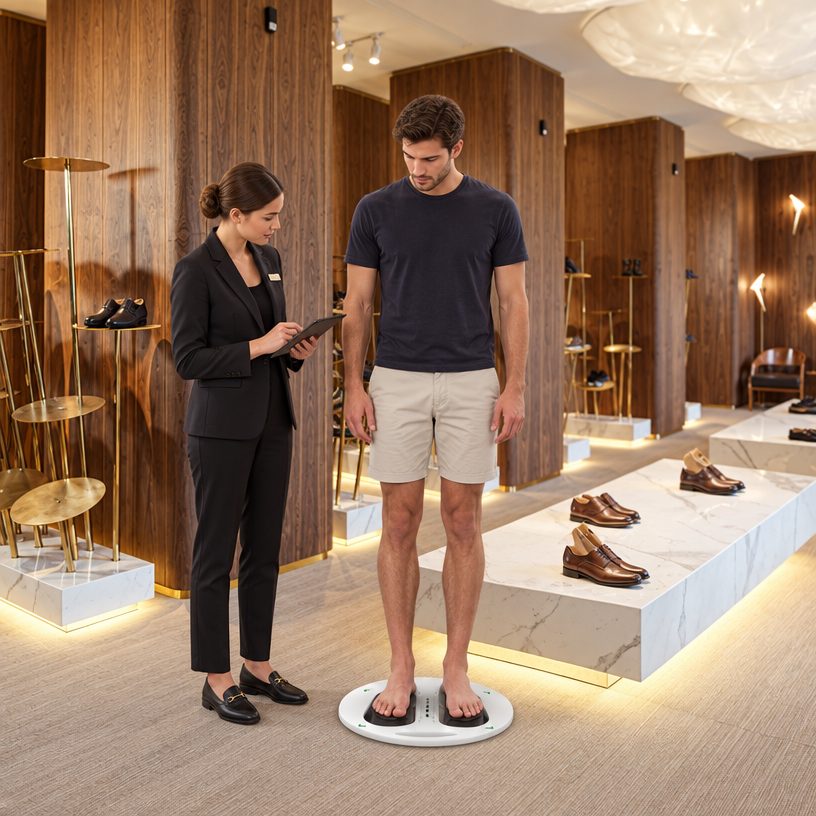
The camera half of the session records what the sole cannot: how the ankles line up, whether the knees track inward, how the pelvis sits during the task. Captured in the same session as the pressure data, the frames give the alignment context that turns a load map into a readable picture. Buyers evaluating systems should ask how the two streams stay synchronised, because records captured separately cannot be compared honestly. Our own systems pair pressure sensing with camera capture and assemble both into one report — an assessment category, not an imaging scanner, and we describe it that way in every quotation.
What a visit-to-visit comparison can legitimately show
The first comparison a stored baseline enables is regional. If the opening record shows the forefoot carrying a particular share of standing load, and the mid-season record shows that share moved toward the heel or across to the other foot, the shift is visible on the maps without anyone squinting at memory. Migration between regions does not carry its own explanation — footwear changes, surface changes, loading volume and simple fatigue all move load around — but the fact of the migration is now documented, and the conversation about causes starts from evidence rather than recollection. That alone changes the quality of the mid-season review.
The second is balance between the sides. A baseline records how standing load divided between left and right on day one; later sessions record the same division under the same conditions. A split that held steady for months and then moved is a different finding from one that has always leaned the same way, and only a stored baseline can tell the two apart. For teams, this is the comparison staff ask for most often after a return from interruption, when the question is whether the previously uninjured side has quietly taken on more of the work.
The third comparison costs nothing and gets skipped constantly: standing against walking. A record where the standing map looks conventional but the walking timeline shows one side hesitating tells a different story from a record where both agree. Comparing the two views within a single session — and then across the season — is what turns a foot assessment from a photograph into a sequence. The software assembles both views into one report precisely so this comparison happens in front of the professional, not across separate printouts that never quite meet. Rooms that read the two views together write shorter, sharper notes.
Where the device stops and the staff start
A foot assessment system records and reports. It does not predict performance, and it does not forecast which athlete will come through a season unscathed — no pressure map holds that information, and a supplier who implies otherwise is selling confidence rather than measurement. What the record does is describe load distribution, alignment and change over time, in a form a qualified person can read against everything else they know about the athlete. Teams evaluating equipment should listen for that division of labour in the sales conversation, because it predicts how the system will behave in the room for years afterwards.
Training prescriptions sit even further outside the device’s remit. The report can show that load has shifted, that one side carries more, that transfer timing changed; it cannot say what the training week should become. That judgement belongs to the coach, the physiotherapist or the medical staff who hold the athlete’s history, goals and constraints. We draw the line deliberately in our own documentation: the equipment supports assessment, the professional decides. Buyers who want a machine to hand them a programme will be disappointed by every honest system on the market, and this article will not pretend otherwise.
The boundary is not a limitation to hide; it is what makes the record durable. A device that promises conclusions locks a team into trusting conclusions it cannot verify, while a device that delivers clean records lets the staff’s own judgement compound season after season. In our experience exhibiting at trade fairs from Canton to Dubai to Brazil, the buyers who probe hardest on this boundary are the most experienced ones — they have already owned a system that overpromised, and they ask different questions the second time. The questions are worth rehearsing before the first quotation arrives.
Storage, export and the life of a baseline
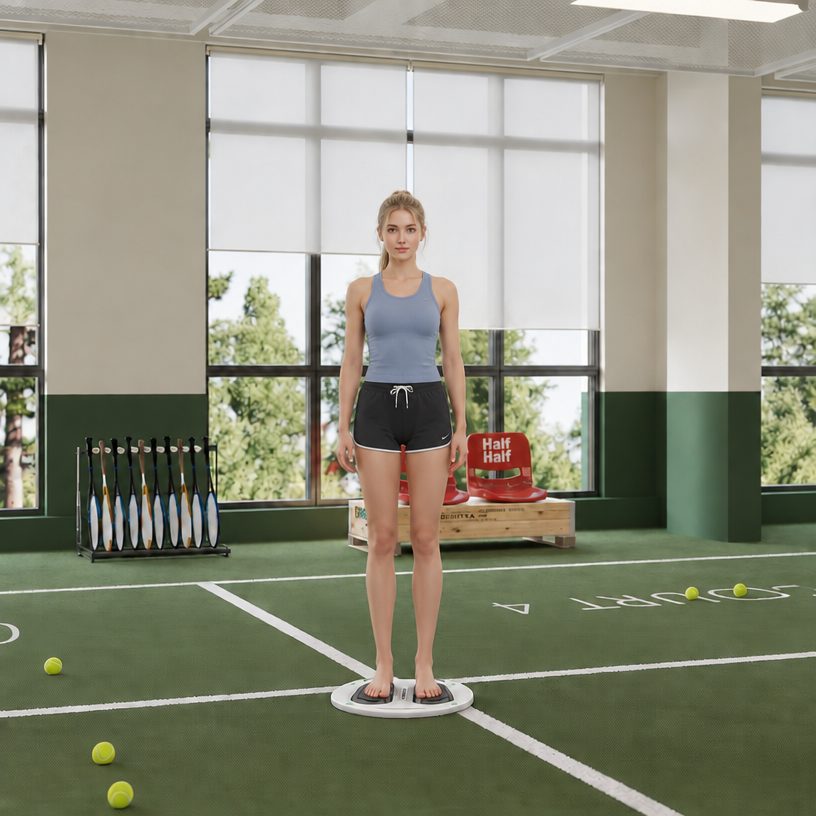
A baseline is only as durable as the storage behind it. When the opening record lives as a printed summary pinned to a noticeboard, the season’s comparisons degrade with the paper; when it lives in the system, retrievable in its full form, every later session has a genuine reference. The distinction buyers should press is between a summary page and the underlying record. The summary suits the conversation in the room; the underlying record — the maps, the timeline, the frames — is what makes a comparison in month six as sharp as one in week two.
Export matters for the same reason. A system whose records leave cleanly — as files a clinic or team can archive, share with an outside professional, or hand to an insole workshop — keeps the organisation independent. A system that holds records hostage inside a proprietary viewer makes the loyalty accidental rather than earned. Our reports are built to export the underlying record alongside the summary, because we also manufacture the insoles those records sometimes feed: we have no interest in a format that traps the data a specification needs. Buyers should test the export path with a demonstration record before signing anything.
The stored baseline also changes what a retest session needs to be. With the original protocol attached to the record — instructions, task, conditions — a new staff member can run the follow-up months later and have it compare honestly. Without that attachment, the comparison quietly weakens: nobody remembers exactly how the first capture was taken. Teams planning a purchase should therefore ask not only whether records are stored, but whether the session conditions travel with them. The answer separates systems designed for longitudinal work from systems designed for single visits. It is one of the few questions that predicts satisfaction a year out.
Procuring for a team or a training studio
For a team or a fitness studio, the practical questions come first. How many athletes pass through the session flow, and how long does one athlete take? The static capture takes seconds; the walking record takes a few minutes including instructions; the conversation afterwards belongs to the staff, not the machine. A realistic session budget — athletes per hour, staff per station — should be modelled before purchase, not discovered after. Studios that underestimate the instruction time tend to shorten it, and shortened instructions are the quiet killer of baseline comparability. A supplier who can walk through the flow step by step is worth shortlisting.
The equipment checklist for this use case is short. The sensing surface must handle the population that walks on it — heavier athletes, cautious ones, and everyone between. The report must be readable by staff who are not engineers, because a baseline nobody opens is a baseline nobody uses. Records must store and export, as argued above. And the workflow must fit the room: our systems are specified as pressure sensing plus camera capture plus analysis software, with the report assembled in one pass, because splitting the capture across stations is where team schedules fall apart.
On the commercial side, buyers should know who they are dealing with. We are the manufacturer — the factory in Ruichang, Jiangxi, has been in production since 2018 — not a trading company relaying questions to someone else’s floor. Machine orders start from a single unit, which suits a studio adding one station, and the equipment side is available under ODM terms for buyers building their own line. The same factory runs the insole production that assessment records sometimes feed, which keeps the whole conversation under one roof. Both sides of that conversation are described in writing before any commitment.
Support terms that keep a season running
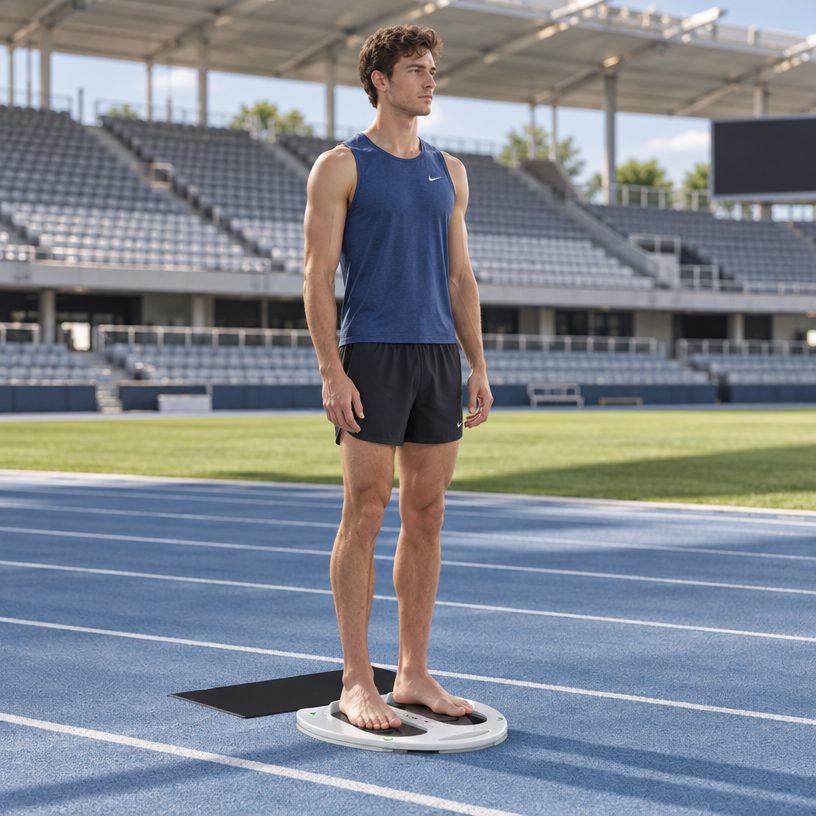
Assessment equipment earns its keep in the second and third season, and support terms decide whether it does. Our model is specific: every connected unit sits in a dedicated WhatsApp group with an engineer on the other end, remote assistance covers software questions without waiting for a visit, and over-the-air updates keep the analysis software current. A capture that fails mid-session is an operational problem with a clock on it; the support structure exists so the room is taking records again the same day, not opening a ticket and waiting a week. Buyers should ask every supplier on their list to describe their model this concretely.
Before any unit ships, it passes seven days of factory testing, and the warranty runs for twelve months from delivery. Those are written terms, not verbal reassurances, and they appear in the quotation alongside the rest. Shipping is planned to the destination: express delivery runs in the working-week range, air freight somewhat longer, sea freight for full programme planning — the current figures for each route are published on our FAQ page so buyers can schedule an installation window without guessing. Certification covers European Union certification and ISO quality system certification, both stated plainly. A season plan deserves terms that survive being read twice.
Price, when the conversation reaches it, should be structured rather than numeric on first contact. What sits in the base system, what arrives as a software option, what a service year involves, and what happens when a component fails out of warranty — a supplier who answers those four in writing can be compared like-for-like with any other quotation on the desk. Our own practice is to put the structure in the proposal first and the figures after, because a buyer who understands what they are buying negotiates faster and reorders with fewer surprises. The same structure holds whether the order is one unit or several.
Frequently asked questions
How often should we re-measure across a season?
Most teams anchor on a pre-season baseline and add retests at planned points — mid-cycle, after interruptions, at season close. The frequency matters less than protocol consistency: same instructions, same task, same conditions each time. A retest that changes the method produces a comparison nobody can defend, so we recommend setting the protocol in writing when the baseline is taken.
Can the equipment predict performance or injury?
No. The system records plantar pressure and posture data and reports how load is distributed and how it changes between sessions. Prediction and interpretation belong to the coach or the clinical professional working with the athlete’s history. We state this boundary in our quotations and manuals, and buyers should expect the same clarity from every supplier they evaluate.
What exactly does the system capture in a session?
Pressure sensing under the sole captures the static standing map and the walking timeline; camera capture records posture and alignment during the same session; the analysis software assembles both into a single report a professional can annotate. It is a foot assessment system — not an imaging scanner — and we describe it that way in every document we issue.
Can our staff export the records for long-term comparison?
Yes. Reports export the underlying record as well as the summary page, so a session taken at the start of a season can be retrieved in full months later and compared honestly with a retest. Buyers comparing systems should test the export path with a demonstration record before committing, because storage without retrieval is not a baseline.
What is the minimum order for an assessment system?
One unit. Machine orders start from a single system, which suits a studio or clinic adding one assessment station before expanding. The equipment side is available under ODM terms for buyers building a line under their own brand, and the terms are agreed in writing before production begins.
What after-sales support do you provide?
Every connected unit is backed by a dedicated WhatsApp group with an engineer on the other end, remote assistance for software questions, and over-the-air updates for the analysis software. Systems ship after seven days of factory testing, and the warranty runs twelve months from delivery. The terms are stated in the quotation so they can be compared with any other offer on your desk.
How long does delivery take?
It depends on the route. Express delivery typically runs in the six-to-seven working day range, air freight takes somewhat longer, and sea freight suits full programme planning. The current transit figures for each destination are published on our FAQ page and confirmed in the order documents, so an installation window can be scheduled without guessing.
What we would do next
Tell us how your season is structured — baseline timing, retest frequency, athletes per session — and we will return a system proposal built around that schedule, with support terms, factory testing and warranty stated in writing. Machine orders start from a single unit, so a studio can add one assessment station before committing to more.
Specification questions reach our engineers directly — through the contact page or the FAQ page, where minimums, transit times and after-sales terms are published in plain figures. We answer before the quotation, not after, because a baseline programme is only as good as the terms behind it.
This article is intended for professional and educational reference. It is not medical advice. Foot assessment equipment produces measurements and images; clinical interpretation and any decision about care remain the responsibility of a qualified professional. Certification scope is limited to the documentation we hold: European Union certification and ISO quality system certification.